2026年10月15日,约旦河西岸的橄榄采收季正式开始,与此同时,以色列定居者和士兵对巴勒斯坦人的暴力行为有所增加。与此同时,定居者和士兵一直在利用社交媒体宣扬一种唯美的、适合发在Instagram上的、带有民族主义色彩的采收景象。
The olive harvest officially began in the West Bank on October 15, 2026, and it has coincided with an uptick in violence towards Palestinians carried out by both Israeli settlers and soldiers. Meanwhile, the settlers and soldiers have been using social media to promote an aesthetic, Instagram-friendly and nationalistic view of these harvests.
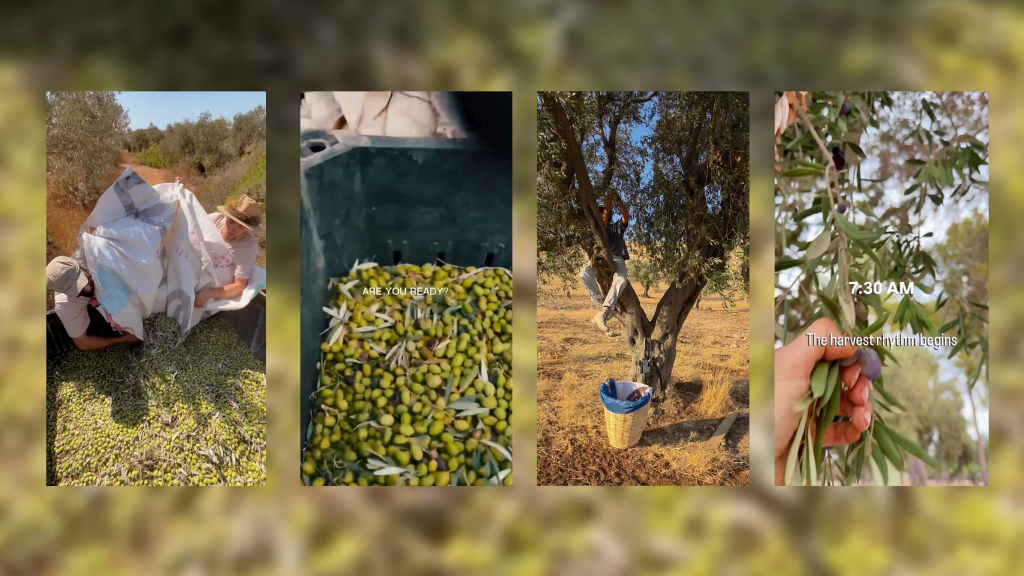
以色列定居者一直在社交媒体上发布他们的橄榄采收照片。© The Observers 乍一看,这像是一个普通的视频。视频里有激昂的音乐、阳光、笑容、咖啡,以及三个人在采摘橄榄。但视频的配文将这些迷人的场景置于一个截然不同、暴力得多的现实之中:“这花了我们整整四个小时。我们邀请你们来展示以色列土地并采摘橄榄。”这段画面拍摄于被占领的约旦河西岸,帖子中标注的地点是大卫·凯拉,一个非法的以色列定居点。
Israeli settlers have been posting images of their olive harvests on social media. © The Observers At first glance, it is an video like any other. There’s rousing music, sunshine, smiles, coffee and three people harvesting olives. But the video's caption situates these charming scenes in a different, much more violent reality: "That took us a good four hours. We are asking you to come and showcase the land of Israel and harvest olives.”This footage was captured in the occupied West Bank David Kela, an illegal Israeli settlement, is identified as the scene's location in the post.
这段于2026年9月28日发布的视频显示,三个人在被占领的约旦河西岸采摘橄榄,其乐融融。然而,视频中标注了一个非法定居点,配文还号召人们前来“展示以色列土地”。
This video, posted on September 28, 2026, shows three people gathering olives in the occupied West Bank and having a merry time doing it. It turns out, however, that an illegal settlement is identified in the video and the caption calls on people to come and "showcase the land of Israel".
要显示此来自Instagram的内容,您必须启用追踪和受众衡量功能。
To display this content from Instagram, you must enable tracking and audience measurement.
橄榄采收季于2026年10月15日正式开始,持续至11月底。然而近年来,这一时期已成为以色列军队和定居者针对巴勒斯坦人暴力行为增加的代名词。因此,许多巴勒斯坦人今年提前两周开始采收,以减少遭遇暴力的风险。
The olive harvest officially began on October 15, 2026 and lasts until the end of November. In recent years, however, this period has become synonymous with an uptick in violence towards Palestinians, carried out by the Israeli army and settlers. Because of this, many Palestinians began their harvest two weeks early this year to reduce the risk of violence.
然而,暴力的现实并未阻止一些以色列人利用社交媒体展现一幅愉快和睦的采收图景,并常附带邀请网民前来加入的信息。社交媒体上有数十条此类帖子。
However, the violent reality hasn’t prevented some Israelis from taking to social media to present an image of a pleasant and convivial harvest, often with a message to social media users to come and join them. There are dozens of these posts on social media.
@nehoraichushinski 于 2026 年 10 月 11 日发布的这段视频中,一名男子在悠扬的音乐声中采摘橄榄、观看瞪羚。该账号运营者经常身着军装出镜。配文写道:“我们在村里其他人抢先之前赶紧采橄榄……瞪羚已经过来看看剩下什么给它们了。”甚至有些定居点自设榨油厂。定居者 Elisha Yered 转发帖子,邀请社交媒体用户前往非法定居点 Itamar 和非法农场 Avihai 采摘橄榄榨油。
In this video, posted by @nehoraichushinski on October 11, 2026, a man gathers olives and watches gazelles as calm music plays. The person who runs this account often appears wearing a military uniform. The caption says: "We are harvesting olives before someone from the village overtakes us… And the gazelles have already come to see what’s left over for them." Some settlements even have their own oil mills. Settler Elisha Yered shared a post inviting social media users to come and gather olives to make oil in Itamar, an illegal settlement, and Avihai, an illegal farm.
他在配文中呼吁观众去“最近的橄榄园,就在你们城镇大门后面”采摘橄榄,并号召大家“强化犹太人在我们国家土地上的存在”,这两句都是民族主义口号。
In his caption, he calls on viewers to go and harvest olives "in the nearest orchard, located just behind the gate to your town” and calls on them to “reinforce the Jewish presence on our country’s land”, both nationalistic messages.
定居者 Elisha Yered 于 2026 年 9 月 30 日转发了这条帖子,内容为:“去发掘广阔天地,采摘橄榄,收复土地,践行犹太复国主义!来我们的榨油厂学习如何生产纯正橄榄油。”
Settler Elisha Yered shared this post on September 30, 2026, which says "Go and discover wide open spaces, gather olives, reconquer the land and live Zionism! Come learn how to produce pure olive oil in our olive mill".
10 月 15 日,联合国人道主义事务协调厅(OCHA)统计,与橄榄采收季有关、导致人员伤亡或财产损失的袭击事件已近 200 起。
On October 15, the United Nations Office for the Coordination of Humanitarian Affairs (OCHA) counted nearly 200 attacks linked to the olive harvest that resulted in bodily injury or material damage affecting the harvest season.
OCHA 还证实,今年西岸定居者实施的影响橄榄采收的袭击次数,已超过 2025 年记录的 185 起。
OCHA also confirmed that the number of attacks affecting the olive harvest carried out by settlers in the West Bank this year has already surpassed the 185 incidents recorded in 2025.
“他们禁止我们去自家橄榄园” Omar(化名)居住在被占领的西岸希伯伦省。以色列军方自 2026 年 6 月 16 日起封锁了他通往自家橄榄园的通道。
'They banned us from going to our own olive grove' Omar (not his real name) lives in the Hebron Governorate in the occupied West Bank. The Israeli army has blocked his access to his olive grove since June 16, 2026.
2026 年 6 月 16 日周二,我们发现十几名以色列定居者闯入了我们的橄榄园。这块地是我从父亲和祖父那里继承来的。他们用球棒殴打橄榄树。
On Tuesday, June 16, we discovered that a dozen Israeli settlers had come into our olive grove. I inherited this land from my father and my grandfather. They were hitting the olive trees with bats.
我们联系了以色列警方,警方赶到现场,但没有靠近到足以让他们离开的程度。他们只是待在主路上。随后,军队赶来,士兵向定居者走去,一些定居者离开了,但并非全部。
We called the Israeli police, who came to the site, but they didn’t come close enough to make them leave. They just stayed on the main road. Then, the army came and the soldiers went towards the settlers and some left, but not all.
留下的定居者开始砸毁橄榄树。他们用球棒击打树木,并专门针对最美丽的树木。定居者拿走了一些橄榄,然后践踏了剩下的橄榄。
The settlers who remained started to ransack the olive trees. They beat them with bats and specifically targeted the most beautiful trees. The settlers took some of the olives and then stamped on the rest.
接着,他们赶来大约200只羊,将羊群带入橄榄园,任其到处吃草。定居者带着羊群在那里待了从早晨到日落。
Then, they brought over about 200 sheep, led them into the olive orchard and let them graze all over. The settlers stayed there with their sheep from the morning to sunset.
他们禁止我们进入自己的果园,声称这片土地现在属于军事区。我们不知道该怎么办。
They banned us from going into our orchard, claiming that this land was now part of a military zone. We don’t know what to do.
橄榄是约旦河西岸数以万计巴勒斯坦人极其重要的收入来源。根据人道主义事务协调厅(OCHA)的数据,2019年,超过1000万棵橄榄树为8万至10万个家庭提供主要或次要收入。以色列人权非政府组织“贝特塞莱姆”(B’Tselem)在其报告《消除计划》中报道,平均而言,橄榄行业每年为被占领的约旦河西岸经济带来1.7亿美元(超过1.51亿欧元)的收入。
Olives are an incredibly important source of income for tens of thousands of Palestinians in the West Bank. According to OCHA, in 2019, more than 10 million olive trees were a source of primary or secondary income for between 80,000 and 100,000 families. In its report "The Elimination Project", the Israeli human rights NGO B’Tselem reported that, on average, the olive sector brought in $170 million per year (more than €151 million) to the economy of the occupied West Bank.
根据人道主义事务协调厅(OCHA)的数据,围绕2025年收获季的各种限制和暴力行为——包括将橄榄园指定为军事区或国家公园、暴力或恐吓行为,以及阻止巴勒斯坦人采摘橄榄的军事命令——导致巴勒斯坦经济损失超过4600万美元(近4000万欧元)的收入。“整个系统都支持定居者”亚尔·德维尔是“贝特塞莱姆”的发言人。他强调了定居者与军队之间的密切联系,以及一个旨在限制巴勒斯坦人进入其土地的系统。
The various restrictions and violence around the 2025 harvest – including designating olive groves as military zones or national parks, acts of violence or intimidation, and military orders preventing Palestinians from harvesting their olives – resulted in the Palestinian economy losing more than $46 million in revenue, or nearly €40 million, according to OCHA. 'The whole system supports settlers' Yair Dvir is the spokesperson for B’Tselem. He highlighted the close links between settlers and the army as well as a system created to restrict Palestinian access to their land.
多年来,每到这个时期,暴力事件都会有所上升。但每年,暴力仍在持续升级。定居者和士兵实施的暴力导致受伤甚至死亡。
Every year, for decades, we see an uptick in violence during this time of year. But each year, the violence continues to intensify. The violence perpetrated by settlers and soldiers leads to injuries or even deaths.
暴力还包括定居者实施的盗窃。有多名目击者证词和视频显示,定居者直接从树上偷摘橄榄,或者等巴勒斯坦人收获完毕后,直接夺走他们的橄榄。
The violence also includes theft carried out by settlers. There are a number of eyewitness accounts and videos showing settlers stealing olives directly from the trees or waiting for Palestinians to finish their harvest and then just taking their olives from them.
巴勒斯坦人权非政府组织Yesh Din在X上发布了一段视频,记录了被占领的西岸定居者偷窃橄榄的情况。
Palestinian Human Rights NGO Yesh Din published a video on X documenting the theft of olives by settlers in the occupied West Bank.
在许多案例中,我们发现以色列军队正在积极参与这些行为:他们在事发时在场,任由定居者攻击和偷窃。通常,他们甚至直接参与攻击,逮捕巴勒斯坦人,向他们开火,并使用催泪瓦斯。
In many of the cases, we’ve found that the Israeli army is actively participating in these acts: they are there while it is happening and are letting the settlers attack and steal. Often, they even participate in the attacks, arresting Palestinians, firing on them and using tear gas.
我们最近观察到的一件事——多年来也一直如此,但现在尤其引人注目——是,橄榄林被清理的情况越来越多,这不仅由定居者实施,也由军队实施。
One thing that we’ve observed recently – as well as throughout the years, though it is particularly striking now – is that we’ve seen more and more clearing of olive groves, carried out not just by settlers but also by the army.
非政府组织“拉比人权组织”于2026年10月9日发布的一段视频显示,定居者——包括一名戴着巴勒斯坦人常戴的传统头巾(keffiyeh)的人——袭击了前来保护巴勒斯坦人收获的该非政府组织的活动人士。
In a video posted on October 9, 2026 by the NGO Rabbis for Human Rights, settlers - including one wearing a keffiyeh, a traditional scarf often worn by Palestinians - attack activists from the NGO who came to protect Palestinians during their harvest.
“我们看到戴头巾的定居者过来袭击我们,”穆罕默德(非真名)是一个巴勒斯坦村庄农业委员会的主席。他向我们讲述了橄榄树在巴勒斯坦文化中所起的作用。对我们来说,种植橄榄是一种历史性的、文化的和宗教性的行为。
'We saw settlers wearing keffiyeh come and attack us' Mohammed (not his real name) is the president of an agricultural committee in a Palestinian village. He spoke to us about the role that olive trees play in Palestinian culture. Growing olives is a historic, cultural and religious act for us.
西岸的大多数巴勒斯坦人并非难民。这意味着有些人从未与土地分离过,他们拥有每年在那里采摘橄榄、生产橄榄油的土地。然而,突然间,他们再也无法这样做了。
Most of the Palestinians in the West Bank have not been refugees. That means that there are people who have never been separated from their land, who have plots where they gather olives each year and produce their oil. However, suddenly, they are no longer able to do that.
在文化层面,巴勒斯坦的凯菲耶(一种传统头巾)上常绣有代表橄榄枝的图案。女性的传统长袍也带有代表橄榄树的特殊纹样。橄榄油是我们所制作的食物中不可或缺的原料。
Culturally, the Palestinian keffiyeh (a traditional scarf) often features embroidery that represents olive branches. Women’s traditional dresses, or thobes, also have special patterns that represent olive trees. Olive oil is essential to the food we make.
在《古兰经》中,橄榄树和无花果树常被一并提及——两者存在共生关系,历史上在巴勒斯坦也常被种在一起。橄榄树在《古兰经》的神圣经文中扮演着不可或缺的角色。
In the Quran, olive and fig trees – which have a symbiotic relationship and which, historically, were planted together in Palestine – are often jointly mentioned. Olive trees play an integral role in the Quran’s sacred texts.
我认为无法解释这些橄榄树对我们意味着什么。这超出了象征意义的范畴。烈士的墓碑上刻着这样一句话:“我们站着死去,就像巴勒斯坦的橄榄树。”这张照片由我们的观察员于2026年10月12日夜间在比尔宰特拍摄。由于担心遭到定居者或军队的袭击,巴勒斯坦人已开始在夜间采收。在这张照片中,我们的观察员展示了一棵被毁坏的橄榄树。
© The Observers 看到定居者假装自己是本地人、假装他们与橄榄树的关系是天然的,实在令人作呕——因为过去十年来,正是他们在实实在在地毁坏和砍伐橄榄树。
I don’t think it is possible to explain what these olive trees mean for us. It goes beyond symbolism. Grave stones of martyrs are inscribed with the words: “We die standing up, like Palestine’s olive trees.”This photo was taken by our Observer in Birzeit on the night of October 12, 2026. Fearing attacks by settlers or the army, Palestinians have begun harvesting at night. In this image, our Observer shows an olive tree that has been destroyed. © The Observers It’s revolting to see the settlers pretend to be locals and that their relationship with the olive tree is natural when it is them who have literally been destroying and cutting down olive trees for the past decade.
我们看到自己的文化正被剥夺。很快,他们还会试图偷走长袍(传统服饰)。我们甚至看到戴着阿拉伯头巾的殖民者前来袭击我们。”
We see our culture being stolen from us. Soon, they are going to try to steal the thobe (traditional garment), too. We even saw colonists wearing keffiyeh come to attack us."
我们的观察员于2026年10月12日夜间在比尔宰特拍下了这张照片,照片中一棵橄榄树被砍得只剩树干。© 观察员法国24台观察员团队联系了以色列军方,军方表示,在“影响收成的骚乱”发生时,他们采取了“必要的措施予以起诉,或在需要时驱散在场人员,同时始终努力避免造成任何伤害”。军方还补充说:“大多数摩擦发生在橄榄收获无需协调的地区[编者注:巴勒斯坦农民必须获得所谓的事先协调许可,才能进入被军方封锁的土地],或者安全部队不在场的地区。大多数经过协调的收获活动都按计划进行。”
Our Observer took this photo of a hacked-up olive tree with only the trunk remaining in Birzeit during the night of October 12, 2026. © The Observers The FRANCE 24 Observers team contacted the Israeli army, who said that in the case of “disturbances affecting the harvest”, they took the “necessary measures for prosecution or, if needed, to disperse those present, all while attempting to avoid any injury”. The army added: “Most instances of friction that occur in the areas where olive harvesting doesn’t require coordination [Editor’s note: Palestinian farmers must obtain so-called prior coordination permits to access land that has been blocked by the army] or where security forces are not present. Most coordinated harvests are taking place as planned.”
联合国人道主义事务协调厅报告称,今年与橄榄收获相关的袭击迄今已造成一人死亡、120多人受伤。超过2500棵橄榄树或幼苗遭到损坏或被毁。据巴勒斯坦农业部称,自2023年以来,在被占领的约旦河西岸,至少有10万棵橄榄树被毁、被连根拔起或被烧毁。
OCHA reported that attacks linked to the olive harvest this year have so far resulted in the death of one person and more than 120 people injured. More than 2,500 olive trees or young plants have been damaged or destroyed. Since 2023, at least 100,000 olive trees have been destroyed, ripped out or burned in the occupied West Bank, according to the Palestinian Ministry of Agriculture.