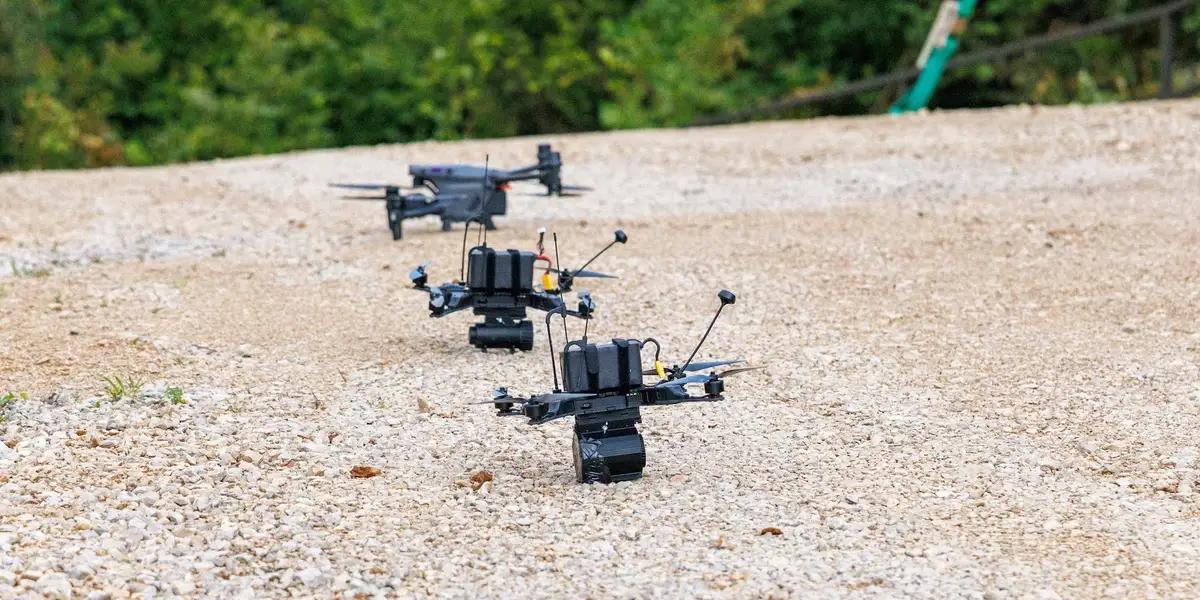
北约无人机制造商正与乌克兰防务工业合作,并在地下建造无人机部件。该公司首席执行官表示,公司正寻求汲取战时生产的经验,这些经验在危机时可能对西方防务公司至关重要。克罗地亚无人机技术公司ORQA与乌克兰无人机制造商General Cherry正共同在两国开发和制造拦截无人机、部件及其他反无人机系统。作为合作的一部分,他们正在乌克兰建造一座地下工厂用于生产部件。
A NATO drone maker is teaming up with Ukraine's defense industry and building drone parts underground. The company's CEO said it's seeking to learn lessons in wartime production that could prove critical for Western defense companies in a crisis. Croatian drone technology company ORQA and Ukrainian drone maker General Cherry are jointly developing and manufacturing interceptor drones, components, and other counter-drone systems in both countries. As part of the partnership, they are building an underground factory in Ukraine to make components.
ORQA首席执行官斯尔丹·科瓦切维奇在接受《商业内幕》采访时表示,在乌克兰的战时风险环境中工作,使公司在受攻击的情况下获得了宝贵的制造经验。他说,在乌克兰生产部件比在北约内部制造后再运往乌克兰军方更为高效。科瓦切维奇称,公司正在“向乌克兰学习”,因为那里的工业“始终面临威胁”。“他们也被迫转入地下,扩大规模,以降低分配资产的风险,”他说。“所以我认为这就是任何关键能力的前进方向。”
Working amid Ukraine's wartime risks teaches the company valuable lessons in manufacturing while under attack, ORQA CEO Srđan Kovačević told Business Insider. Producing components in Ukraine is also more efficient than making them in NATO and shipping them to the Ukrainian military, he said. Kovačević said his company is "learning from Ukraine," where industry is "under constant threat." "They were also compelled to go underground, to go wide, to de-risk their assets in distribution," he said. "So I think that's the way forward for any critical capabilities."
乌克兰防务企业正将制造分散到多个地点,频繁搬迁,并将部分工作转入地下,以避免遭受俄罗斯攻击。虽然效率降低,但对攻击的韧性更强。一些西方官员和公司警告称,面对俄罗斯的侵略担忧,欧洲工业应当学习这些做法。
Ukrainian defense firms are splitting their manufacturing across multiple sites, frequently relocating, and moving some work underground to avoid being targeted by Russian attacks. It's less efficient, but more resilient to attacks. Some Western officials and companies warn that it's time for European industry to learn these practices amid concerns about Russian aggression.
科瓦切维奇说:“分布式系统比集中式系统更能抵御任何中断,集中式系统容易出现单点故障。”他说,乌克兰拥有“在火力下建设和扩张的极其宝贵的实践经验”,而这些经验常被西方公司抽象化并忽视。不过,他表示,这种情况正开始改变。
"Distributed systems are much more resilient to any disruption than concentrated systems, centralized systems," Kovačević said. "It's simply about not having a single point of failure." Ukraine has "this immensely valuable lived experience of building and scaling under fire," the ORQA CEO said, "that's being often abstracted and neglected by Western companies." That, however, is starting to change, he said.
“我认为欧洲方面的思维也在真正转变,这种分布式的特性实际上增强了韧性,尽管它也带来了经济上的不利。” 拉脱维亚国防部长拉伊维斯·梅尔尼斯在接受《商业内幕》采访时表示,北约公司的运作方式远比乌克兰公司更为集中,“问题在于我们是否准备好在不同地点、分散地生产这些系统,以及我们如何组织这些生产。”
"I think the thinking is really shifting on the European side as well, that this distributed nature actually reinforces resilience even though there are economic downsides to it." Raivis Melnis, the defense minister of Latvia, told Business Insider that NATO companies work in a far more concentrated way than Ukrainian ones do, and "the question is whether we are ready to produce the systems in different locations, dispersed, and how we organize that."
他希望拉脱维亚和乌克兰的防务工业能够合作,部分原因是让他们学习乌克兰公司在战争期间如何维持生产。 乌克兰国家安全与防务委员会副秘书达维德·阿洛扬在今年早些时候对《商业内幕》表示,北约内部的防务公司“绝对”应该开始更多地分散其生产。一些防务行业人士也对西方的生产现状表达了类似担忧。 爱沙尼亚无人机制造商Krattworks的销售主管卡尔莫·萨尔在接受《商业内幕》采访时称,在与俄罗斯的战争中,如果欧洲公司不进一步分散,“我认为我们将会受到惩罚”。
He wants Latvian and Ukrainian defense industries to work together in part so they can learn how Ukrainian companies maintain production during a war. Davyd Aloian, the deputy secretary of Ukraine's National Security and Defense Council, told Business Insider earlier this year that defense companies within parts of NATO should "definitely" start breaking up their production more. Some defense industry figures have voiced similar concerns about the state of production in the West. Karmo Saar, the head of sales for Estonian drone maker Krattworks, told Business Insider that in a war with Russia, if European companies don't disperse more, "I think we're going to be punished."
但分散生产并非没有权衡。 乌克兰-爱沙尼亚防务技术公司及地面机器人制造商Ark Robotics的首席执行官阿奇对《商业内幕》表示,这类防御性措施是“必要的”,但“并不理想”。所有设施集中在同一地点时,运营会更为便利。 一些乌克兰公司已经开始在北约国家设立生产基地,既是为了更好地与伙伴国分享专业技术,也为了在没有俄罗斯袭击风险的环境中运作。
Dispersing production is not without trade-offs, though. Achi, CEO of the Ukrainian-Estonian defense technology company and ground robot maker Ark Robotics, told Business Insider that such defensive steps are "necessary," but "not ideal." Operations would be easier with everything in one place. Some Ukrainian companies have begun setting up production in NATO countries, both to better share their expertise with partner nations and to operate without the risk of Russian attacks.
但科瓦切维奇所在的公司不仅生产无人机,还生产包括控制器、接收器、护目镜、视频设备和飞行模拟器在内的无人机技术,他表示,在乌克兰本土建厂也有其优势。
But Kovačević, whose company makes drones as well as drone technology, including controllers, receivers, goggles, video equipment, and flight simulators, said that building in Ukraine comes with upsides.
这家公司为24个北约盟国供货,本可以在克罗地亚与General Cherry完成全部工作,但他们却将联合工作分散在两个国家进行。科瓦切维奇表示,在欧洲制造零部件再进口到乌克兰,“比直接在乌克兰制造效率更低”。这样做成本也更高,而乌克兰已经展示了其大规模生产的能力。供应链本地化还意味着各方可以“更高效地交换信息”,包括战场上的情况和需求。
The company, which supplies 24 NATO allies, could have done all of its work with General Cherry in Croatia, but instead, they are spreading their joint work across both countries. Kovačević said building components in Europe and then importing them into Ukraine is "more inefficient than actually doing it in Ukraine." It's also more expensive, and Ukraine has shown its ability to produce in large volumes. Localizing the supply chain also means that all parties can "exchange information more efficiently," including about what's happening and what's needed on the battlefield.
他说,他理解为什么一些乌克兰公司在北约国家境内制造装备,但他认为在乌克兰与General Cherry合作有其价值。他说,这家乌克兰公司是该国最大的无人机制造商之一,在“以安全方式运营自身制造业务方面具有很高的运营水平,即使在持续威胁之下也是如此”。这一合作还提供了制造业之外的借鉴。他说,西方“拥有非常深厚的技术专长”,但缺乏“将这种技术应用于21世纪战争作战现实的亲身经验”。
He said he understands why some Ukrainian companies are building gear on NATO soil, but he sees value in partnering with General Cherry in Ukraine. He said the Ukrainian company, one of the country's largest drone makers, has "a high operational excellence in running their own manufacturing operations in a safe manner, even under constant threat." The partnership also offers lessons beyond manufacturing. He said that while the West "has a very deep technology expertise," it lacks "this lived experience of taking that technology and applying it to the operational reality of the 21st-century warfare."
目标既是供应乌克兰,也是为北约配备受乌克兰战场经验和专长塑造的武器。在克罗地亚,合作方正在建立一座联合批量生产设施,用于生产共同开发的拦截无人机及其他反无人机系统,供北约使用;而在乌克兰,他们打算生产无人机零部件,包括电子和通信系统,General Cherry表示,这些零部件将供应给“我们在乌克兰的所有合作伙伴”,而不仅仅供自己使用。
The goal is to both supply Ukraine and to equip NATO with weapons shaped by Ukraine's battlefield experience and expertise. In Croatia, the partners are establishing a joint serial-production facility for co-developed interceptor drones and other counter-drone systems destined for NATO, while in Ukraine, they intend to create drone components, including electronics and communications systems, which General Cherry says it will supply to "all our partners in Ukraine," not just use itself.
乌克兰已经能够制造该合作项目将在克罗地亚生产的无人机,但“他们缺乏的是制造这些系统中零部件的产能”,科瓦切维奇说,他以此解释乌克兰工厂的重点。他说,该项目不会扰乱乌克兰现有的供应链。
Ukraine is already able to make the drones that the partnership will produce in Croatia, but "what they lack is the capacity to build components that go into those systems," Kovačević said, explaining the focus of the Ukrainian facility. He said the project won't disrupt Ukraine's existing supply chains.
ORQA的优先事项之一是减少对中国产品的依赖,并希望帮助乌克兰工业也做到这一点。“现在,”他说,“是时候将两者融合,让这一合作关系的双方都变得更好。”
One of ORQA's priorities is to reduce reliance on Chinese products, and it wants to help Ukraine's industry do the same. "Now," he said, "it's time to merge the two and emerge better off on both sides of this partnership."