在《家庭烦恼》这部最精彩地描绘现代印度的小说之一中,故事背景设定在20世纪60年代和70年代,罗欣顿·米斯特里有力地传达了选票对处于社会底层的印度人的社会意义。达利特裁缝纳拉扬坚持要在即将到来的选举中亲自在选票上盖章,而不是让上层种姓地主的手下代为投票。
In , one of the finest novels about modern India set in the 1960s and 1970s, Rohinton Mistry powerfully conveys a sense of the social meaning of the vote for the Indians at the bottom of the ladder. Narayan, a Dalit tailor, insists on marking his own ballot in an upcoming election instead of allowing an upper-caste landlord’s men to vote on his behalf.
他的父亲杜基警告他不要这么做。“这仍然是我的权利,”纳拉扬回答,“我向你保证,我将在下一次选举中行使这项权利。”杜基敦促他不要拿性命冒险。“没有尊严的生命毫无价值,”纳拉扬回答。
Dukhi, his father, warns him against it. “It is still my right,” Narayan replies. “And I will exercise it in the next election, I promise you.”Dukhi urges him not to risk his life.
在过去几周里,我一直在重读米斯特里的这部小说,与此同时,一系列抗议活动将十月变成了围绕印度选举诚信、体制问责、抗议权利以及民主灵魂的激烈战斗月。
“Life without dignity is worthless,” Narayan replies.
一个名为“蟑螂人民党”的初生Z世代运动,曾在6月和7月在德里组织针对教育和失业问题的抗议,并迫使印度高等教育部长辞职,该运动发起了十月抗议的号召。年轻抗议者以一种造反般的能量在夏季响应号召,并很快获得了由反对党、社会运动和印度公民社会其他支柱组成的更广泛联盟的支持。
I have been rereading Mistry’s novel over the past few weeks as a series of protests has turned October into a month of fierce battles over the integrity of India’s elections, the accountability of its institutions, the right to protest, and the soul of its democracy.
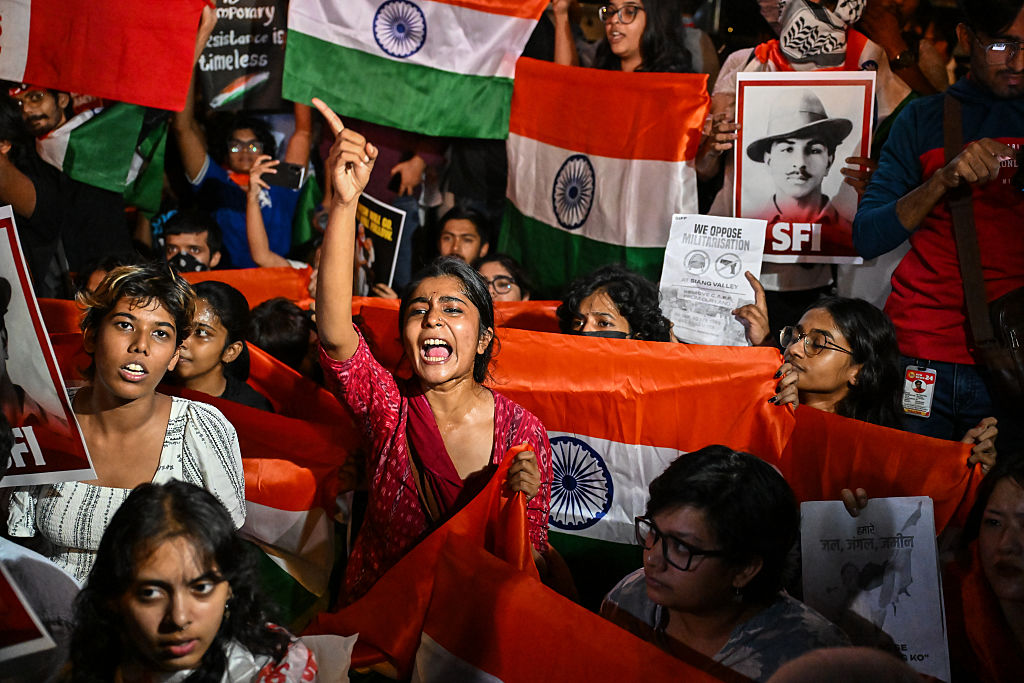
这些形形色色的抗议者认为当前时刻的赌注关乎生存:印度选票的神圣性,换言之,即民主的基本要素。整个十月,成千上万的人在德里和其他印度城市加入这项事业,他们的游行源于对一项正在进行的全国性改革国家选举体制行动的愤怒。
A nascent Gen-Z movement, Cockroach Janta Party, which organized protests over education and unemployment in Delhi in June and July and forced the resignation of India’s higher education minister, gave the call for the October protests. Young protestors answered with an insurrectionary energy in the summer and soon found support from a broader coalition comprised of opposition parties, social movements and other pillars of Indian civil society.
这项被称为“特别密集修订”的工作,据抗议者称,已导致超过1.3亿选民从选民名单中被删除。尽管选民名单定期修订,但这是首次有此类行动将举证责任置于公民身上,要求他们证明自己的资格,引发担忧:数百万合法选民,尤其是贫困和边缘群体,可能被剥夺投票权。
These assorted protesters see the stakes of the current moment as existential: the sanctity of the vote in India, the essential ingredient, in other words, of democracy. Throughout October thousands joined the cause in Delhi and other Indian cities, their marches spurred by anger directed against an ongoing national exercise to overhaul the country’s electoral.
为追究责任,他们一直要求印度首席选举委员贾亚内什·库马尔辞职,后者负责监督印度选举委员会——这一机构肩负在全国范围内举行选举并维护选举神圣性的职责。抗议者指责库马尔放弃了其宪法赋予的公正行事义务。在他们看来,这位高级官员安排事务的方式,有利于总理纳伦德拉·莫迪领导的印度人民党(BJP)的利益,执政当局否认这一指控。
Known as the Special Intensive Revision, the exercise has, according to the protestors, resulted in more than 130 million voters being removed from electoral lists. Although electoral rolls have been revised periodically, this is the first time such an exercise has placed the burden on citizens to establish their eligibility, raising fears that millions of legitimate voters, particularly the poor and marginalized, could be disenfranchised.
在因夏季教育抗议而动荡不安之后,印度政府这次以强制力回应,实际上将中央德里——首都的政治和行政核心、印度民众请愿抗议的场所——变成了一个军事驻地。10月10日,政府部署了数万名警察和准军事人员,限制互联网接入,拘留数千名抗议者,并试图阻止抗议者进入首都各地的公共空间。
Seeking accountability, they have been calling for the resignation of Gyanesh Kumar, the country’s chief election commissioner, who oversees the Election Commission of India, the body charged with conducting and safeguarding the sanctity of elections across the nation. The protestors accuse Kumar of abandoning his constitutional obligation to act impartially. In their telling, the mandarin has set the table in a way to favor the interests of Prime Minister Narendra Modi’s Bharatiya Janata Party, a charge denied by those in power.
镇压行动十分激烈。10月16日晚,印度社交媒体上弥漫着明显的恐慌感,一个紧迫的问题被反复提问:内哈·博拉在哪里?这位29岁的博士生、左翼活动家,已成为这些抗议活动中最善辩、最强有力的领导者之一,这些抗议动摇了莫迪政府,并且——尽管印度人民党领导人和其他党内机要人员竭力构建反叙事——已成为对莫迪声望和合法性的重大挑战。
Already shaken by the summer protests over education, this time the Indian government responded with coercive force, effectively turning central Delhi, the political and administrative heart of the capital, and the place where India goes to protest, into a garrison. On Oct. 10, it deployed tens of thousands of police and paramilitary personnel, restricted internet access, detained thousands of protesters, and sought to deny the protesters access to public spaces across the capital.
博拉在前往加入已聚集在首都康诺特广场——这一著名商业区——的数千名抗议者途中被警方拘留。抗议者挥舞国旗,重申要保护投票权和印度选举民主的神圣性。日落后数小时内,关于使用他们/她们代词的博拉下落没有任何消息。其律师称警方拒绝透露其所在位置。最终在午夜左右,律师在一家警察局找到了他们。
The crackdown was intense. On the night of Oct. 16, there was a palpable sense of panic on social media in India as an urgent question was asked repeatedly: Where is Neha Bora? A 29-year-old doctoral student and left-wing activist, Bora has emerged as one of the most articulate and formidable leaders of these protests, which have rattled Modi’s government and—despite valiant attempts to construct a counter narrative by BJP leaders and other party apparatchiks—become a significant challenge to his popularity and legitimacy.
博拉于周六上午获释后在推特上发文:“为民主和宪法而战不能被定为犯罪。”这句话简洁概括了推动众多印度人走上街头的情绪,即被剥夺了具有生存意义的东西的感受。一名抗议者对记者说:“如果他们再剥夺我们的投票权,我们还能剩下什么?”投票的力量抗议背后的情感冲动根源于现代印度民族国家的诞生。印度一直以在1950年1月26日宪法生效时采纳普遍选举权为荣。
Bora was detained by the police on their way to join the thousands of protesters who had converged on Connaught Place, a prominent commercial district in the capital, waving the national flag and reiterating demands to protect the right to vote and the sanctity of electoral democracy in India. For several hours after sunset, there was no news of the whereabouts of Bora, who uses they/them pronouns.
1952年举行的历史性首次大选中,所有年满21岁的印度人——不论种姓、宗教、性别、种族或财富——均拥有宪法保障的投票权。正如许多法律和宪法学者随后所评论的那样,这是一项巨大的成就,也成为现代印度理念的标志。
Their lawyers spoke about the police refusing to reveal their location. Eventually, around midnight, their lawyers located them at a police station.
因此,该国目前正经历动荡。莫迪政府可能正在逆转数十年的民主成果,将投票行为重塑为一种特权——由官僚酌情授予,或作为执政党的恩赐,而非宪法秩序所保障的一项权利。如今,每一位潜在选民都必须首先填写一份登记表格,随后许多人可能还需提供繁重的文件证据,如出生证明和学历记录,以确立其投票资格。数千万来自边缘群体的印度人要么缺乏文件记录,要么持有的文件充满错误,例如拼写错误,这使得他们更难通过任何官僚核实程序。
When Bora was released on Saturday morning, they tweeted, “Fighting for democracy and the Constitution cannot be criminalized.”It was a neat summation of the sentiment moving so many Indians to take to the streets, namely a sense of being robbed of something of existential proportions. “Now if they take away our right to vote,” a protester told a reporter, “what is left with us?”The power of the vote The emotional charge behind the protests has its roots in the birth of the modern Indian nation-state itself. India always took great pride in adopting universal franchise rights as the Constitution of India came into effect on Jan. 26, 1950. In its historic first general elections in 1952, every Indian above the age of 21, irrespective of caste, religion, gender, race or wealth, had their constitutionally guaranteed right to vote. It was, as many legal and constitutional scholars have since remarked, a colossal feat, and one that became a touchstone for the modern idea of India.
人们担心,直白地说,印度正被硬生生拽回一个更黑暗的时代——印度之所以能走出那个时代,在很大程度上归功于数十年来为确立其民主选举权的公信力、拓展其广度所做的努力。在20世纪50年代,印度是一个以农村为主的国家,约83%的人口生活在村庄,只有约17%居住在城市地区。其初建的民主制度面临着根深蒂固的种姓与权力等级制度。关于印度基层民主的早期记录描述了高种姓地主如何控制其低种姓依附者的选票,有时甚至替选民填好选票,只需选民按手印认证即可。
Hence the current upheaval in the country. The Modi government may be reversing decades of democratic gains by recasting the act of voting as a privilege, conferred at the discretion of bureaucrats or as a favor from the ruling party, rather than a right guaranteed by the constitutional order. Now, every prospective voter must first complete an enumeration form, and many may subsequently be required to produce onerous documentary evidence, such as birth certificates and educational records to establish their eligibility to vote. Tens of millions of Indians from marginalized communities either lack documentary records or possess documents that are riddled with mistakes such as spelling errors, making it harder for them to navigate any process of bureaucratic verification.
印度社会学先驱 M.N. 斯里尼瓦斯(M.N. Srinivas)指出,政客在拉票时并不把村民视为有自主意志的个体选民,而是把他们当作“票仓”的成员。政客们找上地主或社区领袖,由后者交出这些成块的选票,以换取政府给予的好处,从“为公交车和碾米厂发放许可证,到为其亲属争取医学院和技术学院的入学名额”。直到20世纪60年代,仍有数百万印度人无法行使宪法赋予的投票权。
The fear is that India is—to put it bluntly—being yanked back to a darker time, one from which it emerged in no small part because of the work done over decades to firmly establish the credibility and broaden the depth of its democratic franchise. In the 1950s, India was an overwhelmingly rural country, with around 83% of its population living in the villages and only about 17% in urban areas. Its nascent democratic system confronted entrenched social hierarchies of caste and power.
在印度东部的比哈尔邦,地主们动用手持棍棒的打手,把达利特人——即最受压迫的种姓群体的成员——挡在投票站之外。“我记得曾看到我所在种姓的人被拖出投票站,”比哈尔邦锡万县一位年长的达利特男子在接受印度新闻网站采访时回忆道。
Early accounts of grassroots democracy in India describe how higher-caste landowners controlled the votes of their lower-caste dependents, sometimes even marking ballots that the voters had to authenticate with their thumbprints.
1967年邦选举期间,由教师转变为活动人士的贾格迪什·马斯特(Jagdish Master)挑战地主对达利特人投票权的否决,他护送一群达利特人前往比哈尔邦博杰普尔县埃克瓦里村的一个投票站。地主的打手将他打得遍体鳞伤,把他赶了出去。他以武装游击队员的身份重返该村,招募达利特劳工和其他贫苦农民,发动了一场毛派风格的农村叛乱,这场叛乱在此后数十年间席卷了整个地区。
The pioneering Indian sociologist M.N. Srinivas showed how politicians campaigning for votes treated villagers not as individual voters with agency but as members of “vote banks.”Politicians approached landlords or community leaders to deliver these blocs of votes in return for favors from the government, from “licenses for buses and rice-mills to seats in medical and technological colleges for their kinsfolk.”And well into the 1960s, millions of Indians were still unable to exercise their constitutional right to vote. In the eastern Indian state of Bihar, landlords used club-wielding enforcers known as to keep Dalits, members of the most oppressed caste, out of polling booths. “I remember watching members of my caste being dragged out of a polling booth,” an elderly Dalit man in Bihar’s Siwan district recalled in an interview with , an Indian news site.
投票权在印度意识形态中的力量在“紧急状态”之后发生了根本性转变。紧急状态是指1975年6月至1977年3月期间,时任总理英迪拉·甘地暂停宪法权利,掌握无限权力,监禁反对派领袖并压制媒体。印度的大部分精英——官僚、商界人士、报纸编辑和电影明星——屈膝迎合甘地夫人的“秩序”和“纪律”承诺。财富和人脉为他们提供了免受国家迫害的保护。被剥夺选举权的印度贫民则遭受了不可计数的官僚和警察的滥权,从贫民窟拆迁到对男性的强制绝育,痛苦不堪。
During the state elections in 1967, Jagdish Master, a teacher turned activist, challenged the veto of the landlords over Dalit suffrage by escorting a group of Dalits to a polling booth in Ekwari, a village in Bihar’s Bhojpur district. The landlords’ henchmen brutally beat him and drove him out. He returned to the village as an armed guerrilla, recruiting Dalit laborers and other poor peasants in a Maoist-style rural insurgency that would flare across the region for decades.
1977年3月,紧急状态结束后举行的大选中,甘地夫人的国大党被人民决定性地击败,自1947年印度独立以来首次被赶下台。紧急状态期间滥用权力首当其冲的受害者——达利特人、穆斯林以及人口稠密的印度北部各邦的穷人——首次投票反对国大党,对其下台起到了重要作用。选票的力量逐渐迫使印度专横的官僚机构承认普通人的尊严和政治公民身份。
The power of the vote in Indian consciousness transformed radically after the “Emergency,” the period between June 1975 and March 1977 when Prime Minister Indira Gandhi suspended constitutional rights, assumed untrammeled powers, imprisoned opposition leaders and silenced the press. Much of India’s elite—bureaucrats, businessmen, newspaper editors and movie stars—bent the knee and welcomed Mrs. Gandhi’s promise of “order” and “discipline.”Wealth and connections offered protection from the state.
选民对甘地夫人违背印度国家与人民之间神圣契约的行为作出了裁决:人民赋予国家合法性,以换取他们的权利,包括国家对投票神圣性的保护。选民在主张了自己的权力之后,被证明难以再次被制服。正如政治理论家帕沙·查特吉所言,正是1977年甘地夫人和国大党的失败确立了“选票的能力”。
India’s poor, stripped of their electoral power, suffered terrible abuses of an unaccountable bureaucracy and police from slum demolitions to forced sterilization of men.
一场无声的革命:印度独立三十年后,穷人和边缘化群体恰当地掌控了自己的投票选择。紧急状态之后的岁月里,他们把选票用作保障生计的手段,或用作确保正义的工具。政客们不能再依靠地方保护人恐吓人们投票给他们,而必须在代表选民利益上展开竞争。20世纪80年代出现了新的竞争性政治,并导致——如查特吉所写——“一种此前从未被允许扰乱众所周知的权力走廊的秩序与安宁的大众诉求”的高涨。
In the general elections held in March 1977 after the end of the Emergency, Mrs. Gandhi’s Congress Party was decisively defeated by the people and tossed out of power for the first time since Indian independence in 1947. The principal victims of abuses of the Emergency—Dalits, Muslims, and the poor of the populous northern Indian states—voted against the Congress party for the first time and contributed significantly to its removal from power The power of the vote has gradually forced India’s high-handed bureaucracy to recognize the human dignity and political citizenship of ordinary people. The electorate delivered its verdict on Mrs. Gandhi’s breach of the sacred covenant between the Indian state and its people: the people confer legitimacy on the state in exchange for their rights, including its protection of the sanctity of the vote. Having asserted their power, voters proved difficult to subdue again. As the political theorist Partha Chatterjee put it, it was the 1977 defeat of Mrs. Gandhi and the Congress party that established the “capacity of the vote.”
到20世纪90年代,来自社会上被剥夺权利的种姓和达利特社区的政治领袖开始在人口稠密的印度北部比哈尔邦和北方邦掌权。
A silent revolution India’s poor and marginalized took proper control of their voting choices three decades after independence. In the years after the Emergency, they leveraged the vote as a means to a secure livelihood or as a tool for ensuring justice. Politicians could no longer rely on local patrons to intimidate people into voting for them and had to compete on representing their interests. A new competitive politics emerged in the 1980s and led to an upsurge, as Chatterjee wrote, “of popular demands of a kind that had never before been allowed to disturb the order and tranquility of the proverbial corridors of power.”
政治学家克里斯托夫·雅弗雷洛曾令人印象深刻地将其描述为“静默革命”。这场由历史上受压迫群体的选票带来的革命,并未真正改变该地区的经济和社会结构。但它改变了日常的权力关系。发展研究学者因德拉吉特·罗伊回忆起2000年代末他在比哈尔邦达利特人中进行田野调查时经常听到的一句话:“发展已经发生,变化已经到来。今天,我们可以直视地主的眼睛,平等地说话。”
By the 1990s, political leaders from socially disenfranchised castes and Dalit communities were taking power in the populous, northern Indian states of Bihar and Uttar Pradesh. Political scientist Christophe Jaffrelot memorably described it as “the silent revolution.”This revolution, ushered in by the votes of the historically oppressed communities, did not quite transform the economic and social structures of the region. But it changed the everyday relations of power. Indrajit Roy, a scholar of development studies, recalled a refrain he heard frequently during his fieldwork among Dalits in Bihar in the late 2000s: “There has been development, change has come. Today, we can look the landlord in the eye and speak as equals.”
投票银行由此变成了集体政治表达的载体。边缘化群体已经善于汇集选票以获取政治好处、推进共同利益。他们选择自己的庇护人,更愿意由本种姓的领袖代表他们的利益,并代表他们与国家谈判。
Vote banks had thus turned into vehicles of collective political assertion. Marginalized communities had become adept at pooling their votes to secure political favors and advance their shared interests. They chose their own patrons, preferring their own caste leaders to represent their interests and negotiate with the state on their behalf.
随着时间的推移,投票银行的庇护主义政治与根深蒂固的腐败文化联系在一起。这为莫迪2014年成功的全国竞选铺平了道路。在竞选中,他将自己塑造成一个民粹主义强人,代表着所有印度人对“发展”的渴望,同时将国大党和地方政党描绘成受制于各自投票银行。莫迪对投票银行政治的抨击还带有更为险恶的指控:历届政府为了选票而安抚约占人口14%的印度穆斯林少数群体,牺牲了国家利益。
Over time, the clientelist politics of vote banks became associated with an entrenched culture of corruption. This helped pave the way for Modi’s successful national campaign in 2014, in which he cast himself as a populist strongman who embodied the aspirations for “development” of all Indians while portraying the Congress and regional parties as beholden to their respective vote banks. Modi’s attacks on vote bank politics also carried a more sinister charge: that successive governments had appeased India’s Muslims minority, which accounts for around 14% of the population, for their votes at the expense of the national interest.
孟加拉国与印度西孟加拉邦接壤,莫迪把最尖锐、最具排外色彩的矛头对准了西孟加拉的穆斯林。他在2014年竞选期间给他们扣上“孟加拉国人”和“非法移民”的帽子,为至今仍在持续的污名化定下了模板。在一次煽动性的竞选演讲中,莫迪发出了不祥的警告:“5月16日(2014年大选结果公布之日)之后,这些孟加拉国人最好收拾好行李做好准备。”
Bangladesh borders the Indian state of West Bengal and Modi reserved his sharpest, xenophobic barbs for Bengal’s Muslims, whom he tarred during his 2014 campaign as “Bangladeshi” and “illegal immigrants,” establishing a template for their vilification that persists to this day. In an inflammatory campaign speech, Modi issued an ominous warning: “After May 16 [the day of the results of the 2014 elections], these Bangladeshis better be prepared with their bags packed.”
危险的排斥 莫迪政府正是借“非法孟加拉国穆斯林”这一幽灵,推动在印度大多数邦修订选民名册。印度内政部长阿米特·沙阿此前曾将孟加拉国移民比作“白蚁”,他在回应持续不断的抗议时称这些抗议是“保护渗透者的行动计划”。目前没有可靠估计表明有多少孟加拉国移民生活在印度。2016年,莫迪政府的一名部长在未援引任何来源的情况下告诉议会,印度境内约有2000万“来自孟加拉国的非法移民”。政府后来承认,它没有关于印度非法移民人数的准确数据。
A dangerous exclusion The Modi government invoked that very specter of the “illegal, Bangladeshi Muslim” to push through revisions to electoral rolls across most Indian states. India’s home minister, Amit Shah, who had earlier likened Bangladeshi immigrants to “termites,” responded to the ongoing protests by calling them an “action plan to protect infiltrators.”There are no reliable estimates of how many Bangladeshi immigrants live in India. In 2016, a minister of the Modi government told the parliament, without citing a source, that the country was home to some 20 million “illegal immigrants from Bangladesh.”The government later acknowledged that it had no accurate data on the number of illegal immigrants in India.
然而,印度政府却利用关于“非法”孟加拉国人的毫无根据的猜测,颠覆了该国选民登记制度的基本逻辑,将确保登记的责任从选举委员会转移到了选民本人身上。此前,确保每位公民被纳入选民名册是选举委员会的职责。
Yet the Indian government has used unfounded speculation about “illegal” Bangladeshis to overturn the fundamental logic of the country’s electoral registration system, shifting the burden of ensuring registration from the Election Commission to the voter herself. The commission was responsible for ensuring that every citizen made it onto the electoral rolls.
这项行动已经对穷人、移民、宗教少数群体和女性造成了不成比例的剥夺选举权影响,并注定将继续造成这种影响。“比哈尔邦被从名单中剔除的选民大多在农村地区,”退役少将阿尼尔·维尔马(Anil Verma)说,他领导着“民主改革协会”,这是一个曾在最高法院对选民名册修订提出质疑的非营利组织。“受影响最严重的是穷人和边缘群体——他们没有证件。”
The exercise has already disproportionately disenfranchised the poor, migrants, religious minorities, women—and is bound to continue doing so. “The majority of voters in Bihar who were excluded from the list were in rural areas,” said retired Maj. Gen. Anil Verma, who heads the Association for Democratic Reforms, a nonprofit group that challenged the electoral rolls revisions in the Supreme Court. “Those worst affected were the poor and the marginalized—they had no documents.”
反对党还指控,选民名册修订使选举局势向印度人民党(BJP)倾斜,帮助该党在今年早些时候举行的西孟加拉邦选举中首次赢得该邦政权。公共政策研究机构“萨巴尔研究所”(SABAR Institute)的一项分析给这一指控提供了一定的可信度:从西孟加拉邦选民名册中删除的908万选民中,不成比例地来自当时执政的全印 Trinamool Congress(全印草根国大党)控制的选区或穆斯林人口众多的选区。
Opposition parties have also alleged that the electoral roll revisions tilted the electoral field in the BJP’s favor in the West Bengal election held earlier this year, helping the party win power in the state for the first time. An analysis by the SABAR Institute, a public policy research institute, lent some credence to that charge: a disproportionate share of the 9.08 million voters removed from West Bengal’s electoral rolls came from constituencies held by the then-ruling Trinamool Congress or those with large Muslim populations.
选举委员会否认删除行为具有政治动机,辩称其采用统一标准,剔除已死亡、重复登记或已永久迁居选民的记录。但这一说法难以与某些群体在部分选区经裁决程序后发布的补充名单中被删除者中占比不成比例这一事实相协调。例如,尽管穆斯林约占西孟加拉邦南迪格拉姆选区人口的23%,但萨巴尔研究所的研究发现,他们却占选举委员会为该选区发布的七份补充名单中被删除人数的95.5%。
The Election Commission has denied the charge that the deletions were politically motivated, arguing that it applied uniform criteria to remove entries for voters who had died, were registered more than once or had permanently relocated. But that claim is difficult to reconcile with the disproportionate representation of certain groups among those deleted from supplementary lists issued for some constituencies after an adjudication process. For instance, although Muslims make up around 23% of the population of Nandigram, a constituency in West Bengal, the SABAR Institute study found that they accounted for 95.5% of the deletions across seven supplementary lists released by the Election Commission for the constituency.
对于那些平等公民身份未被国家机构充分承认的印度人来说,投票具有近乎生存性的意义。印度人将投票视为对自身存在的确认。如果投票不再是人民自由给予或收回的礼物,而变成了由国家控制的资源,普通选民便再次沦为依赖政治精英恩惠的请愿者。
Voting carries an almost existential significance for Indians whose equal citizenship has not been fully recognized by the institutions of the state. Indians see the vote as an affirmation of their existence. If the vote is no longer a gift freely given or withdrawn by the people but a resource controlled by the state, it reduces ordinary voters once again to supplicants dependent on the favor of political elites.
选举制度修订和大规模删除选民引发了如此广泛的愤慨,因为许多印度人将其视为对其公民身份的攻击,以及对他们通过漫长、艰辛斗争赢得的社会认同的威胁。许多印度人或许原谅了莫迪的诸多失误,但他们坚决不允许他贬低他们的投票权力。
The electoral revisions and mass deletion of voters have provoked such widespread revulsion because many Indians see it as an assault on their identity as citizens and a threat to the social recognition they have won through a long, arduous struggle. Many Indians might have forgiven Modi for his numerous missteps but they are determined not to let him devalue their voting power.
我们这些年轻人 在德里设有路障的街道上游行的年轻抗议者,带着一种切实可感的感觉,仿佛正身处一个历史时刻。对反抗该国昔日英国殖民统治的“退出印度运动”以及“紧急状态”时期抗议活动的提及已变得司空见惯。对过去里程碑式事件的记忆,提供了一种审视当下的视角。未来似乎因集体行动而敞开变革的大门。这种转折点的感觉赋予了个人行动更宏大的目的,并驱使抗议者去对抗一支不惜用一切必要手段清场的警察力量。
We that are young The young protesters moving through Delhi’s barricaded streets carry a palpable sense that they are living through a historical moment. References to the Quit India movement against the country’s erstwhile British colonizers and the protests around the Emergency have become commonplace. Memories of seminal events of the past offer a lens through which to consider the present. The future seems open to change through collective action. This sense of a turning point imbues individual actions with a larger purpose and drives protesters to confront a police force intent on clearing the streets by whatever means necessary.
10月9日,即德里实施封锁的前一天,博拉援引印度反抗英国帝国主义的斗争,谴责对抗议组织者的预防性拘留。“历史正在重演。就像1942年,逮捕领袖无法阻止‘退出印度运动’;这场运动也不会停止,”博拉说。“这无异于全国处于公开的紧急状态。”年轻人对教育和就业的愤怒、对专制主义的恐惧,以及对选票神圣性的担忧,这三者的汇聚,对莫迪政府构成了严峻挑战。
On Oct. 9, a day before Delhi was placed under a lockdown, Bora invoked India’s struggle against British imperialism to denounce the pre-emptive detention of protest organizers. “History is repeating itself. Just like in 1942, the arrest of leaders could not stop the Quit India movement; this movement will also not stop,” Bora said. “This is nothing but a state of open emergency in the country.”The convergence of young people’s anger over education and employment, fears of authoritarianism, and concern for the sanctity of the vote poses a serious challenge to the Modi government.
这可能锻造出一个广泛的大众联盟,将失业青年、城市贫民、达利特和宗教少数群体团结在一起,共同挑战政府的合法性。除非政府在选民名册修订问题上退让,否则持续的抗议可能会消耗其政治资本。
It could forge a broad popular coalition of unemployed young people, urban poor, Dalits and religious minorities, united in challenging the legitimacy of the government. Unless the government retreats on electoral roll revisions, sustained protests could drain its political capital.
印度民主的一大成就在于,即便是最贫穷的公民,也已证明善于识别何时其选票的力量正被夺走,衡量后果并组织起来抵抗。印度政府即便未能提供正常运转的学校或体面的就业,仍能保持其合法性。但如果同时侵犯选票的神圣性,则无法做到这一点。
One of Indian democracy’s great achievements is that even its poorest citizens have proved adept at recognizing when the power of their vote is being wrested away, gauging the consequences and organizing to resist. A government in India can retain its legitimacy despite failing to provide functioning schools or decent employment. It cannot do so if it also violates the sanctity of the vote.