
从摩根资产管理到忠意保险和Ninety One SA的投资者正在大举买入新兴市场债券,无视美国国债收益率的飙升——这在过去本会令他们纷纷撤离。
Investors from JPMorgan Asset Management to Generali and Ninety One SA are loading up on emerging-market debt, defying a surge in Treasury yields that would once have sent them running for the exits.
根据美国银行基于EPFR Global的最新数据,新兴市场债券基金已连续12周录得资金净流入,而美国银行本月对投资者的调查显示,即使大多数美国国债收益率已突破5%,受访者仍将新兴市场股票列为其首选交易之一。
Emerging bond funds have drawn 12 straight weeks of inflows, according to the latest Bank of America Corp. data based on EPFR Global, while investors surveyed by BofA this month named emerging stocks as one of their top trades even as most US yields have topped 5%.
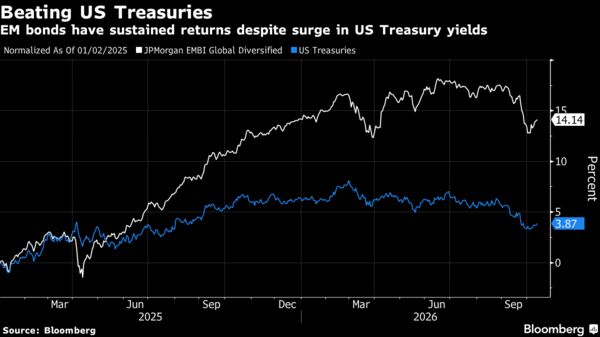
历史上,面对美国货币紧缩、国债收益率上升以及欧洲债务危机再度爆发的威胁,新兴市场资产往往会崩盘。但这一次,投资者越来越多地将这些因素引发的疲软视为增加敞口的机会。事实上,自去年初以来,新兴市场债券的回报率几乎是美国国债的四倍。
Historically, EM assets buckled when faced with US monetary tightening, rising Treasury yields and the threat of another European debt crisis. This time though, investors are increasingly using weakness triggered by those factors as opportunities to add exposure. In fact, returns from EM bonds are nearly four times those from Treasuries since the start of last year.
这是因为当前全球固定收益市场的恐慌更多聚焦于发达国家的债务负担和预算赤字,这推高了美国、欧元区和日本的借贷成本。相比之下,发展中国家的财政状况总体看起来更健康。
This is because the current bout of global fixed-income anxiety is focused more on rich nations’ debt burdens and budget deficits, which helps drive up US, euro region and Japanese borrowing costs. In contrast, developing countries’ fiscal profiles generally look healthier.
摩根资产管理固定收益首席投资官Iain Stealey在伦敦的一场投资者会议上表示:“我只是觉得人们配置的新兴市场资产还不够。”他将该板块描述为该公司4.3万亿美元投资组合中“最具建设性的配置”之一,并补充称公司将“继续看到资金部署到那里。”
“I just don’t think people own enough emerging markets,” Iain Stealey, chief investment officer for fixed income at JPM Asset Management, told a investor conference in London. He described the sector as among the “most constructive allocations” across the $4.3 trillion firm’s portfolios, adding that the firm will “continue to see assets deployed there.”
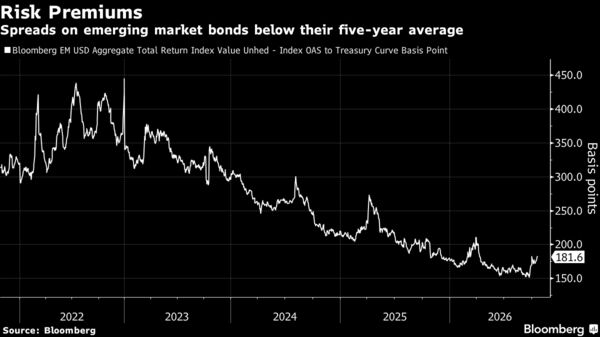
尽管新兴市场股票和债券指数今年跑赢了发达市场同类指数,Stealey预计还将有更多涨幅,因为“人们正在寻找方法,也许能退出发达市场政府债券。”这种持续的转换有助于解释,为什么即使投资者抛售美国国债,今年投资者持有新兴市场债券而非美国国债所要求的额外收益率几乎未变。
While emerging stock and bond indexes have outperformed developed-market peers this year, Stealey expects more gains as “people are looking to find ways of getting, maybe, out of developed market governments.”This ongoing switch helps explain why the extra yield investors demand to hold emerging bonds instead of Treasuries has barely budged this year even as investors dumped US bonds.
阅读:油价飙升与战争之后,新兴市场可抵御美联储风险 另一个重大转变是,投资者越来越多地根据新兴市场债务自身的优劣来判断,而不再主要将其视为相对于美国国债的额外相对收益。
Read: Emerging Markets Can Weather Fed Risk After Oil Jump and War Another big shift is that investors are increasingly judging EM debt on its own merit, not mainly as a relative additional yield over Treasuries.
“过去18个月我们做对的一件事,就是没有把美国国债作为我们的估值指标,”Ninety One Asset Management固定收益联席首席投资官Peter Kent表示,该公司近期增加了新兴市场债务敞口。“如果那样做了,当利差变得相当窄时,你会在八个月前就停止买入新兴市场债券。”Generali Asset Management全球新兴市场策略师Guillaume Tresca表示,当发达世界正在应对高企的债务水平时,许多较贫穷国家已强化其经济和政策框架,使其更有能力承受利率冲击。
“The one thing we’ve done well over the last 18 months is not use Treasuries as our valuation metric,” said Peter Kent, co-chief investment officer of fixed income at Ninety One Asset Management, which recently added emerging debt exposure. “If you had, you would have stopped buying EM eight months ago, when spreads got quite tight.”While the developed world grapples with elevated debt levels, many poorer nations have strengthened their economic and policy frameworks, leaving them better equipped to withstand interest-rate shocks, said Guillaume Tresca, global EM strategist at Generali Asset Management.
他说:“新兴市场国家的全球信用评级明显呈上升趋势。而在另一方面,发达市场国家(如法国)却引发了许多疑问。”
“The global credit rating of EM countries is on the upward trend clearly. While on the other side, there have been many questions on developed-market countries, like France,” he said.
据UBS Group AG策略师称,新兴市场的平均预算赤字小于发达经济体。大多数政府还通过将更多借贷转向本国货币,降低了对美元的脆弱性。
Budget deficits are smaller on average in emerging markets than in developed economies, according to strategists at UBS Group AG. Most governments have also reduced their vulnerability to the dollar by shifting more borrowing into their own currencies.

据Aberdeen Investments的Milana Muratova称,许多新兴市场央行也更早、更激进地采取行动遏制物价上涨,使实际收益率相对较高。这帮助债券和货币经受住了美元的升值。
Many emerging-market central banks also moved earlier and more aggressively to tame price growth, leaving inflation-adjusted yields relatively high, according to Milana Muratova, at Aberdeen Investments. That’s helped bonds and currencies withstand the dollar’s rise.
Muratova表示,这并不意味着新兴市场货币对美元走强免疫,“但这确实凸显了一个重要观点:国内基本面的重要性日益凸显。”
That does not make emerging currencies immune to dollar strength, “but it does underline an important point: domestic fundamentals increasingly matter,” Muratova said.
尽管出现反弹,但发展中世界仍存在压力区域。印度已采取一系列非常规措施支撑其货币,而包括莫桑比克、斯里兰卡和厄瓜多尔在内的几个国家的美元借贷成本已飙升至接近10%的水平。
Despite the rally, pockets of stress remain across the developing world. India has deployed a series of extraordinary steps to support its currency, while dollar borrowing costs have surged toward the 10% mark for several countries, including Mozambique, Sri Lanka and Ecuador.
对于范埃克(VanEck)主动新兴市场债券部门负责人埃里克·法因(Eric Fine)来说,印度、菲律宾和泰国是当地债券收益率不够高的市场。他更青睐委内瑞拉、厄瓜多尔、玻利维亚、尼日利亚和加纳等国更具风险但收益率更高的美元债券。
For Eric Fine, head of active emerging markets debt at VanEck, India, Philippines and Thailand are markets where local debt yields are just not high enough. He favors instead the riskier, but higher-yielding dollar bonds of countries like Venezuela, Ecuador, Bolivia, Nigeria and Ghana.
据州街环球投资顾问(State Street Global Advisors)高级投资策略师德斯蒙德·劳伦斯(Desmond Lawrence)表示,新兴市场债券今年表现之所以如此出色,还因为发展中国家的举债能力低于发达经济体,这有助于抑制了它们的举债狂潮。
EM debt has performed so well this year also because developing nations have had a lower capacity for taking on debt than advanced economies, which had helped curtailed their debt binges, according to Desmond Lawrence, senior investment strategist at State Street Global Advisors.
“整个动态正在发生变化,”劳伦斯说。新兴市场债券“将是一项能帮你度过未来几个季度的资产。它的韧性非常出色。”What to
“The whole dynamic is changing,” Lawrence said. EM debt “will be an asset that’ll get you through the next few quarters. Its resilience has been remarkable.”What to