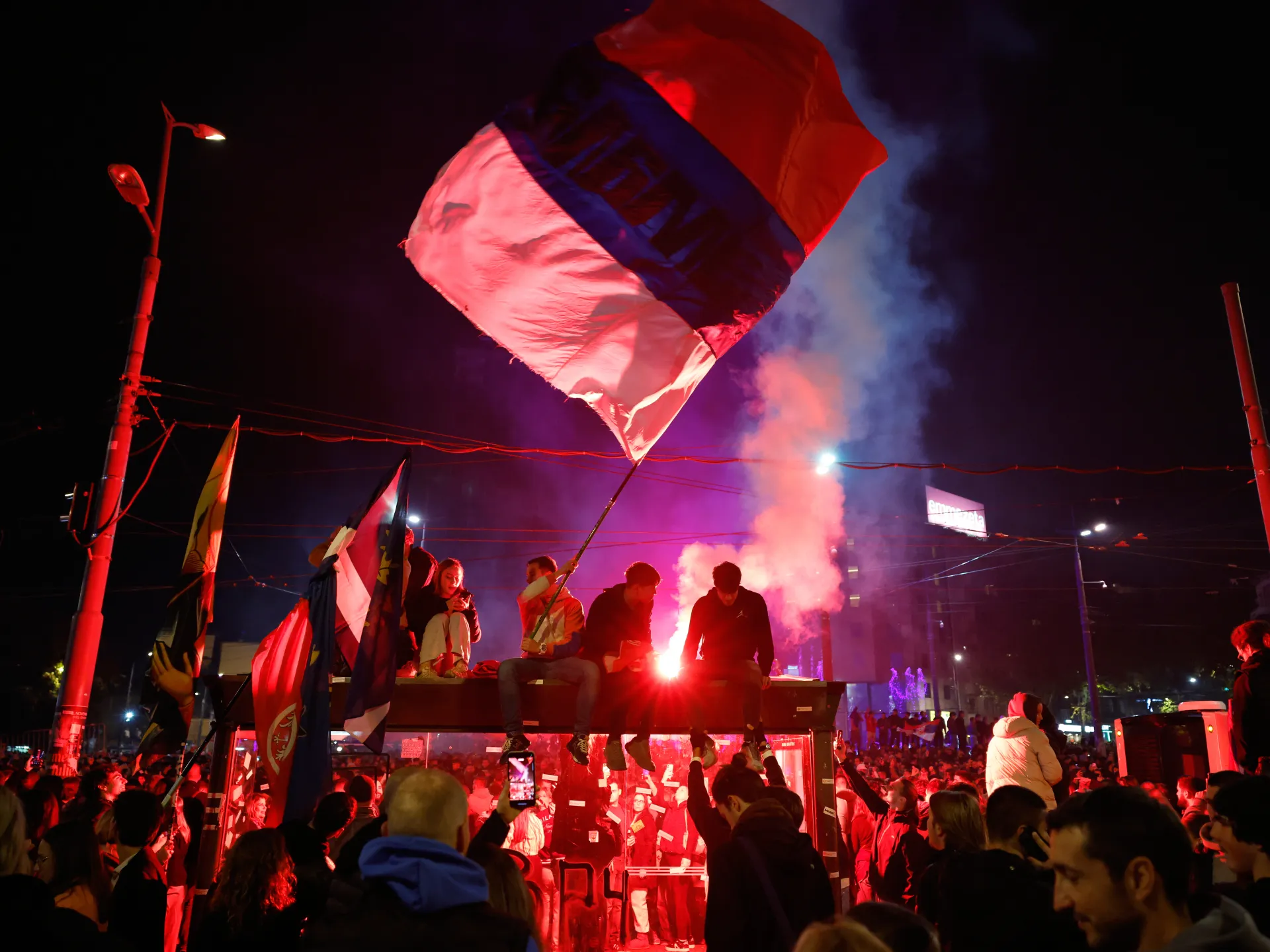
塞尔维亚在亚历山达尔·武契奇及其塞尔维亚进步党(SNS)长达14年的威权统治后,迎来了一个分水岭时刻。
Serbia has reached a watershed moment following 14 years of authoritarian rule by Aleksandar Vucic and his Serbian Progressive Party (SNS).
周日的选举为反对派“学生名单”带来了历史性胜利,终结了武契奇和进步党行使/强制实施了14年的政治统治。
Sunday’s election delivered a historic victory for the opposition Student List, ending the political dominance that Vucic and the SNS had exercised/enforced for 14 years.
随着贝尔格莱德为动荡的过渡期和12月即将到来的总统选举做准备,国际观察员和地区邻国一直在询问,武契奇的离任是否会促使塞尔维亚外交政策发生转变。
As Belgrade prepares for a turbulent transition and the upcoming presidential elections in December, international observers and regional neighbours have been asking whether Vucic’s departure will prompt a shift in Serbia’s foreign policy.
然而,尽管国际分析人士往往预期威权政权倒台时会迅速向西方进行外交政策转向,但专家警告称,内部巩固将占据当务之急,任何转型都将是渐进的。
However, while international analysts often anticipate a quick foreign policy pivot toward the West whenever an authoritarian regime falls, experts warn that internal consolidation will take immediate priority and any transformation will be gradual.
国内清理优于地区重置 进步党的失败在西巴尔干地区带来了谨慎乐观与不确定性交织的局面。由于武契奇的民族主义言论,塞尔维亚与波斯尼亚和黑塞哥维那、克罗地亚、黑山和科索沃的关系常常紧张。
Domestic cleanup before regional reset SNS’s defeat has brought a mixture of cautious optimism and uncertainty across the Western Balkans. Serbia’s relations with Bosnia and Herzegovina, Croatia, Montenegro and Kosovo have often been frayed by Vucic’s nationalistic rhetoric.
塞尔维亚诺维萨德区域主义中心主任亚历山大·波波夫告诉半岛电视台,地区关系迅速重置的可能性不大。
Aleksandar Popov, director of the Centre for Regionalism in Novi Sad in Serbia, told Al Jazeera that a rapid reset in regional relations was unlikely.
“这些问题不会立即列入议程,”他说,指的是与塞尔维亚邻国的关系。
“These questions will not be on the agenda immediately,” he said, referring to relations with Serbia’s neighbours.
他说,新当局将首先不得不解决国内问题,包括应对一个“俘获了所有民主机构”的体制,以及司法、检察机关、警察和媒体领域存在的问题。
The new authorities will first have to tackle domestic problems, he said, including dealing with a system that has “captured all democratic institutions”, as well as problems in the judiciary, prosecution service, police and media sector.
波波夫说,“家庭大扫除”将优于“解决与邻国的问题”,尽管他指出,即将离任的政权已尽一切可能破坏地区关系。
“Tidying up at home” will take priority before “solving problems with the neighbours”, Popov said, despite noting that the outgoing regime had done everything possible to undermine regional relations.
尽管与克罗地亚的关系“并未冻结”,但也“并非邻国之间应有的……样子”,其特点是频繁的尖锐措辞。
While relations with Croatia are “not frozen” neither are they “the way they should … be between neighbours”, being marked by frequent sharp words.
在塞尔维亚近期爆发大规模抗议活动之际,武契奇指责萨格勒布组织了一场“颜色革命”。
Amid recent mass protests in Serbia, Vucic accused Zagreb of organising a “colour revolution”.
他还表示,“与黑山的关系受到破坏,与波斯尼亚和黑塞哥维那的问题仍未解决。”
In addition, “relations with Montenegro are disrupted and issues with Bosnia and Herzegovina remain unresolved,” he said.
波波夫指出,在稳定地区的问题上,克罗地亚是最棘手的案例,他提到随着塞尔维亚进步党(SNS)与克罗地亚执政党克罗地亚民主联盟(HDZ)发生冲突,双边关系恶化,后者源自类似的民族主义-民粹主义阵营。
Stabilising the region Croatia is the thorniest case, Popov suggested, noting that relations deteriorated as the SNS clashed with Croatia’s ruling Croatian Democratic Union (HDZ), which stems from a similar nationalist-populist stable.
他说:“萨格勒布会向塞尔维亚射出毒箭,这给了贝尔格莱德反击的借口。”他形容这是一个“靠制造内部和外部敌人运转的体制”。
“Zagreb would fire a poisoned arrow at Serbia and that gave Belgrade an argument to retaliate,” he said, describing a system that “functioned on the production of internal and external enemies”.
与此同时,他辩称,在公开敌视的背后,双方在波黑问题上存在一种默契的趋同,贝尔格莱德支持塞族共和国领导人米洛拉德·多迪克,而萨格勒布则倾向于建立第三个实体。
Meanwhile, behind the public hostility, lay a quiet convergence on Bosnia and Herzegovina, he argued, with Belgrade backing Republika Srpska leader Milorad Dodik and Zagreb favouring a third entity.
他表示希望由专家和公民领袖领导的塞尔维亚新政府,能致力于稳定地区,并重燃塞尔维亚加入欧盟的希望。
He expressed hope that a new government in Serbia led by experts and civic leaders, would work towards stabilising the region and revive Serbia’s hopes of joining the European Union.
波波夫说:“前政府破坏了欧盟一体化进程,欧盟不会接受一个没有良好睦邻关系的国家。新政府的任务将是修复那些受损的关系。”
“The previous government sabotaged EU integration and the EU will not accept a country without good neighbourly relations. The new government’s task will be to repair those damaged ties,” Popov said.
俄罗斯和乌克兰 在紧邻地区之外,全球大国正密切关注贝尔格莱德。
Russia and Ukraine Beyond the immediate neighbourhood, global powers are closely watching Belgrade.
在武契奇领导下,塞尔维亚维持着微妙的平衡术,尽管面临欧盟的巨大压力,仍拒绝对俄罗斯实施制裁,同时却允许弹药间接流向乌克兰。
Under Vucic, Serbia maintained a delicate balancing act, refusing to impose sanctions on Russia despite heavy pressure from the EU, while simultaneously allowing ammunition to flow indirectly to Ukraine.
伦敦国王学院外交政策讲师武克·武克萨诺维奇向半岛电视台预测,在塞尔维亚公共政策的所有要素中,外交政策将在即将到来的政府变动中变化最小。
Of all elements of Serbian public policy, foreign policy will transform the least under the forthcoming governmental changes, Vuk Vuksanovic, a lecturer in foreign policy at King’s College London, predicted to Al Jazeera.
他说:“塑造塞尔维亚外交政策的许多国际和国内结构将保持原状。”他补充说,莫斯科从未完全信任武契奇,而是将他视为“熟悉的魔鬼”。
“Many international and domestic structures that shape Serbian foreign policy will remain in place,” he said, adding that Moscow never fully trusted Vucic, but viewed him instead as “the devil they knew”.
俄罗斯的影响力将受到打击,武契奇控制的小报和媒体将不再无批判地歌颂莫斯科,情报合作也将降级,他说,但新政府不太可能一夜之间采取鹰派立场。
Russian influence will take a blow, with the end of uncritical glorification of Moscow in Vucic-controlled tabloids and media and intelligence cooperation to be downgraded, he said, but the new government is unlikely to adopt a hawkish stance overnight.
他断言,与俄罗斯的关系仍可服务于塞尔维亚的利益。“该国仍需优惠天然气价格,科索沃争端依然未解,部分公众对西方依然感到幻灭。”“新塞尔维亚政府不会看到加入欧盟制裁或对莫斯科采取鹰派立场的价值,”武克萨诺维奇继续说道。
Serbian interests can continue to be served by ties with Russia, he asserted. “The country still needs preferential gas prices, the Kosovo dispute remains unresolved and parts of the public remain disillusioned with the West.”“The new Serbian government will not see value in joining EU sanctions or adopting a hawkish stance toward Moscow,” Vuksanovic continued.
“关于乌克兰问题,塞尔维亚将维持不承认克里米亚和顿巴斯被吞并的政策。然而,弹药交付问题存疑,因为反对派视武契奇向基辅出售武器为一种愤世嫉俗的伎俩,旨在换取西方对其国内统治的容忍。”
“Regarding Ukraine, Serbia will maintain its policy of not recognising the annexation of Crimea and Donbas. However, there is a question mark over ammunition deliveries, as the opposition viewed Vucic’s weapons sales to Kyiv as a cynical ploy to buy Western tolerance for his domestic rule.”
与以色列的关系 塞尔维亚外交关系的另一个关键维度是其与以色列的密切关系。在武契奇领导下,塞尔维亚与总理本雅明·内塔尼亚胡的政府建立了强有力的伙伴关系,其标志是军贸和技术交流。
Ties with Israel Another critical dimension of Serbia’s external relations is its close relationship with Israel. Under Vucic, Serbia established a strong partnership with Prime Minister Benjamin Netanyahu’s government, marked by arms trade and technology exchanges.
外交政策分析师博什科·亚克西奇告诉半岛电视台,虽然关系不会断裂,但近期有争议的协议将面临审查。
Bosko Jaksic, a foreign policy analyst, told Al Jazeera that while ties will not be severed, recent controversial agreements will face scrutiny.
“新政府没有理由放弃与以色列的合作,但肯定会重新审视新近签署的合同——主要是关于塞尔维亚向以色列出口弹药和以色列向塞尔维亚出口监控设备的合同,”亚克西奇说。
“The new government has no reason to abandon cooperation with Israel, but it will certainly re-examine newly concluded contracts – primarily those concerning Serbian ammunition exports to Israel and Israeli surveillance equipment exports to Serbia,” Jaksic said.
该分析师还指出,在今年早些时候匈牙利的维克托·欧尔班下台后,内塔尼亚胡政府在欧洲又失去了一个“专制、民族主义盟友”。然而,塞尔维亚未来的立场也将取决于耶路撒冷的政治发展。
The analyst also noted that Netanyahu’s government has lost another “authoritarian, nationalist ally” in Europe after Viktor Orban’s removal in Hungary earlier this year. However, Serbia’s future stance will also depend on political developments in Jerusalem.
“以色列如何定位自己以对待贝尔格莱德的新当局,很大程度上取决于以色列自身大选的结果,”亚克西奇补充道。
“How Israel positions itself toward the new authorities in Belgrade depends largely on the outcome of Israel’s own elections,” Jaksic added.
从更广泛的地缘政治格局来看,他强调塞尔维亚的外交政策必将接受重新审视。
Multiple chairs Looking at the broader geopolitical alignment, he emphasised that Serbia’s foreign policy will inevitably undergo a review.
他表示:“‘坐多把椅子’的政策给塞尔维亚带来的弊大于利,肯定会被重新评估”,并认为贝尔格莱德加强与欧盟关系是现实的预期。
He suggested that “the policy of ‘sitting on multiple chairs,’ which brought Serbia more harm than good, will certainly be re-evaluated”, and that it is realistic to expect Belgrade to strengthen ties with the EU.
但所有分析人士一致认为,随着塞尔维亚步入新的政治时代,国际社会应预期将迎来一段激烈的内部改革期,而非突然的地缘政治重组。
But as Serbia enters a new political era, the international community should expect a period of intense internal reform rather than sudden geopolitical realignments, all of the analysts agree.