日本央行的基础通胀指标飙升至三年来最高,远超该行2%的目标,支持当局继续加息的理由。
The Bank of Japan’s gauge of underlying inflation surged to the highest in three years, well above the bank’s 2% target, backing the case for authorities to continue raising interest rates.
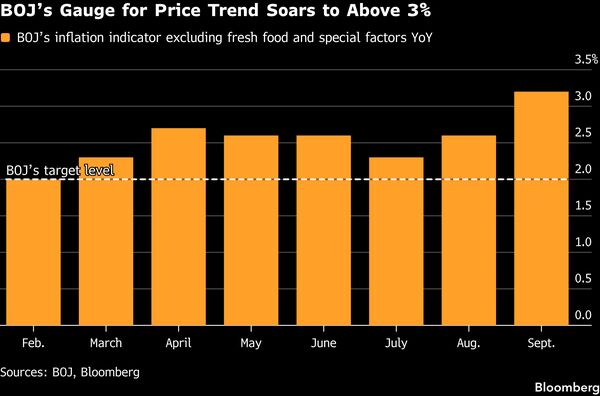
根据日本央行周二发布的一份报告,9月份剔除生鲜食品和特殊因素后的消费者价格同比上涨3.2%,涨幅较上月的2.6%有所加快。
Consumer prices excluding fresh food and special factors rose 3.2% in September from a year earlier, with the pace quickening from 2.6% in the previous month, according to a BOJ report released Tuesday.
这一结果可能会巩固市场对近期加息的预期,此前日本央行在9月将借贷成本上调至1.25%,收紧步伐加快至1990年以来最快。日本央行普遍预计将在周五的货币政策会议上维持政策设定不变,即使许多人预测它可能会宣布基础通胀终于达到了2%目标——距离该目标确立已过去13年多。
The outcome is likely to firm up speculation over a near-term increase after the bank accelerated the pace of tightening to the fastest since 1990 when it lifted borrowing costs to 1.25% in September. The BOJ is widely expected to hold its policy settings steady at a board meeting on Friday even as many predict it may declare that underlying inflation has finally reached its 2% target — more than 13 years after that target was established.
根据彭博社的一项调查,超过80%的经济学家预测央行将在12月会议上上调基准利率。没有受访经济学家预期本周五会有行动。
More than 80% of economists predict the central bank will raise the benchmark rate at its December meeting, according to a Bloomberg survey. No surveyed economists anticipate a move this Friday.
数据中的特殊因素包括政府对汽油和公用事业的补贴。旨在缓解生活成本危机的此类措施减缓了消费者通胀的步伐。政府数据上周显示,9月剔除生鲜食品后的消费者价格上涨2.1%。
Special factors for the data include government subsidies for gasoline and utilities. Such steps aimed at easing the cost of living crisis slow the pace of consumer inflation. Government data last week showed that consumer prices excluding fresh food advanced 2.1% in September.
日本近期的数据支持了日本央行继续提高基准利率的行动。周二早些时候,日本服务业生产者价格加快上涨,部分原因是中东冲突的影响。
Japan’s recent data have supported the BOJ’s campaign to keep raising a benchmark rate. Earlier Tuesday, Japan’s service producer prices quickened due in part to the impact of the Middle East conflict.
日本央行行长植田和男本月表示,他无法再容忍基础通胀上升,因为它已非常接近2%,显示出他继续加息的意图。
BOJ Governor Kazuo Ueda this month said that he can no longer tolerate a rise in underlying inflation as it has come very close to 2%, in a sign of his intention to continue with rate hikes.