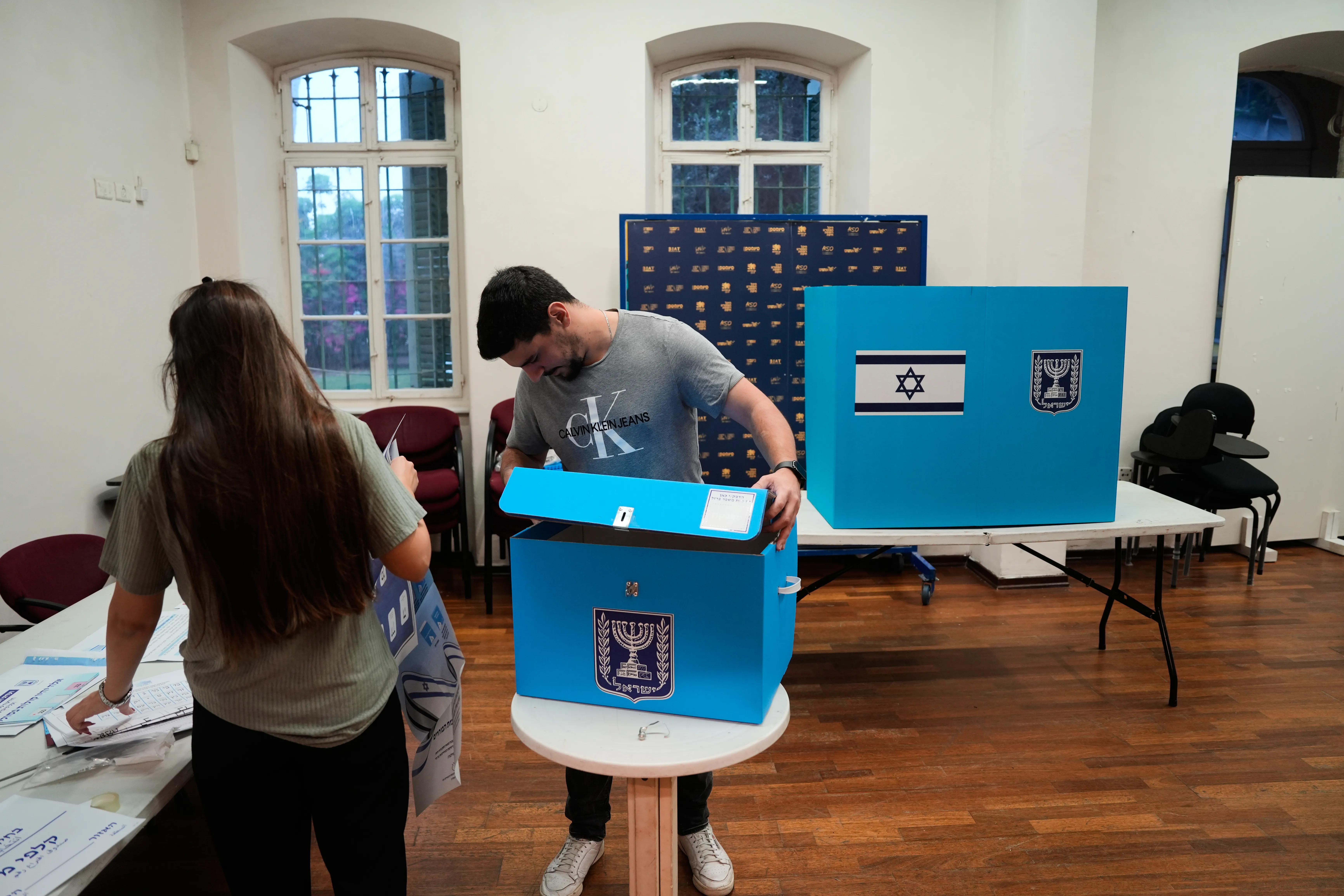
投票箱已在投票站摆放就绪,以色列2026年大选即将开始投票。随着以色列人于周二投票选举第26届内阁(Knesset),来自基里亚特加特的社区领袖亚尼夫·阿什塔姆克尔(Yaniv Ashtamker)代表“Tsomet Beit Yisrael”党参选,旨在将印度裔犹太人的诉求带入议会。
Ballot boxes are set up at a polling station ahead of the voting in the Israel Election 2026. As Israelis voted on Tuesday to elect the 26th Knesset in the Israel Election 2026, Yaniv Ashtamker, a community leader from Kiryat Gat, is contesting on the Tzomet Beit Yisrael ticket, seeking to take the concerns of Indian-origin Jews into Parliament.
亚尼夫·阿什塔姆克尔在该党名单中排第三。他的参选距离该社区早先一次争取议会代表权的尝试——即参加1984年7月大选——已过去四十年。
Yaniv Ashtamker is placed third on the party’s list. His candidature comes four decades after an earlier attempt by the community to win representation by contesting the July 1984 election.
以色列2026年大选:来自基里亚特加特的印度裔社区领袖亚尼夫·阿什塔姆克尔代表“Tsomet Beit Yisrael”党参加以色列大选,寻求在内阁中代表印度裔犹太人的诉求。(特别安排)那次尝试失败了,但该社区如何将其存在感转化为国家层面的政治代表权,这一问题始终挥之不去。
Israel Election 2026: Yaniv Ashtamker, an Indian origin community leader from Kiryat Gat, is contesting the Israeli election on the Tzomet Beit Yisrael ticket, seeking to represent the concerns of Jews of Indian origin in the Knesset. (Special arrangement) The bid failed, but the question of how the community could translate its presence into national political representation has persisted.
宗教认可 故事始于“贝内·以色列”(Bene Israel),这是最大的印度裔犹太社区,其历史主要集中在马哈拉施特拉邦,特别是科纳坎海岸。
Religious recognition The story begins with the Bene Israel, the largest Indian-origin Jewish community, whose history is centred largely in Maharashtra, particularly the Konkan coast.
1948年以色列建国后,数千名“贝内·以色列”社区成员从马哈拉施特拉邦移居以色列。但他们的到来随即引发了一场关于其宗教地位的争议。
After Israel was established in 1948, thousands of Bene Israel migrated from Maharashtra. But their arrival was followed by a dispute over their religious status.
“近两千名印度裔犹太人在耶路撒冷街头游行,抗议以色列的‘宗教法西斯统治’。抗议期间,他们表示:‘两千年来,他们在印度作为忠诚的犹太人生活,来到以色列却要遭受同胞的反犹太主义迫害。’”苏拉杰·拉詹·卡丹托杜(Suraj Rajan Kadanthodu)题为《以色列国的移民、歧视与同化》的研究论文如此记载。
“Almost two thousand Indian-origin Jews marched in the streets of Jerusalem to end the ‘religious fascist rule’ in Israel. During the protest, they said that ‘for two thousand years they lived as loyal Jews in India and only to come to Israel and suffer anti-Semitism at the hands of our brethren,” a research paper by Suraj Rajan Kadanthodu titled Migration, Discrimination and Assimilation in the State of Israel states.
1964年8月,议会通过一项决议,确认“贝内·以色列”社区成员在各方面均属犹太人。
In August 1964, Parliament adopted a resolution affirming that members of the Bene Israel community were Jews in every respect.
迪莫纳位于以色列南部,许多印度裔犹太人在那里定居,并成为了社区活动中心。根据卡丹索(Kadanthodu)在《以色列时报》(The Times of Israel)上的记述,贝内以色列(Bene Israel)活动人士于1980年组建了一个市镇政党——“迪莫纳促进党”(Kiddum Dimona),并在市议会中赢得了一个席位。
ational ballot Dimona in southern Israel, where many Indian-origin Jews settled, became a centre of community activism. According to Kadanthodu’s account in The Times of Israel, Bene Israel activists formed a municipal party, Kiddum Dimona, in 1980 and won a seat on the city council.
四年后,该运动谋求全国政治舞台。“结合”党(Shiluv,意为“融合”)参加了第11届克尼塞斯(议会)选举,试图代表印度裔犹太人独立参政,而不是通过既定政党。
Four years later, the movement sought a national platform. The party Shiluv, meaning “integration”, contested the election to the 11th Knesset, seeking to represent Indian-origin Jews independently rather than through established parties.
该党获得了5499张选票,占总票数的0.3%,未能达到当时生效的1%的选举门槛。它没有赢得任何席位,并不久后便销声匿迹。
The party secured 5,499 votes, or 0.3 per cent of the total, falling short of the 1 per cent electoral threshold in force at the time. It won no seats and soon faded.
出生于印度的议员 出生于印度的政治人物曾通过主流政党在克尼塞斯任职。其中一位是埃利·本-梅纳赫姆(Eli Ben Menachem),他于1947年出生于孟买,1949年随家人移居以色列。他在1988年至2006年期间担任克尼塞斯议员,代表中间派联盟(Alignment)、工党(Labour Party)和同一个以色列(One Israel)联盟。
India-born MP Indian born politicians have served in the Knesset through mainstream parties. One was Eli Ben Menachem, born in Bombay in 1947, who moved to Israel with his family in 1949. He served in the Knesset from 1988 to 2006, representing the Alignment, Labour Party and One Israel alliance.
2026年以色列选举:埃利·本-梅纳赫姆于1947年出生于孟买,1988年至2006年担任以色列克尼塞斯议员,代表包括工党在内的主流政党。他还担任过部长职务,并担任过克尼塞斯副议长。(特约安排)他还担任过政府职务,包括住房和建设部副部长、工业和贸易部副部长,并担任过克尼塞斯副议长。
Israel Election 2026: Eli Ben Menachem, born in Bombay in 1947, served in Israel’s Knesset from 1988 to 2006, representing mainstream political parties including Labour. He also held ministerial posts and served as a deputy speaker of the Knesset. (Special arrangement) He also held government posts, including deputy minister of Housing and Construction and deputy minister of Industry and Trade, and served as a deputy speaker of the Knesset.
印度裔犹太人高度融入 据印度驻特拉维夫大使馆统计,以色列大约有8.5万名印度裔犹太人。他们包括来自马哈拉施特拉邦的贝内以色列人、来自喀拉拉邦的科钦犹太人、巴格达犹太人以及较晚从印度东北部移居的移民。
Indian-origin Jews well-integrated There are approximately 85,000 Indian-origin Jews in Israel, according to the Indian Embassy in Tel Aviv. They include the Bene Israel of Maharashtra, Cochin Jews from Kerala, Baghdadi Jews and more recent immigrants from northeastern India.
印度裔以色列人、代表印度犹太人社区的印度犹太人遗产中心主席拉菲·邦克(Rafi Bhonker)表示,该社区总体上较少参与政治。
Rafi Bhonker, an Indian-origin Israeli, chairs the Indian Jewish Heritage Centre, which represents Jewish communities from India, said the community had generally remained less involved in politics.
“在以色列的印度裔犹太人对自己的印度血统感到无比自豪,但他们已非常融入以色列社会。这是10月7日袭击事件发生后的首次选举,因此,对大多数印度裔犹太人而言,就像其他任何以色列公民一样,这是一个至关重要的国家议题,将在投票时占据很大分量,”Bhonker说。
“Indian-origin Jews in Israel take immense pride in their Indian heritage but they are very well-integrated into Israeli society. This marks first election after the attacks of 7th October and as such, for most Indian origin Jews, like any other Israeli citizen, this is a paramount national issue that will factor in heavily while casting their vote,” said Bhonker.
2020年3月移居以色列的Revital Moses表示,由于该群体人数较少,各党派并未开展针对印度裔犹太选民的定向竞选活动。
Revital Moses, who moved to Israel in March 2020, said the community’s small numbers meant parties had not mounted targeted campaigns to reach Indian Jewish voters.
人数的局限 以色列120席的议会(Knesset)通过全国比例代表制选举产生。政党必须获得至少3.25%的有效选票才能进入议会。
The limits of numbers Israel’s 120-member Knesset is elected through a nationwide proportional representation system. A party must secure at least 3.25 per cent of the valid vote to enter Parliament.
对于一个小群体而言,独立参选的政党面临陡峭的门槛,除非能吸引到本群体选民以外的支持。Ashtamker作为更广泛政党名单上的候选人,提供了另一条进入议会的途径,尽管他在名单上的排名本身并不保证能获得席位。
For a small community, an independent party faces a steep hurdle unless it attracts support beyond its own electorate. Ashtamker’s candidature on a broader party list offers another route to representation, though his place on the list does not by itself guarantee a seat.