
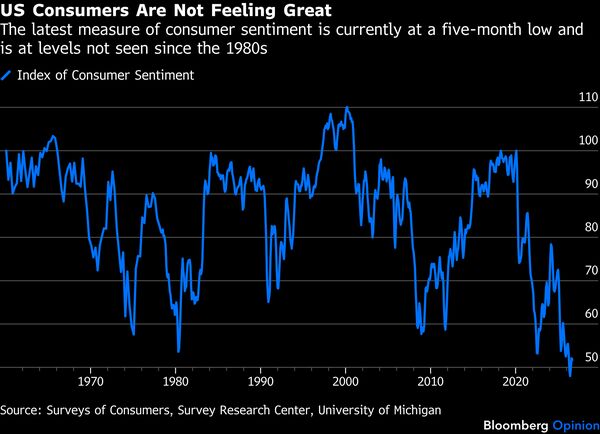
美国经济并未陷入危机,但美国消费者似乎正处于危机之中。根据上周发布的数据,密歇根大学消费者信心指数在9月降至五个月低点——尽管经济增长稳健、失业率低位、通胀率相对较低且零售支出强劲。
The US economy isn’t in crisis, but US consumers seem to be. The University of Michigan’s consumer sentiment index reached a five-month low in September, according to numbers released last week — despite stable growth, low unemployment, a relatively low rate of inflation and robust retail spending.
对于这一令人费解的局面,至少有三种可能的解释。要么数据有误,要么美国人判断有误,要么经济存在宏观表现掩盖不住的根本性问题。每种可能性的含义各不相同,但最后一种可能性是决策者最应重视的。
There are at least three potential explanations for this perplexing state of affairs. Either the data are wrong, Americans are wrong, or there is something fundamentally wrong with the economy that the macro performance masks. The implications for each vary, but the final possibility is one that policymakers should pay the most attention to.
消费者信心指数源自密歇根大学的消费者调查。这是一项由来已久的指标,始于1960年。虽然数据收集方式最近从电话访谈改为网络调查,引发部分质疑者的疑虑,但该方法在转型前后均经过广泛测试,以排除回答偏差。而且消费者信心指数并非孤例,其他多项民调也显示民众对经济普遍不满。
The consumer sentiment index is compiled from the University of Michigan’s survey of consumers. It’s an established measure, dating to 1960. While the data collection has changed recently from phone-based to web-based, raising doubt among some skeptics, the methodology was extensively tested for response bias before and during the transition. And the consumer sentiment index is hardly an outlier, with several other polls showing widespread discontent with the economy.
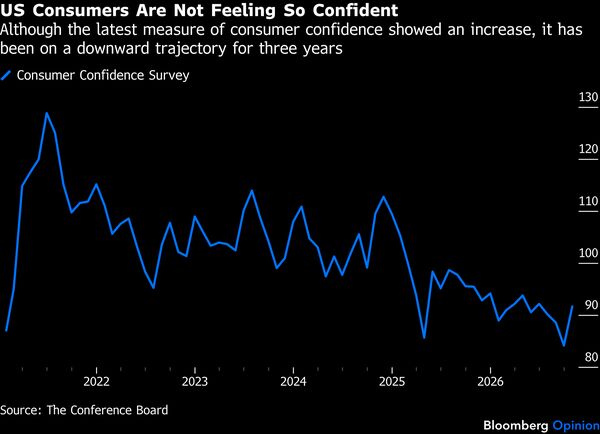
信心指数的“表亲指标”、商业会议理事会的消费者信心调查本周意外显示上升。但从长期看,它讲述的是相似故事:信心已连续三年下滑。
The cousin of the sentiment index, the consumer confidence survey from the Conference Board, showed an unexpected uptick this week. But long-term, it is telling a similar story: Confidence has been falling for three years.
这并非数据怪象;美国人似乎真心对经济感到不满。但他们的感受合理吗?还是说他们自觉理所当然,甚至有点任性、忘恩负义?毕竟他们有工作、在消费——这不正是美国人最爱做的两件事吗?
This is not a data quirk; Americans appear to be genuinely upset about the economy. But are their feelings justified? Or are they feeling entitled, maybe a little bit petulant or ungrateful? After all, they have jobs and they’re shopping — aren’t those the two things Americans like to do most?
事情没那么简单。首先,“美国人有工作”这一说法掩盖了劳动力市场的大量不满。正如我所指出的,美国正处于低招聘、低裁员环境中,导致求职周期漫长、工资增长惨淡,并致使民众退出劳动力大军。
It’s not so simple. First, the statement that “Americans have jobs” glosses over a lot of discontent in the labor market. As I have pointed out, the US is in a low-hire, low-fire environment, resulting in long searches, dismal wage growth, and people dropping out of the labor force.
消费也是相对的。情绪指数在此能提供一些洞见:除拥有大量股票财富的人群外,所有美国人群体对经济的看法都在恶化。美国当前的工资、收入和财富分配状况,与20世纪20年代的相似程度,超过了以往任何时期:追踪整体支出的汇总数据可能依然表现良好,而衡量个人支出的数据却并非如此。
Shopping is also relative. The sentiment index can offer some insight here: Views on the economy are deteriorating among every group of Americans except those with considerable stock wealth. America’s wage, income and wealth distribution is more similar today to the 1920s than any other prior period: Aggregate figures that track overall spending could still look good even as numbers that measure personal spending do not.
此外,今年是大选年,这使得人们无法回避对情绪的政治解读。选民因高通胀对时任总统乔·拜登感到愤怒,因此选出了唐纳德·特朗普。通胀依然过高,所以现在他们对特朗普感到愤怒。也许仅仅是这个原因:消费者信心的崩塌,反映了对现任总统——无论是谁——一种深刻但短暂的不满。
Then there is the fact that this is an election year, making it impossible to escape the political interpretation of sentiment. Voters were mad at former President Joe Biden for high rates of inflation, so they elected Donald Trump. Inflation is still too high, so now they are mad at him. Maybe that’s all it is: The collapse of consumer sentiment reflects a deep but ephemeral dissatisfaction with the current president, whoever that happens to be.
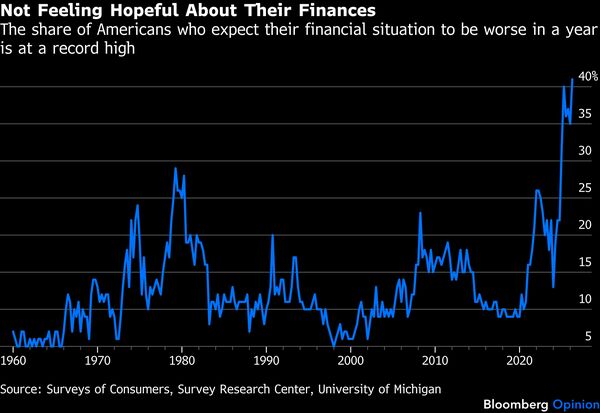
然而,仍存在一种更激进的结论:美国人感到不满的不是现任政府,而是当前的经济组织形式。深入情绪指数背后的数据颇具启示性。略超40%的美国人认为,一年后他们的个人财务状况会变得更糟,比该系列此前的纪录(出现于20世纪80年代初)整整高出10个百分点。略超30%的人认为,五年后他们的个人财务状况会变得更糟,这一比例是20世纪80年代的两倍。
Yet there remains the possibility of the more radical conclusion: Americans are dissatisfied not with the current administration, but with the current organization of the economy. A dive into the sentiment data beyond the index is revealing. Just over 40% of Americans believe that their personal financial situation will be worse in a year, a full 10 points higher than the prior record in the series, reached during the early 1980s. Just over 30% believe that their personal financial situation will be worse in five years, double the share that did in the 1980s.
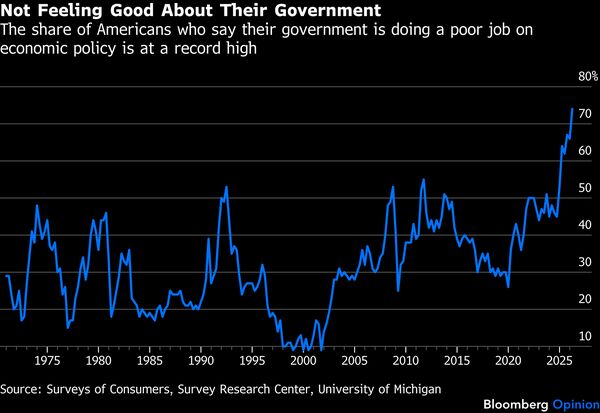
又如,自1970年以来,认为政府管理经济表现不佳的美国人比例超过半数的情况仅出现过三次。而如今这一比例已达74%。
Or, only three times since 1970 have more than half of Americans reported that the government was doing a poor job managing the economy. It’s now at 74%.
可以公正地说,这些数据——连同更直接的政治民调数据——表明,华盛顿的领导层更迭迫在眉睫。但从经济角度看,这一结论还不够深入。
It is fair to say that this data — along with that from more straightforward political polls — indicates that a change of leadership in Washington is imminent. But from an economic standpoint, that conclusion doesn’t go far enough.
工作和购物已不再足够。许多美国人正面临着令人望而生畏的高昂市场,涉及住房、医疗、托儿、养老、公用事业、房主保险等诸多领域,名单还在继续,且往往没有廉价的选择。因此,他们降低成本的唯一途径就是在其他方面削减开支,或者干脆做无。
Jobs and shopping aren’t enough anymore. Many Americans are staring down intimidatingly expensive markets in housing, healthcare, childcare, eldercare, utilities, homeowner’s insurance — the list goes on, and often there’s no cheap option. So the only way for them to lower costs is to reduce spending elsewhere, or to go without.
关于数据是否描绘了过于乐观的美国经济图景,抑或美国消费者对经济的看法过于悲观,这种争论已非重点。这两项调查都指向同一个结论:过去50年占主导地位的保守派政策——减税和削减福利项目、放松监管、在国防上慷慨开支、在社会保障问题上回避任何实质性行动——已走到尽头。美国人正在发出对经济感到绝望、并拒绝现行经济管理方式的信号。这就是华盛顿的决策者们需要听到的信息。
The debate over whether the data is painting too rosy a picture of the US economy, or whether US consumers are taking too bleak a view of it, is beside the point. The conclusion both these surveys are pointing toward is that the dominant conservative policy of the past 50 years — cutting taxes and welfare programs, deregulating, spending generously on defense, avoiding any meaningful action on Social Security — has run its course. Americans are signaling both a hopelessness about the economy and rejection of how it is managed. That’s the message policymakers in Washington need to hear.