作者:Ditas B Lopez据市场观察人士称,菲律宾比索兑美元今年下跌近 8%,可能会促使中央银行动用更多工具来稳定货币。
By Ditas B Lopez The Philippine peso’s nearly 8% slide against the dollar this year may prompt the central bank to deploy more tools to stabilize the currency, according to marketwatchers.
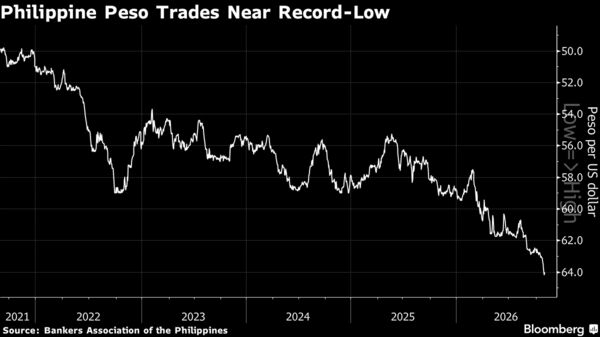
受能源价格居高不下拖累,这个严重依赖进口燃料供应的国家,比索周二触及 1 美元兑 64.200 比索的新低,使其成为 10 月迄今亚洲表现最差的货币。菲律宾已采取一系列措施缓冲中东危机的影响,其中包括本月意外加息 50 个基点以抑制通胀。以下是菲律宾当局可能考虑的其他支持比索措施:减少银行可持有的超过其美元负债部分的美元数量,可能会增加市场上的美元供应。
The peso hit a new low of 64.200 to a dollar on Tuesday, making it Asia’s worst performer so far in October, as elevated energy prices weigh on the nation which relies heavily on imports for fuel supplies. The Philippines has taken a series of steps to cushion the impact of the Middle East crisis, including a surprise 50-basis-point hike this month to rein in inflation. Here are other measures Philippine authorities may consider to support the peso: Reducing the amount of greenback banks can hold in excess of their dollar liabilities may increase the supply of US currency in the market.
“这是一种可能性,”花旗集团驻菲律宾国家主管 Paul Favila 表示。他说,此举将有助于遏制投机。不过,“真正的问题在于我们过度依赖进口,而实际商品价格已经上涨。”BSP 证券是中央银行发行的货币工具,用于影响金融系统中流通的货币量。
“It’s a possibility,” said Paul Favila, Citigroup Inc.’s country officer in the Philippines. Such a move would help curb speculation, he said. However, “the real issue lies in the fact that we are overly reliant on imports while actual commodity prices have gone up.”BSP securities are monetary instruments issued by the central bank to influence the amount of money circulating in the financial system.
发行更大规模的自有债务证券和其他短期工具(如定期存款便利),可使中央银行吸收更多现金。
Issuing larger volumes of its own debt securities and other short-term tools such as term-deposit facility allows the central bank to absorb more cash.
菲律宾中央银行可能会更多地在即期市场进行干预,动用国家外汇储备抛售美元。该国已动用部分外汇储备来限制比索贬值。
The BSP may intervene more in the spot market by selling dollars out of the country’s foreign exchange reserves. The nation has already deployed some of its foreign reserves to limit the peso’s decline.
除了即期干预外,它还可以积极利用衍生品来帮助塑造对未来汇率的预期,特别是当压力集中在远期市场时。
Alongside spot intervention, it could actively use derivatives to help shape expectations about future exchange rates, particularly if pressure is concentrated in the forward market.
中央银行可以发出更强烈的信号,表明其认为汇率变动过度,并已准备好进行干预。
The central bank can signal more strongly that it considers the exchange-rate moves excessive and that it stands ready to intervene.
货币当局在前几届政府时期曾多次采取这一措施。这消除了实际动用美元储备的必要。
Monetary authorities have resorted to this measure several times under previous administrations. This eliminates the need to actually dip into the dollar reserves.
总统小费迪南德·马科斯周三承诺将“尽最大可能”捍卫比索。货币当局可以推动财政措施以改善市场情绪。如果由弗雷德里克·戈领导的财政部——他同时也是央行货币委员会成员——能够表明财政缺口和债务将得到控制,这有可能缓解菲律宾央行(BSP)大幅加息的压力。
President Ferdinand Marcos Jr. on Wednesday pledged to defend the peso “as hard as we possibly can.”Monetary authorities can push for fiscal measures to improve market sentiment. If the Department of Finance, headed by Frederick Go who also sits as a member of the central bank’s Monetary Board, can show that fiscal gap and debt will be contained, it can potentially ease pressure on the BSP to raise rates aggressively.
“政府需要遏制比索贬值带来的连锁反应,并采取货币和非货币双重措施以恢复投资者信心,”马尼拉雷耶斯·塔坎东公司高级顾问乔纳森·拉维拉斯表示。
“The government needs to contain the fallout from the weakening peso and pursue both monetary and non-monetary measures to restore investor confidence,” said Jonathan Ravelas, a senior adviser at Reyes Tacandong & Co. in Manila.