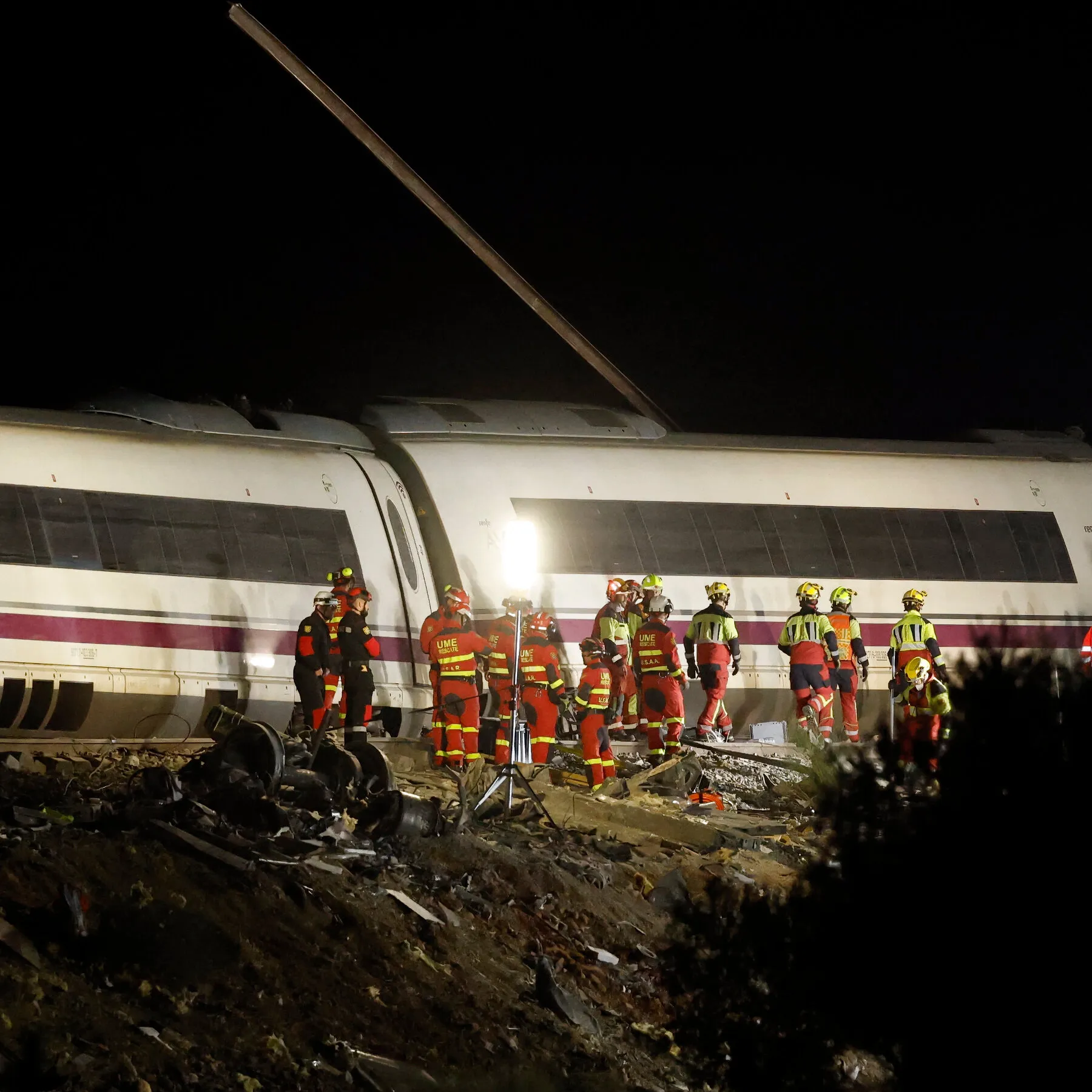
西班牙托莱多附近发生一起高速列车相撞事故,造成至少68人死亡。事后,铁路安全专家表示,关于“坐在列车中部最安全”的粗略共识有其局限性。
After a high-speed collision near Toledo, Spain, killed at least 68 people, rail safety experts said the rough consensus that it is best to sit in the middle of a train has its limits.
周三西班牙发生的一起致命高速铁路事故,引发了人们的疑问:在列车上坐在什么位置,是否会影响在此类撞车事故中幸存的几率。
A deadly high-speed rail accident in Spain on Wednesday has raised questions about whether where someone sits on a train affects their chances of surviving such a crash.
一个非常粗略的共识已经形成:最好不要坐在车头,也不要坐在最尾部,而是坐在列车中部某个位置,面朝后方。但铁路安全专家表示,列车事故中的变量太多,无法下定论。
A very rough consensus has emerged: it is best to sit not up front, not at the very back, but somewhere in the middle of a train, facing backward. But rail safety experts say that there are too many variables in train crashes to say for certain.
西班牙这起事故是追尾撞击。一列火车撞上另一列停在轨道上的火车,造成至少68人死亡。专家表示,座位选择可以在边际上改变乘客的生存几率,但事故类型远比任何人碰巧坐在哪里更重要。
The accident in Spain was a rear-end impact. At least 68 people were killed when one train slammed into another one that was stopped on the tracks. Experts say seat choice can shift a passenger’s odds at the margins, but the type of crash matters far more than where anyone happens to be sitting.
“告诉我你会遇到哪种撞车,我就能告诉你最佳位置在哪里,”独立安全顾问、美国国家运输安全委员会前成员约翰·戈利亚说。他说,不存在普遍安全的座位。
“Tell me what kind of crash you’re going to have, and I’ll tell you where the best place to be is,” said John Goglia, an independent safety consultant and former member of the National Transportation Safety Board. There is no universally safe seat, he said.
纽约城市大学土木工程荣休杰出教授罗伯特·帕斯韦尔表示,严重的列车事故很罕见,其原因和情况可能千差万别。一起可能是追尾碰撞,另一起可能是轨道缺陷导致的脱轨。
Robert Paaswell, a distinguished emeritus professor of civil engineering at the City College of New York, said serious train crashes are rare, and their causes and circumstances can vary widely. One might be a rear-end collision, another a derailment caused by a track defect.
“在这里,一列火车直接撞上了另一列火车的尾部,所以最安全的座位本应是被撞列车的前部,”帕斯韦尔说。“但你事先并不知道会发生这种事。”这并没有阻止专家们试图弄清楚坐在哪里最安全。传统答案是列车中部,因为头车会吸收正面碰撞的冲击力,而尾车则承受追尾撞击的主要冲击。
“Here, a train just plowed into the back of a train, so the safest place to have sit would have been in the front of the train” that was struck, Mr. Paaswell said. “But you didn’t know that was going to happen.”That has not stopped experts from trying to figure out where it is safest to sit. The traditional answer has been the middle of the train because the lead car absorbs the force of a head-on collision and the rear car takes the brunt of a rear-end one.
美国乘客铁路服务倡导组织“铁路乘客协会”的首席执行官兼总裁吉姆·马修斯表示,按经验法则,他倾向于坐在列车中部。但这并不能提供任何保证。
Jim Mathews, chief executive and president of the Rail Passengers Association, an advocacy group that seeks to improve American passenger rail service, said that as a rule of thumb he prefers to sit in the middle of a train. But that offers no guarantee.
“我要在上面打一个大大的星号:取决于事故的性质和严重程度,任何安全装置都可能失效,”马修斯说。
“I put a giant asterisk on it that, depending on the nature of the wreck and the severity of it, any safety device can be defeated,” Mr. Mathews said.
一些专家表示,在这些中部车厢里,最好的选择是面向后方的靠过道座位。在突然停车时,面向后方的乘客身体会被推向座椅而不是向前冲,从而减轻挥鞭伤以及被飞溅物体击中的风险。靠过道的座位还能让乘客远离碎裂的窗户。
In those middle cars, some experts have said, the best bet is an aisle seat facing backward. In a sudden stop, a rear-facing passenger’s body is thrust into the seat instead of forward, reducing whiplash and the risk of being hit by flying objects. An aisle seat keeps passengers away from shattering windows.
周三的撞车事故表明,这种逻辑也可能反转。行驶列车(由西班牙国家运营商Renfe运营)的前部车厢被毁。停驶列车(由私营公司Iryo运营)尾部的两节车厢翻覆。
The crash on Wednesday showed how that logic can flip. The front carriage of the moving train — run by Spain’s national operator, Renfe — was destroyed. The two cars at the back of the stopped train, which was run by the private company Iryo, overturned.
戈吉拉说,对于Iryo列车上的乘客而言,最安全的位置本应是前部。你坐得离撞击点越远,你和迎面而来的列车之间就有越多车厢来吸收其能量。
For passengers on the Iryo train, Mr. Gogila said, the safest place would have been up front. The farther you sit from the point of impact, the more cars there are between you and the oncoming train to absorb its energy.
即便选对了“正确座位”也几乎不能保证什么。松动的行李可能变成抛射物,而站在过道、车厢连接处或洗手间的乘客暴露风险要大得多。专家表示,在如此猛烈的撞车中,座椅本身也可能失效。
Even choosing the “right seat” guarantees little. Loose luggage can become projectiles, and passengers standing in aisles, vestibules or restrooms are far more exposed. In a crash this violent, experts said, the seats themselves may give way.
“如果你站着,你很可能就没命了,”戈吉拉说。“如果你坐着,你可能仍然没命,因为没有安全带。”特拉华大学铁路工程与安全项目主任艾伦·扎伦布斯基表示,他尚未看到有研究明确认定最安全的座位。通常的建议——避开列车两端、坐在中部——主要适用于碰撞事故。但他表示,当脱轨是由钢轨或车轮断裂引起时,“脱轨的真的可能是列车上的任何一节车厢”。他说,乘客最有可能在火车脱轨后倾覆时受伤。阿兰·德拉凯里埃尔为本文提供了研究支持。
“If you’re standing up, you’re probably dead,” Mr. Gogila said. “If you’re seated, you might still be dead because there’s no seatbelts.”Allan Zarembski, director of the railroad engineering and safety program at the University of Delaware, said he has not seen a study that definitively identifies the safest seat. The usual advice is to avoid the ends of the train and sit in the middle applies mainly to collisions. But when a derailment is caused by a broken rail or wheel, “it really can be any car in the train” that derails, he said. Passengers are most likely to be injured when a car derails and then overturns, he said. Alain Delaquérière contributed research.
马克·沃克是《纽约时报》的一名记者,负责报道突发新闻和文化。
Mark Walker is a Times reporter who covers breaking news and culture.