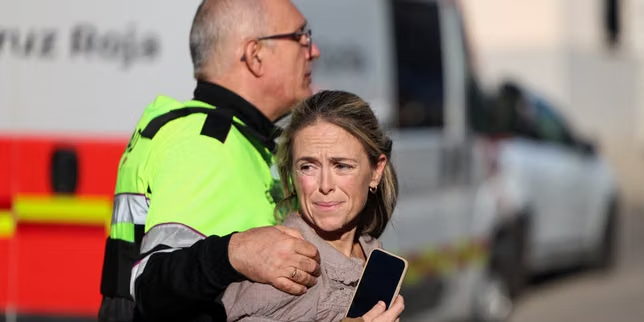
2026年10月28日,在西班牙乌尔达,两列高速列车发生事故后,一名铁路安保人员护送一名等待亲人消息的女子。
A railway security guard escorts a woman waiting for news of a loved one after the accident between two high-speed trains in Urda, Spain, on October 28, 2026.
10月29日星期四,西班牙报纸只留出了一个故事的版面:乌尔达(托莱多)的铁路灾难,造成69人死亡。《世界报》在标题中写道:“三重安全故障导致又一场铁路惨案。”日报《国家报》使用了类似措辞:“不到一年内高速铁路网上的第二场灾难。”总部位于巴塞罗那的《先锋报》则谴责“又一场令人无法承受的悲剧”。电视台派出摄制组前往现场,起重机彻夜作业清理损毁的车厢,尤其是私营公司Iryo所属的车厢,它被Renfe的AVE列车撞击。
On Thursday, October 29, Spanish newspapers only had room for one story: the rail disaster in Urda (Toledo), that left 69 dead. "A triple safety failure causes another rail massacre," wrote El Mundo in its headline. Daily El País used similar language: "Second disaster on the high-speed network in less than a year." Barcelona-based La Vanguardia for its part, decried "another unbearable tragedy." Television channels sent crews to the scene, where cranes were working through the night to clear the wrecked carriages, in particular those belonging to the private company Iryo, which was struck by Renfe's AVE train.
“列车为什么会相撞?”随着关于事故情况的首批披露不断增多,这一问题被提出。网络日报elDiario.es报道了列车司机与西班牙铁路基础设施监测机构Adif位于马德里阿托查车站的铁路控制中心之间的通信。该中心在LZB安全系统发生故障后接管了交通管理,该系统持续监测列车速度,并在出现异常时触发自动停车。
"Why did the trains collide?" asked as early revelations about the accident's circumstances multiplied. The online daily elDiario.es reported on the communications between the train drivers and Spanish train infrastructure monitoring body Adif's railway control center at the Atocha station in Madrid. The center had taken over traffic management after a failure of the LZB safety system, which continuously monitors train speed and triggers automatic stops in the event of an anomaly.