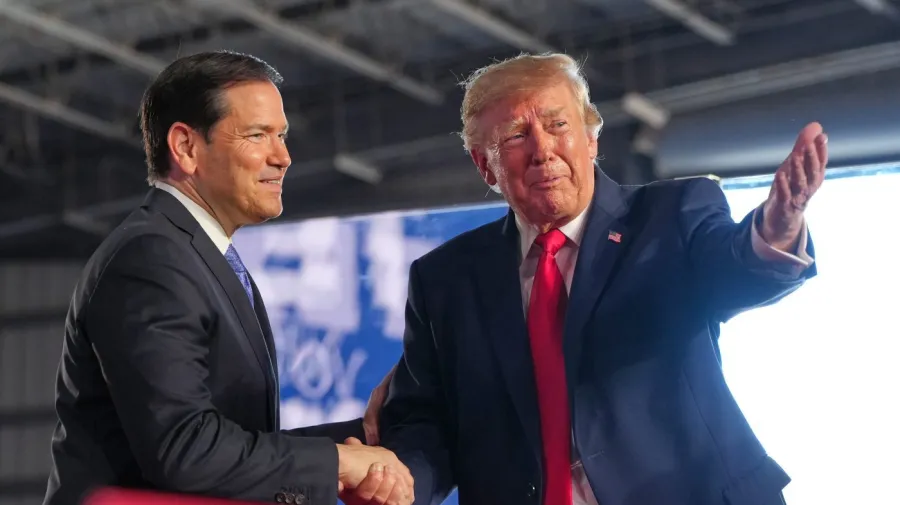
将高风险外交外包给家人和商业伙伴,在大多数民主国家都会引发公众愤怒。然而,特朗普总统已将这种做法常态化。
Outsourcing high-stakes diplomacy to family members and business associates would provoke public outrage in most democracies. President Trump, however, has normalized the practice.
在这种裙带外交模式下,个人忠诚、私人利益和非正式网络常常凌驾于制度流程和国家利益之上,而问责制则日益削弱。
In this model of crony diplomacy, personal loyalty, private gain and informal networks routinely override institutional processes and the national interest, while accountability diminishes.
在此背景下,国务卿马尔科·鲁比奥最近的海外行程绕开了世界主要热点地区,或许并不令人意外。鲁比奥最近的行程包括哥伦比亚、厄瓜多尔、秘鲁、冰岛、希腊、葡萄牙,最近还包括乌兹别克斯坦和印度。
Against this backdrop, it may scarcely be surprising that Secretary of State Marco Rubio’s recent overseas travels have skirted the world’s main hot spots. Rubio’s latest travels have taken him to Colombia, Ecuador, Peru, Iceland, Greece, Portugal and, most recently, Uzbekistan and India.
特朗普没有依赖鲁比奥和专业外交官,反而一再求助于他的女婿贾里德·库什纳和商业合作伙伴史蒂夫·维特科夫——一位曼哈顿房地产人物——让他们主导乌克兰、俄罗斯、加沙和伊朗等高风险谈判。两人均无外交经验,却担任“和平特使”。两人也都存在明显的利益冲突。
Trump, instead of relying on Rubio and the professional diplomatic corps, has repeatedly turned to his son-in-law, Jared Kushner, and business partner Steve Witkoff — a Manhattan real-estate figure — to spearhead high-stakes negotiations on Ukraine, Russia, Gaza and Iran. Both men entered their roles as “special envoys” for peace with no prior diplomatic experience. Both also have glaring conflicts of interest.
鲁比奥的行程安排明显偏好低风险地区,同时避开全球冲突的主要战场。批评者猜测,他这样做是为了保护自己的政治前途。通过与特朗普政府最混乱、最不稳定的外交政策危机保持距离,包括其混乱的对华政策,鲁比奥避开了可能以糟糕结果收场的问题。
Rubio’s travel schedule heavily favors lower-risk regions while avoiding the main theaters of global conflict. Critics speculate that he is doing this deliberately to safeguard his own political future. By keeping his distance from the Trump administration’s messiest and most volatile foreign-policy crises, including his muddled China policy, Rubio stays clear of issues that could end badly.
鲁比奥可能计算,他的长期职业生涯——可能包括2028年总统竞选——最好的方式是绕开政府的核心外交政策雷区。
Rubio may have calculated that his long-term career — potentially including a presidential run in 2028 — is best served by bypassing the administration’s core foreign-policy minefields.
然而,鲁比奥仍然是委内瑞拉和古巴问题上的政府负责人。不过,委内瑞拉和古巴都未能为他的记录增光添彩。
Rubio, however, has remained the administration’s point man on Venezuela and Cuba. Neither Venezuela nor Cuba, though, has done much to burnish his record.
自1月以来,特朗普政府扼杀古巴的战略在岛上造成了严重的人道主义危机,却未能实现政权更迭。与此同时,美国军事行动在委内瑞拉俘获该国现任总统的成功,只会进一步鼓舞特朗普对伊朗的战争,而这场战争已成为他政治上代价高昂的失败。即使委内瑞拉人对美国接管该国石油财富感到愤慨,特朗普仍吹嘘道:“我们在委内瑞拉掠夺了大量石油,大约抵偿了[对伊朗]战争成本的25倍。”
The Trump administration’s strategy since January of strangling Cuba has created a severe humanitarian crisis on the island without bringing about regime change. Meanwhile, the success of the U.S. military operation in Venezuela in capturing the country’s sitting president only emboldened Trump’s war on Iran, which has turned into a politically costly fiasco for him. Even as Venezuelans bristle over the U.S. takeover of their country’s oil wealth, Trump boasted: “We’ve taken out so much oil in Venezuela, we paid for the cost of the war [on Iran] about 25 times over.”
委内瑞拉的石油出口收入直接存入由美国财政部控制的账户,鲁比奥实际上监督其出口和财务,包括向加拉卡斯释放资金的时间、数额和用途。这种关系常被描述为类似于为获批的人道主义或基础设施用途提供“每周零用钱”。从远处看,鲁比奥实际上以新殖民主义方式管理着委内瑞拉。
Venezuela’s oil-export revenues are deposited directly into accounts controlled by the U.S. Treasury, with Rubio effectively overseeing both its exports and finances, including when, how much and for what purposes funds are released to Caracas. This relationship has frequently been described as akin to a “weekly allowance” for approved humanitarian or infrastructure purposes. From afar, Rubio effectively runs Venezuela in neocolonial fashion.
扩大委内瑞拉石油出口是鲁比奥近期访问印度的关键目标之一,他在贾姆纳加尔私人访问了世界上最大的炼油综合体。
Expanding Venezuela’s oil exports was one of the key objectives behind Rubio’s recent trip to India, where he paid a private visit to the world’s largest oil-refining complex in Jamnagar.
精炼委内瑞拉的高硫超重原油比精炼轻质低硫原油要耗能、耗碳且耗时得多。虽然轻质低硫原油通过常压蒸馏能产出相对较高比例的汽油和柴油,但重原油需要进行广泛的多级转化才能生产出可销售产品。尽管如此,贾姆纳加尔炼油综合体已成为受美国控制的委内瑞拉重原油的主要买家和加工商。
Refining Venezuela’s high-sulfur, ultra-heavy crude is significantly more energy-intensive, carbon-intensive and time-consuming than refining light, sweet crude. While light, sweet crude yields relatively high proportions of gasoline and diesel through atmospheric distillation, heavy crude demands extensive, multistage conversion to produce marketable products. Still, the Jamnagar refining complex has emerged as a leading buyer and processor of U.S.-controlled Venezuelan heavy crude.
贾姆纳加尔原油加工能力约为每天140万桶,在全球脱颖而出,成为少数几个能够大规模将不同原油品种加工成超清洁、符合欧VI标准燃料的超复杂私人出口中心之一。
With a crude-processing capacity of about 1.4 million barrels per day, Jamnagar stands out globally as one of the few hyper-complex private export hubs capable of processing different crude varieties into ultra-clean, Euro VI-compliant fuels on an enormous scale.
将印度——世界第三大石油进口国——称为“炼油超级大国”,鲁比奥主张增加对委内瑞拉原油的采购,在贾姆纳加尔进行加工,以帮助缓解全球柴油短缺及其他成品油供应不足。贾姆纳加尔使印度成为全球领先的柴油及其他成品油出口国,向亚洲、非洲、欧洲和美洲的市场供应。贾姆纳加尔的成品油出口量远超其他国家的单个炼油厂,包括美国的炼油厂。
Calling India, the world’s third-largest oil importer, a “refining superpower,” Rubio pitched greater purchases of Venezuelan crude for processing at Jamnagar to help ease a global diesel crunch and other refined-fuel shortages. Jamnagar makes India a leading global exporter of diesel and other refined fuels, supplying markets across Asia, Africa, Europe and the Americas. Jamnagar’s refined-product exports dwarf those of individual refineries elsewhere, including in the U.S.
该综合体由穆克什·安巴尼的信实工业拥有,设有一个位于经济特区内的专用出口设施,使其能够作为国际市场的关键波动供应商。鲁比奥的访问紧随埃隆·马斯克对安巴尼的公开攻击之后,马斯克嘲讽地称安巴尼为“安巴尼总理”,这体现了特朗普华盛顿中商业竞争、个人庇护与外交官方之间界限日益模糊。
Owned by Mukesh Ambani’s Reliance Industries, the complex features a dedicated export-only facility within a Special Economic Zone, allowing it to serve as a crucial swing supplier to international markets. That Rubio’s visit followed Elon Musk’s public attacks on Ambani, whom he mockingly styled “Prime Minister Ambani,” illustrated the blurring line between commercial rivalry, personal patronage and official diplomacy in Trump’s Washington.
印度寻求通过多元化来增强能源韧性,不大可能大幅增加委内瑞拉石油进口,而无论如何,委内瑞拉石油进口都伴随着更高的运输和海上保险成本。鉴于印度企业过去因美国政策反复无常而遭受的财务损失,它们也不太可能接受鲁比奥的提议,即在美方监督下直接投资修复委内瑞拉破旧的油田。
India, seeking energy resilience through diversification, is unlikely to substantially increase Venezuelan oil imports, which in any case come with higher transportation and marine-insurance costs. Nor are Indian firms likely to accept Rubio’s proposal that they invest directly in restoring Venezuela’s dilapidated oil fields under American oversight, given the financial losses the companies have suffered from past U.S. policy reversals.
由于特朗普的政策,新德里的政治关系承压,鲁比奥此次访印旨在将重点转向能源安全和企业伙伴关系。鲁比奥将行程仅限于印度商业中心孟买和贾姆纳加尔综合体,强调务实合作而非外交摩擦。
With political ties with New Delhi under pressure largely because of Trump’s policies, Rubio’s India visit sought to shift the focus toward energy security and corporate partnerships. By limiting his itinerary to India’s commercial capital, Mumbai, and the Jamnagar complex, Rubio emphasized pragmatic cooperation over diplomatic friction.
然而,鲁比奥的访印凸显了在美式裙带外交时代,支离破碎的外交政策所能实现的局限性。
Rubio’s India visit, however, exemplified the limits of what a fragmented foreign policy can deliver in an era of American crony diplomacy.
外交不仅仅是做交易,尽管特朗普似乎这么认为。自特朗普重返白宫以来,美国在中东的外交日益反映出个人和商业优先考量。库什纳在达沃斯论坛上发布的“新加沙”提案,被广泛批评为“房地产外交”——一种将大规模毁灭视为商业机会的计划。
Diplomacy is not merely deal-making, as Trump seems to believe. Since Trump’s return to office, U.S. diplomacy in the Middle East, for example, has increasingly reflected personal and commercial priorities. Kushner’s “New Gaza” proposal, unveiled at Davos, has been widely criticized as “real estate diplomacy” — a plan that treats large-scale devastation as a commercial opportunity.
特朗普削弱了国务卿的角色,将美国外交重塑为他自己的形象——个性化、交易式、霸道且不透明。
Undercutting the secretary of state’s role, Trump has recast U.S. diplomacy in his own image — personalized, transactional, overbearing and opaque.
结果是,美国在世界舞台上变得更不可信、更不被信任,最终也更无效。
The result is a U.S. that is less credible, less trusted and ultimately less effective on the world stage.
布拉马·切拉尼是九本书的作者,其中包括获奖作品《水:亚洲的新战场》。
Brahma Chellaney is the author of nine books, including the award-winning “Water: Asia’s New Battleground.“