编辑部撰文 生活成本危机一次次降临,正如当前的全球能源价格冲击,令各国政府陷入两难:要么做艰难的工作,识别并援助弱势群体;要么不管需不需要,向所有人撒钱。一次次,它们绝大多数选择了后者。这是一种它们再也负担不起的习惯。
By The Editors Time and again, cost-of-living crises like the current global energy-price shock confront governments with a dilemma: Either do the difficult work of identifying and supporting the vulnerable, or throw money at everyone whether they need it or not. Time and again, they overwhelmingly choose the latter. It’s a habit they can no longer afford.
2022年俄罗斯入侵乌克兰,随之而来的能源价格飙升——尤其是在欧洲——暴露了社会安全网的严重漏洞。由于无法迅速定位并触达受冲击最重的消费者,各国政府不得不诉诸次优手段,如普惠性救助金和价格管制。这些措施削弱了减少消费的努力,且需要巨额财政资源——在欧盟,2022年约占国内生产总值的1.2%。据一项估算,若援助精准瞄准最贫困的20%家庭,成本本可降至约三分之一。
When Russia invaded Ukraine in 2022, the accompanying surge in energy prices — particularly in Europe — exposed serious gaps in social safety nets. Unable to quickly locate and reach the hardest-hit consumers, governments resorted to suboptimal measures such as blanket relief payments and price controls. These undermined efforts to reduce consumption and required vast fiscal resources — in the European Union, about 1.2% of gross domestic product in 2022. By one estimate, the cost could’ve been about a third as much if support had been targeted at the poorest 20% of households.
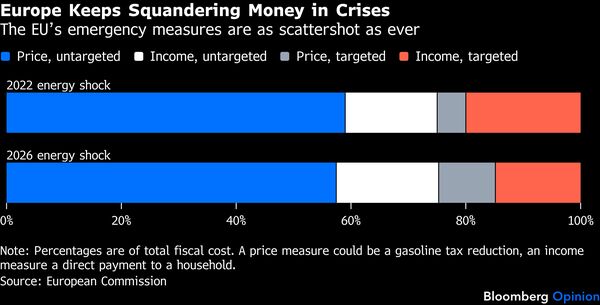
有吸取教训吗?几乎没有,从今年伊朗战争引发的能源冲击来看便是如此。尽管欧盟的财政应对规模较小——预计年底前将达GDP的约0.2%——但主要仍由非精准的价格和收入措施构成,如德国的大幅燃油税减免和瑞典与电力及天然气消费挂钩的现金发放。欧盟委员会估计,精准措施仅占总成本的25%——与2022年相同。
Were any lessons learned? Hardly, judging from this year’s energy shock caused by the war in Iran. Although the EU’s fiscal response is smaller — expected to reach about 0.2% of GDP by year-end — it again has consisted predominantly of untargeted price and income measures, such as Germany’s hefty fuel-tax discount and Sweden’s cash payments tied to electricity and gas consumption. The European Commission estimates that targeted measures have accounted for only 25% of the total cost — the same as in 2022.
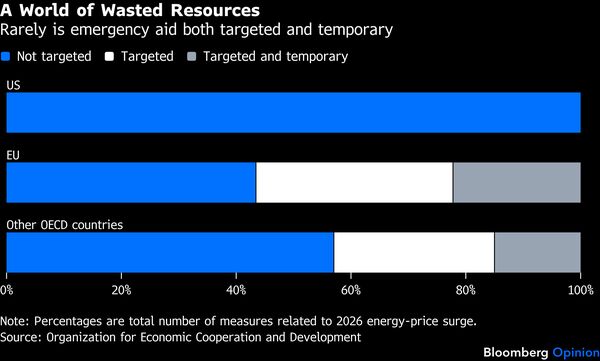
欧洲并非孤例。全球范围内,旨在缓解能源冲击的政策极其浪费。尽管经济合作与发展组织建议此类措施应精准且临时,但其38个成员国中仅有极少部分照做。影响不仅是财政层面的:美国政府为获取更多俄罗斯柴油达成的协议,招致巨大地缘政治代价,换来的却预计只是对价格微乎其微的影响。
Europe isn’t alone. Throughout the world, policies aimed at mitigating the energy shock have been profoundly wasteful. Although the Organization for Economic Cooperation and Development recommends that such measures be targeted and temporary, only a small portion of its 38 member states have complied. And the impact isn’t only fiscal: The US administration’s deal to secure more Russian diesel has incurred a large geopolitical cost for what promises to be a vanishingly small effect on prices.
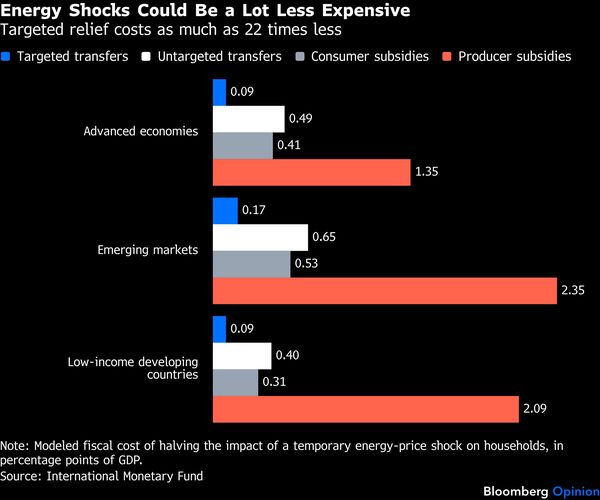
诚然,全面性的应对措施也有其优势。它们在政治上具有吸引力:选民会注意到加油站油价何时下跌。它们所需的官僚协调较少。然而,从长远来看,它们会产生不良激励。当你可以指望政府在价格飙升时介入,为什么要投资节能设备?更糟的是,此类政策给本已严重紧张的公共财政增加了负担:研究表明,非针对性措施的财政成本可能高达针对性措施的22倍,尤其是针对发电公用事业等生产商的补贴。
To be sure, sweeping responses have their advantages. They’re politically appealing: Voters notice when prices at the gas pump fall. They demand less bureaucratic coordination. Yet over time they create bad incentives. Why invest in energy-saving equipment when you can count on the government to step in whenever prices spike? Worse, such policies burden already severely stretched public finances: Research suggests that the fiscal cost of untargeted measures can be as much as 22 times greater, particularly for subsidies aimed at producers such as power utilities.
下一次冲击来临时,政府必须准备得更充分。他们掌握了所需的大部分信息,涉及住户的收入、规模、位置、能源效率、社会项目参与情况和银行账户详情。挑战在于以一种能够快速识别需援助者并发放救助的方式关联所有数据——以及产生必要的政治意愿,在没有危机聚焦官员注意力时进行必要的投资。例如,丹麦结合了收入和能源来源数据,以精准锁定最易受高昂取暖费影响的人群。
When the next shock comes, governments must be better prepared. They have much of the information they need on the income, size, location, energy efficiency, social program participation and bank details of households. The challenge is linking all the data in ways that allow rapid identification of the needy and delivery of aid — and generating the political will to make the necessary investments when there’s no crisis to focus officials’ attention. Denmark, for example, has combined data on income and energy sources to target people most exposed to high heating costs.
归根结底,增强能源韧性的最佳途径是首先减少对化石燃料的依赖。与此同时,在其他领域,生活成本冲击将持续发生。它们需要让纳税人付出的代价更小。
Ultimately, the best path to energy resilience is to reduce reliance on fossil fuels in the first place. In the meantime, and in other sectors, cost-of-living shocks will continue. They need to cost taxpayers less.