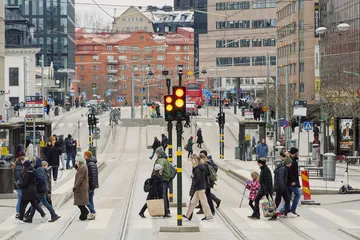
欧洲越来越擅长承受冲击。问题在于这能维持多久。在经历俄罗斯入侵乌克兰之后整整一代人中最严重的生活成本危机后,该地区正在以少得多的手忙脚乱来适应伊朗战争。其经济并没有陷入许多人担心的衰退,反而表现出出人意料的强劲。
Europe is getting good at absorbing shocks. The question is how long it can keep it up. Having endured the worst cost-of-living crisis in a generation after Russia invaded Ukraine, the region is adjusting to the Iran war with considerably less fuss. Evading the recession many feared, its economy has instead proved unexpectedly robust.
周五的数据显示,欧元区第三季度经济产出跃升0.4%,是分析师估计速度的两倍,尽管不稳定的爱尔兰数据推高了近期的读数。
Data Friday showed euro-zone output jumped 0.4% in the third quarter, twice the pace analysts estimated, though volatile Irish numbers have boosted recent readings.
2022年之后吸取的教训至关重要。能源供应更加多元化,消费者正在动用储蓄,欧洲央行对通胀的反应也更加迅速——这些因素可以帮助欧洲大陆在日益容易遭受冲击的世界中,经受住未来关于能源和贸易的动荡。最新的危机远未结束。但就目前而言,欧洲正在收获回报。
Lessons learned after 2022 have been crucial. Energy supplies are more diversified, consumers are tapping savings and the European Central Bank has responded more quickly to inflation — factors that can help the continent weather future turbulence over energy and trade in a world that’s becoming more prone to shocks. The latest crisis is far from over. But for now, Europe is reaping the rewards.
也许在能源方面取得的进展最大。据欧洲经济委员瓦尔迪斯·东布罗夫斯基斯称,在俄罗斯于2022年利用管道输气进行敲诈之后,与俄罗斯的分裂现在“大体上已经完成”,他列举出挪威和美国目前是该地区的主要供应商。
Perhaps the most progress has been made on energy. The split from Russia following its blackmail over pipeline deliveries in 2022 is now “by and large done,” according to European Economy Commissioner Valdis Dombrovskis, who lists Norway and the US as the region’s top providers at present.
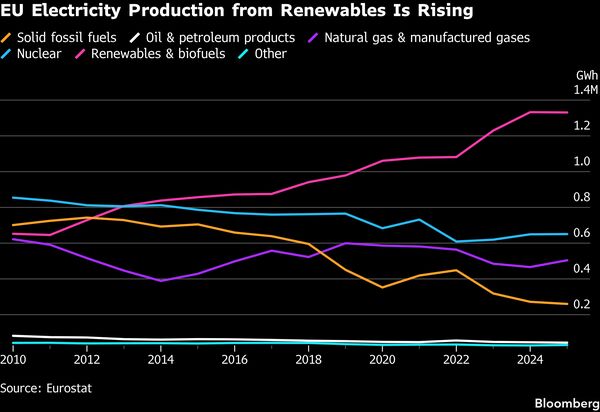
他在一次采访中表示:“我们不得不投资于实现供应多元化,特别是天然气供应,这正在帮助我们。但随后还要继续推广可再生能源并提高能源效率。因此,这无疑对当前的韧性做出了贡献。”欧盟电力产值中绿色能源的份额从2022年的39%上升到2025年的47%,缓和了天然气成本上升对电价的影响。耗能产业也加大了提高能效的力度。
“We had to invest in diversification of notably natural gas supplies, and that’s helping us,” he said in an interview. “But also then to continue our rollout of renewables and improvements in energy efficiency. So that certainly has contributed to resilience right now.”The share of green sources in European Union electricity output rose to 47% in 2025 from 39% in 2022, cushioning the impact of rising gas costs on power prices. Energy-guzzling industries have also stepped up efficiency efforts.
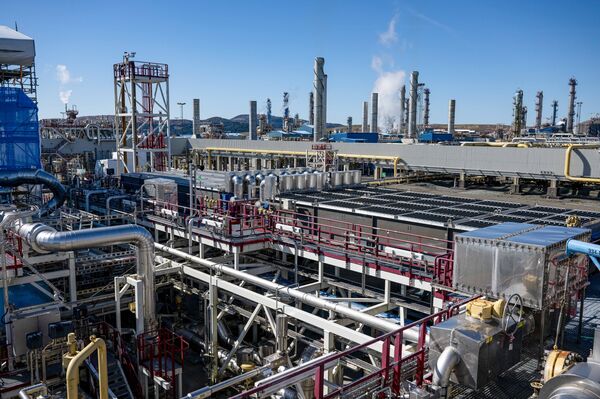
水泥制造商海德堡材料公司改造了一家法国工厂,使其靠90%的替代燃料运行,并将电力需求削减了十分之一。化工厂科思创公司在2020年至2025年期间将每吨产品的能耗降低了12%以上。
Cement maker Heidelberg Materials AG has revamped a French plant to run on 90% alternative fuels and trimmed power demand by a 10th. Chemicals firm Covestro AG cut energy consumption per ton of product by more than 12% in 2020-2025.
德国电网运营商50Hertz负责人斯特凡·卡普费雷尔表示,企业已经学会了在能源便宜时使用能源,并且随着电池变得更加普及,它们将从中受益。在其他创新解决方案中,他列举了一个通过使用多余电力产生蒸汽来节省天然气的化工园区。
Businesses have learned to use energy when it’s cheap and will benefit as batteries become more prevalent, according to Stefan Kapferer, who heads German power-grid operator 50Hertz. Among other innovative solutions, he lists a chemical park that saves on natural gas by using excess electricity to generate steam.
卡普费雷尔说:“这些都是如果没有2022年的经历也会发生的趋势。但它们当然得到了加速。”荷兰国际集团首席经济学家玛丽克·布洛姆估计,家庭也起到了帮助作用,导致天然气使用量较乌克兰战争前总体下降了约15%,这使得消费者和工业对当前的冲击脆弱性降低。
“These are all trends that would have happened without the experience of 2022,” Kapferer said. “But they’ve, of course, been accelerated.”Households have helped too, resulting in an overall drop of about 15% in gas usage from before the war in Ukraine that’s left both consumers and industry less vulnerable to the current shock, ING Chief Economist Marieke Blom estimates.
她说,欧盟国家更好地协调采购以避免推高市场价格也发挥了作用。
EU nations better coordinating purchases to avoid bidding up market prices has also helped, she said.
标普全球评级经济学家西尔万·布鲁耶表示,除了能源之外,尽管通胀侵蚀了可支配收入,但购物者仍在继续消费,部分原因是他们动用了自大流行以来积累的大笔现金储蓄。
Beyond energy, shoppers have kept spending despite inflation eroding disposable incomes, in part by dipping into the outsized cash stockpiles they’ve accumulated since the pandemic, according to S&P Global Ratings economist Sylvain Broyer.
他说:“看起来消费者的韧性植根于一场非常不同寻常的储蓄消耗中。”
“It looks like the resilience of the consumer has its roots in a very unusual drawdown in savings,” he said.
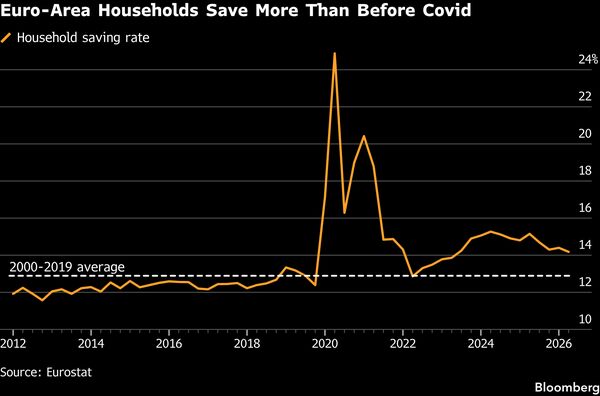
他预计,即使在动用这些储备之后,储蓄仍将继续超过新冠疫情前的水平,特别是在存款账户利率很高的情况下。这可能为应对下一次冲击提供弹药。
Even after tapping those reserves, he expects saving to continue eclipsing pre-Covid levels, especially while rates on deposit accounts are high. That could provide ammunition for the next shock.
利率看起来也将进一步上升。与俄罗斯对乌克兰战争爆发后、仅在通胀已接近9%时才提高借款成本不同,政策制定者这次采取行动的速度要快得多。
Interest rates look set to rise further, too. Unlike after the start of Russia’s war in Ukraine, when borrowing costs were only lifted with inflation already near 9%, policymakers were much quicker to act this time around.
自美国袭击伊朗以来,欧洲央行已经加息两次,这使其成为七国集团央行中的先行者。与2022年的对比遵循了一项旨在为应对来自地缘政治、气候和人口统计的更频繁冲击做好准备的战略评估。行长克里斯蒂娜·拉加德曾承诺提高灵活性。
The ECB has hiked twice since the US attacked Iran, distinguishing it as the first mover among G7 central banks. The contrast to 2022 follows a strategy review designed to prepare for more frequent jolts from geopolitics, climate and demographics. President Christine Lagarde had promised more agility.
更快的反应本身可能就在帮助经济吸收冲击。中期通胀预期仍锚定在2%的目标附近,而诸如高昂的薪资要求等后续影响看起来得到了遏制,这可能会减少最终所需的货币紧缩力度。
The faster response may itself be helping the economy absorb the shock. Medium-term inflation expectations remain anchored near the 2% goal, while knock-on effects such as lofty wage demands look contained, potentially reducing the amount of monetary tightening ultimately needed.
彭博经济研究表示……“我们预计经济将继续以接近趋势的温和速度扩张,但随着市场压力和更紧的金融条件日益对经济活动造成拖累,下行风险正在积聚。”——首席欧元区经济学家西莫娜·德勒·基亚伊。点击此处查看完整报告然而,由于中东冲突看不到尽头,这最新一集的故事并没有结束,欧洲仍然有理由担心。
What Bloomberg Economics Says...“We expect the economy to continue expanding at a moderate pace close to trend, but downside risks are building as market stress and tighter financial conditions increasingly weigh on activity.”—Simona Delle Chiaie, chief euro-area economist. Click here for full note With no end in sight to the conflict in the Middle East, however, the story of this latest episode isn’t over and Europe still has reasons to worry.
石油和天然气价格的再次飙升打破了伊朗战争的经济后果将迅速消退的希望,威胁到对家庭和公司利润率的又一次挤压。随着通胀逼近4%,消费者可能会收紧开支。
A fresh surge in oil and gas prices has dashed hopes that the Iran war’s economic consequences will quickly fade, threatening a renewed squeeze on households and company margins. With inflation closing in on 4%, consumers may retrench.
尽管欧洲大陆在经历过去几次危机后建立起了缓冲,但未来危机的形式尚不清楚。天然气储存、法国、贸易紧张局势、战争和通胀可能会相互作用,当多重冲击同时到来时,为抵御一次冲击而建立的韧性可能更难维持。
And while the continent has erected buffers following past crises, it’s unclear what form future ones will take. Gas storage, France, trade tensions, war and inflation can interact, and resilience built to withstand one shock may be harder to maintain when several arrive together.
目前,欧洲似乎拥有一些动能,并将继续受益于人工智能支出以及在军事和基础设施方面的巨额支出。牛津经济研究院高级经济学家保罗·格里尼亚尼尽管认为各国存在一些脆弱性,但仍看到了乐观的理由。
Right now, Europe appears to have some momentum and will continue to benefit from AI spending alongside huge outlays on the military and infrastructure. Despite some vulnerability at the country level, Paolo Grignani, a senior economist at Oxford Economics, sees grounds for optimism.
他在周五的GDP数据公布后表示:“在地缘政治动荡和恶化通胀环境的背景下,欧元区经济依然具有韧性。经济仍有望以健康的基调结束这一年。”
“The euro-zone economy remains resilient amid geopolitical turmoil and a worsening inflationary environment,” he said after Friday’s GDP data. “The economy is still set to end the year on a decent footing.”