全球自然保护谈判结束,行动与资金缺口依然存在各国在亚美尼亚举行的联合国谈判中重申了保护野生动植物的承诺,但如何筹措资金仍是一个悬而未决的问题。
Global Talks on Nature End With Persistent Gaps on Action and Funding Countries renewed their promises to protect wildlife at U.N. talks in Armenia, but how to cover the costs remains a question.
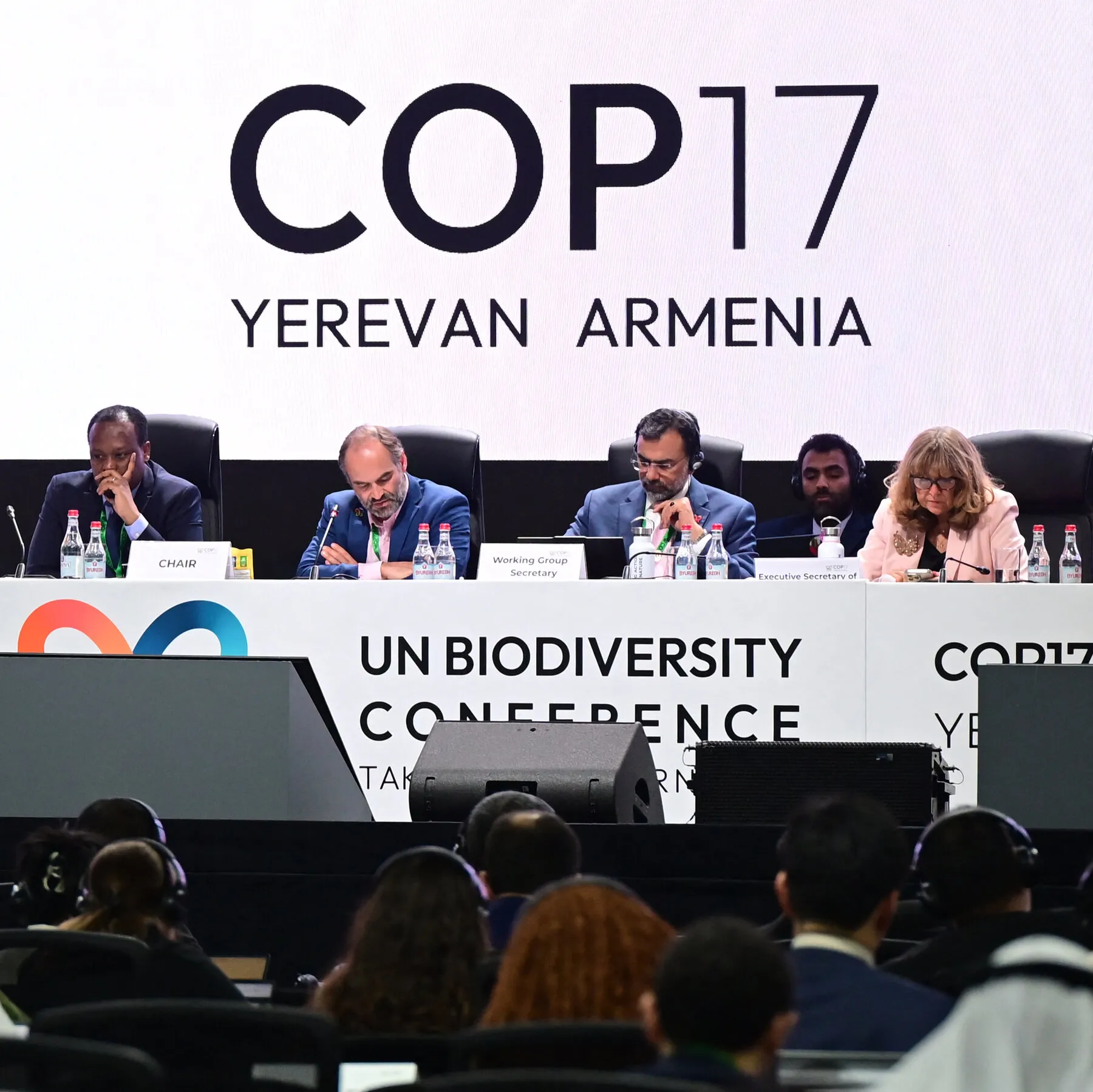
为期两周的全球谈判旨在保护世界野生动植物和生态系统,于周六在亚美尼亚首都埃里温结束。各国重申了保护自然的承诺,但距离在2030年截止日期前实现一套雄心勃勃的目标仍偏离轨道。
Two weeks of global negotiations to protect the world’s wildlife and ecosystems ended on Saturday in Yerevan, Armenia, with nations reaffirming their pledges to protect nature but still off track to meet an ambitious set of targets by a 2030 deadline.
科学家表示,地球上的生物多样性——即生命的多样性——正以人类历史上前所未有的速度下降。
Biodiversity, the variety of life on the planet, is declining at levels unprecedented in human history, scientists say.
2022年,在《联合国生物多样性公约》框架下达成的一项里程碑式协议中,各国承诺通过在23项目标上采取行动来扭转这些损失,其中包括保护地球30%的陆地和水域,以及改革导致野生动植物减少的产业。
In 2022, in a landmark agreement made under the United Nations biodiversity treaty, nations pledged to reverse those losses by taking action on 23 targets, including protecting 30 percent of the earth’s land and water and reforming industries that drive declines in wildlife.
今年的会议标志着各国履行这些承诺的截止日期已过半。美国是除梵蒂冈外唯一未加入该公约的国家,尽管它出席会议并从场边参与。
This year’s meeting marked the halfway point for countries to meet their deadline for those pledges. The United States is the only country, with the exception of the Vatican, that is not party to the treaty, though it attends the meeting and participates from the sidelines.
就在谈判开始前,联合国发布了一份进展评估报告,发现各国远远落后于进度。一个主要议题是如何通过“埃里温路径”重回正轨,以帮助释放进展动力。
Just before the talks began, the United Nations issued a review of progress that found that countries were lagging far behind. A major theme was how to get on track with a “Yerevan Pathway” that would help unlock progress.
最终,代表们重申了承诺并设定了优先事项,为国内行动施加了压力,但如何为自然保护买单,特别是对于那些经济贫困但生物多样性丰富的国家,这一棘手问题仍未得到解决。会议官员表示,各国承诺提供近20亿美元的新增融资。
In the end, delegates reaffirmed their commitments and set priorities, creating pressure for domestic action, but tense questions over how to pay for nature protection, especially in countries that are poor financially but rich in biodiversity, remained unresolved. Countries pledged almost $2 billion in new financing, conference officials said.
“在联合国系统的不可避免的局限性之内,我认为我们取得了一些重大进展,”曾任加拿大环境部长、曾协助促成2022年全球生物多样性协定的史蒂芬·吉尔博(Steven Guilbeault)说。他表示,很高兴看到埃里温有更多的财政部长出席,因为采取生物多样性行动需要他们的参与。
“Within the inevitable limits of the U.N. system, I think that we’ve made some significant progress,” said Steven Guilbeault, a former environment minister of Canada who helped shepherd through the 2022 global biodiversity agreement. He was heartened to see more finance ministers in Yerevan, he said, because action on biodiversity requires their involvement.
他和其他人表示,一个主要亮点是集中解决最棘手的问题之一:根据联合国的数据,大约有2.4万亿美元的公共资金流向了破坏环境的活动。
A major highlight, he and others said, was a focus on tackling one of the thorniest issues: about $2.4 trillion in public money that flows toward environmentally damaging activities, according to the United Nations.
非营利组织野生生物保护学会(Wildlife Conservation Society)国际政策主任阿尔弗雷德·德杰米斯(Alfred DeGemmis)表示:“亚美尼亚碰触了生物多样性谈判的‘触电红线’,理应受到赞誉:即那些支撑着导致全球生物多样性衰退体系的农业、渔业和其他补贴。”
“Armenia deserves credit for touching the ‘third rail’ of biodiversity negotiations: the agricultural, fisheries and other subsidies that prop up a system leaving biodiversity in global decline,” said Alfred DeGemmis, the director of international policy at the nonprofit Wildlife Conservation Society.
这些有害补贴被视为填补保护工作所需巨额资金缺口的关键。研究机构保尔森研究所(Paulson Institute)和其他机构估计,这一资金缺口约为每年1.3万亿美元。在会谈之前,各国在2022年作出的所有承诺中,补贴改革已被证明是最难应对的议题之一。
Those harmful subsidies are seen as critical to plugging the yawning gap in funding needed for conservation, estimated at about $1.3 trillion a year by the Paulson Institute, a research organization, and others. Going into the talks, of all the pledges nations made in 2022, subsidy reform has proved one of the most difficult for countries to address.
在埃里温举行的会谈期间,启动了三项倡议以帮助各国在补贴改革方面取得进展。其中一项是由哥伦比亚和芬兰领导的联盟,旨在汇聚部长级团队,分享知识、经验和战略。
During the talks in Yerevan, three initiatives were started to help countries make progress on reforming subsidies. One is a coalition led by Colombia and Finland that aims to bring ministerial teams together to share knowledge, experience and strategies.
“我们不需要花更多的钱来弥补生物多样性资金缺口,我们需要把钱花得更好,”芬兰高级部长级顾问、该工作联合主席玛丽娜·冯·魏森贝格在一份新闻稿中说。“各国政府在此有一个真正的机会,能够着眼子孙后代重塑公共支出,但它们无法独自完成。国际协调是给予各国政府引领变革信心的关键。”
“We don’t need to spend more to close the biodiversity funding gap, we need to spend better,” Marina Von Weissenberg, a Finnish senior ministerial adviser and co-chair of that effort, said in a news release. “Governments have a real opportunity here to reshape public spending with future generations in mind, but they can’t do it alone. International coordination is key to giving governments the confidence to lead change.”
谈判的另一个议题是2024年在哥伦比亚卡利举行的上一轮全球生物多样性谈判的一项主要成果:一个基金,依靠生物多样性的制药及其他行业将通过该基金为保护工作出资。自2025年启动以来,该基金举步维艰,仅筹集到约1万美元。埃里温会议上的代表们重申了对大型企业建议的缴纳比例:利润的1%。但向该基金缴款是自愿的,后续将如何发展仍有待观察。
Another topic of negotiations was one of the major accomplishments from the last global biodiversity talks, in Cali, Colombia, in 2024: a fund through which the pharmaceutical and other industries that rely on biodiversity would contribute to conservation efforts. Since its beginning in 2025, the effort has struggled, raising only about $10,000. Delegates in Yerevan reaffirmed the suggested rate of contribution for large companies: 1 percent of profit. But contributing to the fund is voluntary, and it remains to be seen what will happen.
在整个谈判过程中,一些活动人士表达了强烈的失望,担心2022年的全球协议会步其前任后尘,后者未能完全实现任何一项目标。下一次此类会议将于2028年在厄瓜多尔举行。
Throughout the talks, some activists expressed bitter disappointment, raising concerns that the 2022 global agreement would go the way of its predecessor, which failed to fully meet a single global target. The next such gathering will be held in 2028 in Ecuador.
卡特林·艾因霍恩为《纽约时报》报道生物多样性、气候和环境新闻。
Catrin Einhorn covers biodiversity, climate and the environment for The Times.