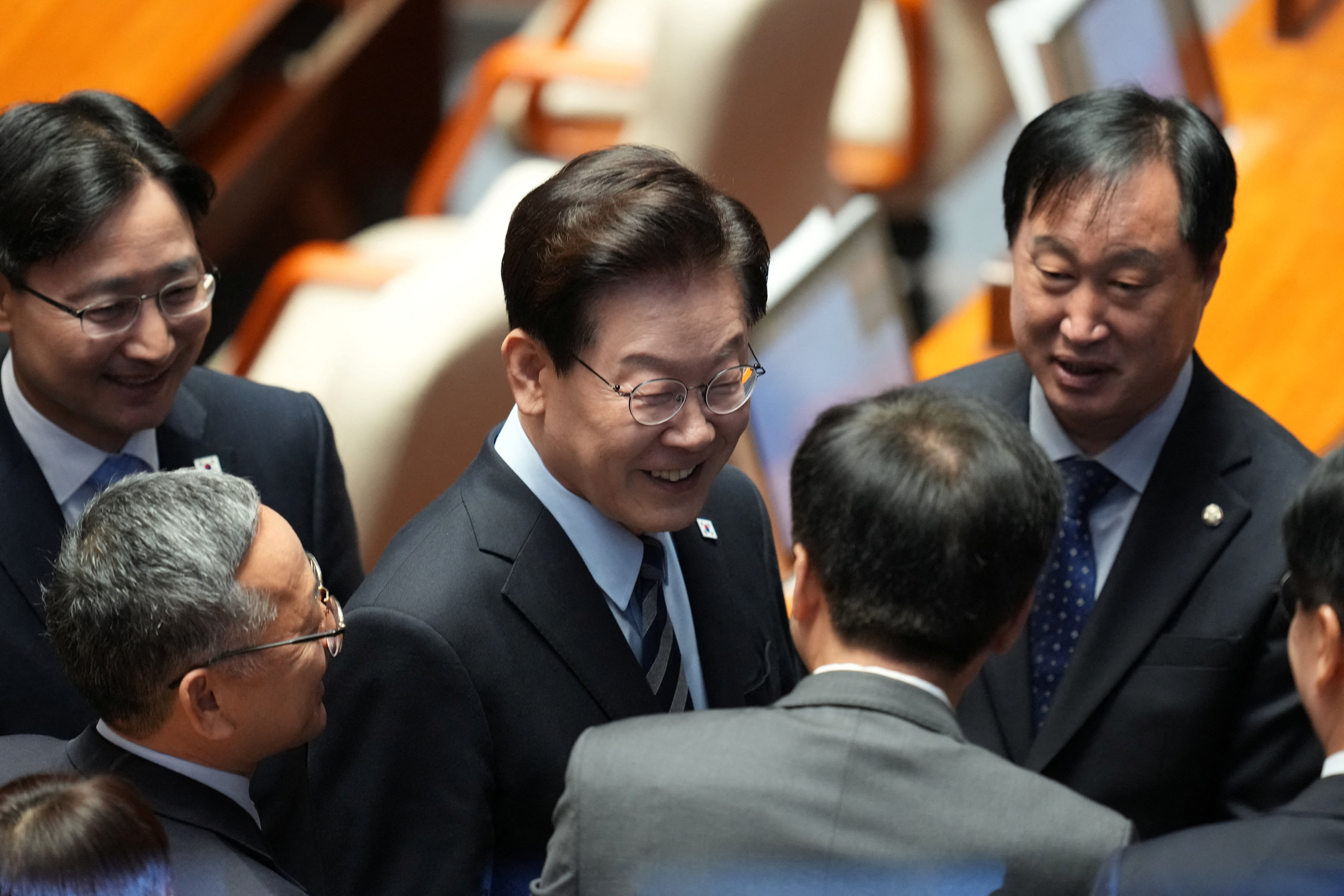
韩国总统李在明周一承诺,将大力投资人工智能,以提升该国经济增长潜力,此番表态是在向议会发表讲话,寻求批准明年预算。
Korean President Lee Jae Myung vowed on Monday to make bold investments in artificial intelligence to boost the country's economic growth potential, in an address to parliament seeking approval for next year's budget.
“我们将在人工智能以及半导体、实体人工智能和人工智能数据中心这三大旗舰项目上投资21.3万亿韩元(约合159.7亿美元),几乎是今年的两倍,”李在明说。
"We will invest 21.3 trillion won ($15.97 billion), nearly twice this year’s amount, in AI and the three megaprojects of semiconductors, physical AI and AI data centres," Lee said.
其政府9月提出,明年将政府支出创纪录地增加12.8%,达到820.9万亿韩元(约合6156.2亿美元),旨在加强韩国的技术优势,因为全球人工智能竞争日趋激烈。
His administration proposed in September increasing government spending by a record 12.8% next year to 820.9 trillion won ($615.62 billion) aiming to strengthen South Korea’s technological edge as global competition over AI intensifies.
韩国经济一直受益于人工智能先进芯片的需求,推动了出口以及三星电子和SK海力士等存储芯片制造商的盈利。
South Korea’s economy has been heavily boosted by demand for advanced chips used in AI, lifting exports and the earnings of memory chip makers Samsung Electronics and SK Hynix.
亚洲第四大经济体在第三季度因芯片出口和投资而增长快于预期。1月至10月,出口总额达9300亿美元,有望在今年突破1万亿美元,使韩国成为继美国、中国和德国之后世界上第四个达到这一里程碑的国家。
Asia's fourth-largest economy grew faster than expected in the third quarter on chip exports and investment. From January to October, exports totalled $930 billion, on track to exceed $1 trillion this year and make South Korea the fourth country in the world to reach the milestone after the United States, China and Germany.
李在明表示,年出口1万亿美元的目标如今已触手可及,但警告称,收益并未得到均等分享。
Lee said annual exports of $1 trillion were now within reach, but warned that the benefits were not being shared evenly.
“我们必须从‘少数人的增长’——即机会和收益集中于特定地区、阶层和少数公司——实现向‘所有人的增长’的伟大转变,”他说。
"We must make a great transition from ‘growth for the few,’ in which opportunities and gains are concentrated among certain regions, classes and a small number of companies, to ‘growth for all,’” he said.
预算中包括162.3万亿韩元的未来应对基金,该基金主要由半导体繁荣带来的额外税收收入融资,旨在支持增长型产业、年轻人、地区发展和教育,同时为未来收入短缺提供缓冲。
The budget includes a 162.3 trillion won Future Response Fund, financed largely by additional tax revenue from the semiconductor boom, to support growth industries, young people, regional development and education while providing a buffer against future revenue shortfalls.
李在明同时推动以芯片、实体人工智能和数据中心为中心的全国性旗舰项目,包括由三星和SK海力士在该国西南部主导的800万亿韩元私营部门芯片建设计划。
Lee is simultaneously pursuing nationwide megaprojects centred on chips, physical AI and data centres, including an 800 trillion won private sector chip buildout led by Samsung and SK Hynix in the country's southwest.