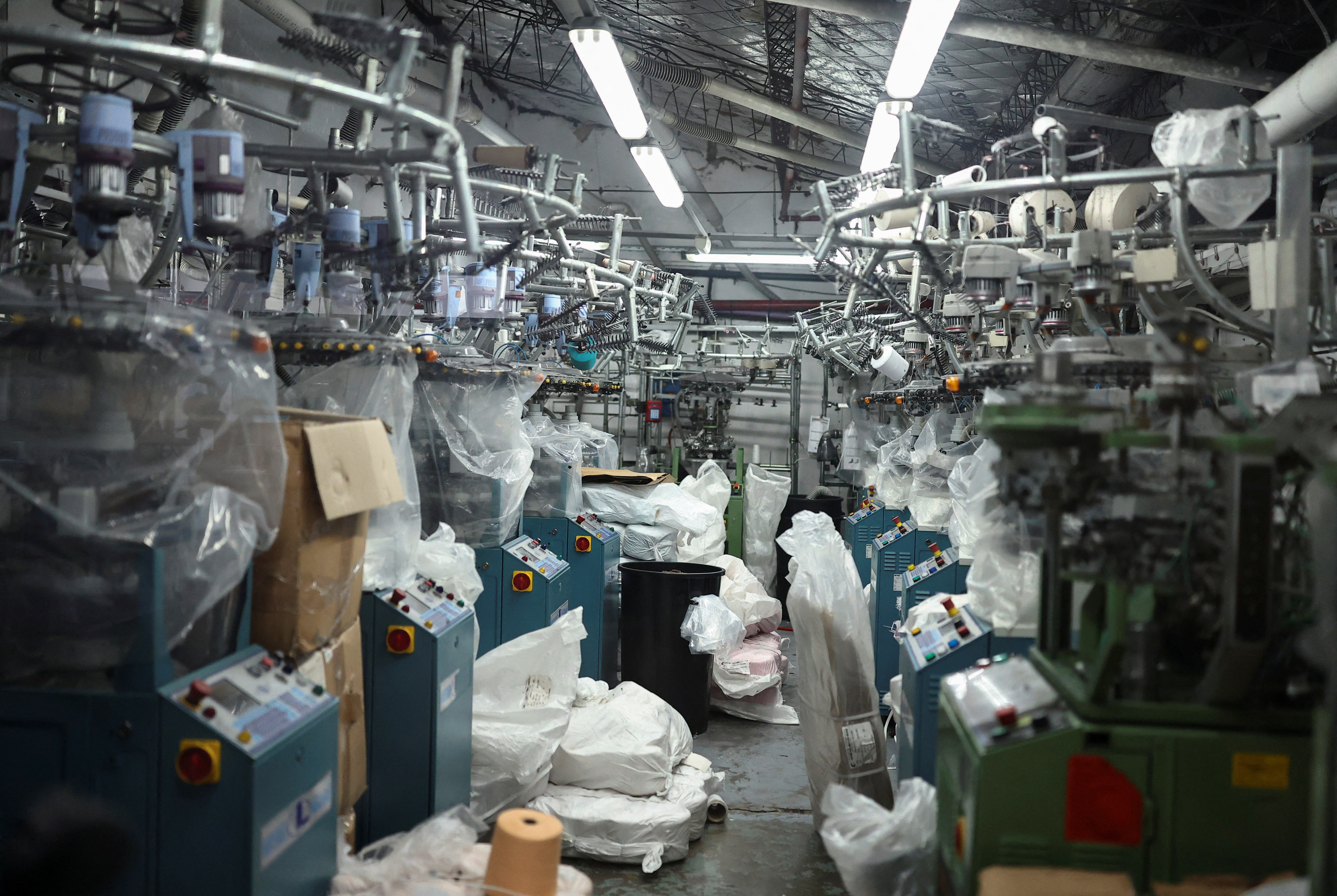
尼古拉斯·米斯库林(Nicolás Misculin)报道:在布宜诺斯艾利斯一家家族经营的工厂里,一台用于打包彩色袜子的机器静静地立在那里。
By Nicolás Misculin At a family-owned factory in Buenos Aires, a machine used to wrap packets of colored socks sits silent.
Eseka目前在该工厂每月仍生产近300万件商品,其中包括Cocot和Dufour品牌的内衣和泳装。但和许多当地企业一样,它正在艰难求生。自阿根廷总统哈维尔·米莱近三年前上台以来,由于政府取消了贸易限制,受消费者需求疲软以及来自廉价进口商品竞争的双重打击,该公司的销量下降了约40%。
Eseka still produces nearly 3 million items a month at the factory, including underwear and swimwear for its Cocot and Dufour brands. But like many local businesses, it is struggling to stay afloat. Since President Javier Milei took office nearly three years ago, sales have fallen around 40%, battered by weak consumer demand and competition from cheaper imports as the government has lifted trade restrictions.
这在阿根廷至关重要,因为家庭消费约占国内生产总值的三分之二,这意味着任何持续的支出回落都会对整体经济形成拖累。
That matters in Argentina, where household consumption accounts for about two-thirds of gross domestic product, making any sustained pullback in spending a drag on the broader economy.
经济学家表示,阿根廷经济在第三季度可能已经陷入衰退,这在2027年10月总统大选(米莱预计将竞选连任)前的一年里,对选民的耐心构成了考验。
Economists says the economy likely slipped into a recession in the third quarter, a test of voter patience a year ahead of the October 2027 presidential election, when Milei is widely expected to run for a second term.
根据智库Fundar的数据,从2023年12月米莱上台到7月期间,约有3.23万家企业倒闭,约占阿根廷企业总数的6%。
Some 32,300 businesses — roughly 6% of the total companies in Argentina — closed in the period from when Milei took power in December 2023 through to July, according to think-tank Fundar.
“情况很危急,”与兄弟古斯塔沃(Gustavo)共同拥有Eseka的里卡多·库奇基安(Ricardo Kuchikian)说。据兄弟二人透露,该公司去年出现亏损,并裁掉了约30%的员工。这家袜厂中有一半以上的圆机处于闲置状态。库奇基安说:“过去三年里,消费下降非常剧烈。”
"The situation is critical," said Ricardo Kuchikian, who owns Eseka with his brother Gustavo. The firm posted losses last year and shed about 30% of its workforce, according to the brothers. Over half of the circular knitting machines in the sock factory stand idle. "Consumption has fallen very sharply over the past three years," Kuchikian said.
根据追踪超市、小型零售商和电商平台销售额的市场研究公司Scentia的数据,今年前九个月,阿根廷的消费量比2025年同期下降了2.7%。
In the first nine months of the year consumption in Argentina fell 2.7% compared with the same period in 2025, according to market research firm Scentia, which tracks sales across supermarkets, small retailers and e-commerce platforms.
虽然米莱激进的紧缩政策已将通胀率从高达200%的水平降至30%,并使其他宏观经济失衡得到了控制,但其益处尚未惠及广大公众。在2025年降至八年来的最低点后,生活在贫困线以下的阿根廷人比例已上升至近三分之一的人口。
While Milei's radical austerity measures have slowed inflation to 30% from a sky-high 200% and brought other macroeconomic imbalances under control, their benefits have yet to reach much of the broader public. The share of Argentines living beneath the poverty line has risen to nearly a third of the population, after falling to an eight-year low in 2025.
不仅如此,经济学家表示,受紧缩政策和紧缩货币政策的驱使,阿根廷在第三季度可能陷入了衰退。预计2027年将出现轻微反弹。
To boot, Argentina likely dipped into recession in the third quarter, economists say, driven by austerity and tight monetary policy. A slight rebound is forecast in 2027.
据预测,7月至9月期间,经济活动连续第二个季度出现萎缩,符合经济衰退的通常定义。该季度的官方数据将于11月发布。
Economic activity is forecast to have contracted for a second consecutive quarter in the July-September period, meeting the common definition of a recession. Official data for the quarter will be released in November.
咨询公司Analytica负责人里卡多·德尔加多(Ricardo Delgado)表示:“阿根廷经济从技术上讲处于温和衰退中。”第二季度GDP较第一季度已经下降了0.6%,德尔加多预测第三季度将进一步萎缩约1.5%。
“Argentina’s economy is technically in a moderate recession,” said Ricardo Delgado, head of consultancy Analytica. GDP already fell 0.6% in the second quarter from the first, and Delgado forecasts a further contraction of around 1.5% for the third quarter.
根据咨询公司Giacobbe y Asociados最近的一项民意调查,米莱的支持率在10月份小幅滑落至36%,而不支持率则上升至56%。
According to a recent survey by consultancy Giacobbe y Asociados, Milei’s approval rating slipped slightly in October to 36% while disapproval rose to 56%.
当然,并非所有经济部门都在遭受痛苦。在米莱模式下,能源、矿业和农业已成为赢家,这得益于出口以及对阿根廷庞大页岩油气储量的投资,还有全球对锂等矿产不断增长的需求。
To be sure, not all of the economy is suffering. Energy, mining and agriculture have emerged as the winners under Milei’s model, driven by exports and investment in Argentina’s vast shale oil and gas reserves, as well as rising global demand for minerals such as lithium.
但这些出口导向型行业的强劲表现,迄今未能抵消与国内市场相关的其他行业的低迷。随着消费者继续感受到紧缩带来的压力,纺织业、汽车制造业、零售业和建筑业均持续承压。
But the strength of these export-oriented sectors has so far not offset the slump in other industries tied to the domestic market. Textiles, auto manufacturing, retail and construction have all remained under pressure as consumers continue to feel the squeeze.
Analytica的德尔加多表示,他预计这种双轨经济将在2027年继续“起伏不定”,并警告称,家庭财务状况在选举前不太可能出现实质性改善。
Analytica's Delgado said he expected that two-track economy to continue with "ups and downs" in 2027, warning that household finances were unlikely to improve meaningfully before the election.
米莱已排除修改其经济计划的可能性,并斥责声称人们难以维持生计的说法是“极度的愚蠢”。
Milei has ruled out changes to his economic plan, dismissing as "colossal stupidity" claims that people were unable to make ends meet.
投资者对米莱放松严格的进口限制、资本和货币管制以及长期拖累阿根廷企业发展的其他法规表示欢呼。但对于许多当地企业来说,这一转变带来了一次痛苦的调整,在内需走软之际,使它们暴露在更廉价的进口商品竞争之下。
Investors have cheered Milei’s easing of strict import restrictions, capital and currency controls and other regulations that long weighed on business in Argentina. But for many local firms, the shift has brought a painful adjustment, exposing them to cheaper imported goods just as domestic demand weakens.
阿根廷国家统计与普查局(INDEC)发布的8月官方数据显示,制造业同比下降3.2%,零售和批发贸易下降3.5%,建筑业下降2.5%。
Official data from August showed manufacturing fell 3.2% year-on-year, retail and wholesale trade dropped 3.5%, and construction declined 2.5%, according to Argentina’s INDEC statistics agency.
另一家分销织物的家族企业Dakuba的负责人马丁·阿比加多(Martin Abigador)说:“自2023年底以来,我认为销量下降了40%。”
“Since the end of 2023, I think sales have fallen 40%,” said Martin Abigador, director of Dakuba, another family-owned business that distributes fabrics.
他的公司一直无法抵御他所说的来自外国进口商品(主要是中国商品)的“激进竞争”。
His company has been unable to offset what he described as "aggressive competition" from foreign imports, mainly from China.
回到袜厂,库奇基安担心,如果米莱的政策继续下去,“国家工业可能会消失。”一名政府发言人则为复苏步伐不均进行了辩护,称增长永远不会在各行业之间均匀发生。该发言人说:“这是总统坚信的经济计划,他不会改变它。”
Back at the sock factory, Kuchikian feared that if Milei's policies continue "national industry could disappear.”A spokesperson for the government defended the uneven pace of the recovery, saying that growth never occurs uniformly across sectors. "This is the economic program the president believes in, and he is not going to change it," the spokesperson said.