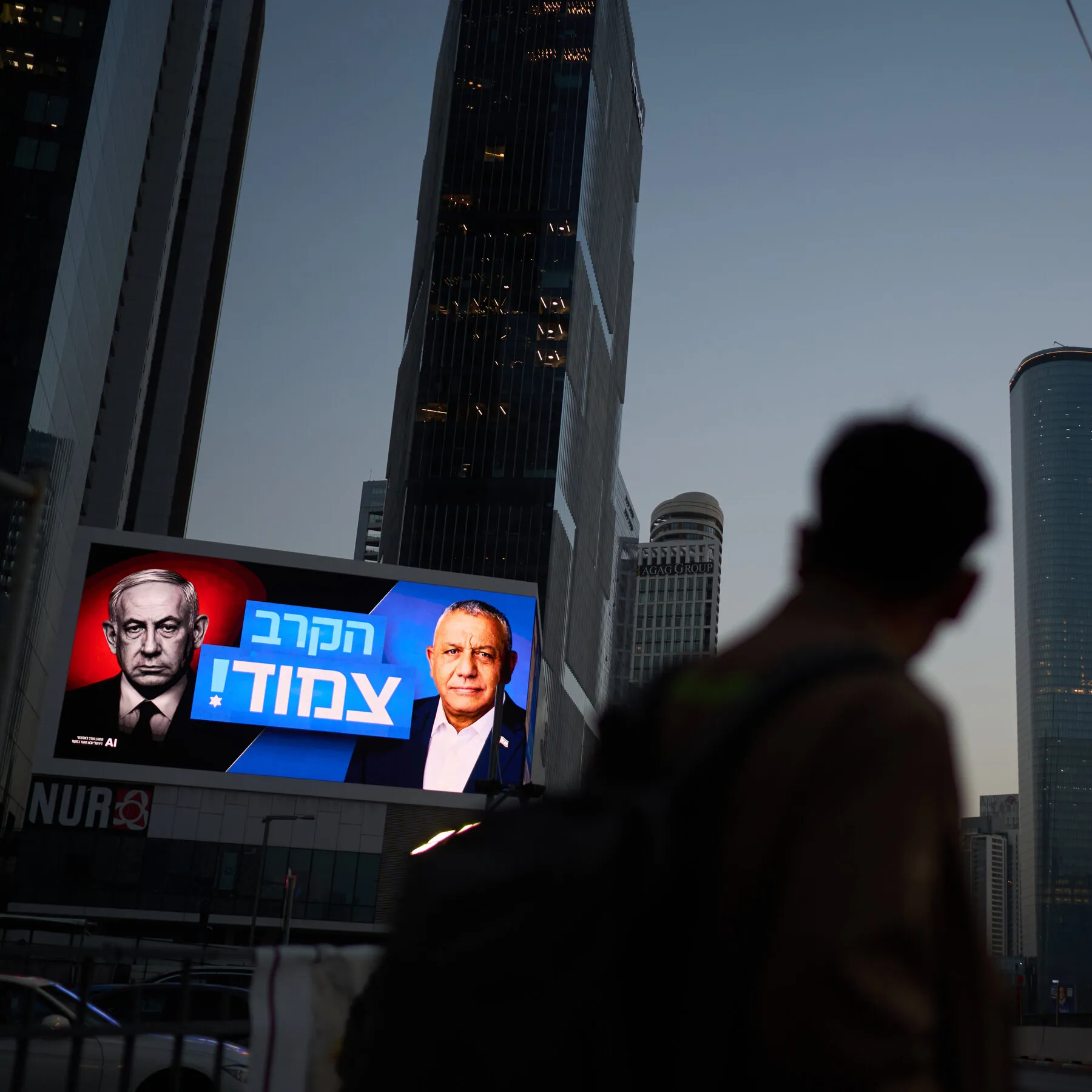
以色列面临下一个重大问题:谁有机会出任总理?各党派领袖将向以色列总统分别陈述理由,主张由本雅明·内塔尼亚胡或加迪·艾森科特获得优先组建执政联盟的机会。
Israel Turns to Next Big Question: Who Gets a Shot at Being Prime Minister? Party leaders will make competing cases to the Israeli president for either Benjamin Netanyahu or Gadi Eisenkot to get the first chance to build a governing coalition.
本周,以色列各党派领袖将陆续前往总统伊萨克·赫尔佐格的官邸,正式推荐他们心目中下一任总理的人选,此前上周二的大选结果不明朗。
This week, Israeli party leaders will trickle into the residence of President Isaac Herzog to officially recommend their pick for Israel’s next prime minister following the inconclusive election last Tuesday.
从周三开始的直播会议中,来自11个政党的政治家——包括代表世俗自由派、极端正统派犹太人和阿拉伯选民的政党——将向赫尔佐格陈述主张。随后,他将把组建联盟的授权交给他认为最有希望成功的候选人,该候选人将拥有长达六周的时间组建政府。
In livestreamed meetings to begin on Wednesday, politicians from 11 parties, including those representing secular liberals, ultra-Orthodox Jews and Arab voters, will make a pitch to Mr. Herzog. He will then bestow the mandate to build a coalition on whichever candidate he deems the most viable, who will have up to six weeks to form a government.
大多数党派领袖预计将支持现任总理、长期右翼领袖本雅明·内塔尼亚胡,或其主要中右翼对手加迪·艾森科特。两人均未在120席议会的投票中赢得明确的61席多数,这极可能意味着未来几周或几个月将在各党派和当选议员之间展开谈判。
Most party leaders are expected to back either Prime Minister Benjamin Netanyahu, the longtime right-wing leader, or his main center-right rival, Gadi Eisenkot. Neither man won a clear 61-seat majority in balloting for the 120-member Parliament, most likely meaning that weeks or months of negotiations among the parties and elected lawmakers lie ahead.
在幕后,政治家们正在权衡前进道路并争夺主动权。无人从选举中取得决定性胜利,使得内塔尼亚胡、艾森科特及其他人都在试图劝说并施压对手和潜在盟友。
Behind the scenes, politicians are weighing the path forward and wrangling for the upper hand. No one emerged from the election with a decisive victory, leaving Mr. Netanyahu, Mr. Eisenkot and the rest trying to cajole and squeeze opponents and would-be allies alike.
“这是一场胆小鬼博弈,”政治策略师内沃·科恩说,他曾负责极右翼国家安全部长伊塔马尔·本-格维尔2022年的竞选活动。
“It’s a game of chicken,” said Nevo Cohen, a political strategist who ran the 2022 election campaign for the far-right national security minister, Itamar Ben-Gvir.
内塔尼亚胡长期对其保守派和宗教政党集团保持严密控制。但政治分析人士表示,其中一些党派随时可能倒戈——可能是极端正统派,或是他利库德集团内部较为温和的右翼人士——以换取在艾森科特领导的政府中获得影响力。
Mr. Netanyahu has long exercised a tight grip over his bloc of conservative and religious parties. But some could always bolt — potentially ultra-Orthodox or more moderate right-wingers in his own Likud faction — in exchange for influence in an Eisenkot-led government, political analysts said.
艾森科特也可能寻求依靠长期处于以色列政坛边缘的阿拉伯政党组建政府,或者与内塔尼亚胡合作组建团结政府。这两种选择都很棘手,因为他的一些盟友在竞选期间曾承诺,绝不与内塔尼亚胡合作,也绝不与阿拉伯议员合作组建政府。
Mr. Eisenkot could also look to form a government by relying on Arab parties that have long sat on the sidelines of Israeli politics, or by partnering with Mr. Netanyahu to form a unity government. Either option would be tricky because some of his allies promised on the campaign trail never to work with Mr. Netanyahu, or with Arab lawmakers to form a government.
周一,反对派阵营关键人物阿维格多·利伯曼表示,他将推荐艾森科特担任总理。但他重申了长期以来的誓言,拒绝与内塔尼亚胡分享权力,也拒绝在阿拉伯政党支持下组建少数派政府,这进一步使艾森科特的处境复杂化。
On Monday, Avigdor Liberman, a key figure in the opposition bloc, said he would recommend Mr. Eisenkot for prime minister. But he reiterated his longstanding vow not to share power with Mr. Netanyahu or serve in a minority government with Arab parties, further complicating matters for Mr. Eisenkot.
曾参与前总理纳夫塔利·贝内特竞选团队、该团队上周在议会赢得12个席位的政治策略师利奥尔·乔雷夫表示:“所有政党‘都在审视自身内部状况,看看有多大的操作空间。他们想知道能走多远。’” 2022年上次大选后,内塔尼亚胡凭借64个席位的多数优势掌权,组建了以色列历史上最右翼的政府。这一次,盘算要复杂得多。内塔尼亚胡及其盟友在议会的多数席位降至53个,而艾森科特领导的反对派阵营获得了48个席位。
All the parties “are checking their internal situation to see how much room they have to maneuver,” said Lior Chorev, a political strategist who worked on former Prime Minister Naftali Bennett’s campaign, which picked up 12 seats in Parliament last week. “They want to know how far they can go.”After the last election in 2022, Mr. Netanyahu swept to power with a 64-seat majority, allowing him to establish the most far-right government in Israel’s history. This time, the calculations are considerably more complex. Mr. Netanyahu and his allies’ majority dropped to 53 seats in Parliament, while Mr. Eisenkot’s opposition bloc garnered 48 seats.
以色列阿拉伯公民投票率激增,也帮助两个主要阿拉伯主导政党赢得了历史性的19个席位,使它们成为潜在的“关键少数派”(注:kingmakers指掌握关键选票、能决定大局的势力)。
Surging turnout among Israel’s Arab citizens also helped deliver a historic 19 seats to the two main Arab-led parties, turning them into potential kingmakers.
一位以色列反对派官员在讨论私下谈判时要求匿名,他表示,各党领袖正在试探彼此的底线。该官员还透露,这些领袖也在为以色列议会(克内塞特)本周宣誓就职时的立法计划做准备。
An Israeli opposition official, who spoke on the condition of anonymity to discuss private negotiations, said that party leaders were feeling out one another’s red lines. These leaders were also drawing up legislative plans for when Israel’s Parliament, the Knesset, is sworn in this week, the official said.
联盟谈判将极其敏感,因为它们很容易破裂,让以色列重回另一轮选举,前中间派议员伊扎尔·沙伊表示。因此,在达成交易或作出让步时,政客们需要意识到这可能会如何影响他们的选民,万一他们比预期更快发现自己又回到了投票站前。
The coalition talks will be extraordinarily sensitive because they could easily collapse, sending Israel back to another round of elections, said Izhar Shay, a former centrist lawmaker. So in making deals or concessions, politicians need to be cognizant of how that might play with their voters, should they find themselves back at polling stations quicker than expected.
“各党派正在谈判——但实际上,他们仍在竞选,因为这可能在短短几个月内就变成一场选举战役,”沙伊先生说。“所以他们对说什么很谨慎,因为这可能会损害他们在可能四个月后、而非四年后举行的选举中的前景。”艾森科特至少有三条通往权力的路径。他可以试图拉拢内塔尼亚胡的一些盟友;他可以与他发誓要赶下台的总理组建团结政府;或者他可以依靠阿拉伯政党集团——并冒着分裂其基本盘的风险。
“The parties are negotiating — but in reality, they’re still campaigning, because this might turn into an election campaign in just a few months,” said Mr. Shay. “So they’re being cautious about what they say, because it could hurt them in elections which might be in four months, rather than four years.”Mr. Eisenkot has at least three paths to power. He could try to pick off some of Mr. Netanyahu’s allies; he could form a unity government with the prime minister he swore to oust; or he could lean on the Arab bloc — and risk splitting his base.
一些艾森科特的支持者表示,与内塔尼亚胡联手——尽管许多人痛恨这位总理——可能最讲得通,因为这能让极端正统派和阿拉伯政党远离权力中心。
Some of Mr. Eisenkot’s supporters say that joining with Mr. Netanyahu — although many detest the prime minister — might make the most sense, since it would keep ultra-Orthodox and Arab parties out of power.
但内塔尼亚胡是出了名的滑溜搭档,当政治协议不再服务于他时,他以前曾退出过协议。
But Mr. Netanyahu is a famously slippery partner, and he has walked away from political agreements before when they no longer served him.
2020年,内塔尼亚胡与中间派反对派领袖本尼·甘茨组建的团结政府在权力分享不到一年后垮台。根据他们的联合协议,内塔尼亚胡本应把总理职位让给甘茨,但他却解散了议会并宣布提前大选。
In 2020, a unity government between Mr. Netanyahu and Benny Gantz, a centrist opposition leader, collapsed after less than a year of power sharing. Under their coalition agreement, Mr. Netanyahu was supposed to yield the prime minister’s seat to Mr. Gantz, but he instead dissolved the Knesset and called new elections.
“我们以为我们在做正确的事,最终内塔尼亚胡却欺骗了我们,”当时是甘茨政党议员的沙伊先生说。
“We thought we were doing the right thing, and in the end Netanyahu cheated us,” said Mr. Shay, a lawmaker in Mr. Gantz’s party at the time.
但要在没有内塔尼亚胡的情况下组建政府,艾森科特很可能不得不依靠阿拉伯政党,特别是相对务实的“统一阿拉伯名单”(Raam),该党获得了8个席位。“联合名单”获得了11个席位,不太可能加入他的执政联盟,但它可以在议会(Knesset)中阻挠针对该政府的不信任投票,从而使他能够用不足61个席位组建“少数派政府”。
But to form a government without Mr. Netanyahu, Mr. Eisenkot would most likely have to lean on the Arab parties, in particular the relatively pragmatic Raam party, which got eight seats. The Joint List, which netted 11 seats, is unlikely to join his governing coalition, but it could block a no-confidence vote against it in the Knesset, allowing him to form a “minority government” with fewer than 61 seats.
自上周以来,内塔尼亚胡声称阿拉伯公民在“窃取选举”。他的利库德集团指控选举结果存在大规模舞弊,但未提供证据。选举官员多次表示,没有证据显示投票存在系统性干扰。
Since last week, Mr. Netanyahu has claimed that Arab citizens were “stealing the election.”His Likud party has alleged, without providing proof, that the results were subject to widespread tampering. Election officials have repeatedly said there was no evidence of systematic interference in the vote.
分析人士表示,内塔尼亚胡带有种族色彩的竞选活动旨在进一步抹黑艾森科特试图将阿拉伯政党作为合作伙伴的任何尝试。
Analysts say Mr. Netanyahu’s racially charged campaign aims at further discrediting any attempt by Mr. Eisenkot to engage Arab parties as partners.
“这是内塔尼亚胡唯一害怕的情景,所以他试图做一些会让少数派政府无法成立的事情,”以色列政策论坛(Israel Policy Forum,一个研究机构)的专家迈克尔·科普洛说。
“That’s the only scenario that Netanyahu is afraid of, so he’s trying to do things that will make a minority government impossible,” said Michael Koplow, an expert at the Israel Policy Forum, a research group.
周四曝光的一起事件给了内塔尼亚胡一个机会,对阿拉伯选民的高投票率的合法性提出质疑。
An incident that surfaced Thursday gave Mr. Netanyahu an opening to cast doubt on the legitimacy of the high Arab vote.
负责监督该国中央选举委员会的最高法院大法官诺姆·索尔伯格在一封信中表示,他看到了情报,显示选举中可能存在“通过外国资金进行的不当影响”。他没有详细说明或提供证据,并称他“无法证明这些嫌疑的真实性”。尽管如此,他还是发出了一封信,授权以色列国内安全机构辛贝特(Shin Bet)负责人进行调查。
Noam Sohlberg, the Supreme Court justice overseeing the country’s elections committee, said in a letter that he had seen intelligence indicating potential “improper influence through foreign funding” in the elections. He did not elaborate or provide evidence and said he “could not attest to the veracity of the suspicions.”He nevertheless sent a letter authorizing the head of Shin Bet, Israel’s domestic security agency, to investigate.
利库德党迅速发表声明称阿拉伯党“窃取了以色列的选举”。该党错误引用索尔伯格先生致内务部的信件,错误地称信中报告称“外国官员为阿拉伯党行贿选民”。三天后,索尔伯格先生发表澄清,表示没有理由“怀疑阿拉伯公民的投票”。但阿拉伯党玷污选举的说法已经成为右翼的论调。
The Likud party quickly issued a statement saying that the Arab parties had “stolen the elections in Israel.”The party incorrectly cited Mr. Sohlberg’s letter to Shin Bet, falsely saying it had reported that “foreign officials have bribed voters on behalf of the Arab parties.”Three days later, Mr. Sohlberg issued a clarification, saying that there was no reason to “doubt the votes cast by Arab citizens.”But the claim that Arab parties had tainted the elections had already become a right-wing talking point.
周日,利库德党再次谴责投票结果,称选举上空弥漫着“一片乌云”。
On Sunday, the Likud party again denounced the results of the vote, saying that a “black cloud” was hovering over the election.
Heedo Abu Laban 为以色列摩迪因的报道提供了信息。
Heedo Abu Laban contributed reporting from Modiin, Israel.
Aaron Boxerman 是《泰晤士报》驻耶路撒冷的记者,报道以色列和加沙地区的新闻。
Aaron Boxerman is a Times reporter covering Israel and Gaza. He is based in Jerusalem.