
今年跟随科技股反弹获利的投资者,应当将目光投向最大型科技股之外,因为对人工智能繁荣的疑虑日益加深,正在动摇市场,联博(AllianceBernstein)股票主管Nelson Yu表示。
Investors who rode the technology rally this year should look beyond the biggest tech stocks as growing doubts about the artificial intelligence boom rattle markets, says AllianceBernstein’s head of equities Nelson Yu.
周二,科技股占比较重的纳斯达克100指数一度上涨1.1%,在周一下跌将其推入年内第三次回调后反弹。Yu表示,科技板块最新的疲软,重新引发了关于巨额人工智能基础设施支出能否产生足够回报以支撑市场估值的质疑。
The tech-heavy Nasdaq 100 Index rose as much as 1.1% on Tuesday, rebounding after a Monday loss that pushed it into its third correction of the year. The latest weakness in tech is renewing questions about whether enormous spending on artificial intelligence infrastructure will generate sufficient returns to justify market valuations, Yu said.
他敦促投资者构建一个对今年主导股市的科技巨头依赖度较低的投资组合。他看好国防、医疗保健和国际股票,以及小盘股和价值股,作为占投资者被动投资组合很大比例的科技公司的替代选择。
He urges investors to build a portfolio that’s less dependent on the technology giants that have dominated the stock market this year. He favors defense, healthcare and international equities along with smaller companies and value stocks as alternatives to the tech companies that account for a big part of investors’ passive portfolios.
Yu在接受采访时表示:“我们给客户的建议是,如何找到‘反被动’投资组合。”
“Our recommendation to clients is how do you find the anti-passive portfolio,” Yu said in an interview.
科技巨头令人失望的财报持续拖累市场情绪。周二,Palantir Technologies Inc.股价一度下跌7.3%,此前这家AI驱动的数据与分析平台发布的季度展望指向销售增长可能放缓。Alphabet Inc.和Amazon.com Inc.加剧了投资者对AI支出步伐的担忧,而芯片制造商Intel Corp.和软件公司ServiceNow Inc.发布了疲软的预测。Yu表示,投资者在哪些公司能够维持盈利增长的问题上变得更加挑剔。
Subpar earnings reports from technology megacaps continue to weigh on sentiment. On Tuesday, shares of Palantir Technologies Inc. fell as much as 7.3% after the AI-powered data and analytics platform issued a quarterly outlook that pointed to a potential slowdown in sales growth. Alphabet Inc. and Amazon.com Inc. added to investor concerns about the pace of AI spending, while chipmaker Intel Corp. and software company ServiceNow Inc. reported weak forecasts. Investors are becoming more selective about which companies can sustain earnings growth, said Yu.
他表示,医疗保健为投资者提供了一条从AI中获益的途径,同时能为投资组合增加一些保护。该板块使投资者接触到可能从AI采用中受益的制药和生物技术公司,且传统上在成长导向的科技股承压时,能为投资者提供一定程度的保护。
Healthcare offers investors a way to benefit from AI, while adding some protection to portfolios, he said. The sector provides exposure to pharmaceutical and biotechnology companies that could benefit from AI adoption, and it has traditionally offered investors a degree of protection when growth-oriented technology stocks come under pressure.
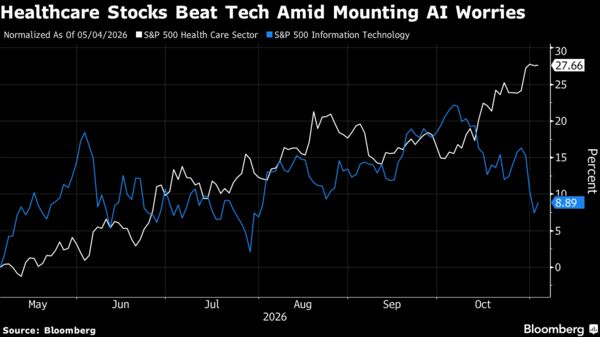
标普500医疗保健指数自10月6日纳斯达克100指数见顶以来已上涨近10%。这只以科技股为主的指数在同期下跌了9.5%。
The S&P 500 Health Care Index has gained almost 10% since October 6, when the Nasdaq 100 peaked. The tech-heavy gauge has declined 9.5% over the same period.
“如果AI赢你也赢,如果AI输你也赢,”余伟达谈到医疗保健板块时表示。
“You kind of win if AI wins and win, if AI loses,” Yu said of healthcare.
国防是他看好的另一个领域。他认为,公司将有机会从军费开支增加中受益。
Defense is another area he favors. He sees opportunities for companies to benefit from increased military spending.
在国际方面,日本因其公司治理改革而脱颖而出,而欧洲则提供拥有可持续现金流的高质量工业公司。他表示,拉丁美洲也拥有处于有利位置、可从消费增长中受益的优质企业。
Internationally, Japan stands out for its corporate governance reforms, while Europe offers high-quality industrial companies with sustainable cash flows. Latin America also has attractive businesses positioned to benefit from consumer growth, he said.
原材料、能源和农业是其他一些领域,无论AI基础设施支出是否维持当前步伐,这些领域的盈利可能表现出更强的韧性。余伟达指出,即使大盘AI股票遭抛售,小盘股最近已显现出企稳迹象。
Materials, energy and agriculture are other areas where earnings may prove more resilient regardless of whether spending on AI infrastructure continues at its current pace. Yu noted that smaller-cap stocks have recently shown signs of stabilization, even as large-cap AI shares sold off.
罗素2000指数自10月6日以来持平,而标普500指数下跌近3%。
The Russell 2000 Index is unchanged since October 6, while the S&P 500 is down almost 3%.