印度企业削减用于对冲卢比贬值的美元购买量,降至八个月低点,表明印度央行针对其所称的针对该货币的投机性押注的打压正在取得成效。
Indian companies cut dollar purchases used to hedge against rupee weakness to an eight-month low, a sign that the central bank’s crackdown on what it called speculative bets against the currency is yielding results.
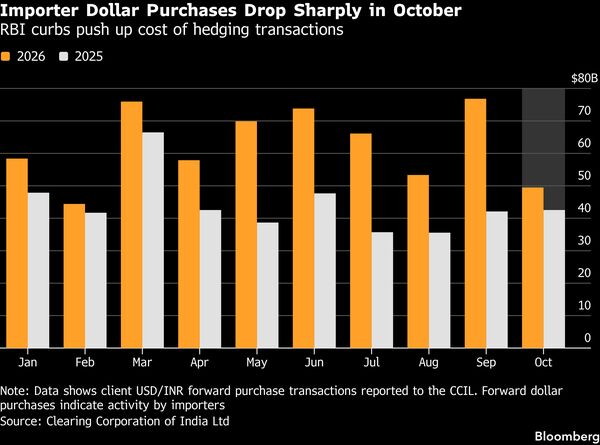
根据结算所数据,远期美元购买量——即企业承诺在未来某日购买美元的承诺——10月较前一个月的创纪录高点下降35%,至495亿美元。该数字是自2月以来的最低水平,反映了进口商对卢比走弱造成损失的对冲。
Buying of forward dollars, or commitments by companies to acquire the US currency at a later date, fell 35% in October from a record high the previous month to $49.5 billion, according to clearinghouse data. The figure was the lowest since February and reflects hedging by importers against losses from a weaker rupee.
这一下降紧随印度储备银行上个月为捍卫卢比而采取的一系列广泛措施,当时卢比正逼近历史低点。这些措施包括中国式的外汇风险准备金,使建立远期美元头寸的成本更高,从而在昂贵的石油继续给印度外部财务带来压力的同时,有助于缓解卢比的压力。自那以来,该货币对美元已上涨约2%。
The drop followed sweeping measures by the Reserve Bank of India last month to defend the rupee as it neared a record low. The steps, which include a China-style foreign-exchange risk reserve, have made it more expensive to build forward dollar positions, helping ease pressure on the rupee even as costly oil continues to the strain India’s external finances. The currency has since risen about 2% against the dollar.
“这些措施反映了政策制定者对持续外汇压力的不适,但它们仍然是战术性权宜之计,而非结构性解决方案,”Emkay Global Financial Services Ltd.首席经济学家Madhavi Arora表示。
“These measures reflect the policymakers’ discomfort with persistent foreign-exchange pressures, but they remain tactical fixes rather than structural solutions,” said Madhavi Arora, chief economist at Emkay Global Financial Services Ltd.
这些限制在3月采取的措施基础上进一步完善,表明印度央行越来越依赖监管工具,同时配合直接市场干预来支持卢比。即使在最近反弹之后,该货币今年仍是亚洲表现较弱的货币之一。
The curbs, which build on steps taken in March, show the central bank is increasingly relying on regulatory tools alongside direct market intervention to support the rupee. Even after its recent rebound, the currency remains among Asia’s weaker performers this year.
干预也扰乱了对冲市场,限制措施生效后活动冻结。对冲卢比走弱的成本上个月升至多年高点,并仍居高位,可能削弱外国投资者对本地资产的兴趣。
The intervention has also disrupted hedging markets, with activity freezing after the curbs took effect. The cost of buying insurance against rupee weakness rose to multi-year highs last month and remains elevated, potentially reducing foreign investors’ appetite for local assets.
英威达香港有限公司亚太地区固定收益投资组合管理主管诺伯特·林表示,对于完全对冲的投资者,这可能会削弱国内债券的收益率优势。海外投资者10月抛售了约5.9亿美元的指数合格债券,这是连续第二个月出现资金流出,尽管近期对全球基金实施了减税措施。
For fully hedged investors, that can erode the yield advantage of domestic bonds, said Norbert Ling, head of fixed income portfolio management, Asia Pacific at Invesco Hong Kong Ltd. Overseas investors sold index-eligible bonds worth about $590 million in October, the second straight month of outflows despite recent tax cuts for global funds.
这种扰乱已波及出口商,他们推迟远期出售美元以对冲卢比走强的风险,反映出对货币前景的不确定性。数据显示,上月他们的远期美元销售额为322亿美元,为自5月以来的最低水平。
The disruption has extended to exporters, who have held back from selling dollars forward to protect against a stronger rupee, reflecting the uncertainty over the currency’s outlook. Their forward dollar sales were at $32.2 billion last month, the lowest since May, the data showed.
尽管如此,监管干预迄今已帮助遏制了远期市场的压力,而美元的基本需求仍居高位。进口商平均每月购买的美元今年已上升约40%至620亿美元,反映出对美元需求的规模。
Even so, the regulatory interventions have so far helped contain pressure in the forward market, while underlying demand for dollars remains elevated. Average monthly dollar purchases by importers have climbed around 40% to $62 billion this year, reflecting the scale of demand for the US currency.