韩国外国语大学国际区域研究中心教授郑正雄(Giwoong Jung)同时也是HK+国家战略研究计划署副署长。
Professor Giwoong Jung is a faculty member at the Center for International Area Studies of South Korea's Hankuk University of Foreign Studies and vice head of the HK+ National Strategies Research Project Agency.
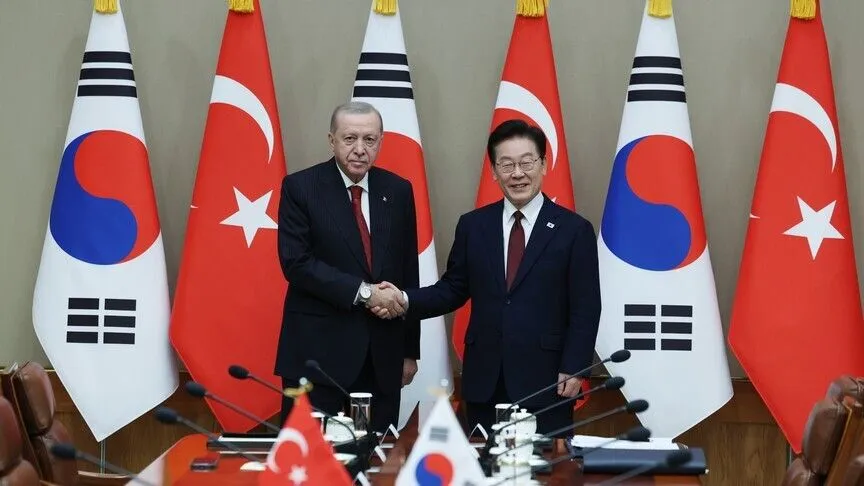
土耳其总统雷杰普·塔伊普·埃尔多安与韩国总统李在明于11月3日举行的峰会,为土耳其—韩国关系指明了更清晰的方向:联合生产、技术合作和共享机遇。两国友谊源于朝鲜战争,至今仍不可或缺。韩国人从未忘记土耳其在战争期间的援助,这段记忆为团结奠定了强大基础。近来,韩流和韩国游客在土耳其的活动,通过相互理解进一步加强了双边纽带。但对这种兄弟情谊最有力的致敬,是一项为未来带来共同繁荣的伙伴关系。
The Nov. 3 summit between Turkish President Recep Tayyip Erdogan and South Korean President Lee Jae-myung gave Türkiye-South Korea relations a clearer direction: joint production, technological cooperation, and shared opportunities. The two nations' friendship, rooted in the Korean War, remains indispensable. Koreans have never forgotten Türkiye's help during the war, and that memory provides a powerful foundation for solidarity. Recently, the K-wave and South Korean tourists in Türkiye have further strengthened bilateral bonds through mutual understanding. But the strongest tribute to that brotherhood is a partnership that delivers shared prosperity for the future.
在李在明总统2025年11月和2026年7月访问安卡拉之后,此次最新峰会为推动双方在多个领域的伙伴关系提供了机遇。两国都需要可靠的伙伴,因为地缘政治竞争正在扰乱技术和供应链的获取。它们都面临着盟友抛弃与陷入冲突的双重困境,并力求最大限度地提高战略独立性。两国都认为当前国际体系存在合法性缺口:土耳其主张“世界比五国更大”,而韩国则要求联合国安理会拥有更多经选举产生的、具有代表性且负责任的成员。
Following President Lee’s visits to Ankara in November 2025 and July 2026, this latest summit offers an opportunity to advance their partnership in many areas. Both countries need reliable partners because geopolitical competition disrupts access to technology and supply chains. They have faced the twin dilemmas of alliance abandonment and entrapment and sought to maximize strategic independence. Both feel a legitimacy gap in the current international system: Türkiye argues that "the world is bigger than five," while South Korea demands more elected, representative, and accountable membership on the UN Security Council.
更紧密的合作可以扩大两国的选择,而无需任何一方放弃现有联盟或采取相同的外交政策。
Closer cooperation can broaden their options without requiring either to abandon existing alliances or adopt identical foreign policies.
升级国防、贸易与科技 此次峰会将工业雄心与具体的制度性步骤相结合。四份谅解备忘录涵盖科学、技术与创新;天然资源与采矿;能源;以及核项目融资。领导人还支持更广泛的国防合作,并重申致力于实现更加平衡的贸易。这些成果很重要,但执行情况将决定它们是否能带来持久的变化。
Upgrading defense, trade, and tech The summit combined industrial ambition with practical institutional steps. Four memorandums of understanding covered science, technology, and innovation; natural resources and mining; energy; and nuclear project financing. The leaders also supported broader defense cooperation and reaffirmed their commitment to more balanced trade. These outcomes matter, but implementation will determine whether they produce lasting change.
国防提供了最直接的机会。埃尔多安引用“菲尔蒂纳”榴弹炮和“阿尔泰”坦克作为成功先例。李表示,联合制造、技术协作以及进入第三国市场是下一个方向。这一议程超越了单纯增加彼此采购的范畴。
Defense offers the most immediate opportunity. Erdogan cited the Firtina howitzer and Altay tank as successful precedents. Lee identified joint manufacturing, technology collaboration, and entry into third-country markets as the next direction. This agenda goes beyond simply increasing purchases from each other.
经济合作需要同样的互惠。正如在首尔讨论的那样,更新自由贸易协定应鼓励投资和供应商整合,而非仅关注头条贸易目标。韩国制造商可以认证更多土耳其供应商,并共同为区域市场开发产品。电动汽车零部件和电池回收提供了切实可行的机会,可以在增加土耳其增值生产的同时,增强韩国供应链的韧性。
Economic cooperation needs the same reciprocity. Updating the free trade agreement, as discussed in Seoul, should encourage investment and supplier integration rather than focusing exclusively on headline trade targets. South Korean manufacturers could qualify more Turkish suppliers and develop products jointly for regional markets. Electric-vehicle components and battery recycling offer practical opportunities to increase Turkish value-added production while strengthening South Korean supply-chain resilience.
科学与技术谅解备忘录应支持具有竞争力的联合科研资助项目和大学-产业实验室。工业人工智能、机器人和电力电子提供了切实可行的起点。资助工程师和中小型创新企业,将为双边关系奠定比大型企业间偶尔达成的协议更广泛的基础。
The science and technology memorandum should support competitive joint research grants and university-industry laboratories. Industrial artificial intelligence, robotics, and power electronics provide realistic starting points. Funding engineers and smaller innovative firms would give the relationship a broader foundation than occasional agreements between major corporations.
安全合作需要相互理解,而非一致的政策。首尔面临朝鲜的核与导弹威胁,而安卡拉则必须应对黑海和中东地区的安全隐患。俄朝军事合作凸显了两国安全环境之间的关联。土耳其重申对首尔对朝政策的支持,为更紧密的磋商奠定了基础,而韩国也可从安卡拉的区域知识中受益。不扩散、海上安全和外交缓和提供了共同基础,无需在每一项争端上都自动保持一致。
Security cooperation requires mutual understanding, not identical policies. Seoul faces North Korea's nuclear and missile threat, while Ankara must manage insecurities around the Black Sea and the Middle East. Russia-North Korea military cooperation shows the connection between their security environments. Türkiye's reaffirmed support for Seoul's North Korea policy provides a basis for closer consultation, while South Korea can benefit from Ankara's regional knowledge. Non-proliferation, maritime security, and diplomatic de-escalation offer common ground without demanding automatic alignment on every dispute.
区域外交新途径 维持这一议程需要更频繁的总统会晤。互访有价值,但进展无需依赖安排另一次国事访问。领导人可以承诺在适当时机于二十国集团或联合国大会边会举行年度磋商,并通过定期的部长级评审予以支持。一次解决融资或监管障碍的短暂会晤,可能比另一份宏大的宣言更有用。
New avenues for regional diplomacy Sustaining this agenda requires more frequent presidential meetings. Reciprocal visits are valuable, but progress need not depend on arranging another state occasion. The leaders could commit to an annual consultation on the sidelines of the G20 or UN General Assembly when appropriate and support it with regular ministerial reviews. A short meeting that resolves a financing or regulatory obstacle can be more useful than another expansive declaration.
突厥语国家组织(OTS)提供了另一种选择。在其成员国同意的前提下,土耳其可以主张邀请韩国作为客人参加适当的峰会或合作活动。这将创造另一次双边会谈的机会,同时将韩国的技术和投资与区域优先事项相连接。这可以被呈现为基于邀请的倡议,而非迈向正式成员资格的一步。
The Organization of Turkic States (OTS) offers another option. With its members' agreement, Türkiye could advocate inviting South Korea as a guest to an appropriate summit or cooperation event. This would create another opportunity for bilateral talks while connecting South Korean technology and investment with regional priorities. It can be presented as an invitation-based initiative rather than a step toward formal membership.
首尔举行的韩中亚峰会首次于9月举行,为C5+1机制提供了一条互补路线。首尔可以与五个中亚合作伙伴及下一届东道国哈萨克斯坦商讨,在下一次峰会旁边举办一场单独的外联活动,邀请土耳其参加。相关领导人会议可以探讨交通联通、关键矿产加工和工业合作。这将保留现有的C5+1框架,而不改变其核心成员。中亚各国政府应作为合作伙伴塑造议程,而不应仅仅充当韩土外交的背景。
The South Korea-Central Asia Summit, first held in Seoul in September, offers a complementary C5+1 route. Seoul could consult its five Central Asian partners and the next host, Kazakhstan, about inviting Türkiye to a separate outreach event alongside their next summit. An associated leaders' meeting could explore transport connectivity, critical-mineral processing, and industrial cooperation. This would preserve the existing C5+1 framework without altering its core membership. Central Asian governments can shape the agenda as partners, not serve merely as a setting for South Korean-Turkish diplomacy.
这些安排可以支持横跨里海的中走廊沿线具有商业可信度的项目,将基础设施与海关协调和有韧性的供应链联系起来。它们应补充双边合作,而不应毫无目的地增加机构。
These arrangements could support commercially credible projects along the trans-Caspian Middle Corridor, linking infrastructure with customs coordination and resilient supply chains. They should complement bilateral cooperation, not multiply institutions without purpose.
随着外交关系即将迎来2027年70周年,下一步任务明确:将首尔承诺转化为有明确期限和持续政治关注支持的具体项目。更频繁的会议本身并非目的。其价值在于使合作更可靠、更互惠,并能够取得成果,以及将兄弟情谊转化为共同繁荣。
As diplomatic relations approach their 70th anniversary in 2027, the next task is clear: translate the Seoul commitments into concrete projects backed by firm deadlines and sustained political attention. More frequent meetings would not be an end in themselves. Their value lies in making cooperation more dependable, reciprocal, and capable of delivering results, and in turning brotherhood into shared prosperity.