寄望于美国中期选举能为年末股市反弹扫清障碍的投资者或许要失望了,因为压在股市身上的最大几股力量——对人工智能回报的质疑以及为其建设提供融资的成本——并不会因这次投票而得到解决。
Investors hoping the US midterm elections will clear the way for a year-end stock-market rally may be disappointed, as the biggest forces weighing on equities — questions about AI’s payoff and the cost of financing its buildout — won’t be resolved by the vote.
在经历了艰难的10月之后,华尔街越来越多地将选举日视为潜在的反弹催化剂。但巴克莱全球股票战术策略主管亚历克斯·奥尔特曼表示,此次选举不太可能改变推动市场近期波动的根本性问题。
Wall Street has increasingly looked to Election Day as a potential catalyst for a rebound after a difficult October. But the election is unlikely to change the fundamental questions driving the market’s recent volatility, according to Alex Altmann, Barclays’ global head of equities tactical strategies.
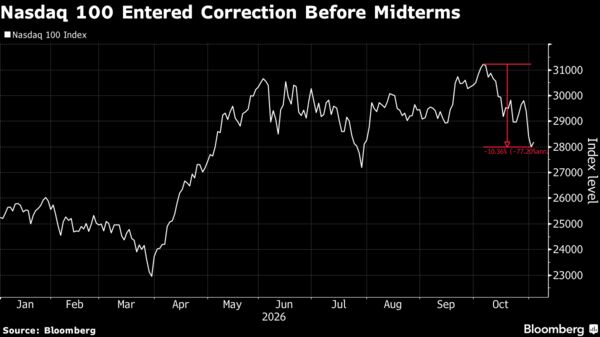
“纳斯达克并没有因为中期选举风险而下跌10%,”奥尔特曼在接受采访时说。他表示,这轮回调更多是由对人工智能融资和收入轨迹的担忧所驱动。他补充说,选举的不确定性虽然是一个因素,但只扮演了次要角色。
“The Nasdaq hasn’t sold off 10% because of midterm risk,” Altmann said in an interview. The pullback has been driven more by concerns over artificial intelligence’s financing and revenue trajectories, he said. Election unknowns, while a factor, have played a secondary role, he added.
投资者的初步反应是积极的。民主党在国会大获全胜、总统唐纳德·特朗普表示将接受选举结果后,美国股指期货抹去跌幅转为上涨,这缓解了不确定性,并促使投资者买入近期下跌的股票。
Investors’ early reaction has been positive. US equity index futures erased losses to rally after Democrats swept to power in Congress and President Donald Trump said he would accept the results, easing uncertainty and prompting investors to buy the recent dip in stocks.
“人们几乎普遍希望,中期选举代表着这样一次宣泄式的出清事件,让投资者得以重新建仓,并在年末迎来美好的‘圣诞老人行情’式的乐观情绪,”奥尔特曼说。
“There’s near universal hope that the midterm represents this cathartic clearing event that allows investors to regrow and have this lovely Santa Claus rally feel-good year end,” Altmann said.
奥尔特曼表示,尽管投资者已减少股票敞口,从而有余地重新加仓,但今年剩下的交易周数有限,感恩节和圣诞假期通常会导致流动性更加稀薄。
While investors have reduced exposure to equities, giving them scope to reload positions, the remaining trading weeks of the year are limited, with Thanksgiving and the Christmas period typically bringing thinner liquidity, Altmann said.
诚然,选举结果仍可能对科技股产生影响,因为它提高了州和联邦层面采取行动遏制人工智能建设的可能性。奥尔特曼说,这是中期选举可能影响人工智能交易的最直接渠道。
To be sure, the election results may still have a bearing on technology shares, by increasing the odds of state and federal actions to curb the artificial intelligence buildout. That’s the most direct channel through which the midterms could affect the AI trade, Altmann said.
例如在得克萨斯州,数据中心开发商正寻求建造数十个AI综合体,州众议员詹姆斯·塔拉里科为民主党赢得了该州自1994年以来的首次参议院胜利,而吉娜·伊诺霍萨则当选为三十多年来首位民主党州长。这些胜利增加了对建筑实施更严格监管的可能性,伊诺霍萨在竞选期间多次呼吁暂停数据中心开发。
In Texas, for example — where data-center developers are seeking to build dozens of AI complexes — state representative James Talarico gave Democrats their first Senate victory in the state since 1994, while Gina Hinojosa was elected the first Democratic governor in more than three decades. The victories increase the potential for tighter regulation of construction, with Hinojosa on her campaign repeatedly calling for a moratorium on data-center development.
阿尔特曼表示,得克萨斯州很重要,因为它约占预计数据中心建设量的四分之一。
Texas is important as it accounts for about a quarter of projected data-center construction, Altmann said.
尽管如此,围绕人工智能的更广泛辩论远远超出了政治范畴。投资者还在纠结于对AI基础设施的大规模投资能否产生足够的收入,以及公司将如何为这些支出融资。
Still, the broader debate around artificial intelligence extends well beyond politics. Investors are also grappling with whether the massive investments in AI infrastructure will generate sufficient revenue and how companies will finance the spending.
“目前股票的两个最大驱动因素是AI收入和AI融资,”阿尔特曼说。这两个问题都不太可能在短期内得到解决。
“The two biggest drivers for equities right now is AI revenue and AI financing,” Altmann said. Neither question is likely to be settled in the near term.
这使得市场容易受到情绪进一步波动的影响,尤其是因为AI仍然是一个长期投资叙事,其最终回报难以衡量。
That leaves markets vulnerable to further swings in sentiment, particularly because AI remains a long-term investment narrative whose eventual returns are difficult to measure.
“中期选举据称代表了这一近期的出清事件。但它真的关乎AI吗?不太可能,”阿尔特曼说。
“The midterms allegedly represents this near term clearing event. But is it really for AI? It’s unlikely to be,” Altmann said.