
新西兰货币走弱,正在加剧生活成本压力,使选民在下周大选前对这个国家的主要政党渐行渐远。
New Zealand’s weakening currency is compounding the cost-of-living pressures turning voters away from the country’s main political parties ahead of next week’s election.
新西兰元(俗称“kiwi”)上周兑离岸人民币跌至历史新低,兑澳元跌至近14年来最弱水平——这两种货币来自新西兰最大的两个贸易伙伴。在11月7日大选前,这一跌势已成为经济学家和投资者议论的话题,他们担心其对通胀和家庭购买力的影响。
The kiwi, as it’s known, last week sank to a record low against the Chinese offshore yuan and its weakest level against the Australian dollar in almost 14 years — the currencies of the nation’s two biggest trading partners. The slide has become a talking point among economists and investors concerned about its impact on inflation and household purchasing power ahead of a Nov. 7 election.
民调显示,这场选举胜负难料,总理克里斯托弗·卢克森领导的中右翼国家党和克里斯·希普金斯领导的中左翼工党各自民调支持率都在30%左右。由于两大主要政党都没有提出应对货币贬值的具体措施,投资者预计新西兰元将维持弱势。
Opinion polls signal the election is too close to call with Prime Minister Christopher Luxon’s center-right National Party and the center-left Labour Party, led by Chris Hipkins, each polling at around 30% of the votes. With the two major parties offering no specific measures to address the currency slump, investors expect the kiwi to remain weak.
“生活成本危机正在冲击全球所有人,而如果你的货币在贬值,这种冲击只会被放大,”伦敦Insight Investment的投资组合经理亚历克斯·莫洛尼说。“如果这能让更多人出来投票,那更好,但必须对此采取一些措施。我们将看到的情况,以及我们一直在研究的一些政策,我认为没有任何东西能真正从结构上扭转新西兰元。”
“The cost of living crisis is hitting everyone globally, and that’s only just amplified if your currency is weakening,” said Alex Moloney, a portfolio manager at Insight Investment in London. “If that gets more people out to vote, the better, but there needs to be something done on it. What we’ll see, and some of the policies we’ve been looking through, there’s nothing that I really think will structurally turn the Kiwi.”
自新冠疫情结束以来,新西兰元已下跌约11%,在十国集团货币中表现仅次于日元,受到经济低迷和就业市场疲软的拖累。根据彭博汇编的数据,在过去六次全国大选后的一个月里,新西兰元平均下跌约0.5%。
The New Zealand dollar has lost about 11% since the end of Covid pandemic, making it the worst-performing Group-of-10 currency after the Japanese yen, weighed down by a sluggish economy and a weak job market. The kiwi has fallen about 0.5% on average in the month following the past six national elections, according to data compiled by Bloomberg.
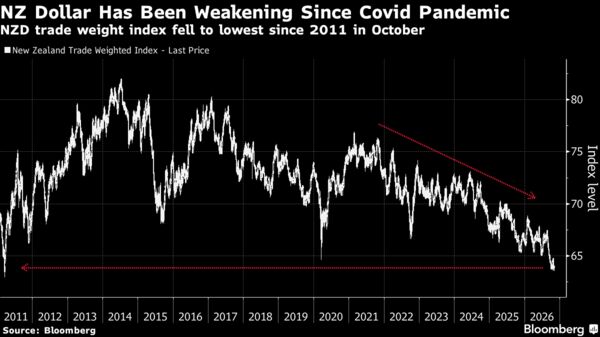
货币走弱在一定程度上助推了生活成本危机,导致选民在连续几届选举中转而反对主要政党。在最新民调中,国家党和工党的合计支持率已降至约59%,低于2017年大选时的约81%。
The weaker currency has partly fueled the cost-of-living crisis that’s caused voters to turn against the major parties over successive elections. National and Labour’s combined support has fallen to around 59% in the most-recent opinion poll, down from about 81% at the 2017 election.
小党可能决定最终谁能组建政府,它们试图利用选民的不满情绪,其中一些小党承诺拆分两大超市运营商和电力公司,以促进竞争、缓解生活成本压力。
Minor parties, which may determine who eventually forms the government, have sought to capitalize on voter discontent, with some promising to break up the two main supermarket operators and power companies to boost competition and ease the cost of living.
与此同时,副总理兼行动党领袖大卫·西摩呼吁选民支持其政党,以“拯救新西兰元”。他将汇率视为对新西兰信心的晴雨表,主张在不增税的前提下平衡预算、削减政府开支,为投资者创造更可预期的环境。
Meanwhile, David Seymour, deputy prime minister and leader of the ACT Party, is urging voters to support his party to save the kiwi. He views the currency as a gauge of confidence in New Zealand, and has advocated balancing the budget without new taxes and reducing government spending to create a more predictable environment for investors.
西摩上月在一次演讲中说:“平衡账目。不增设新税。不通过立法或监管剥夺人们的权利。创造一种财政和监管环境,让投资者面对的是商业风险,而非政治不确定性。这些是恢复对这个国家及其货币信心的最低要求,让生活重新变得负担得起。” 央行上周意外以分歧投票决定维持利率不变,进一步令新西兰元前景蒙上阴影。暂停加息表明,政策制定者在如何大力对抗高于目标的通胀问题上依然保持谨慎,特别是在能源价格居高不下、经济复苏依然脆弱的背景下。
“Balance the books. Don’t raise new taxes. Don’t legislate or regulate away people’s rights. Create the fiscal and regulatory environment where investors face commercial risk, but not political uncertainty,” Seymour said in a speech last month. “Those are the bare minimum to restore confidence in this country and its dollar, so life can be affordable again.”The central bank’s unexpected split vote last week to hold interest rate has further clouded the outlook for the kiwi. The pause signaled how policymakers remain cautious over how aggressively they should battle the above-target inflation, particularly as the economic recovery remains fragile amid elevated energy prices.
毋庸置疑,作为一个开放经济体,新西兰货币易受全球市场波动影响,政客们很难左右其走向。
To be sure, as an open economy, New Zealand’s currency is vulnerable to swings in global markets and politicians can do little to influence its direction.
但疲软的经济大环境并不支持市场对新西兰元情绪的即时扭转。疲弱的企业和消费者信心以及就业市场降温表明,经济增长还将在一段时间内保持低迷。基金经理指出,如果在野的工党获胜,其承诺恢复储备银行的双重授权——要求其在现有的 1% 至 3% 通胀目标之外兼顾就业——可能会缩短加息周期,从而打压汇率。
The dour economic backdrop, though, doesn’t support an immediate turnaround in sentiment toward the kiwi. Weak business and consumer confidence and a softening jobs market indicate growth will remain subdued for a while. If the opposition Labour wins, its pledge to restore the Reserve Bank’s dual mandate, requiring it to consider employment alongside its existing 1%-3% inflation target could shorten the rate-hiking cycle and weigh on the currency, according to fund managers.
“在当地经济出现有意义的扭转之前,很难看出是什么能让新西兰元实现转向,”T Rowe Price投资组合经理Scott Solomon表示。
“Until there’s a meaningful turnaround in the local economy, it’s difficult to see what will allow the NZ dollar to pivot,” said Scott Solomon, a portfolio manager at T Rowe Price.