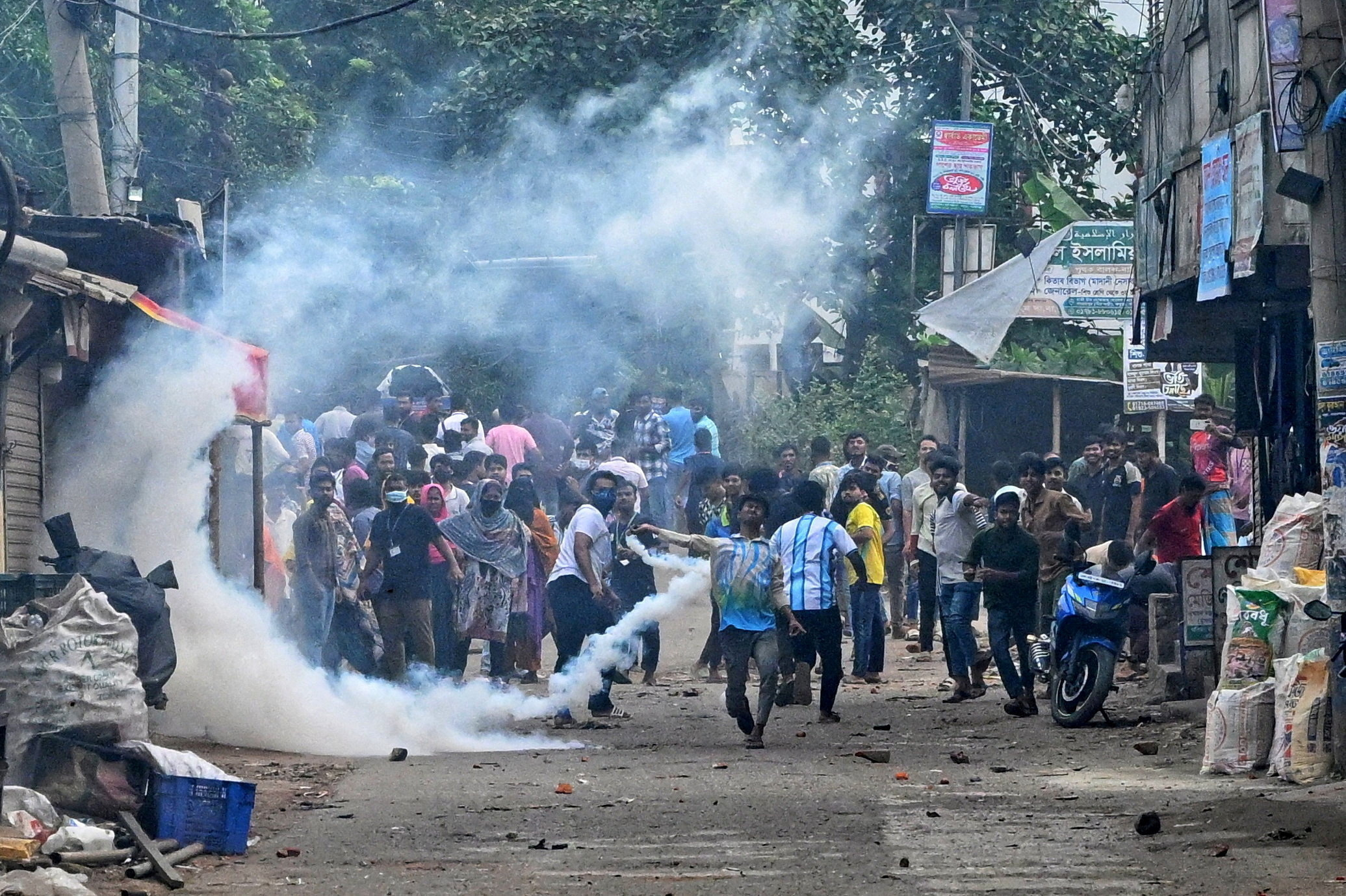
孟加拉国服装工人周四发起新一轮抗议,迫使工厂暂停运营,尽管工资委员会已决定从12月起实施修订后的薪酬结构。
Garment workers staged fresh protests in Bangladesh on Thursday, forcing factories to suspend operations despite a wage board move to introduce a revised pay structure from December.
抗议活动始于周六,已迫使数百家工厂关闭,扰乱了生产,并引发了对出口货物延误的担忧。孟加拉国是仅次于中国的世界第二大服装出口国。
The protests, which began on Saturday, have forced the closure of hundreds of factories, disrupting production and raising concerns about export shipment delays in Bangladesh, the world's second-largest garment exporter after China.
周四早些时候,工人们在首都达卡郊外的主要服装制造中心阿舒利亚正常上班。但随后他们罢工离岗并封锁一条主要高速公路,要求就拟议的加薪幅度作出明确宣布。
Workers initially reported to work early on Thursday in Ashulia, a major garment manufacturing hub on the outskirts of the capital Dhaka. But they later walked out and blocked a major highway, demanding a clear announcement on the proposed wage increase.
阿舒利亚工业区警察局长穆罕默德·莫米努尔·伊斯拉姆·布伊扬说:“抗议者向警察投掷砖块并破坏警车,我们不得不使用催泪瓦斯和震爆弹。”
"We had to use tear gas and sound grenades after protesters threw bricks at police and vandalised police vehicles," Ashulia Industrial Police Superintendent Mohammad Mominul Islam Bhuiyan said.
他说,周四该地区有100多家工厂暂停运营,并补充说,额外的警察和孟加拉国边防卫队人员已部署在整个工业区,以防止进一步动荡。
More than 100 factories suspended operations in the area on Thursday, he said, adding that additional police and Border Guard Bangladesh personnel had been deployed across the industrial zone to prevent further unrest.
与此同时,包括萨瓦尔和加济布尔在内的其他工业中心局势相对平静,许多工人已返回岗位,尽管部分工厂仍暂时关闭。当局敦促工厂员工复工,安全部队在主要工业区保持高度戒备。
The situation was, meanwhile, relatively calm in other industrial hubs, including Savar and Gazipur where many workers returned to their jobs, though some factories remained temporarily closed. Authorities have urged factory employees to come back to work as security forces remain on high alert across major industrial zones.
工资委员会周三同意从12月起实施修订后的工资结构,工人将于1月按新标准领取首笔工资。但加薪幅度尚未确定。
The wage board agreed on Wednesday to implement a revised wage structure from December, with workers set to receive their first pay under the new scale in January. But it has yet to determine the size of the increase.
工人们要求将最低月薪从目前的12500塔卡(约合241.55美元)提高一倍以上至30000塔卡,称不断上涨的食品、住房和交通成本已削弱了他们的购买力。
Workers are demanding that the minimum monthly wage be more than doubled to 30,000 taka ($241.55) from 12,500 taka currently, saying rising food, housing and transport costs have eroded their purchasing power.
“物价全面上涨,工资却没涨。日子越来越难过了,”没有参加周四抗议的制衣工人希尔皮·哈图恩(Shilpi Khatun)说。
"The prices of everything have gone up, but wages have not. It is becoming harder and harder to make ends meet," said Shilpi Khatun, a garment worker who did not join Thursday's protest.
低廉的工资和对主要西方市场的免税准入,助推了孟加拉国制衣业的增长。该行业创造了这个南亚国家超过80%的出口收入,但动荡正在考验其低成本优势。
Low wages and duty-free access to key Western markets helped fuel the growth of Bangladesh's garment industry, which generates more than 80% of the South Asian nation's export earnings, but the unrest is testing its low-cost advantage.
该行业雇佣约400万工人,为H&M、Zara母公司Inditex和沃尔玛等主要全球品牌供货。制造商警告,动荡可能会在出口订单旺季扰乱生产计划。
The sector employs about 4 million workers and supplies major global brands including H&M, Zara owner Inditex and Walmart. Manufacturers warn the unrest could disrupt production schedules during the peak season for export orders.