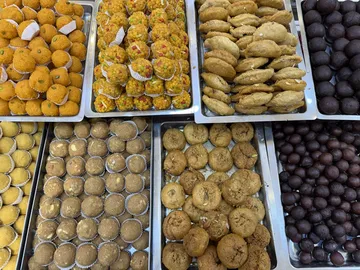
印度各地商店、办公室和家中堆满了色彩鲜艳的糖果盒子,一年一度的排灯节即将到来,这已是惯例。排灯节是印度一年中最重要的印度教节日,互赠甜点是其中的核心仪式之一。今年,这个节日将变得格外昂贵。
Brightly colored boxes of sweets are piling up in shops, offices and homes across India, as they always do around this time. The country is preparing to celebrate Diwali, the main Hindu festival of the year, and exchanging treats is one of the defining rituals. This year, it’s going to be an expensive one.
几乎所有印度甜点的基础——糖,在9月的价格比去年同期上涨了近30%。用于油炸的精炼食用油上涨了约15%,葡萄干上涨了10%,坚果上涨了9%,所有这些涨幅都远远超过了该国的整体通胀率。
Sugar, the foundation of almost every Indian sweet, costs almost 30% more in September than it did a year earlier. Refined cooking oil used for frying rose about 15%, raisins 10% and nuts 9% — all of them running far ahead of the country’s overall inflation rate.
成本压力正在传导至新德里市中心的甜品店,这些店铺正为周日前的购物高峰做准备,届时大多数人将庆祝这个节日。玻璃柜台里摆满了各种甜点,这是用牛奶、坚果、面粉、糖和黄油制作的糖果的统称。这些商品让人垂涎欲滴,但价格标签却不尽如人意。
The cost pressures are filtering through to the sweet shops of central New Delhi as they prepare for a rush of business before Sunday, when most people will celebrate the festival. Glass counters are packed with , the catch-all term for confections made from milk, nuts, flour, sugar and ghee. The merchandise is mouth-watering. The price tags, not so much.
孟加拉甜品店(Bengali Sweet House)的管理合伙人瓦尔杰什·阿格瓦尔(Varjesh Aggarwall)表示,原料成本上升迫使他提高了价格,但涨幅控制在10%以下。这家成立于1937年的德里老店,当时印度仍处于英国统治之下。“所有商品价格都上涨了,这显然影响到了我们,”这位58岁的商人说。
Varjesh Aggarwall, managing partner at Bengali Sweet House — a Delhi shop founded back in 1937 when India was still under British rule — said the rising cost of ingredients has forced him to push prices up, though he’s kept the hike below 10%. “All the commodity prices have increased and obviously impacted us,” the 58-year-old said. Nationwide, sweet-inflation is running at more than 9%, according to official data.
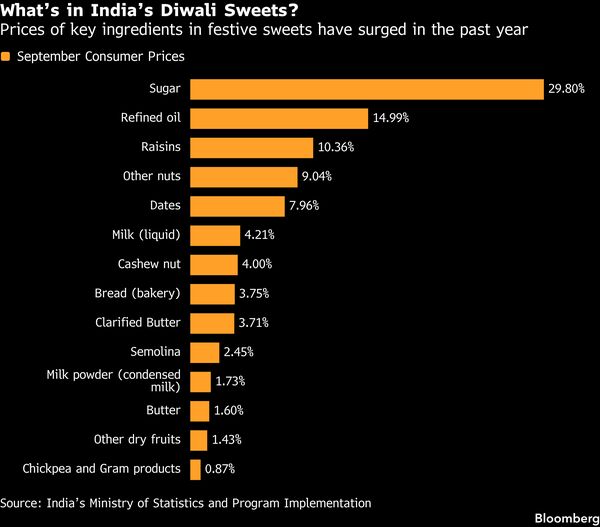
根据官方数据,全国范围内的甜点通胀率超过9%。在热爱甜点的印度——这个既是世界最大的糖消费国,也是第二大生产国——这堪称一场紧急事件,政客们已经介入。
That’s something of an emergency in sweet-loving India — the world’s biggest consumer of sugar, as well as the No. 2 producer — and politicians have already intervened.
在国内糖价创下历史新高后,政府8月份允许糖厂和精炼厂免税进口原糖。当局还限制了糖商和大宗买家的囤糖量,敦促糖厂在节日期间克制价格,并禁止将糖转用于乙醇生产。
The government in August allowed mills and refiners to import raw sugar duty-free, after domestic prices hit records. Authorities also imposed limits on how much sugar dealers and bulk buyers can hold, urged mills to restrain prices during the festival season, and barred sugar from being diverted to ethanol production.
这些措施产生了一定影响,但其效果已被与厄尔尼诺现象相关的降雨不足所抵消,后者威胁着2026-27年产季的甘蔗产量。
Those measures had some impact. But they’ve been offset by an El Niño-linked rainfall deficit that threatens sugar-cane production in the 2026-27 season.
对于甜点制造商来说,所有因素加在一起,构成了一个棘手的排灯节算计:在一年中最重要的销售季节将这些成本转嫁给消费者,还是牺牲利润空间。
For sweetmakers, it all adds up to a difficult Diwali calculation: pass those costs on during their most important sales season, or sacrifice margins.
“我们已经吸收了所有损失,”在德里市中心的“Kaleva甜点店”工作了25年的43岁经理Vijay Shankar Agarwal说。他表示,价格只上涨了约3%。在首都各地的店铺里,顾客们都注意到今年情况有所不同。
“We have absorbed all the losses,” said Vijay Shankar Agarwal, 43, a manager at House of Kaleva in central Delhi where he’s worked for 25 years. Prices have risen only about 3%, he said. At shops across the capital, customers have noticed something’s different this year.
25岁的商业分析师Poosa Ramesh和母亲在孟加拉市场的“Nathu’s”甜点店里,寻找送给亲友的甜点。她说:“过去一周,每盒价格上涨了20到30卢比。”
Poosa Ramesh, a 25-year-old business analyst, was at Nathu’s in Bengali Market with her mother, looking for sweets to give friends and relatives. “Prices have increased 20-30 rupees per box in the last one week,” she said.
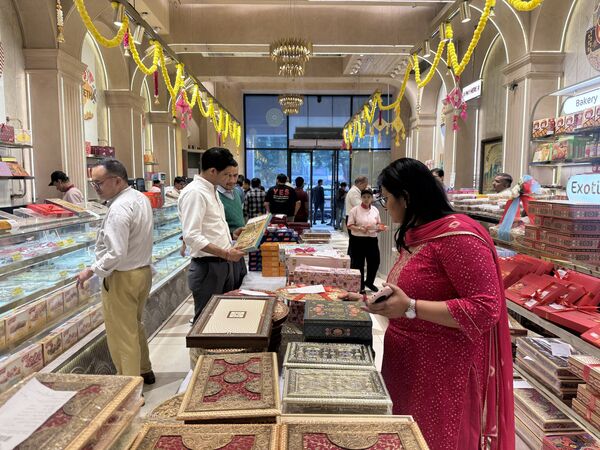
一些买家怀疑他们花同样的钱买到的东西变少了。59岁的律师Tarun Johri在另一家店买了40盒干果作为排灯节礼物,他说价格上涨了,而一些包装里的分量却减少了。对甜点店及其顾客而言,情况在好转之前可能会先恶化。
Some buyers suspect they’re getting less for their money. Tarun Johri, a 59-year-old lawyer who bought 40 boxes of dried fruit from another store for Diwali gifting, said prices had risen while quantities in some packages had shrunk. For the sweet shops and their customers, things could get worse before they get better.
彭博新闻社调查的经济学家预计,今年最后一个季度的总体通胀率将达到6.1%,高于9月的5.5%。食品杂货的涨幅可能更高。信用评级公司ICRA Ltd.首席经济学家Aditi Nayar预计,“广泛的”食品通胀将超过8%。
Economists surveyed by Bloomberg News expect headline inflation of 6.1% in the last quarter of this year, up from September’s 5.5%. The numbers for groceries will likely be higher. Aditi Nayar, chief economist at credit rating firm ICRA Ltd., expects “broad-based” food inflation of above 8%.
所有迹象表明,随着印度的节日季深入秋季,这种价格挤压不会消失。糖的需求通常从8月一直旺盛到次年1月。
All of this suggests the price squeeze won’t go away as India’s festival season extends deeper into the fall. Sugar demand is typically high all the way from August through January.
而对于这个排灯节提着甜点盒走亲访友的家庭来说,他们已经尝到了通胀的滋味。
And for the families taking sweet-boxes to friends and relatives this Diwali, they’re already getting a taste of inflation.