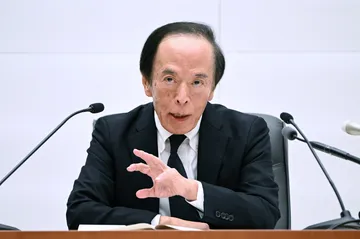
作者:藤冈亨、Enda Curran、Jorgelina do Rosario日本央行行长植田和男表示,虽然日本的通胀率已达到决策者的目标,但尚不清楚能维持多久,并暗示这一目标尚未在日本公众中真正扎根。
By Toru Fujioka, Enda Curran and Jorgelina do Rosario Bank of Japan Governor Kazuo Ueda said that while his nation’s inflation rate has reached policymakers’ target, it’s unclear how long it will stay there, and indicated it hasn’t yet become embedded among the broader Japanese public.
“潜在通胀率为2%——我们的目标是将其维持在那里,”植田周五在华盛顿国际货币基金组织发表演讲后的问答环节中表示。“我认为我们处于均衡状态,”他说。“我们能否长期维持这种均衡,目前仍不得而知。”这些言论是在日本央行宣布潜在通胀率自2013年设定目标以来首次达到2%这一里程碑一周后发表的。在与国际货币基金组织总裁格奥尔基耶娃的对话中,植田并未就央行进一步加息的意愿提供任何具体指引。
“Underlying inflation is 2% — our goal is to keep it there,” Ueda said in a question and answer session after delivering a speech at the International Monetary Fund in Washington Friday. “I think we are in equilibrium,” he said. “Whether we could stay in that equilibrium for a very long time to come, we still don’t know.”The remarks come a week after the BOJ marked a milestone by declaring that underlying inflation had reached the bank’s 2% target for the first time since the goal was introduced in 2013. Ueda didn’t offer any specific guidance on the central bank’s appetite to raise interest rates further, in an exchange with IMF Managing Director Kristalina Georgieva.
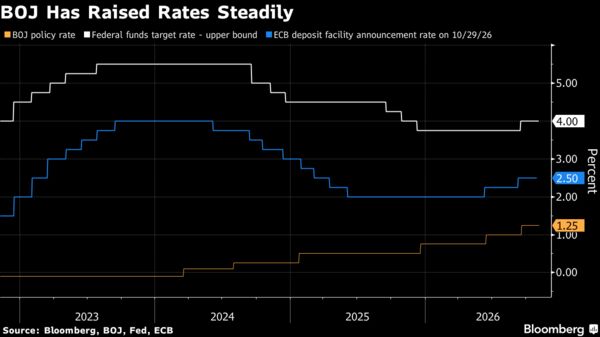
当被问及达到物价上涨目标后的反应时,他回应道:“我会说2%的通胀尚未完全成为社会常态,”植田表示,“行内外的普遍心情是,是的,你们达到了一个重要里程碑,但还有很多工作要做——这意味着有必要通过适当调整货币政策,在未来数年将其维持在那里。”日本央行9月将基准利率上调0.25个百分点至1.25%。这是日本央行、美联储和欧洲央行首次在同一个月内均上调政策利率。
Asked about what the reaction was to hitting the target for price rises, he responded, “I would say 2% inflation hasn’t quite become the social norm yet,” Ueda said, “The general mood within and outside the bank has been that, yes, you reached a significant milestone, but there’s a lot remaining — which means that it’s necessary to keep it there for years to come, through appropriate adjustment of monetary policy.”The BOJ raised its benchmark rate in September by a quarter point to 1.25%. It was the first time the BOJ, US Federal Reserve and European Central Bank all raised their policy rates in the same month.
在当月加息时,日本央行在三个月内第二次收紧货币政策设定,这是自1990年以来加息间隔最短的一次。预计目前将维持这一节奏。
In hiking rates that month, the BOJ tightened settings for the second time in three months, the shortest interval between increases since 1990. It’s expected to maintain that pace for now.
“我们实施货币政策正常化,旨在实现物价稳定,”植田周五表示。
“We carry out monetary policy normalization in an attempt to achieve price stability,” Ueda said Friday.
行长此前发表了题为《日本经常账户顺差历史》的演讲,他在演讲中指出企业风险偏好出现了一些复苏迹象。
The governor earlier delivered a speech on the history of Japan’s current account surplus titled, where he noted some reawakening of corporate risk appetite.
“最近银行贷款增速超过5%”,他说,“这是三十年来最快增速。”他表示:“在温和通胀回归的帮助下,企业风险偏好似乎正在复苏。”截至东京时间周五,隔夜指数掉期定价暗示,日本央行在12月18日下次议息会议上再次加息的概率约为68%。彭博社10月进行的一项经济学家调查显示,超过80%的受访者预测年内将加息。
“Bank lending has been expanding at more than 5% most recently,” which is the “fastest clip seen in three decades,” he said. “Aided by the return of moderate inflation, corporate risk appetite appears to be reawakening.”As of Friday in Tokyo, pricing in the overnight index swaps implied around a 68% probability of another hike when the BOJ delivers its next decision on Dec. 18. More than 80% of economists forecast a year-end move in a Bloomberg survey conducted in October.
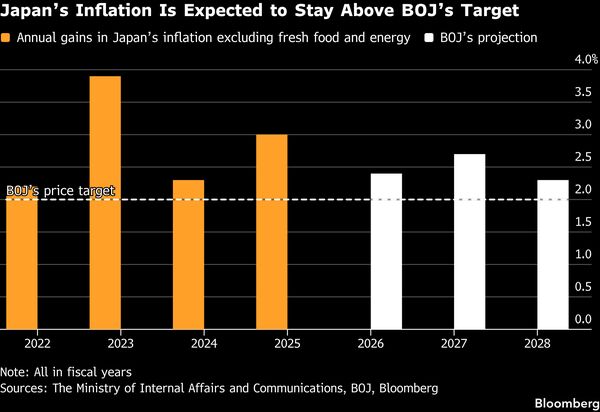
上周,植田和男行长领导的董事会继续强调基础通胀存在上行风险。其更新后的通胀预测显示,其关键物价指标预计将在未来三年保持在2%目标以上,这将使此类涨势延续至七年。
Governor Ueda’s board continued to flag upside risks for underlying inflation last week. Its updated inflation projections showed that one of its key price gauges is expected to stay above the 2% target in the coming three years, extending the streak of such gains to seven years.
通胀及其加剧的负担能力问题,助推了美国总统唐纳德·特朗普的共和党在中期选举中遭遇重大挫折;而日本首相高市早苗通过推出帮助家庭应对的措施,成功维持了较高的支持率。她计划从4月起将食品销售税降低两年。
While inflation — and its exacerbation of affordability issues — helped pave the way for a major midterm election setback for President Donald Trump’s Republican party, Japanese Prime Minister Sanae Takaichi has managed to keep her approval ratings high by rolling out measures to help households cope. She is planning to reduce the sales tax on food for two years starting in April.
在美国财政部长斯科特·贝森特多次呼吁日本央行将政策设定常态化、并敦促日本走出再通胀政策后,高市早苗及其内阁成员近期坚持认为,日本不再需要再通胀措施。经济学家指出,这一政策立场表明政府不会寻求阻止日本央行进一步加息。
Following repeated calls from US Treasury Secretary Scott Bessent for the BOJ to normalize policy settings and for Japan to move beyond reflation, Takaichi and her cabinet ministers have recently maintained that the nation no longer needs reflationary measures. That policy stance indicates the government won’t seek to deter the BOJ from further hikes, according to economists.
周五公布的数据显示,日本工人的名义工资在9月以近三十年来最快的速度增长,为日本央行加息提供了空间。与此同时,当局将密切关注全球股市,并可能避免在可能加剧波动的时候采取行动。
Data Friday showed that Japanese workers’ nominal wages rose in September at the fastest pace in almost three decades, providing scope for the BOJ to raise rates. At the same time, authorities will be keeping an eye on global stock markets and would likely avoid taking steps at a time when it might exacerbate volatility.
自2023年4月接任央行行长以来,这位前经济学教授植田和男已拆除日本央行前所未有的货币宽松框架。他在2024年3月结束了全球最后一个负利率,并叫停了日本央行的收益率曲线控制计划,还缩减了资产购买。他现在已将借贷成本上调了六次,这是至少半个世纪以来任何一位日本央行行长加息次数最多的一次。
Since taking the helm of the central bank in April 2023, Ueda, a former economics professor, has dismantled the BOJ’s unprecedented monetary easing framework. He ended the world’s last negative rate and halted the BOJ’s yield-curve-control program in March 2024, and scaled back asset purchases. He has now raised borrowing costs six times, the most by any single BOJ governor in at least half a century.
人们的关注日益转向:在植田和男的五年任期将在不到18个月内结束之前,利率可能上升到多高。经济学家的中位数预测将本轮加息周期的终端利率定在1.75%,暗示还将加息两次,每次25个基点。法国巴黎银行和摩根大通证券等机构预测基准利率将达到2.5%。
Attention is increasingly turning to how high rates might go before Ueda’s five-year term ends in less than 18 months. The median economist forecast puts the terminal rate for the current cycle at 1.75%, implying two more quarter-point hikes. BNP Paribas and JPMorgan Securities are among those forecasting the benchmark rate will reach 2.5%.