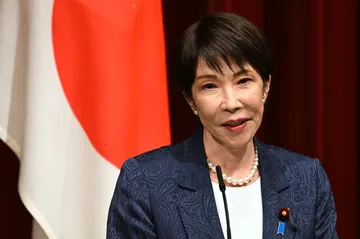
高市早苗首相正在寻找新工具,以帮助实施其雄心勃勃的经济议程,但改变规则以释放更多资金来为其融资,可能会带来新的风险。
Prime Minister Sanae Takaichi is on the hunt for new tools to help implement her ambitious economic agenda, but shifting the rules to unlock more cash to fund it could bring fresh risks.
关键在于高市的财政可信度。她面临着年底的截止日期,需要说明她打算如何为包括两年食品消费税减免、国防建设以及一项旨在未来多年提振日本经济的广泛投资计划在内的各项举措提供资金。
At stake is Takaichi’s fiscal credibility. She faces a year-end deadline to explain how she intends to pay for initiatives ranging from a two-year sales tax cut on food to a defense buildup and a sweeping investment plan that’s supposed to boost Japan’s economy for years to come.
如果她成功,高市或许能够限制新的政府债券发行,让担忧日本已有巨额债务负担的投资者放心,同时也能巩固她在选民中的受欢迎程度。然而,正在考虑的一些筹资方法将拉伸现有的保障措施,而另一些方法可能会让纳税人承担更大的风险。
If she succeeds, Takaichi could manage to cap new government bond issuance, reassuring investors worried about Japan’s already enormous debt burden, while also reinforcing her popularity with voters. Yet some of the cash-gathering methods under consideration would stretch existing safeguards, while others could leave taxpayers shouldering greater risk.
“并不是说有一个魔法般的资金池可以不断动用,”日本研究院有限公司首席高级经济学家牧田武史说。“现实是,他们做出了太多大承诺,现在正苦于找到资金来支付。”以下是高市正在考察的方案——以及涉及的风险。
“It’s not like there’s some magic money pot they can keep dipping into,” said Takeshi Makita, chief senior economist at the Japan Research Institute Ltd. “The reality is they’ve made too many big promises and are now struggling to find the money to pay for them.”Here’s where Takaichi is looking — and the risks involved.
多年的日元贬值和海外高利率,帮助推高了日本外汇基金特别会计的盈余,该账户持有该国大部分外汇储备,并用于资助货币干预。政府咨询委员会的私营部门成员上个月提出,更积极地动用这些盈余,以帮助资助支出。
Years of yen weakness and high overseas interest rates have helped swell surpluses in Japan’s Foreign Exchange Fund Special Account, which holds the bulk of the country’s foreign reserves and which is used to finance currency intervention. Private-sector members of a government advisory panel last month proposed tapping into those surpluses more aggressively to help fund spending.
根据财务省的指导方针,政府通常会将基金中至少30%的盈余作为应对未来货币风险的缓冲,而将其余大部分转入普通会计,用于各种用途。2025财年,该账户产生了约5.1万亿日元(323亿美元)的盈余。其中约3.1万亿日元,即约60%,被分配给了下一年的普通会计。不过,更加依赖外汇储备也存在风险。
Under Finance Ministry guidelines, the government generally retains at least 30% of the surplus in the fund as a buffer against future currency risk, while transferring much of the remainder to the general account, where it can be used for a variety of purposes. In fiscal 2025, the account generated about ¥5.1 trillion ($32.3 billion) of surplus. Some ¥3.1 trillion, or about 60%, was allocated to the following year’s general account. Relying more heavily on foreign reserves, however, would carry risks.
如果海外利率下降或日元走强,该账户的利润可能会下降。此外,还可能出现这种情况:该国需要不断动用基金,为旨在应对市场波动的干预提供资金。
Profits in the account could fall if overseas interest rates decline or the yen strengthens. Also, there could be scenarios where the country needs to keep drawing from the fund to finance intervention meant to address market volatility.
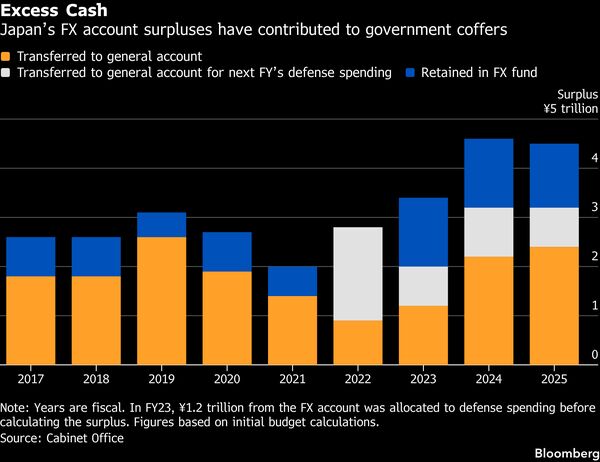
这意味着该账户的收入不如税收收入可预测。未来几年可能会有更大规模的划转,但不能假设这些划转将无限期地维持在当前水平。
That means income from the account is less predictable than tax revenue. Larger transfers may be possible for several years, but it can’t be assumed that they’ll remain at current levels indefinitely.
JRI的牧田表示,目前将更多基金划入国库风险不大,但他警告说,鉴于未来的不确定性,不应将其作为永久性安排。更具体地说,他预计,随着美日利差缩小以及政府采取行动限制日元进一步贬值,盈余将会减少。
JRI’s Makita said that transferring more of the fund to general coffers holds little risk right now, but he warned against making it a permanent fixture given future uncertainty. More specifically, he expects surpluses to shrink as the US-Japan interest-rate gap narrows and the government takes action to limit further yen weakness.
高市早苗经济战略的核心是一项计划:到2040财年,在包括人工智能和半导体在内的17个战略领域,引入370万亿日元的公私部门投资。随着外界对私营部门是否能实际提供如此规模的投资产生疑问,经产省提出了一系列鼓励银行增加贷款的措施。
A centerpiece of Takaichi’s economic strategy is a plan to bring in ¥370 trillion in public and private investment across 17 strategic sectors, including artificial intelligence and semiconductors, through fiscal 2040. As questions arise over whether the private sector can actually help deliver investments of that scale, the Industry Ministry has proposed measures to encourage banks to lend more.
其中一项提案是扩大“两步贷款”,即由国家支持的日本金融机构向金融机构提供资金,再由金融机构向企业发放贷款。经产省希望通过引入旨在为危机应对投资提供融资的此类贷款,将参与范围扩大到大型银行和地方贷款机构,使中小企业更容易获得融资。
One proposal would expand “two-step loans,” under which the state-backed Japan Finance Corporation provides funding to financial institutions that then lend to businesses. The ministry wants to broaden participation to megabanks and regional lenders through the introduction of such loans designed to finance crisis-response investments, making financing more accessible to smaller companies.
另一项提案是允许政府承担部分贷款机构的损失,如果借款人违约的话——此类保护此前主要仅限于自然灾害和大流行病等紧急情况。
Another would allow the government to absorb part of lenders’ losses if borrowers default — protection previously reserved largely for emergencies such as natural disasters and the pandemic.
庆应义塾大学教授土肥孝太郎警告称,针对贷方潜在损失的政府担保可能带来财政风险,因为任何未能覆盖这些损失的缺口,最终可能需要通过一般账户来融资。不过,他淡化了关于道德风险的担忧,表示私人银行可以将政府支持的两步贷款与自身放贷相结合,这可能增加融资规模,同时也能保持银行仔细评估信用风险的积极性。
Government guarantees against the lender’s potential losses could pose fiscal risks, as any shortfall in covering those losses could ultimately be financed through the general account, cautioned Takero Doi, a professor at Keio University. Still, he played down concerns about moral hazards, saying that private banks could combine government-backed two-step loans with their own lending, potentially increasing the amount of financing while also preserving banks’ incentives to assess credit risks carefully.
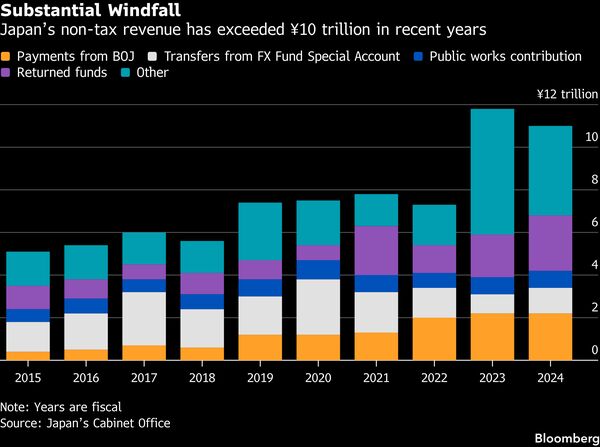
日本银行在10月的货币政策会议上宣布,从明年起将加速出售其交易所交易基金持有量,年出售额将从目前的3300亿日元提高至8600亿日元。据彭博社经济部估计,这预计将增加日本央行向政府上缴的盈余,每年可能多提供8000亿日元。
The Bank of Japan announced at its October policy meeting that starting next year it will accelerate sales of its exchange-traded fund holdings to ¥860 billion a year from the current pace of ¥330 billion. That’s expected to increase the central bank’s surplus remits to the government, potentially providing an extra ¥800 billion annually, according to Bloomberg Economics.
周五,高市早苗表示,政府应利用这笔额外收入,为对日本经济安全至关重要的领域提供投资资金。虽然ETF出售未来几年可能成为政府稳定的资金来源,但这些资产价值会受市场波动影响。日本央行表示,可根据市场环境调整出售速度。
On Friday, Takaichi said the government should use the additional proceeds to finance investments in sectors that are critical for Japan’s economic security. While the ETF sales could be a solid source of funding for the government for years to come, those asset values would be affected by market movements. The central bank said it can slow its sales depending on the market environment.
日本版美国政府效率部去年成立,目前正在审查现有补贴、税收优惠和公共基金,以确定哪些可以削减。日本大约有200个公共基金,持有约7万亿日元。但收回这笔资金可能在政治上充满挑战。
Japan’s version of the US Department of Government Efficiency, established last year, is currently poring over existing subsidies, tax breaks and public funds to see what could be cut. The country has roughly 200 public funds which hold around ¥7 trillion. But reclaiming that money may prove politically fraught.
许多补贴和税收优惠长期以来使有影响力的行业受益,过于激进地取消它们可能引发利益集团以及与这些行业关系密切的执政党议员的抵制。
Many subsidies and tax preferences have long benefited influential industries, and moving too aggressively to eliminate them could trigger resistance from interest groups and ruling-party lawmakers with close ties to those sectors.
高市早苗以党内建制派支持力度不及前任首相著称,削减家庭和企业已经依赖的税收优惠和项目,可能会疏远她试图争取留在自己一边的选民。
Takaichi is known to have weaker support from her party’s establishment compared with previous premiers, and cutting back on tax breaks and programs that households and businesses have come to rely on could risk alienating the same voters Takaichi seeks to keep on her side.
“当然,高市可能会看风向行事,避免采取会让她不得人心的削减,”庆应义塾大学的土井先生说,他同时也是财政制度委员会成员。
“Of course, Takaichi may read the room and avoid cuts that would make her unpopular,” said Keio’s Doi, who’s also a member of the Fiscal System Council.
高市最终能从这些及其他资金来源中筹集多少,将决定她能否将新增国债发行控制在合理范围内。
How much Takaichi can ultimately extract from these and other sources of funding would determine whether she can keep new government bond issuance in check.
高市指出,上一财政年度国债发行量约为40万亿日元,并承诺即将出台的预算将采取类似做法,实际上为投资者评估她的财政计划提供了一个基准。
Takaichi pointed to bond issuance of around ¥40 trillion in the previous fiscal year and pledged a similar approach for the upcoming budget, effectively giving investors a benchmark to judge her fiscal plans.
“我希望尽快看到一些具体成果,特别是这些努力实际上能在多大程度上帮助抑制国债发行,”土井说。
“I’d like to see some concrete results as soon as possible, particularly in terms of how much these efforts will actually help curb government bond issuance,” said Doi.
政府可能能够在债券市场之外找到大笔资金。更难回答的问题是,这些资金来源能维持多久,以及动用它们是否会产生持久影响。
The government may be able to find substantial sums outside the bond market. The harder question is, how long those sources will be available, and whether tapping them might have lasting repercussions.