美国寡头在选举日整体表现不佳,但在加利福尼亚州躲过一劫,甚至可能更进一步。
America’s oligarchs fared badly overall on Election Day, but they dodged a bullet in California, and perhaps then some.
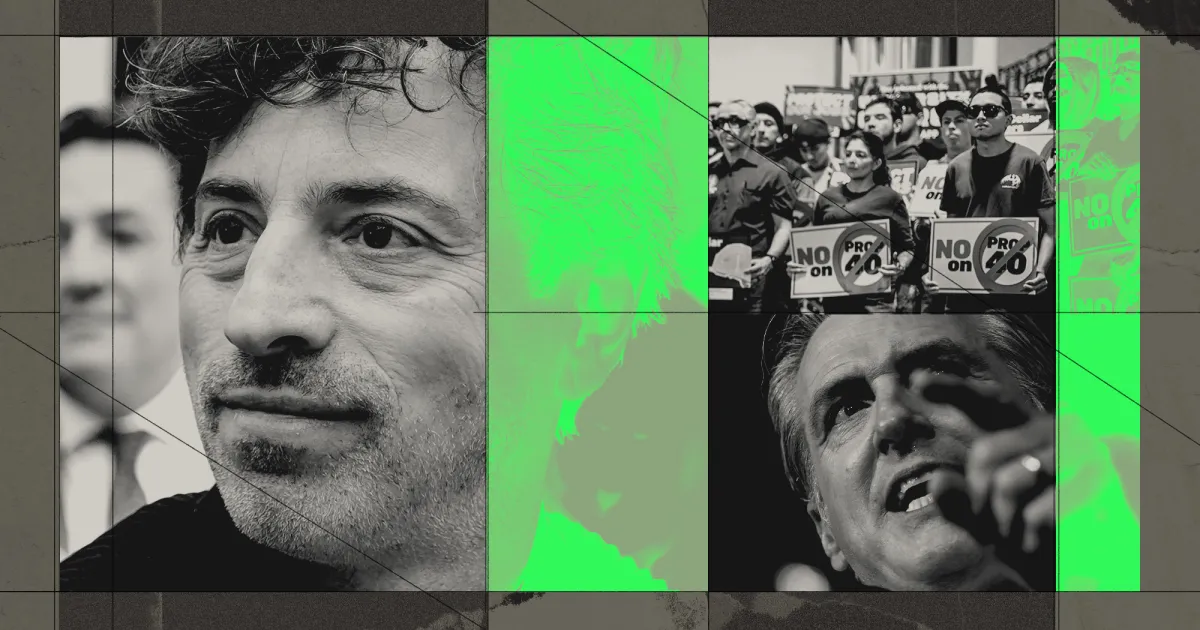
加利福尼亚州的第40号提案(Prop. 40),即“亿万富翁税”倡议,本将成为美国首个针对过度财富征税的法案,这一概念在民调中屡获美国民众支持。尽管该提案存在缺陷,但它本将打破僵局。它本将表明,在一个财富分配日益倾斜、如今已类似于寡头统治的发展中国家的美国里……但该州一些亿万富翁另有打算。在一个医护工会赞助第40号提案后,他们投入超过3.3亿美元成立一个倡导团体,在选民心中播下疑虑和恐惧,并得到知名民主党人的协助,最著名的是州长加文·纽森。
California’s Prop. 40, the Billionaire Tax initiative, would have been the nation’s first-ever tax on excessive wealth, a concept Americans have supported in poll after poll. Despite its flaws, the measure would have broken the glass. It would have showed that in an America whose wealth distribution has grown so skewed that it now resembles that of a kleptocratic developing nation.
亿万富翁的反对行动不仅导致第40号提案失败,还可能说服选民通过了第42号提案——即他们赞助的两项竞争性措施之一——该提案禁止州政府未来对多种类型的财富征税。周一晚间,在83%的选票统计完毕时,美联社宣布第40号提案失败。美联社尚未对第42号提案做出判定,该提案以3.2个百分点的优势领先。
But some of the state’s billionaires had other plans. After a healthcare workers union sponsored Prop. 40, they put up more than $330 million to create an advocacy group that would plant doubts and fears in voters’ minds, with an assist from prominent Democrats, most notably Gov. Gavin Newsom.
第40号提案并不完美。正如我在选前报道中所写,它是一次性税收,收入主要指定用于单一用途(医疗保健),这可能说服了竞争对手工会反对它。批评者声称,除其他外,通过第40号提案将迫使加利福尼亚州约250位亿万富翁中的许多人外流,摧毁该州的税基和初创企业文化。
The billionaire opposition effort not only doomed Prop. 40, but may have convinced voters to pass Prop. 42—one of two competing measures they sponsored—which bars the state from enacting future taxes on many types of wealth. On Monday night, with 83 percent of the votes counted, AP called Prop. 40’s defeat. It has not yet made the call on Prop. 42, which remained ahead by 3.2 percentage points.
来自硅谷的联邦众议员罗·卡纳(Ro Khanna,民主党人)支持40号提案,这让他的科技亿万富翁选民颇为恼火。他将“财富外流”的威胁斥为“彻头彻尾的宣传”。在他看来,失去一群避税的0.0001%超级富豪会严重损害加州税基和创新文化,这种说法简直是胡说八道。“如果有什么不同的话,”他告诉我,“随着我们见证人工智能革命,越来越多的财富将积聚在硅谷。他们不想纳税的理由就是他们不想纳税。”
Prop. 40 was imperfect. As I wrote in a story prior to the election, it was a one-time tax, with revenues earmarked mainly for one purpose (healthcare), which may have convinced rival unions to oppose it. Critics claimed, among other things, that passing Prop. 40 would compel many of California’s roughly 250 billionaires to flee, decimating the state’s tax base and startup culture.
反对40号提案的竞选活动归根结底主要是贪婪使然。但金钱就是权力,亿万富翁们利用手中的财力搅浑了水。他们为工会和依赖超级富豪竞选捐款的民主党人提供了安全的退出借口,这些人包括前联邦众议员凯蒂·波特(Katie Porter)、当选州长哈维尔·贝塞拉(Xavier Becerra)和纽森。如果纽森打算在2028年竞选总统,他需要亿万富翁站在自己这边。
Silicon Valley congressman Rep. Ro Khanna, a Democrat who supported Prop. 40 to the chagrin of his tech billionaire constituents, dismissed the wealth-flight threat as “total propaganda.”The notion that losing a gaggle of tax-avoiding 0.0001 percenters would significantly harm California’s tax base and culture of innovation also struck him as nonsensical. “If anything,” he told me, “more and more wealth is going to accumulate in Silicon Valley as we see the AI revolution. The reason they don’t want to pay the tax is they don’t want to pay the tax.”The No on Prop. 40 campaign, in the end, was mainly about greed.
(加州民主党支持40号提案。)他们的论调基本是:亿万富翁应该支付他们应尽的份额,但40号提案实现这一目标的方式不对。纽森等人重复称该提案会损害经济,且不能在州层面征收财富税,因为那就像打地鼠游戏,超级富豪会从一个司法管辖区跑到另一个司法管辖区以逃避纳税。纽森和其他人表示,必须在联邦层面征收财富税,他们很可能清楚联邦财富税根本行不通——尤其是在最高法院面前更是如此。
But money is power, and the billionaires used theirs to muddy the waters. They provided safe opt-out arguments for unions and for Democrats who have relied on campaign cash from the superwealthy, including former US Rep. Katie Porter, governor-elect Xavier Becerra, and Newsom, who needs the billionaires on his side if he runs for president in 2028. (The California Democratic Party supported Prop. 40.) billionaires should pay their fair share, the argument basically went, but Prop. 40 was the wrong way to accomplish it. Newsom et al. repeated the claims that it would harm the economy, and that you can’t tax wealth at the state level, because that’s like playing Whac-a Mole as the mega-rich scurry from jurisdiction to jurisdiction to avoid taxation. You’ve got to tax wealth at the federal level, Newsom and others have said, likely knowing full well a federal wealth tax is never gonna fly—certainly not with Supreme Court.
与此同时,纽森(但不是贝塞拉)背书了第42号提案。正如州立法分析员所解释的那样,该提案“可能会减少未来的税收收入。未来收入将在何时以及减少多少,目前尚不清楚。”(具有讽刺意味的是,这正是第40号提案的关键论点之一。)第42号提案可能通过两种方式减少州收入:首先,通过禁止追溯性征税——这对追溯至2026年1月1日的第40号提案而言,可能是一颗“毒丸”。
At the same time, Newsom (though not Becerra) endorsed Prop. 42, which, as the state legislative analyst explained, “could reduce future tax revenues. When and by how much future revenues would be reduced is unclear.” (This, ironically, was one of the key arguments Prop. 40.) Prop. 42 could reduce state revenues in two ways: First, by prohibiting retroactive taxes—a potential poison pill for Prop. 40, which was retroactive to January 1, 2026.
如果第42号提案如预期那样通过,它将修改州宪法,取消加州征收财富税的权力,正如选民指南所解释的那样,即针对“个人财产所有权(人们拥有的除房地产以外的一切东西)”征税。第42号提案支持方的选民指南论点警告称,现行宪法允许立法机构对个人财产、商业权益和金融资产征税,包括退休账户和投资账户中的资产,“即使你在赚取这笔钱时已经缴过税了!”这是一个肮脏的伎俩。
If Prop. 42 passes, as seems likely, it will amend the state constitution to eliminate California’s ability to levy wealth taxes, as the ballot guide explains, “on the ownership of personal property (all things people own other than real estate).”The current constitution, the Yes on 42 ballot argument warned, allows the Legislature to tax personal property, business interests, and financial assets, including assets in retirement and investment accounts “even though you already paid taxes on that money when you earned it!”That was a dirty trick.
除了针对住宅和企业的常规财产税外,州立法者从未如此多作为普通加州居民提议过任何财富税。“支持方”论点含糊地指向过去几次试图对民众积蓄征税的立法尝试,方便地忽略了这些法案(均告失败)仅针对超过3000万美元的资产,且通常门槛高得多。
Beyond run-of-the-mill property taxes on homes and businesses, state lawmakers have never so much as proposed any wealth tax on ordinary Californians. The “pro” argument points vaguely to a handful of past legislative attempts to tax people’s nest eggs, conveniently neglecting to mention that those bills (which all failed) onlytargetedassets in excess of $30 million, and typically much more.
也就是说,他们设想中的“你”,实际上是“他们”——拥有过度财富的家庭。
That is, the “you” in their scenario was actually “them”—families with excessive wealth.
双重征税的说法同样是烟雾弹。是的,你那 5000 美元的股票投资或罗斯个人退休账户供款,很可能来自你的税后收入,但当这笔投资最终增值到 25000 美元时,你的 20000 美元利润并没有被征税。再说了,州或联邦立法者曾经推出的唯一财富税,只适用于财富管理师和遗产律师所归类的“超高净值”家庭。州税务机关会来拿走人们养老储蓄的威胁,被证明极具威力。
The double-taxation claim, too, was smoke and mirrors. Yes, your $5,000 stock investment or Roth IRA contribution probably did come from your post-tax earnings, but when that investment eventually grows into $25,000, your $20,000 profit isn’t being taxed. And again, the only wealth taxes state or federal lawmakers have ever introduced apply only to the households that wealth managers and estate lawyers categorize as “ultra-high net worth.”The threat of state tax authorities coming for people’s retirement savings proved powerful, though.
威力大到足以左右许多加州选民——他们可能并未完全意识到,自己实际上是在为地球上一些最富有之人的、基本未被征税的巨额财富投票护航——这些人在胜利的鼓舞下,将继续利用手中的巨额财富让政府政策向己意弯曲,置公众利益于不顾。
Powerful enough to sway many Californians who may not have fully realized they were actually voting to protect the largely untaxedmegafortunes of some of the richest human beings on the planet—who now, encouraged by their victory, will keepusing their vast hoards to bend government policy to their will, public be damned.