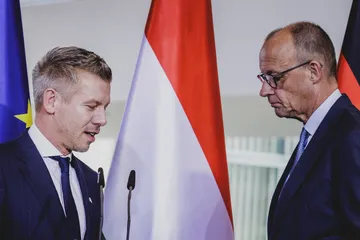
弗里德里希·默茨再次强调,所有欧盟成员国都应为乌克兰提供资金,这一要求遭到东欧领导人的抵制,他们反对将对基辅的融资与欧盟预算挂钩。
Friedrich Merz reinforced his demand that all European Union member states contribute to funding for Ukraine, drawing resistance from eastern European leaders who rejected linking financing to Kyiv with the bloc’s budget.
默茨本周在一封信中写道,柏林对欧盟未来七年预算的支持,以所有成员国都为乌克兰提供资金为条件。乌克兰明年面临700亿欧元(约合785亿美元)的融资缺口。周二,默茨在与匈牙利总理彼得·马贾尔会面后再次提出这一要求,马贾尔对此表示反对。
Merz wrote in a letter this week that Berlin’s support for the EU’s next seven-year budget is conditional on all bloc members contributing to funding for Ukraine, which faces a €70 billion ($78.5 billion) financing gap next year. He repeated the demand on Tuesday after meeting with Hungarian Prime Minister Peter Magyar, who pushed back.
马贾尔在柏林与德国领导人一同出席活动时说:“请允许我非常外交但坚定地说,我不认为将欧盟预算与乌克兰挂钩是一个好的方向。”此前,斯洛伐克总理罗伯特·菲佐将德国的立场称为“赤裸裸的敲诈”。此次对峙发生在欧盟领导人计划于周四和周五在都柏林聚会之际,默茨已明确表示,他将把欧盟预算的讨论与基辅的资金缺口挂钩。
“Let me say very diplomatically but resolutely that I don’t think it’s necessarily a great direction” to link the EU budget with Ukraine, Magyar said in Berlin alongside the German leader. Earlier, Slovakia’s prime minister, Robert Fico, called the German position “blatant blackmail.”The standoff erupted as EU leaders plan to gather in Dublin on Thursday and Friday, where Merz has already made clear he will link the discussion of the EU budget with Kyiv’s funding shortfall.
欧盟去年同意向乌克兰贷款900亿欧元,资金来自资本市场贷款,并由欧盟共同预算担保。捷克、匈牙利和斯洛伐克对资助乌克兰持怀疑态度,选择不支持这笔贷款。
The bloc last year agreed to lend €90 billion to Ukraine, financed by a loan from capital markets and secured by the bloc’s shared budget. The Czech Republic, Hungary and Slovakia, which were skeptical of funding Ukraine, opted out of backing the loan.
周二,默茨表示,欧盟需要重新设定优先事项,聚焦国防,并且各国单独退出资助“并非一个好选择”。“这是共同的欧洲责任,而非个别成员国的责任,”默茨说。他被问及斯洛伐克总理的言论时发表了上述言论。
Merz on Tuesday said the bloc needed to reset its priorities to focus on defense — and that having individual opt-outs from funding “is not a good option.”“This is a shared European responsibility, not the responsibility of individual member states,” said Merz, who was asked about the comments of Slovakia’s premier.
“谁也别想敲诈我,”菲科周二在布拉迪斯拉发与捷克同行安德烈·巴比什一同表示。“我们不会支持向乌克兰提供任何捐款。我正在告诉默茨,我们不会参与向乌克兰提供700亿欧元的捐款。就此为止。”默茨在写给欧洲理事会主席安东尼奥·科斯塔的信中称,乌克兰资金“分配不均,主要由少数几个成员国承担”,彭博社查阅了这封信。
“No one is going to blackmail me,” Fico said in Bratislava on Tuesday alongside Andrej Babis, his Czech counterpart. “We will not support any donation to Ukraine. I am telling Mr. Merz we will not be a part of a €70 billion donation to Ukraine. Full stop.”Merz wrote to European Council President Antonio Costa that Ukraine funding is “distributed unevenly and carried mostly by only a few member States,” in a letter seen by Bloomberg.
“所有人都必须毫无例外地公平分担填补这一缺口的集体承诺,是解决这一问题并讨论任何进一步事项(尤其是涉及财务影响的事项)的必要前提,”默茨写道。马贾尔则寻求更具外交手腕的方式。
“A collective commitment that all of us, without exception, will contribute fairly to closing this gap is an essential prerequisite for resolving this issue and for discussing any further matters, particularly those with financial implications,” Merz wrote. Magyar, for his part, sought a more diplomatic approach.
“我不称之为敲诈,但我认为这不一定是正确的信息,”这位匈牙利人说。
“I don’t call it blackmail, but I don’t think it’s necessarily the right message,” the Hungarian said.