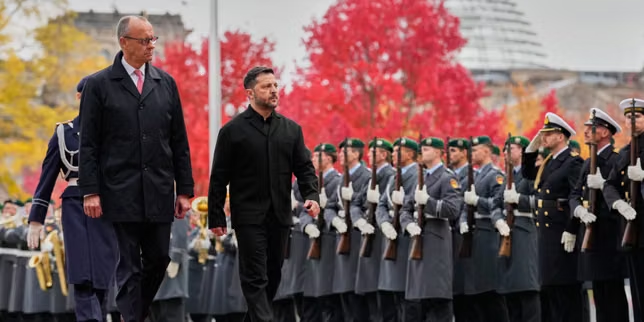
2026年11月3日,德国总理弗里德里希·默茨与乌克兰总统弗拉基米尔·泽连斯基在柏林。
German chancellor Friedrich Merz and Ukrainian president Volodymyr Zelensky in Berlin, November 3, 2026.
德国对欧洲正日益失去耐心。随着利率上升,向乌克兰提供贷款的成本越来越高,但柏林方面仍明确表示,放弃基辅绝无可能。近来,德国率先采取行动,确保乌克兰总统弗拉基米尔·泽连斯基获得平衡该国2027年预算所需的剩余700亿欧元,此外还有已拨付的900亿欧元。柏林方面表示,要实现这一点,每个欧盟成员国都必须承担自己的一份负担。在这种情况下,乌克兰所需资金的大部分——即该国所需的700亿欧元中约450亿欧元——将由欧盟提供。
Germany is growing impatient with Europe. As interest rates rise, making loans to Ukraine increasingly expensive, Berlin has nonetheless made it clear that abandoning Kyiv is out of the question. Of late, Germany has taken the lead in ensuring Ukrainian President Volodymyr Zelensky will receive the remaining €70 billion needed to balance the country's 2027 budget, in addition to €90 billion already disbursed. For this to happen, Berlin says, each European Union member state must take on its share of the burden. In this scenario, the majority of Ukraine's desired funding – about €45 billion of the €70 billion the country needs – will be provided by the EU.
11月9日周一,德国总理弗里德里希·默茨在致欧洲理事会主席安东尼奥·科斯塔的正式信函中明确表明立场。这封信发出仅数日之后,欧洲政治共同体会议和非正式欧洲理事会会议定于11月12日和13日在都柏林举行,乌克兰将是核心议题。默茨在信中威胁称,除非“所有”欧盟成员国都参与这一支持行动,否则他将不批准目前正在谈判中的欧盟2028至2034年多年期预算。他写道:“支持乌克兰事关我们不可分割的欧洲安全,因此支持乌克兰的负担分担也必须如此。”
Chancellor Friedrich Merz made his position clear in a formal letter to Antonio Costa, president of the European Council, on Monday, November 9. The letter comes just days before scheduled meetings of the European Political Community and the informal European Council in Dublin on November 12 and 13, where Ukraine is set to be a central topic. In his letter, the chancellor threatened not to approve the EU's multiannual budget for 2028 to 2034, which is currently under negotiation, unless "all" EU member states participate in this support. "Supporting Ukraine is a matter of our indivisible European security, and so must be the burden sharing for that support," he wrote.