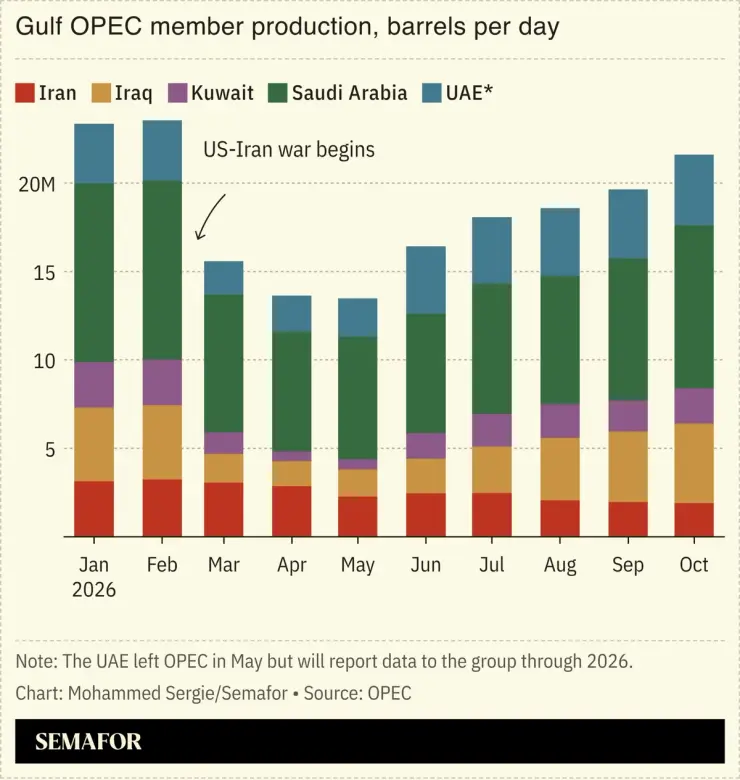
沙特石油产量在10月反弹,推动石油输出国组织(OPEC)成员国总产量首次升至接近战前水平,有助于抑制原油价格,尽管伊朗在霍尔木兹海峡的袭击有所增加。根据该组织最新数据,OPEC产量日增197万桶,其中大部分增量来自沙特产量上升。
Saudi oil production rebounded in October, driving up overall output by OPEC members to near prewar levels for the first time and helping keep down crude prices even as Iranian attacks in the Strait of Hormuz have picked up. OPEC production rose by 1.97 million barrels a day, the majority of which was accounted for by higher Saudi output, according to the latest data from the cartel.
沙特阿美首席执行官阿明·纳赛尔上周表示,公司旨在第四季度“最大化产出”,预计需求将因补充伊朗战争初期耗尽的全球石油库存的努力而得到提振。美军护航、船对船转运以及通往远离霍尔木兹海峡港口的管道,均有助于恢复产出,尽管随着也门胡塞武装威胁曼德海峡,沙特已加大通过其东部港口的发运量。伊拉克和阿联酋产量也创下年内新高。
Aramco CEO Amin Nasser said last week that the company aimed to “maximize production” in the fourth quarter, with the expectation that demand will be bolstered by efforts to replenish global oil inventories drained during the initial months of the Iran war. US military escorts, ship-to-ship transfers, and pipelines to ports away from the Strait of Hormuz have all helped restore output, although Saudi Arabia has stepped up shipments through its eastern ports as Houthi militias in Yemen threaten the Bab el-Mandeb strait. Iraq and UAE output also hit fresh highs for the year.
增加石油流量对海湾国家至关重要,因为它们寻求修复因战争和在新贸易路线及国防上的更高支出而受损的公共财政。相比之下,根据OPEC数据,伊朗产量几乎只有战前水平的一半。
Boosting oil flows is essential for Gulf states as they look to restore public finances bruised by the war and higher spending on new trade routes and defense. In contrast, Iranian production was almost half of prewar levels, according to OPEC.