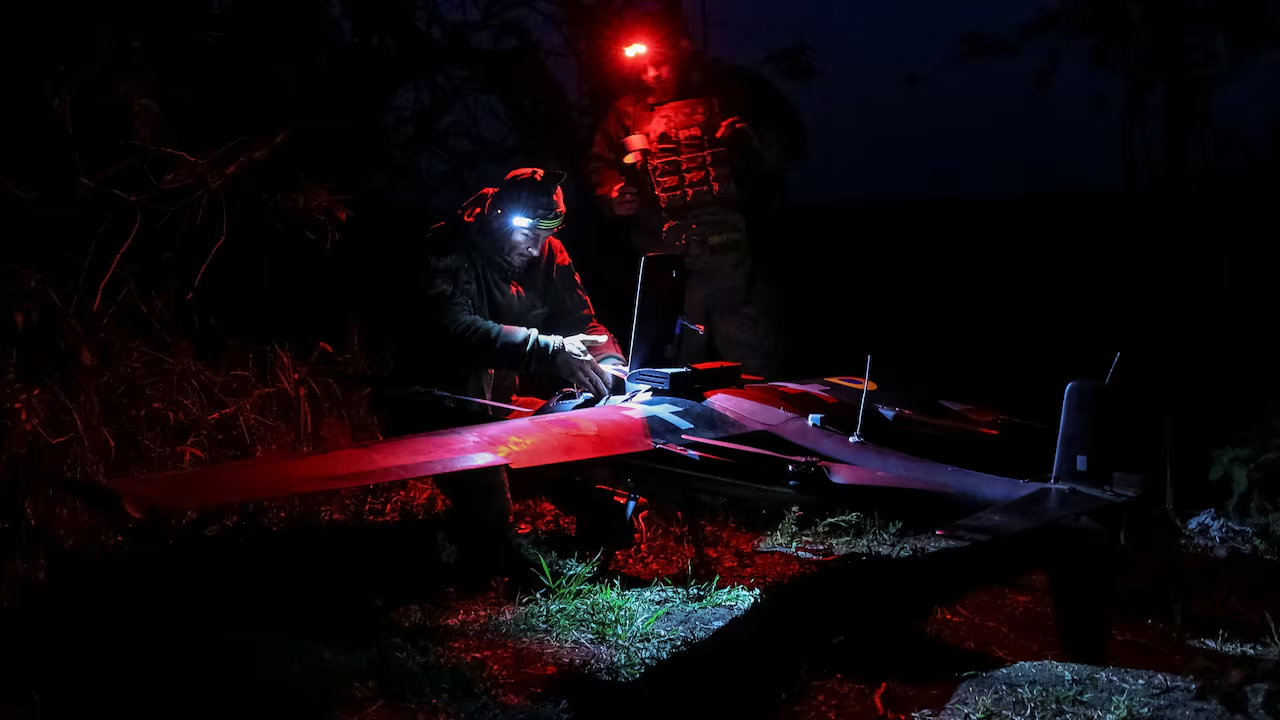
随着联合国本周准备讨论自主武器,内部人士表示,围绕战争中人工智能的有意义且具有约束力的法规希望渺茫——时间可能所剩无几。
As the UN prepares to discuss autonomous weapons this week, insiders say hopes of meaningful, binding regulations around AI in warfare are slim — and time may be running out.
外交官将在瑞士日内瓦举行的《特定常规武器公约》会议上讨论致命性自主武器系统,包括可能的监管框架,会议从周一持续到周五。
Diplomats will discuss lethal autonomous weapons systems, including a possible framework for regulations, at a Convention on Certain Conventional Weapons meeting running Monday to Friday in Geneva, Switzerland.
公约缔约国中超过100个国家将派代表出席,包括加拿大、美国、俄罗斯和中国。
More than 100 countries that are party to the convention will be represented, including Canada, the U.S., Russia and China.
联合国秘书长安东尼奥·古特雷斯八月警告称,世界正逼近一道道德红线,“自主武器,如人工智能驱动的无人机,可能在没有人类介入的情况下杀人。”他表示,他希望到2026年底就自主武器达成一项具有法律约束力的条约,因为人工智能越来越成为致命打击的一个因素。
UN Secretary-General António Guterres warned in August that the world was nearing a moral red line " where autonomous weapons like AI-powered drones could kill without human involvement. He's said he wants a legally binding treaty on autonomous weapons by the end of 2026 as AI increasingly becomes a factor in deadly strikes.
与此同时,一些专家表示,使用人工智能来决定何时何地发动打击,比武器本身更令人担忧。
Meanwhile, some experts say the use of AI to determine where and when to strike in the first place is an even more pressing concern than the weapons themselves.
但迄今为止,包括美国、俄罗斯和中国在内的世界主要军事超级大国,已否决了任何关于具有约束力规则的严肃尝试。人工智能战争时代已经来临。加拿大准备好了吗?
But so far, the world's biggest military superpowers — including the U.S., Russia and China — have shot down any serious attempts at binding rules. The age of AI warfare has dawned. Is Canada ready?
军事指挥官承诺快速行动应对人工智能和机器人,认为加拿大存在“未开发的潜力”康奈尔大学科技政策研究所高级研究员、即将退役的美国军事军官保罗·卢申科表示,领导人担心会因为“谁赢得人工智能竞赛,谁就将主宰世界”这一想法而失去竞争优势。
Military commander vows fast action on AI and robots, sees 'untapped potential' for Canada Leaders are afraid of losing their competitive advantage because of the idea that "whoever wins the AI race will dominate the world," said Paul Lushenko, a senior fellow at Cornell University Tech Policy Institute and a retiring U.S. military officer.
他说,他在军方交谈的每个人都认识到人工智能的道德影响。与此同时,最强大的军队之间普遍存在的共识是,即使他们遵守一套规则,也无法信任竞争对手也会这样做,从而形成一种类似冷战的僵局。“这是一个非常具有挑战性的处境,”他说。
He says everyone he speaks to in the military recognizes the moral implications of AI. At the same time, the prevailing consensus among the most powerful militaries is that even if they follow a set of rules, they can't trust their competitors to do the same, creating a Cold War-esque stalemate. "That's a really challenging position to be in," he said.
卢申科表示,他不指望本周的会议会产出任何形式的“切实可行的国际政策”或法规。
Lushenko said he does not expect any kind of "bona fide international policy" or regulation to come out of this week's meetings.
参加2月在西班牙举行的军事人工智能峰会的国家中,约三分之一(包括加拿大)同意了一项关于如何管控该技术在战争中应用的宣言,但美国和中国属于选择退出的国家之一。联合国外交官曾于9月谈判一项条约,旨在规范致命自主武器的使用,但在最后一天,美国和俄罗斯外交官删除了关键的安全条款。
About one-third of the countries that attended a February military AI summit in Spain, including Canada, agreed to a declaration on how to govern use of the technology in warfare, but the U.S. and China were among those that opted out UN diplomats were negotiating a treaty in September to regulate the use of lethal autonomous weapons when U.S. and Russian diplomats cut out key safety provisions on the final day. According to those provisions included language that would have required systems to operate in a predictable and reliable manner, mandated ethical considerations and required that humans review military targets picked by AI before striking.

根据这些条款,本应要求系统以可预测且可靠的方式运行,强制规定伦理考量,并要求人类在打击前复核人工智能选定的军事目标。
AI in action Ukrainian President Volodymyr Zelenskyy, addressing the UN in September, warned there is a "real possibility" that AI will soon begin to decide what happens on the battlefield.
人工智能实战应用 乌克兰总统泽连斯基9月在联合国发表讲话时警告称,人工智能“极有可能”很快将开始决定战场上发生的事情。“我们需要在达到那个节点之前实现和平,”他说。
"We need peace before we reach that point," he said. Ukraine and Russia are both increasingly using AI to gain advantages in battle as the war between the two countries approaches its fifth year.
随着俄乌战争即将进入第五个年头,双方都在越来越多地使用人工智能以在战场上获取优势。《纽约时报》8月报道称,一架完全由人工智能操控的俄罗斯无人机击杀了三名乌克兰平民。
In August, the New York Times reported that a Russian drone operated entirely by AI killed three Ukrainian civilians. FRONT BURNER Israel accused of using AI to choose Gaza targets Drones and AI are rewriting the rulebook on naval warfare — with uncertain consequences In one of the most prominent examples of AI-assisted targeting, Israeli intelligence officers described to Israeli-Palestinian publication +972 Magazine and the Hebrew-language outlet Local Call how the military's Lavender AI system allegedly identified 37,000 targets in Gaza, with one saying soldiers had about 20 seconds to review each target before they carried out a strike.
焦点话题 以色列被指利用人工智能挑选加沙目标 无人机与人工智能正在改写海战规则书——后果未卜 在最引人注目的人工智能辅助打击目标案例中,以色列情报官员向以巴出版物《+972 Magazine》和希伯来语媒体《Local Call》描述称,军方的“薰衣草”人工智能系统据称在加沙识别出3.7万个目标,一名官员表示,士兵在实施打击前,只有约20秒时间复核每个目标。
The U.S. has since made a major push to ramp up AI use, with the Pentagon declaring the country's military an "AI-first fighting force."
美国此后大力推动人工智能的应用,五角大楼宣称将该国军队打造为“以人工智能为先的作战部队”。据报道,美国在2月与伊朗的战争最初24小时内,使用了Anthropic公司的Claude聊天机器人协助识别了近1000个目标。在美国对伊朗米纳布一所女子学校实施导弹袭击后,美国参议员对在目标选择中使用包括Palantir公司“Maven智能系统”在内的人工智能工具提出了担忧。
The U.S. used Anthropic's Claude chatbot to help identify nearly 1,000 targets in the first 24 hours of its war with Iran in February. After a U.S. missile strike on a girls' school in Minab American senators raised concerns over the use of AI tools, including Palantir's Maven Smart System, in target selection. Those concerns did not deter the military.
这些担忧并未阻止军方。6月,国防部首席数字与人工智能官员卡梅伦·斯坦利表示,埃隆·马斯克的Grok聊天机器人已被用于向伊朗发射数千枚导弹。
In June, Cameron Stanley, chief digital and artificial intelligence officer for the department of defence, said Elon Musk's Grok chatbot had been used to launch thousands of missiles at Iran. Why Canada’s military deal with Palantir sparks sovereignty fears November 7 Duration The frequency of AI-assisted targeting in Gaza and Iran has raised concerns from experts who worry that even though a human technically may have the final say before strikes are made, that human could effectively serve as a rubber stamp.
为何加拿大军方与Palantir的交易引发主权担忧 11月7日 时长 专家对加沙和伊朗频繁使用人工智能辅助选目表示担忧,他们担心尽管人类技术上可能在打击前拥有最终决定权,但该人类可能实际上只充当橡皮图章。“反乌托邦的未来”曾任加拿大海军军官、现任堪萨斯州托皮卡沃什本大学武装冲突法专家的克雷格·马丁也担忧自动化偏见,即人类倾向于过度自信于人工智能的准确性和有效性。
'Dystopian future' Craig Martin, a former Canadian navy officer and an expert in armed conflict laws who teaches at Washburn University in Topeka, Kan, also worries about automation bias, whereby humans tend to become overly confident in AI's accuracy and validity.

他对加拿大广播公司新闻表示:“这可能发生在……加沙使用‘薰衣草’系统的案例中,同样也发生在美国袭击米纳布学校的事件中。”马丁呼吁修改国际法,以禁止完全自主武器并限制半自主武器。
"This may have been the case in the ... use of Lavender in Gaza, similarly the incident of the strike on the school in Minab by the United States," he told CBC News. Martin is calling for changes to international law that would ban fully autonomous weapons and restrict semi-autonomous weapons.
他表示对达成某种形式的人工智能协议抱有希望,但称“说非常乐观将是一个错误”,鉴于国际法目前“处于某种危机之中”。“我最大的担忧是,我们会错失这一机遇窗口,并日益开发出由人工智能控制的武器,而我们对这些武器几乎没有控制力,往往缺乏了解,也没有法律制度管辖这些武器系统,”他说。
He says he has hope for some form of agreement on AI, but it "would be a mistake to say that one is extremely optimistic," given that international law is in "a bit of a crisis right now." "My greatest fear would be that we miss this window of opportunity and we increasingly develop weapons that are governed by AI over which we have little control and often little understanding and no legal regime that's governing those weapon systems," he said.
“这可能导致某种反乌托邦的未来。” 分析 北约与时间的赛跑:高级指挥官警告联盟必须更快适应以遏制俄罗斯 为何美伊冲突新一轮可能是最毁灭性的一次 卢申科表示,他的担忧延伸至核武器。
"It could lead to some kind of dystopian future." Analysis NATO's race against time: Senior commander warns alliance must adapt faster to deter Russia Why a new round in the U.S.-Iran conflict could be the most devastating yet Lushenko says his concerns extend to nuclear weapons.
他指出,虽然人工智能提供了内置威慑的可能性,并有潜力减少人为错误和人员伤亡,但研究项目中的兵棋推演发现,在强国之间不断演变的危机中,人工智能聊天机器人倾向于迅速升级,建议使用核武器。
While noting that AI offers the possibility of built-in deterrents and has potential to reduce human error and civilian casualties, he says war games conducted in research programs have found AI chatbots tend to rapidly escalate to suggesting the use of nukes in evolving crises between powerful countries.

升级的恐惧 “主要大国担心落后,正在推动一场‘逐底竞争’,”国际治理创新中心高级研究员、反战组织“犁头计划”高级研究员布兰卡·马里扬说。
Fears of escalation The fear among major powers of being left behind is driving a "race to the bottom," said Branka Marijan, senior fellow at the Centre for International Governance Innovation and senior researcher with anti-war organization Project Ploughshares.
“如果没有这些护栏,我认为我们确实处于一个非常危险的时刻,”她说。
"Without those guardrails we really, I think, are in a very dangerous moment," she said.
马里扬表示,让她彻夜难眠的,不一定是自主武器或人工智能在持续战争中选择目标可能造成的巨大破坏,而是可能导致国际事件升级为全面危机的错误。
Marijan says what keeps her up at night is not necessarily the sheer destruction that could be caused by autonomous weapons or by AI selecting targets in the midst of an ongoing war, but mistakes that could cause an international incident to escalate into a full-blown crisis.
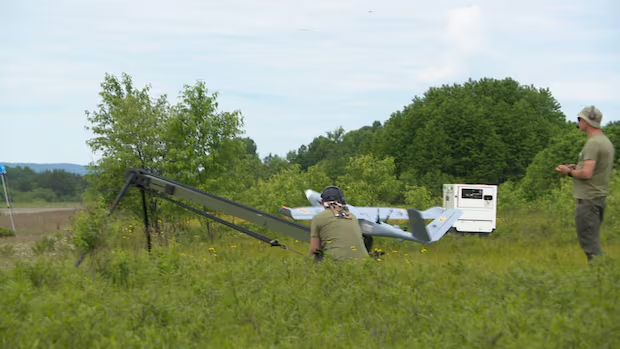
CNN于9月报道,美军差点登上中东的一艘中国船只,因为一个人工智能聊天机器人错误地称该船运载核材料。为乌克兰提供无人机的加拿大公司 7月8日马里扬表示,此类事件“很可能会继续发生”,而下一次,军方可能无法及时叫停。
CNN reported in September that the U.S. military almost boarded a Chinese vessel in the Middle East because an AI chatbot mistakenly said the ship was carrying nuclear materials. The Canadian company arming Ukraine with drones July 8 Marijan says incidents like that "are likely to keep occurring" and next time, the military might not put the brakes on soon enough.
“可能会出现这样一种系统,它完全影响一个国家行为体,使其基于错误信息采取行动……从而导致某种灾难性错误。”
"You could have a system that completely influences a state actor to act in a way that might be based on faulty information ... that results in some catastrophic mistake."