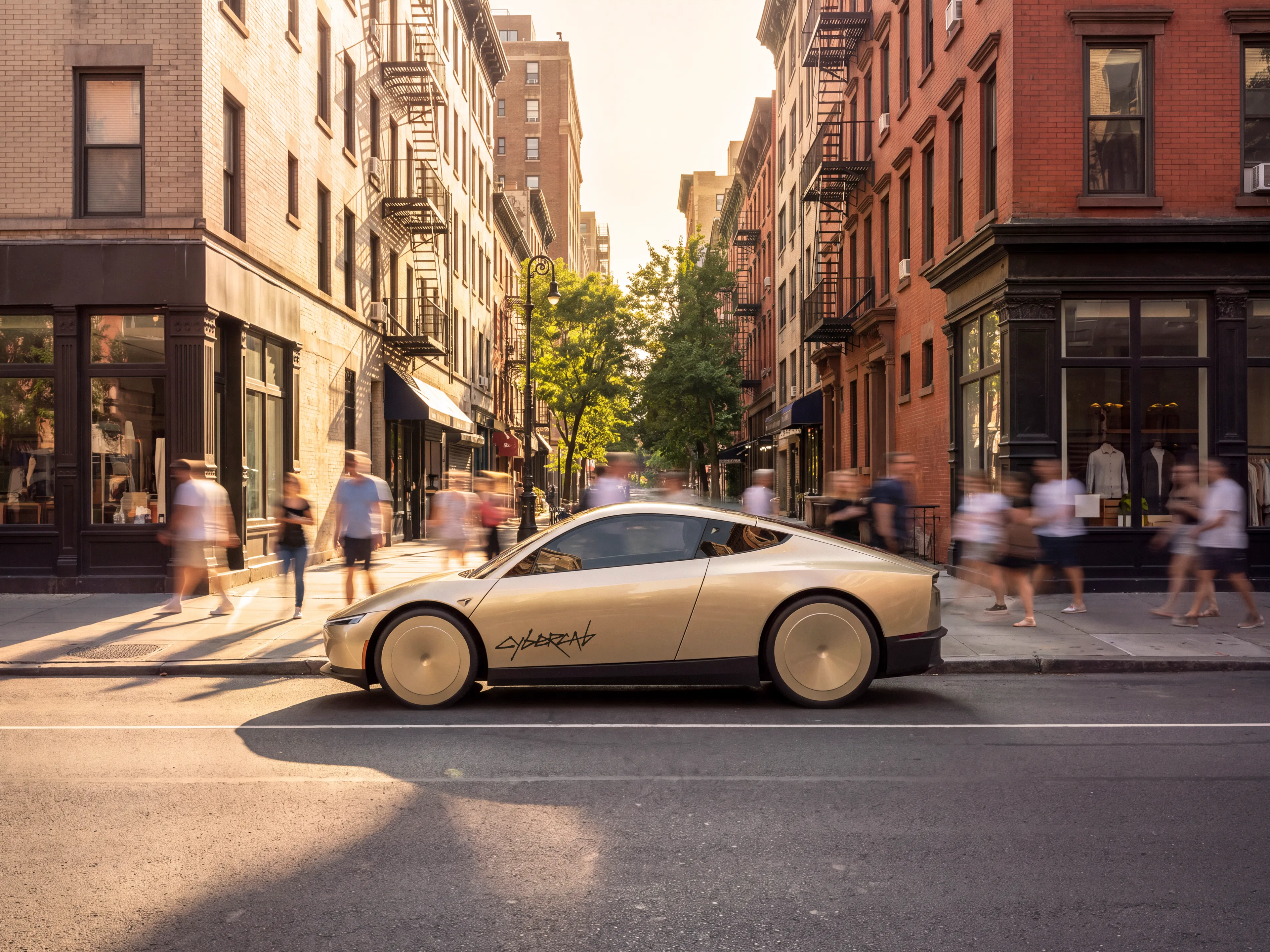
上周五晚间,特斯拉表示已邀请“部分客户”购买他们专属的 Cybercab。款双座金色车型在市场上独树一帜:它没有方向盘和刹车踏板,主要由软件驾驶。(其他自动驾驶公司,包括 Alphabet 旗下的 Waymo 和亚马逊旗下的 Zoox,在网约车网络上提供自动驾驶乘车服务,但不允许人们购买其车辆。)特斯拉的“限量发布”据称将让部分人(具体数量不详)有机会支付 29,900 美元,于 12 月提车。
Last Friday night, Tesla said it had invited “select customers” to purchase their very own Cybercabs. The two-seat, gold vehicle is unlike any other on the market: It lacks a steering wheel and brake pedals, and is primarily driven by software. (Other autonomous vehicle companies, including Alphabet's Waymo and Amazon’s Zoox, offer self-driving rides on ride-hail networks, but don’t let people buy their cars.) Tesla’s "limited release” will supposedly offer some people (unclear how many) the opportunity to pay $29,900 to take delivery in December.
然而,从那之后,Cybercab 将需要持续的现金注入才能维持上路运营。种商业模式引发了疑问:人们购买 Cybercab 到底能得到什么?埃德蒙兹(Edmunds)洞察总监伊万·德鲁里(Ivan Drury)表示:“你永远不会真正拥有这辆车。更像是花 3 万美元买入一个特许经营权。”
From there, though, the Cybercab will need constant cash infusions to stay on the road. The business model raises questions about what people will actually get when they buy a Cybercab. “You’ll never really own the car,” says Ivan Drury, the director of insights at Edmunds. “It’s more like $30,000 to buy into a franchise.”
根据特斯拉网站发布的文件,如果没有特斯拉所谓的“自动驾驶订阅”,该车辆“将无法运行”,这项月费起价为 299 美元。如果车主未按时足额付费,他们的自动驾驶汽车将无法工作。如果他们试图在不支持该服务的地区运行车辆——目前仅限于佛罗里达州和得克萨斯州部分城市的特定区域——他们的自动驾驶汽车将无法工作。
According to documents posted on Tesla’s website, the vehicle “will not operate” without what Tesla is calling an “autonomy subscription," a monthly fee that will start at $299. If owners don’t pay on time and in full, their self-driving cars won’t work. If they try to operate the vehicles in areas that don’t support the service—right now, they’re restricted to portions of cities in Florida and Texas—their self-driving cars won’t work. (That area can expand, contract, or “relocate” at any time.)
(该区域可随时扩大、缩小或“迁移”。)如果车主做了特斯拉认定为“未经授权或不当”的任何事情,公司表示可以暂停或取消订阅——他们的自动驾驶汽车将无法工作。如果车辆失去连接,自动驾驶汽车将无法工作。(其“自动驾驶协议”称:“特斯拉不对运营商、频谱、环境或其他外部中断负责。”)特斯拉还保留随时让车主车辆无法工作的权利:公司表示,出于任何安全或安保目的,均可暂停或终止对 Cybercab 技术的访问,或按地点、道路类型、天气或“状况”限制运行。
If owners do anything that Tesla deems "unauthorized or inappropriate," the company says it can suspend or cancel the subscription—and their self-driving cars won’t work. If the vehicle loses connectivity, the self-driving cars won’t work. (“Tesla is not responsible for carrier, spectrum, environmental, or other external outages,” its “autonomy agreement” says.) Tesla also reserves the right to make an owner’s car not work at any time: It says it can, for any safety or security purpose, suspend or terminate access to Cybercab tech, or restrict operations by location, road type, weather, or “condition.”
点尤为引人关注,因为 Cybercab 也正在美国安全监管机构的调查之下,监管方试图弄清特斯拉为何认为该车辆在缺少许多必需部件和系统的情况下仍符合安全标准。特斯拉未回应置评请求。
This is particularly salient because the Cybercab is also under investigation by US safety regulators, who are trying to understand why Tesla believes the vehicle meets safety standards without so many of the parts and systems required. Tesla didn’t respond to a request for comment.
多年来,车企将日益软件化的汽车视为良机,试图让驾驶者像沉迷 Netflix、亚马逊和 Spotify 那样,对月度订阅服务产生依赖。因为这些车辆能够接收空中下载(OTA)软件更新,制造商可在开发出新服务时随时向驾驶者提供。其吸引力在于科技行业式的高利润率,且能持续带来收益,这与造车业极薄的利润率形成鲜明对比。一份 2024 年报告指出,联网汽车功能未来有望成为一个 2000 亿美元的产业。
For years, automakers have seen increasingly software-dominated vehicles as an opportunity to get drivers hooked on the same special sauce that makes Netflix, Amazon, and Spotify so potent: monthly subscription services. Because these vehicles can receive over-the-air software updates, manufacturers can offer drivers new services as they make them. The upside is high, tech-style margins that keep rolling in, versus the razor-thin ones seen in car-making. A 2024 report suggested that connected-car features could one day be a $200 billion industry.
在某些方面,订阅模式正在奏效。如今,部分车企对远程启动、安防、互联网连接和高级驾驶辅助功能额外收费。通用汽车表示,去年其从驾驶者为 OnStar 和 Super Cruise 服务支付的费用中,获得了 27 亿美元的订阅相关收入。
In some ways, the subscription model is working. Today, some automakers charge extra for remote start, security, internet connectivity, and advanced driver assistance features. General Motors said it made $2.7 billion in subscription-related revenue last year from fees drivers paid for its OnStar and Super Cruise services.
但也有客户觉得这种商业模式令人反感,甚至感到冒犯。一项功能已内置在车上,为什么还要额外收费“解锁”?如果车企随时能添加新功能,难道不也能随时拿走吗?如果能拿走,“所有权”又意味着什么?2022 年,宝马告知部分国家的驾驶者,将对出厂安装的座椅加热功能按月或一次性收费;在舆论哗然后最终妥协,承诺不再为预装硬件收取订阅费。(宝马仍在针对部分功能推行订阅模式。)德鲁里说:“消费者讨厌为订阅服务被层层盘剥。”
But some customers have also found the business model yucky, or even offensive. Why charge extra to “unlock” a feature that’s already built into a car? If an automaker can add a new feature at any time, can’t they also take it away? And if they can take it away, what does "ownership" mean? In 2022, BMW told drivers in select countries it would activate factory-installed heated seats for a monthly or one-time fee; it eventually backed down after public outcry, pledging the company would no longer charge subscription fees for pre-installed hardware. (BMW is still pursuing a subscription model for some features.) “Consumers hate being nickel-and-dimed for subscriptions,” says Drury.
特斯拉是订阅功能领域的早期布局者,十年来一直以月费或一次性收费的方式提供联网和驾驶辅助功能。随着公司战略重心从造车转向机器人和自动驾驶汽车,高管们已明确表示,服务收费是未来方向。(其 Robotaxi 服务目前已在八座美国城市的部分区域接载付费乘客。)因此,特斯拉买家可能特别愿意按月付费,让他们的自动驾驶汽车上路行驶。
Tesla was an early mover in the subscription feature space and has offered connectivity and driver-assistance features for monthly or one-time fees for a decade. As the company has shifted away from making cars and toward robotics and autonomous vehicles, executives have made clear that charging for services is the future. (Its Robotaxi service currently picks up fare-paying passengers in parts of eight US cities.) So Tesla buyers may be particularly amenable to paying monthly to make their self-driving cars go.
作为月费的回报,买家还将获得其他服务,包括远程支持、道路救援、轮胎、空气滤芯和雨刮片更换,以及轮胎和摄像头检查。(协议称该清单也可能变更。)公司表示,Cybercab 将能够“空载自主行驶至特斯拉服务中心”。费用不包含保险。
In exchange for monthly fees, buyers will also get access to other services, too, including remote support, roadside assistance, tire, air filter, and windshield wiper replacements, and tire and camera inspections. (The agreement says that list might change, too.) Cybercabs will be able to “travel autonomously, unoccupied to a Tesla service center,” the company says. The fee doesn't cover insurance.
Cybercab 买家还将面临其他限制。车辆仅限个人使用。尽管首席执行官埃隆·马斯克多次表示,车主将能把车辆投入特斯拉更广泛的 Robotaxi 网络,在闲置时赚钱,甚至为想要拥有并运营自己 Cybercab 车队的人提供了在线意向登记表,但目前的所有权协议禁止这样做。买家也被禁止在未获得特斯拉书面同意的情况下出售或转让车辆。公司“不建议”13 岁以下儿童乘坐 Cybercab,并禁止儿童在无成年人陪同的情况下乘坐。
Cybercab buyers will have other restrictions. The vehicle is for personal use only. Even though CEO Elon Musk has repeatedly said owners will be able to put their vehicles on Tesla’s wider Robotaxi network to make money during downtime, and even has an online interest form for those who want to own and operate their own Cybercab fleets, the current ownership agreement prohibits that. Buyers are also prohibited from selling or transferring their vehicles without Tesla’s written consent. The company “advises against” children under 13 riding in the Cybercab, and prohibits children from riding without an adult present.
马斯克在 X 平台发帖,对 Cybercab 商业模式似乎毫不在意,但确实表示自动驾驶的月费“太高了”。他写道,价格“应该更像是每月约 115 美元”。
In a post on X, Musk showed no apparent compunction about the Cybercab business model, but did say the monthly price for autonomy “is too high.”He wrote that the price should be “more like ~$115/month.”