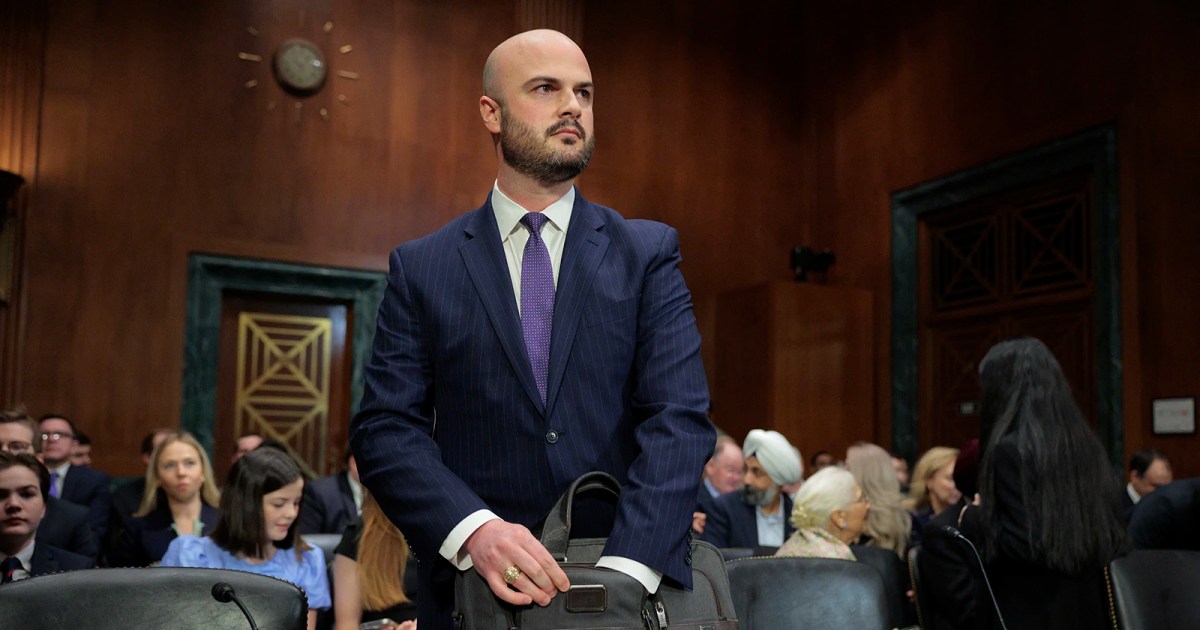
除去服兵役以及去年在司法部短暂任职的经历,亚伦·赖茨的个人和职业生涯绝大部分都在得克萨斯州度过。但从他近期以美国得克萨斯州南区联邦检察官身份发出的信件来看,他的关注点并无明显的地方性特征。
With the exception of his military service and a brief stint at the Justice Department last year, Aaron Reitz has lived the bulk of his personal and professional life in Texas. But judging from the letters he has been sending lately as the U.S. attorney for the state’s Southern District, there is nothing particularly local about his focus.
具体而言,赖茨向民主党籍参议员埃莉萨·斯洛特金、伊丽莎白·沃伦、理查德·布卢门撒尔以及众议员罗伯特·加西亚发出了措辞严厉的信件。上述议员均已规划具体的国会监督调查。赖茨在信中提醒他们,任何拟议的调查必须具有“合法的立法目的”,且刑事起诉权属于行政和司法部门,而非国会。
Specifically, Reitz has sent strongly worded letters to Democratic Sens. Elissa Slotkin, Elizabeth Warren and Richard Blumenthal and Rep. Robert Garcia, all of whom have laid out plans for particular congressional oversight investigations. Reitz reminds them in those letters that any intended investigations must have a “legitimate legislative purpose” and that the powers of criminal prosecution belong not to the executive and judicial branches, not Congress.
他要求参议员和众议员保存所有与他们所谓的恐吓或压制唐纳德·特朗普总统“私人助理”、阻止他们与政府交往,甚至如赖茨在致布卢门撒尔的信中所指,阻止他们“从事将造福我国子孙后代的慈善活动”有关的文件和通信。
He demands that the senators and the congressman preserve all documents and communications related to their purported attempts to intimidate or silence President Donald Trump’s “private associates,” prevent them from associating with the administration, or even deter them, as Reitz alleged in his letter to Blumenthal, from “engaging in philanthropic activities that will benefit our nation for generations.”
最终,他的信件暗示,国会议员可能因合谋剥夺某些调查对象的“核心宪法权利”而面临“重大法律后果”。暂且不论赖茨似乎在威胁对远超其管辖范围的人发起刑事调查,且在至少一起案件中使用了极具争议的语言:他致沃伦的信中充斥着长矛、战斧、猎取头皮和呐喊等字眼(沃伦因过去声称拥有美洲原住民血统而成为右翼攻击目标)。
Ultimately, his letters suggest that members of Congress could face “significant legal consequences” for conspiring to deprive certain investigative targets of their “core constitutional rights.”For the moment, put aside that Reitz appears to be threatening criminal investigations of people far outside his jurisdiction, and in at least one case, with highly questionable language: His letter to Warren, who has been targeted by the right for her past claims of Native American heritage, is infused with references to spears, tomahawks, scalp hunting and war cries. (Those terms do not appear in his letter to Blumenthal.)
(这些词汇未出现在他致布卢门撒尔的信中。)作为一个法律问题,关键在于赖茨——共和党参议员特德·克鲁兹的前幕僚长、曾竞选但未能接替肯·帕克斯顿出任得克萨斯州总检察长——是否完全搞错了。
The question, as a legal matter, is whether Reitz — a former chief of staff to Republican Sen. Ted Cruz and failed candidate to replace Ken Paxton as Texas attorney general — is just wrong.
首先,宪法的言论辩论条款长期以来被理解为不仅保护国会议员免受责任追究,“而且免受为自己辩护的负担”,正如最高法院1975年所指出的。法院在“伊斯特兰诉美国现役军人基金案”(Eastland v. United States Servicemen’s Fund)——一个关于参议院调查一个反越战团体的案件——中裁定,一旦确定参议员或众议员是在“合法立法领域”内行事,言论辩论条款就是对干涉的“绝对障碍”,包括刑事起诉和法律程序。
First, the speech or debate clause of the Constitution has long been understood to protect members of Congress not only from liability, “but also from the burden of defending themselves,” as the Supreme Court noted in 1975. Once it is clear that senators or representatives are “acting within the ‘legitimate legislative sphere,’ the Speech or Debate Clause is an absolute bar to interference,” including criminal prosecution and process, the court ruled in Eastland v. United States Servicemen’s Fund, a case about the Senate investigating an anti-Vietnam War group.
当然,赖茨说得没错,国会调查必须有正当的立法目的。但国会在行使最高法院称为“广泛”且“不可或缺”的权力时,一直享有相当大的自由裁量权,即使是在2020年涉及特朗普本人财务和税务记录的案件中也是如此。
Of course, Reitz is correct that congressional investigations must have a valid legislative purpose. But Congress has always had significant leeway in exercising a power the Supreme Court described as both “broad” and “indispensable,” even in a 2020 case involving Trump’s own financial and tax records.
要了解赖茨的预警威胁信究竟有多么错误,值得重温“茶壶山丑闻”,正如MSNBC的雷切尔·马多在《命运部门》一书中所做的那样,该书记录了司法部最黑暗的时刻。
And to understand just how wrong Reitz’s anticipatory threat letters are, it’s worth revisiting the Teapot Dome scandal, as MS NOW’s Rachel Maddow has in “Department of Fate,” her history of the Justice Department at its worst.
那起丑闻揭露的赤裸裸的自利交易和企业腐败,促使最高法院在近一个世纪前裁定,国会不仅有权调查司法部长滥用职权和玩忽职守,还有权强制执行其传票——哪怕这意味着追踪并将不合作的证人置于联邦羁押之下。
The rank self-dealing and corporate corruption revealed by that scandal led the Supreme Court to decide almost a century ago that Congress had not only the power to investigate an attorney general’s abuse and neglect of his duties, but also the right to enforce its subpoenas — even if it meant tracking down and placing in federal custody an uncooperative witness.
该案始于1924年,当时参议院一个特别委员会开始调查时任司法部长哈里·多尔蒂“涉嫌疏忽和失职”。多尔蒂是沃伦·哈丁总统臭名昭著的密友兼竞选经理,被指控未能起诉“茶壶山”案的核心人物,以及许多被控行贿和贪污的人。总体而言,该委员会旨在弄清多尔蒂及其手下人员究竟在做什么,导致他们公开地成为公众信托的无能且低效的管理者。
That case began in 1924, when a select committee of the Senate opened an investigation of the “alleged neglect and failure” of then-Attorney General Harry Daugherty, a notoriously close friend of and campaign manager for President Warren G. Harding, to prosecute the central figures in Teapot Dome, as well as many others accused of bribery and graft. Broadly, the committee undertook to understand what Daugherty and those working for him were actually doing that made them transparently ineffective and inefficient stewards of the public trust.
作为调查的一部分,委员会向多尔蒂的兄弟马尔发出传票,要求其作证并提交大量记录——包括能反映存取款情况的记录——涉及他在俄亥俄州担任高管的那家银行。
As part of that investigation, the committee issued a subpoena to Daugherty’s brother, Mal, for his testimony and a broad array of records — including those that would reflect deposits and withdrawals — for the Ohio bank where he was an executive.
当马尔·多尔蒂无视传票时,参议院副司法长找到他在辛辛那提将其逮捕,意图强行将其带回华盛顿作证。马尔设法让自己从实质上的“国会监狱”获释,但参议院提出了上诉。
When Mal Daugherty blew off the subpoena, the Senate’s deputy sergeant-at-arms tracked him down and arrested him in Cincinnati with the intent of physically bringing him back to Washington to testify. Mal succeeded in getting himself released from what amounted to Congress jail, but the Senate appealed.
在权衡国会是否有权强迫证人作证以“行使立法职能”时,最高法院首先承认,宪法没有“明确赋予两院中的任何一院进行调查和取证的权力”,但在实践中,根据其自身的先例,“调查权——以及强制执行的程序——是立法职能必不可少且适当的辅助手段”。但同样重要的是,法院还考虑了参议院特别调查委员会调查的目的,以及其是否旨在为立法原因获取信息。尽管马尔·多尔蒂明确抗议参议院试图篡夺司法权并对其兄长进行审判,最高法院并不认同。
In weighing whether Congress had the power to compel a witness to testify in order to “exercise a legislative function,” the Supreme Court first recognized that there was no constitutional provision “expressly investing either house with power to make investigations and exact testimony,” but that in practice, and under its own precedent, “the power of inquiry — with process to enforce it — is an essential and appropriate auxiliary to the legislative function.”But just as significantly, the court also considered the purpose of the Senate select committee’s investigation and whether it was to obtain information for legislative reasons. And even though Mal Daugherty protested expressly that the Senate was attempting to usurp the judiciary and put his brother on trial, the Supreme Court disagreed.
相反,法院认定该调查适当地聚焦于“司法部的管理——其职能是否得到妥善履行,或是被忽视、被误导,特别是司法部长及其助手是履行还是忽视了其职责”。最终,鉴于国会监督司法部的职能和司法部长的权力,并决定每年履行其职责所需的资金,法院认定应推定国会的“真实目的”是合法的。法院得出结论:既然马尔·多尔蒂躲避了为合法调查提供协助的传票,他本不应从参议院副司法长的监管下获释。
Instead, it held that the investigation was appropriately focused on “the administration of the Department of Justice — whether its functions were being properly discharged or were being neglected or misdirected, and particularly whether the Attorney General and his assistants were performing or neglecting their duties.”Ultimately, given that Congress oversees the Justice Department’s functions and the attorney general’s powers, and determines what funds are needed annually to carry out its responsibilities, the court found that it should be presumed that Congress’ “real object” was a legitimate one. The court concluded that, having ducked a subpoena in aid of a legitimate investigation, Mal Daugherty never should have been released from the custody of the Senate’s deputy sergeant-at-arms.
总而言之,多赫蒂案——该案至今仍是有效判例——表明亚伦·赖茨或许会成为一个有趣却略带威胁意味的笔友。然而,尽管他向《华尔街日报》夸口说,他不必等国会“先构成犯罪,我们才能开始调查是否存在升级、起诉或提起公诉的依据”,但看来他倒是需要补一堂历史课。或者,一本马多的书。
All told, the Daugherty case — which remains good law — suggests that Aaron Reitz might make an entertaining if vaguely menacing pen pal. But notwithstanding his boast to The Wall Street Journal that he need not wait for Congress “to commit a crime for us to begin investigating whether there’s a basis to escalate or indict or prosecute,” it appears he could use a history lesson. Or a copy of Maddow’s book.