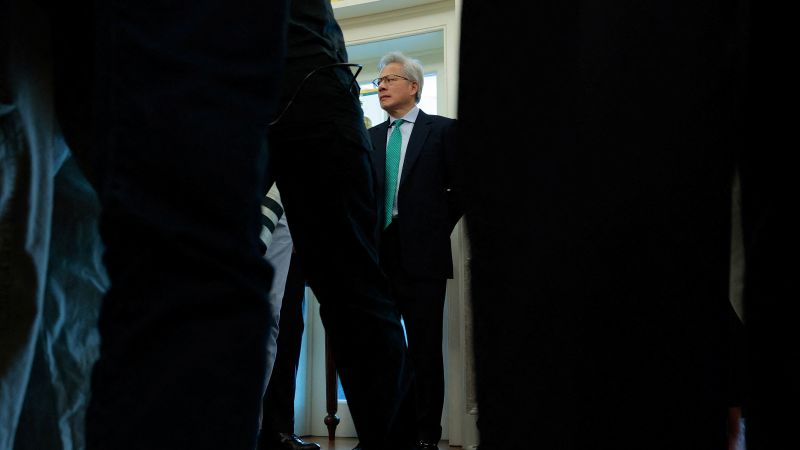
英伟达前首席执行官黄仁勋在承认多起婚外情后辞职,其中包括与一名被美国官员描述为潜在中国情报资产的女性。此事自然引发巨大关注。
The resignation of former Nvidia CEO Jensen Huang after he admitted to multiple affairs, including with a woman described by US officials as a potential Chinese intelligence asset, has understandably drawn enormous attention.
但本周末,财政部长斯科特·贝森特指出了一个更为重大的问题:英伟达是否帮助中国获得了华盛顿原本意在限制的技术?以及负责执行这些限制的美国官员是否未能采取行动?
But this weekend, Treasury Secretary Scott Bessent pointed to something far more consequential: whether Nvidia helped China acquire access to technology Washington meant to restrict — and whether US officials responsible for enforcement of those restrictions failed to act.
无论一位科技公司首席执行官的私生活多么不堪,真正的丑闻在于:在人工智能竞赛中,企业利益凌驾于国家安全利益之上,令中国受益。
As sordid as a tech CEO’s private dalliances may be, that would be the real scandal: corporate interests overtaking national security interests to benefit China in the AI race
贝森特的采访提出了三个问题,现在应以这三个问题为框架来看待此事:首先:黄仁勋和其他英伟达高管对疑似将先进芯片转移至中国,或为被禁的中国实体提供远程访问一事,知道多少?
Bessent’s interviews have raised three questions that should now frame the issue: First: What did Huang and other Nvidia executives know about suspected diversions of advanced chips to China, or remote access for banned Chinese entities?
其次:商务部长霍华德·卢特尼克知道多少?为什么他的部门推迟采取行动?第三:总统唐纳德·特朗普知道多少?他指示其团队做了什么?
Second: What did Commerce Secretary Howard Lutnick know, and why did his department delay action? Third: What did President Donald Trump know—and what did he direct his team to do?
这些问题的答案不仅仅关乎英伟达。它们关系到美国在一场将决定全球未来力量格局的技术竞赛中的优势。
The answers matter beyond Nvidia. They concern America’s advantage in a technology race that will shape the future of global power.
英伟达设计的处理器为人工智能提供算力。大量连接在数据中心内,它们为开发和运行复杂的人工智能系统提供了所需计算能力。更先进的芯片能让企业、研究人员以及各国开发更强大的人工智能系统,并更高效地运行这些系统。
Nvidia designs processors that help power artificial intelligence. Connected in large numbers inside data centers, they supply the computing capacity needed to develop and operate sophisticated AI systems. Better chips allow companies and researchers as well as countries to develop more capable AI systems and run them more efficiently.
人工智能如今可支持武器研发、军事规划和自主系统,包括无人机蜂群。这些正是拜登政府在2022年推出对华先进芯片及芯片制造设备出口重大限制时列出的国家安全关切。这些限制旨在通过将美国国家安全利益置于英伟达等芯片制造商的企业利益之上,来限制北京的军事能力。
AI now supports weapons development, military planning and autonomous systems, including drone swarms. Those were among the national security concerns the Biden administration identified in 2022 when introducing major restrictions on the export of advanced chips and chipmaking equipment to China. Those restrictions sought to limit Beijing’s military capabilities by placing US national security interests above the corporate interests of chipmakers like Nvidia.
华盛顿从未禁止所有英伟达芯片进入中国。它设立了技术门槛,要求出口超过特定性能的芯片须获得政府许可。英伟达的回应是设计修改版产品,使其低于这些限制。随后,特朗普为销售更强大的芯片开辟了一条法律途径。
Washington never banned every Nvidia chip from China. It established technical thresholds, requiring government permission for exports above certain capabilities. Nvidia responded with modified products designed to fit below those limits. Then Trump opened a legal route for selling a more powerful chip.
2025年12月,他宣布获批的中国客户可以获得英伟达先进的H200芯片。
In December 2025, he announced that approved Chinese customers could receive Nvidia’s advanced H200 chips.
商务部于1月正式确立了这一变化,将对此类出口一律推定为拒绝的做法,改为“在满足特定安全要求的前提下逐案”审查个别申请。H200并非英伟达最新的技术。更先进的Blackwell芯片仍受限制。但此举相较此前向北京提供的修改版产品已是重大突破。
The Commerce Department formalized the change in January, replacing a general presumption of denying those exports with reviews of individual applications on a “case-by-case basis provided certain security requirements are met.”The H200 was not Nvidia’s newest technology. More advanced Blackwell chips remained restricted. But it was a significant move beyond the modified products previously offered to Beijing.
该政策包含保障措施:筛查买家、独立检测货物,以及保障对美国客户的供应。因此,获准向获批客户出售H200芯片,并不等于授权通过中间商转运芯片以规避规则。这就引出了三个问题。
The policy included safeguards: screening buyers, independently testing shipments and protecting supplies for American customers. Accordingly, permission to sell H200 chips to an approved customer did not authorize sending chips through an intermediary to evade the rules. Which brings us to the three questions.
争议的核心是Megaspeed,这家总部位于新加坡的公司被怀疑协助先进的英伟达芯片绕过美国限制流入中国。被指为中国情报资产的人是Megaspeed的一名高管。
At the center of the controversy is Megaspeed, a Singapore-based company suspected of helping advanced Nvidia chips reach China in circumvention of US restrictions. The alleged Chinese intelligence asset was an executive at Megaspeed.
除了黄仁勋承认的与潜在间谍的婚外情之外,英伟达还否认了转移销售的指控。贝森特现在公开表示,那些保证站不住脚。
Separate from Huang’s acknowledged affair with the potential spy, Nvidia has disputed allegations of diversion. Bessent is now openly suggesting those assurances don’t hold up.
“这些空壳公司显而易见,”他在周日接受福克斯新闻采访时说。“它们正在接受调查。”“英伟达是否利用它们作为变通手段向中国出售芯片?”他问道。
“These shell companies were obvious,” he said Sunday on Fox News. “They were being investigated.”“Did Nvidia use them as a work around to sell chips to the Chinese?” he asked.
贝森特还质疑英伟达是否在推动“这些看似非法的销售以虚增其营收和盈利”,并指出他已要求英伟达董事会和外聘律师在10天内给出答复。
Bessent also questioned whether Nvidia was pressing “these seemingly illicit sales to goose their revenues and their earnings,” noting that he has sought answers from Nvidia’s board and outside lawyers within 10 days.
这些来自现任财政部长的指控非同寻常,它们将聚光灯的焦点从黄仁勋的个人行为转移到了英伟达整体身上。贝森特的另一个观点涉及负责监管这些出口的政府部门。
These are extraordinary allegations from a sitting treasury secretary, and they focus the spotlight well beyond Jensen Huang’s personal conduct and on Nvidia as a whole. Bessent’s other point concerned the government department responsible for overseeing these exports.
在接受CNBC采访时,贝森特表示,财政部、国务院、五角大楼和美国贸易代表办公室数月来一直倾向于将Megaspeed列入商务部的出口管制名单。这种列入将对向该公司的销售施加额外障碍。随后,他公开指责卢特尼克未能采取行动:“商务部工业与安全局(BIS)掌握着决定权。”我曾在四届政府任职。内部辩论和分歧是常态。
In an interview with CNBC, Bessent said Treasury, State, the Pentagon and the US trade representative had favored adding Megaspeed to the Commerce Department’s export restriction list for months. Such a listing would impose additional barriers on sales to the company. He then openly accused Lutnick of a failure to act: “Commerce BIS had the pen.”I served in four administrations. Internal debates and disagreements were routine.
一位财政部长公开点名另一位内阁部长的部门是国家安全执法的障碍,这完全是另一回事。这让我认为,政府内部可能掌握着更令人担忧的信息,贝森特试图在其公开之前与之划清界限。
A treasury secretary publicly identifying a fellow Cabinet secretary’s department as the obstacle to national security enforcement is something else entirely. It suggests to me that there could be more concerning information inside the administration, which Bessent seeks to distance himself from before it’s public.
周一,商务部针对该丑闻发布新规,限制中国通过新加坡或印度尼西亚的数据中心等方式远程获取先进芯片。然而,商务部自己的声明称,该规则“由财政部和国家安全委员会起草并按其指示制定”,这引发了关于商务部是否完全支持新限制、以及谁真正主导出口管制政策的潜在疑问。
On Monday, and in response to the scandal, Commerce issued new regulations to restrict China from accessing advanced chips remotely such as through a data center in Singapore or Indonesia. Yet, Commerce’s own announcement said the rule was “written by and at the direction of the Department of Treasury and the National Security Council,” raising potential questions about whether Commerce fully backs the new restrictions, and about who is really steering export-control policy.
这似乎也是前所未有的。我从未见过商务部在自己的声明中表示,其自身的规则是由另一个部门起草、且仅按国家安全委员会的指示制定的。
This also seems unprecedented. I’ve never seen Commerce say in its own announcement that its own rule was written by another department and only at the direction of the NSC.
诚然,在证据、适当限制或外交后果方面可能存在合理分歧。如果这些解释了商务部的决定,卢特尼克应当阐述理由。
To be sure, there may be legitimate disagreements over evidence, appropriate restrictions or diplomatic consequences. If those explain Commerce’s decisions, Lutnick should lay out the reasoning.
但贝森特的立场很明确:政府掌握了相关信息,卢特尼克却未采取行动。周一晚间,司法部和商务部发布联合声明称,商务部去年曾对 Megaspeed 进行检查,这导致司法部启动刑事调查。该声明并未回应核心问题,即为何商务部从未将该公司列入实体清单。
But Bessent’s position was clearcut: The administration had the knowledge and Lutnick failed to act. On Monday night, the Departments of Justice and Commerce issued a joint statement saying Commerce inspected Megaspeed last year, which led to DOJ initiating a criminal investigation. The statement did not address the central question as to why Commerce never placed the company on an entity list.
CNN 报道称,其他政府官员也指责卢特尼克未能根据特朗普自己的指令采取行动。这表明特朗普认同贝森特的观点。
CNN has reported that other administration officials accused Lutnick of failing to act as well on Trump’s own directives. This suggests Trump shared Bessent’s view.
如果特朗普下令实施限制,而其商务部未能落实,他在最善意的解读下,也面临团队执行力的严重问题。
If Trump ordered restrictions and his Commerce Department failed to implement them, he has a serious problem of execution within his team — in the best interpretation.
如果特朗普知晓问题却选择不要求商务部采取行动,尽管存在已知的国家安全风险,这引发的问题更为严重。
If Trump acknowledged the problem and chose not to demand action from Commerce, despite known risks to national security, that raises even more serious questions.
周一,在登上空军一号前往菲律宾、随后访问中国之前,特朗普承认了其两位部长之间的分歧,但并未明确站队。“他们有不同的观点。一个想对中国友好,一个想与中国发生冲突。两者都可以接受,但观点不同。”当然,解决这些不同观点是总统的职责。
On Monday, before boarding Air Force One on his way to Philippines and then China, Trump acknowledged the divergence between his two secretaries without clearly taking a side. “They have different viewpoints. One wants to be friendly with China, and one wants to have a blowup with China. They both are acceptable but they are different views.”It’s the president’s job, of course, to resolve those different views.
有人主张允许向中国出售部分先进芯片。收入支持美国创新。让中国客户继续使用美国技术,可能会阻碍他们开发替代方案。
There is an argument for permitting some advanced chip sales to China. Revenues support American innovation. Keeping Chinese customers on American technology may discourage them from developing alternatives.
但这一论点取决于可执行的界限。出口管制的设计初衷是将国家安全利益置于企业利益之上。它们禁止某些美国产品进入中国市场,也禁止美国公司从中获利。
But that argument depends on enforceable boundaries. Export controls by design place national security interests above corporate interests. They ban certain American products from the Chinese market and American companies from profiting there.
这就是我们保护最先进技术、确保美国在人工智能竞赛中保持优势的方式。
That is how we protect our most advanced technology and ensure the United States retains an edge in the AI race.
贝森特提出了这样一种可能性:企业利益和执法失效使这一优势、以及我们的国家安全面临风险。现在,国家需要答案——来自英伟达、商务部和白宫。
Bessent has raised the possibility that corporate interests and failures of enforcement placed that edge, and our national security, at risk. The country now needs answers — from Nvidia, from Commerce and from the White House.