一份拖延已久的南海行为准则(COC)或许已触手可及,但在马尼拉东盟峰会期间举行的一场论坛上,地区专家提醒,不要对这项协议抱有不切实际的期望,因为它的目的是管控紧张局势,而非解决海上争端。
A long-delayed South China Sea code of conduct (COC) may be within reach, but regional experts at a forum held alongside the Asean summit in Manila have cautioned against unrealistic expectations over an agreement designed to manage tensions rather than to resolve the maritime row.
周二,在马尼拉举行的东南亚国家联盟峰会闭幕式上,菲律宾将轮值主席国之槌移交给新加坡,预计这个城市国家将在明年带领该集团处理海上问题。
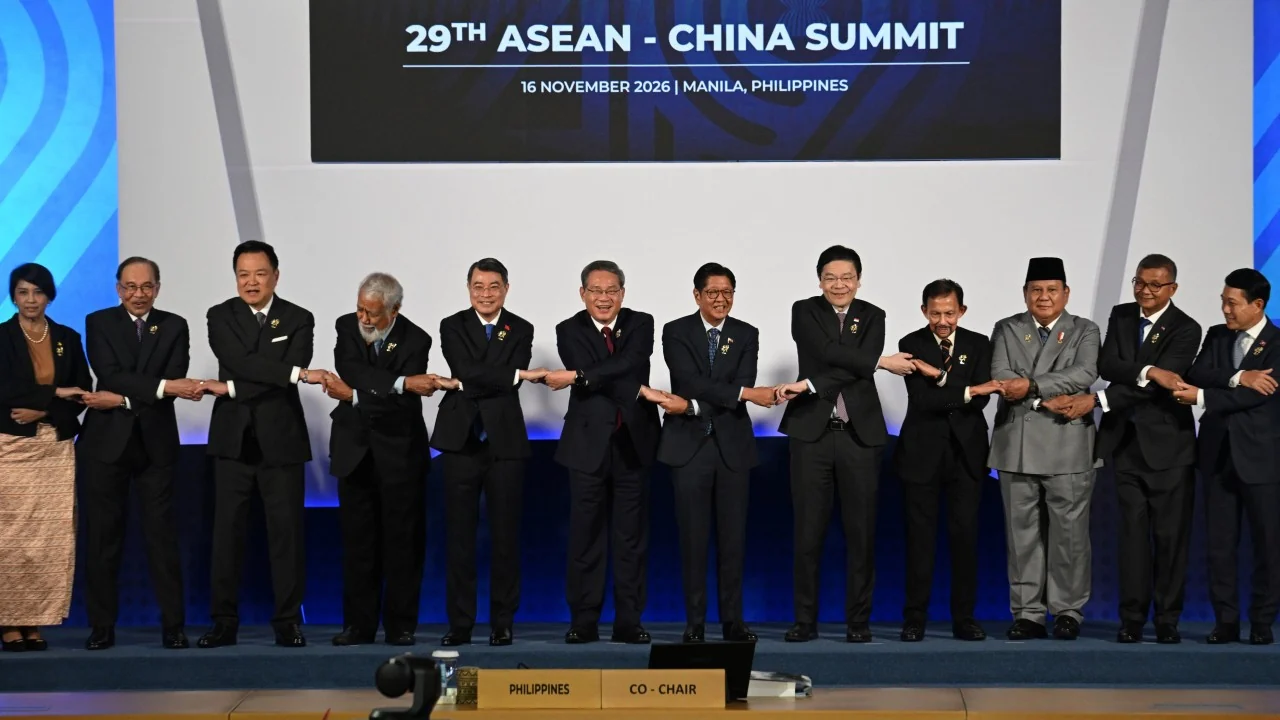
On Tuesday, the Philippines handed the rotating chairmanship gavel to Singapore at the closing of the Association of Southeast Asian Nations summit in Manila, with the city state expected to lead the bloc in tackling the maritime issue next year.
周一举行的马尼拉南海对话会上,数名与会者也谈到了东盟在地区安全问题上以协商一致为驱动的方式的局限。
Several of the participants at the Manila Dialogue on the South China Sea on Monday also spoke about the limits of Asean’s consensus-driven approach on regional security.
这场论坛由总部位于菲律宾的“保护我们的海洋基金会”主办,汇集了政府高级官员、外交官、军方代表和地区安全专家——包括来自中国和东南亚的独立参与者——共同讨论海上争端、国际法和地区稳定问题。
The forum organised by the Philippine-based We Protect Our Seas Foundation brought together senior government officials, diplomats, military representatives and regional security experts – including independent participants from China and Southeast Asia – to discuss maritime disputes, international law and regional stability.
菲律宾总统小费迪南德·马科斯周二表示,“其中85%至90%实际上已经完成”。
Philippine President Ferdinand Marcos Jnr on Tuesday said that “85-90 per cent of it [COC] has actually been done”.
菲律宾外交部长玛丽亚·特蕾莎·拉扎罗为东盟与中国谈判取得的进展进行了辩护,尽管在马尼拉担任主席国期间未能敲定该协议。她告诉记者,她对准则的大部分内容已达成临时一致感到“高兴”,而非“沮丧”。
Philippine Foreign Secretary Maria Theresa Lazaro defended the progress made in negotiations between Asean and China despite a failure to seal the agreement during Manila’s chairmanship. She told reporters that she was “happy”, rather than “frustrated”, that much of the code had been provisionally agreed upon.
“我们很高兴能完成接近80%或更多,”她在周一表示。“所以我不认为这是一次失败。”她表示相信新加坡能够在明年引导谈判完成,但拒绝给出敲定该协议的确切时间表,也未说明这份临时草案是否会缓和争议水域的紧张局势。
“We were happy to come up with almost 80 per cent or more,” she said on Monday. “So I don’t think it’s a failure.”While expressing confidence that Singapore could steer the negotiations to completion next year, she declined to give a firm timeline for finalising the pact or say whether the provisional draft would reduce tensions in contested waters.
东盟与中国之间长期存在的分歧包括准则的地理范围、是否具有法律约束力,以及涉及第三方国家的条款。
Long-standing differences between Asean and China include the COC’s geographic scope, whether it would be legally binding and provisions concerning third-party countries.
周一论坛上发言的专家表示,二十多年的谈判未能产生最终的COC文件,他们并不感到意外。
Experts speaking at the Monday forum were not surprised that more than two decades of negotiations had failed to produce a finalised COC document.
斯坦福大学戈尔迪安·诺特国家安全创新中心“海光”项目主任、美国空军退役上校雷·鲍威尔提到新加坡资深外交官比拉哈里·考斯甘此前说过的话。考斯甘曾把东盟比作“一头牛”,说它“永远成不了马”。
Ray Powell, director of SeaLight at Stanford University’s Gordian Knot Centre for National Security Innovation and a retired US Air Force colonel, referred to comments previously made by veteran Singaporean diplomat Bilahari Kausikan, who once compared Asean to “a cow” that could “never be a horse”.
2015年在新加坡举行的一次会议上,比拉哈里提出,这两种动物都有用,但用处大小不同。
At a conference in Singapore in 2015, Bilahari suggested that both animals were useful, but their level of usefulness was different.
鲍威尔问同台讨论的嘉宾:“南海安全问题的实质是什么?东盟在其中扮演什么角色?我想请大家想一想:我们是不是在让一头牛去参加赛马?”
Powell asked his fellow panellists: “What is the South China Sea security problem and what is Asean’s role in it? I’d ask you to consider, are we asking a cow to run in a horse race?”
德拉萨大学国际研究系杰出教授雷纳托·德卡斯特罗认同这一比喻,他说:“东盟永远成不了马。作为牛,它擅长产出奶制品,但别指望它像马一样奔跑。”德卡斯特罗说,东盟的角色“不是解决任何争端”,而是管控争端。
Renato de Castro, a distinguished professor at De La Salle University’s International Studies Department, agreed with the metaphor, saying: “Asean will never be a horse. It’s good for producing dairy products as a cow, but don’t expect it to run like a horse.”Asean’s role was “not to resolve any dispute” but to manage it, de Castro said.
上海交通大学日本研究中心副教授、东亚海洋政策项目负责人郑志华博士表示,仅靠COC无法一劳永逸地解决海上争端。
Dr Zheng Zhihua, an associate professor and head of the East Asia Marine Policy Project at the Centre for Japanese Studies at Shanghai Jiao Tong University, said the COC alone cannot settle the maritime dispute once and for all.
他提出,声索国之间达成“某种相互理解”,可以更好地管控这场争端。
He suggested the row could be better managed by reaching “some kind of mutual understanding” among the claimant states.
“我认为,对于COC是否具有约束力,中国仍然保持开放态度。”他说。
“I think China still remains open whether the COC is binding or not binding,” he said.
渥太华驻东盟大使安布拉·迪基担心,COC可能会阻碍加拿大等非签署国继续与东盟开展活动。
Ambra Dickie, Ottawa’s envoy to Asean, expressed concern that the COC might block non-signatory countries like Canada from continuing their activities with the bloc.
她说:“从加拿大的角度看,我们定期与东盟成员国进行演练”,尤其是在互操作性演习方面。
She said “from a Canadian perspective, we exercise very regularly with Asean member states”, especially in interoperability manoeuvres.
菲律宾外交部周日发布的一份简报称,南海行为准则(COC)暂定商定文本是一种管控分歧的机制,而非解决争端的机制,其基础是依据国际法(包括《联合国海洋法公约》(UNCLOS))开展自愿合作,同时尊重沿海国的主权和管辖权。
A briefing released by the Philippine foreign office on Sunday said the COC’s provisionally agreed text was a mechanism for managing differences rather than settling disputes, based on voluntary cooperation in accordance with international law, including the UN Convention on the Law of the Sea (Unclos), while respecting the sovereignty and jurisdiction of coastal states.
然而,东盟与中国尚未发表联合声明,确认马尼拉关于COC暂定商定文本的表述。
However, Asean and China have not issued a joint statement confirming Manila’s statement on the provisionally agreed COC text.
印度尼西亚哈比比中心主席德维·福尔图纳·安瓦尔在论坛上强调了东盟的局限性。“东盟不是一个多边安全组织。东盟不搞硬实力,”她说。
Dewi Fortuna Anwar, chairwoman of Indonesia’s Habibie Centre, highlighted Asean’s limitations at the forum. “Asean is not a multilateral security organisation. Asean does not do hard power,” she said.
但安瓦尔也指出,中国不应依靠军事力量,而应行使软实力,以维护地区善意并“创造一个让我们能够爱戴它的条件”。她警告说,依赖硬实力可能适得其反。
But Anwar also suggested that instead of military muscle, China needed to exercise soft power to maintain regional goodwill and “create a condition that we can love it”. She warned that relying on hard power could prove counterproductive.
她的言论凸显了东盟成员国面临的艰难平衡:它们与北京保持着紧密的经贸和外交关系,同时又对其在南海的主张和行动心存顾虑。
Her remarks highlighted the difficult balance facing Asean members that maintain close economic and diplomatic relations with Beijing while harbouring concerns about its claims and actions over the South China Sea.
安瓦尔表示,虽然印度尼西亚不会公开支持菲律宾在有争议水域对抗中国的行动,但它不承认北京的“九段线”,该界线几乎涵盖了整个南海。
Anwar said that while Indonesia would not publicly support the actions of the Philippines in countering China over the disputed waterway, it did not recognise Beijing’s nine-dash line, which encompasses nearly all of the South China Sea.
“但我们仍能将(与中国的关系)分门别类处理,”她解释说,分歧不应阻碍在其他领域的合作。
“But we continue to be able to compartmentalise [our relations with China],” she said, explaining that disagreements should not prevent cooperation in other areas.
她主张东盟成员国应向菲律宾展示团结,即使它们不愿背书马尼拉对抗北京的做法。
She argued that Asean members should show solidarity with the Philippines, even if they were reluctant to endorse Manila’s approach in confronting Beijing.
例如,东盟可以引用2016年有利于菲律宾的仲裁裁决,该裁决认定中国在其“九段线”内主张享有历史性权利、获取资源,在《联合国海洋法公约》下没有法律依据。
For instance, Asean could refer to the 2016 arbitral ruling in favour of the Philippines, which found no legal basis for China’s claims to historic rights over resources within its nine-dash line under Unclos.
北京不接受该裁决,也未参与法律程序,坚持认为仲裁庭对有关争端没有管辖权,领土主权和海洋划界问题应通过有关国家之间的谈判解决。
Beijing has rejected the ruling and did not take part in the legal proceedings, maintaining that the tribunal had no jurisdiction over the dispute and that questions of territorial sovereignty and maritime delimitation should be settled through talks between the countries concerned.
在马尼拉对话会场边接受采访时,中国南海战略态势感知计划主任胡波对《亚洲一周》表示,“即使没有行为准则,局势总体上是可控的”。
In a separate interview on the sidelines of the Manila Dialogue, Hu Bo, director of China’s South China Sea Strategic Situation Probing Initiative, told This Week in Asia that “the situation is generally controllable even without the code of conduct”.