
澳大利亚工资增速在截至9月的三个月内加速超出预期,凸显出在顽固强劲的通胀背景下,经济仍面临持续的成本压力。
Australian wage growth accelerated more than expected in the three months through September, highlighting persistent cost pressures in the economy at a time of stubbornly strong inflation.
澳大利亚统计局周三公布的数据显示,工资价格指数上一季度同比上涨3.5%,高于经济学家预期的3.4%。环比来看,该指标上涨1.1%,增速为2023年最后三个月以来最快。
The Wage Price Index climbed an annual 3.5% last quarter, exceeding economists’ expectation of 3.4%, Australian Bureau of Statistics data showed Wednesday. The gauge advanced 1.1% on a quarterly basis, the fastest pace since the final three months of 2023.
统计局称,公共部门工资同比增长3.9%,私营部门工资上涨3.4%。
Annual wage growth in the public sector was 3.9%, while private sector wages rose 3.4%, the ABS said.
澳大利亚央行2026年加息五次,将利率推升至4.85%的18年高位,以试图抑制通胀。周三的报告显示,工业仲裁机构决定从7月1日起将最低工资上调4.75%,产生了传导效应。
Australia’s central bank raised interest rates five times in 2026 to an 18-year high of 4.85% to try to rein in inflation. Wednesday’s report suggests a flow-on effect from the industrial umpire’s decision to raise the minimum wage by 4.75% from July 1.
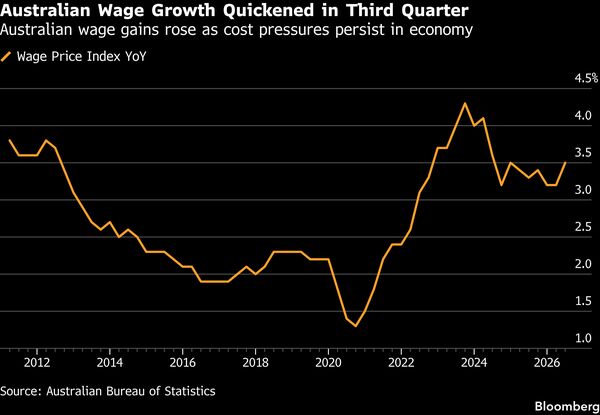
澳大利亚统计局价格统计负责人雷切尔·麦克里里克表示:“公平工作委员会作出的工资设定决定,包括年度审查,是推动私营部门工资增长的主要因素。”
“Wage setting decisions made by the Fair Work Commission,” including the annual review, “were a key driver of much of the growth in private sector wages,” said Rachael McCririck, ABS head of prices statistics.
她表示:“公共部门工资增长的主要驱动力是州政府一线工作者根据企业协议获得加薪。这包括护士、助产士和警察等群体。”
“The main driver of public sector wage growth was pay rises for state government front-line workers covered by enterprise agreements. This included groups like nurses, midwives and police officers,” she said.
澳大利亚储备银行本月早些时候发布的最新经济预测显示,失业率将在2028年底见顶至5.1%,工资涨幅届时将放缓至2.9%。尽管如此,澳储行的联络计划报告称,由于生活成本压力和劳动力市场紧张,企业预计未来一年工资增速不会大幅放缓。
In updated economic forecasts released earlier this month, the Reserve Bank predicted unemployment would peak at 5.1% in late 2028 and pay gains moderate to 2.9% by then. Still, the RBA’s liaison program reported that firms don’t expect wage growth to slow materially over the next year due to cost-of-living pressures and labor market tightness.
澳储行在11月3日发布的《货币政策声明》中表示:“预计较高通胀向私营企业谈判协议和个人安排的一定传导将支撑工资增长,因为工人寻求维持近期实际工资涨幅。”
“Some pass-through from higher inflation to private enterprise bargaining agreements and individual arrangements is expected to have supported wages growth, as workers seek to preserve recent real wage gains,” the RBA said in its Statement on Monetary Policy released Nov. 3.
周四将公布的就业数据将进一步揭示劳动力市场状况(澳储行视其仍为“略显紧张”)是如何演变的。
Jobs data on Thursday will provide further insight into how labor market conditions — viewed by the RBA as still “a little tight” — are evolving.
美联储实行双重使命,目标为实现充分就业和维持物价稳定。然而,由于国内产能受限以及美伊战争引发的能源冲击推高物价涨幅,政策制定者目前高度关注通胀问题。
The central bank operates under a dual mandate that aims for full employment and price stability. However, policymakers are heavily focused on inflation as domestic capacity constraints and the energy shock from the US-Iran war stoke price growth.