
澳大利亚失业率在10月份攀升,经济意外减少就业岗位,显示在澳大利亚储备银行(RBA)快速连续加息以抑制通胀后,劳动力市场进一步松动。
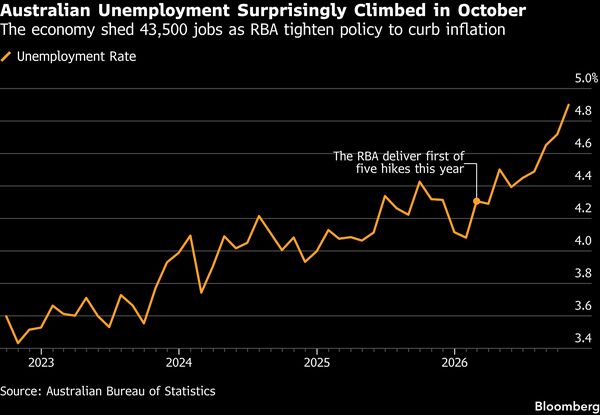
Published: 2026-11-19T08:32:02+08:00 Australian unemployment climbed in October as the economy unexpectedly shed jobs, pointing to further loosening in the labor market after the Reserve Bank delivered rapid-fire interest-rate hikes to cool inflation.
澳大利亚统计局周四公布的数据显示,失业率升至4.9%,超出预期将维持在4.7%的估值。经济减少了4.35万个就业岗位,而预期为增加2.5万个;寻找工作的人数也有所减少。
The jobless rate rose to 4.9%, exceeding estimates for it to stay at 4.7%, data from the Australian Bureau of Statistics showed Thursday. The economy lost 43,500 jobs versus expectations for a 25,000 gain, while fewer people hunted for employment.
澳元跌破67美分,三年期政府债券收益率下跌逾10个基点,交易员将首次降息押注提前至明年11月。
The currency fell below 67 US cents and three-year government bond yields dropped more than 10 basis points as traders brought forward bets on a rate cut to November next year.
“投资者开始质疑澳储行是否‘过度紧缩’,这份数据将加剧这种看法,”野村证券驻悉尼高级策略师安德鲁·蒂斯赫斯特(Andrew Ticehurst)表示。“我认为市场预期将越来越倾向于更激进地为明年降息定价。”澳储行本月早些时候将利率上调至4.85%的18年高位,试图遏制通胀。周四的报告显示,较高的借贷成本正日益拖累劳动力市场,可能缓解令决策者焦虑的部分价格压力。
“Investors have been starting to question whether the RBA has “over-cooked” it, and this data will add to that thinking,” said Andrew Ticehurst, a senior strategist at Nomura in Sydney. “I think market thinking will increasingly move towards pricing rate cuts next year, more aggressively.”The RBA raised rates earlier this month to an 18-year high of 4.85% in an attempt to contain inflation. Thursday’s report suggests higher borrowing costs are increasingly weighing on the labor market, potentially easing some of the price pressures that have raised anxiety among policymakers.
根据更新后的经济预测,央行预计失业率将在2028年底见顶于5.1%,这有助于缓解通胀压力。尽管失业率今年有所上升,但央行在11月3日发布的《货币政策声明》中仍判断劳动力市场状况“略显紧张”。
The central bank predicts unemployment will peak at 5.1% in late 2028, according to updated economic forecasts, which should help to ease inflationary pressure. While the jobless rate has risen this year, the central bank still judged labor conditions to be “a little tight” in its Statement on Monetary Policy released Nov. 3.
“青年失业率——即15至24岁人群的失业率——10月升至11.3%,高于9月的11.1%,”澳大利亚统计局劳工统计主管肖恩·克里克说。“这是自2021年10月以来的最高水平。”
“The youth unemployment rate – that is, for people aged between 15 and 24 – increased to 11.3% in October from 11.1% in September,” said Sean Crick, ABS head of labor statistics. “This is the highest it’s been since October 2021.”The RBA operates under a dual mandate that aims for full employment and price stability, with its focus currently skewed toward inflation as domestic capacity constraints and a global energy shock caused by the US-Iran war have sent prices surging.
澳大利亚储备银行(RBA)依据双重使命运作,旨在实现充分就业和物价稳定,但目前重点偏向通胀,因为国内产能约束以及美伊战争引发的全球能源冲击导致物价飙升。
Stronger wage growth reported Wednesday highlighted persistent cost pressures in the economy, even as a weakening housing market, deteriorating consumer sentiment and a higher jobless rate would suggest cooling activity.
周三公布的工资增长加快凸显了经济中持续存在的成本压力,尽管房地产市场走弱、消费者信心恶化和失业率上升都表明经济活动正在降温。
Yet Australia is also experiencing an investment bonanza related to artificial intelligence. The construction of data centers has been one of the bright spots this year, lifting growth and prices while also contributing to worker shortages in some areas.
然而,澳大利亚也正经历与人工智能相关的投资热潮。数据中心建设是今年亮点之一,提振了增长和物价,同时也在某些地区加剧了劳动力短缺。
The economy has become more inflation-prone due to very weak productivity. As a result, the RBA estimates potential growth is now around 2% — above which consumer prices gain — down from around 3% two decades ago.
由于生产率极其疲弱,经济变得更容易出现通胀。因此,澳储行估计潜在增长率目前约为2%——高于这一水平消费者物价就会上涨——低于二十年前的3%左右。
“There is a lot of pressure on government to respond to things when they go bad,” said Australia’s Secretary to the Treasury Jenny Wilkinson, who sits on the RBA’s nine-member policy board.
“当事情变坏时,政府面临很大压力要做出回应,”坐拥澳储行九人决策委员会席位的澳大利亚财政部秘书珍妮·威尔金森说。
Speaking on a panel focused on productivity Wednesday, she said the private sector needs to think carefully about managing risks “rather than setting up a situation where things don’t go right and then you end up with potentially regulatory overreach.”
周三,她在一个聚焦生产率的小组讨论中表示,私营部门需要仔细考虑如何管理风险,“而不是制造一种局面:事情出了错,最后却导致潜在的监管过度干预。”周四的报告还显示:
Thursday’s report also showed: