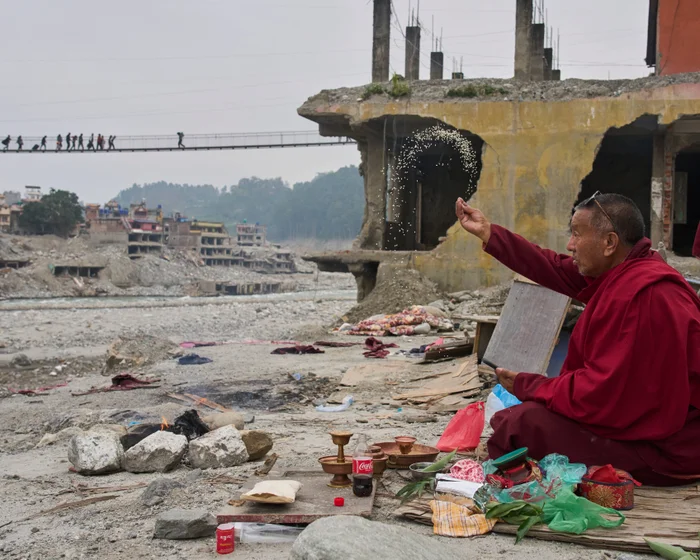
贫穷国家在偿还债权人,而非为气候灾害做准备。国际金融体系必须停止加剧其脆弱性。8月袭击尼泊尔喜马拉雅山的灾难始于一座冰川崩塌。冰雪和岩石的雪崩引发致命洪水,冲走村庄、桥梁和道路,造成数千人死亡或失踪。这说明了全球变暖对喜马拉雅山日益不稳定的冰川所构成的危险。尼泊尔损失了十分之一的发电量。
Poor countries are paying creditors instead of preparing for climate disasters. The international financial system must stop deepening their vulnerability The catastrophe that struck Nepal’s Himalayas in August began with a collapsing glacier. An avalanche of ice and rock unleashed deadly floods, sweeping away villages, bridges and roads, and leaving thousands dead or missing. It illustrated the dangers posed by global heating to the Himalayas’ increasingly unstable glaciers. Nepal lost a tenth of its electricity generation.
重建将花费约50亿美元。然而,在2022年联合国气候峰会上被誉为历史性突破的损失与损害基金,仅为尼泊尔拨款2000万美元——不到加德满都今年必须向外部公共债权人支付的4.82亿美元的5%。
Reconstruction will cost about $5bn. Yet the Loss and Damage Fund, hailed as a historic breakthrough at the 2022 UN climate summit, has earmarked just $20m for Nepal – less than 5% of the $482m that Kathmandu must pay its external public creditors this year.
“资源规模需要扩大,”尼泊尔今年联合国气候大会代表团干巴巴地表示。他们并非唯一在Cop31上推动变革的人。在其9月份的报告《债务助长气候危机》中,行动援助指出,全球南方国家的外部借款是其获得的气候融资的100倍。贫穷国家最终陷入债务依赖,因为它们出口廉价原材料,却进口昂贵的食品、燃料和制成品,这些商品几乎总是以美元定价。该慈善机构警告说,气候脆弱国家现在被期望资助脱碳,同时偿还往往迫使它们出口化石燃料而非投资绿色工业化的美元贷款。
“The scale of resources needs to increase,” Nepal’s delegation to this year’s UN climate conference drily observed. They are not the only ones agitating for change at Cop31. In its September report, Debt Fuels the Climate Crisis, ActionAid noted that the global south’s external borrowing is 100 times more than the climate finance it received. Poor nations end up trapped in debt dependency because they export cheap raw materials, but import expensive food, fuel and manufactured goods, invariably priced in dollars. The charity warned that climate-vulnerable countries are now expected to fund decarbonisation while servicing dollar loans that often pressure them to export fossil fuels rather than invest in green industrialisation.