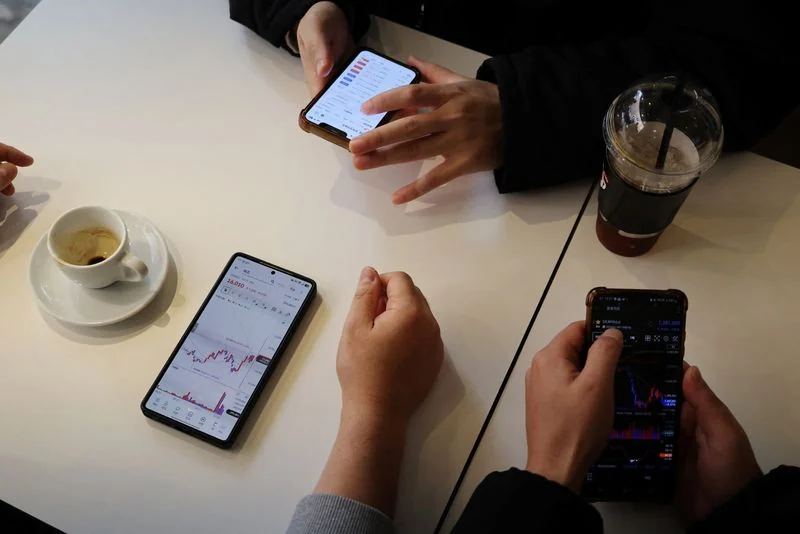
首尔,11月18日电 —— 韩国出口引擎强劲运转,科技巨头凭借半导体业务承接全球人工智能浪潮,然而人工智能市场情绪的起伏,让个人投资者难以获利,而韩国约四分之一国民参与股市投资。
SEOUL, Nov 18 - South Korea’s export engine is roaring as technology majors feed the global AI wave with semiconductors, yet the ebb and flow of AI sentiment has made it difficult for individuals to capitalise in a country where a quarter of citizens invest in stocks.
SK海力士、三星电子等存储芯片出口商有望向员工发放创纪录奖金,但像34岁的权顺国(音)这样的投资者,却眼睁睁看着收益归零,因为每当市场对人工智能的巨额成本和盈利周期产生疑虑,股市就会暴跌。
Exporters such as memory chip makers SK Hynix and Samsung Electronics are set to lavish record bonuses on employees, while investors like 34-year-old Kwon Soon-kuk watch gains vanish as stocks plunge on every doubt about the huge cost of AI and the lead time to profitability.
权顺国在一家消费品公司工作,工作中几乎未感受到人工智能带来的提振,但在评论员大肆宣扬人工智能的变革性影响时,他重仓入市。然而,他非但未获利,反因股市反复大跌,被迫削减餐饮和服装开支,并取消了原定赴东京的圣诞旅行。
Kwon had seen little AI uplift in his job at a consumer goods firm, so he invested heavily while commentators talked up the transformative impact of AI. However, instead of profiting, repeated market routs left him cutting spending at restaurants and on clothes, and cancelling a Christmas trip to Tokyo.
“今年恐怕不会有圣诞行情了,因为太多投资者受伤离场,”权顺国说。
"I don’t think there will be a Santa rally this year with so many investors leaving markets after they got hurt," Kwon said.
他的困境折射出政策制定者在引导日益呈现“双速”特征的经济时面临的挑战。韩国有望今年加入美国、中国和德国的行列,出口额突破1万亿美元。然而,第三季度消费支出近两年来首次收缩,官方和分析师归咎于7月的股市下跌。
His predicament hints at the challenges policymakers face in steering an increasingly two-speed economy. South Korea is on track to join the US, China and Germany in reaching $1 trillion in exports this year. Yet consumption contracted for the first time in nearly two years in the third quarter, with officials and analysts blaming a July stock drop.
韩国综合股价指数(KOSPI)已较6月历史高点下跌逾40%。本月以来单月跌幅达12%,受人工智能相关股拖累,因美国中期选举民主党获胜,引发市场对人工智能开发和数据中心建设将面临更严格监管的预期。
The KOSPI benchmark stock index has fallen more than 40% from a record high in June. It has lost 12% this month alone, pulled down by AI-related shares after the Democratic Party win in US midterm elections raised the prospect of tighter scrutiny of AI development and data centre construction.
芯片行业就业岗位寥寥 亚洲第四大经济体的消费者信心,因利率上升、住房成本高企,以及中东战争引发的物价上涨而受损。不过,分析师指出,股市下跌因散户投资者数量庞大,对消费信心的冲击格外巨大。
FEW JOBS IN CHIP SECTOR Consumer sentiment in Asia’s fourth-largest economy has suffered from rising interest rates and housing costs as well as higher prices brought about by war in the Middle East. However, the stock market decline has had an outsized impact due to the high number of retail investors, analysts said.
韩国证券保管机构的数据显示,韩国5200万人口中约四分之一投资股市。
About a quarter of South Korea’s 52 million people invest in the stock market, Korea Securities Depository data showed.
此外,虽然芯片企业享受了人工智能红利的大头,但这一资本密集型行业创造的就业岗位相对较少。政府数据显示,今年第一季度该行业约有17.4万人就业,占制造业就业人数的4%,占总就业人数的0.8%。
Moreover, while chip firms enjoy the bulk of the AI windfall, the capital-intensive sector creates relatively few jobs. About 174,000 people worked in the sector in the first quarter, making up 4% of the manufacturing sector or 0.8% of the total workforce, government data showed.
总统李在明计划设立一项规模达162.3万亿韩元(约合1210亿美元)的“未来应对基金”,将芯片繁荣带来的超额税收引导至成长型产业、青年、地区发展和教育领域。
President Lee Jae Myung plans to create a 162.3 trillion won ($121 billion) Future Response Fund to funnel excess tax revenue from the chip boom toward growth industries, young people, regional development and education.

他上周还称股市被低估,并誓言将继续推进改革,以改善公司治理并保护股东权益。
He also called the stock market undervalued last week and vowed to continue reform to improve corporate governance and protect shareholder rights.
国际货币基金组织周二在结束与韩国政府的年度磋商后表示:“要维持人工智能上行周期带来的近期收益,需要解决长期存在的结构性逆风,包括人口快速老龄化、地区差距扩大,以及企业和劳动者生产率增长不均衡。”
"Sustaining recent gains from the AI upcycle would require addressing longstanding structural headwinds, including rapid population aging, widening regional disparities and uneven productivity growth across firms and workers," the International Monetary Fund said on Tuesday after its annual consultation with the government.
财政部长李亨镐上月表示,政府计划增加对具有创造更多就业潜力的行业(如服务业)的支持。
The government plans to increase support for sectors that have the potential to create more jobs, such as the services sector, Finance Minister Lee Hyoung-il said last month.
他说:“我们需要第二、第三个‘领跑者’,与半导体产业一起引领经济增长。”
"We need second and third runners to lead economic growth with semiconductors," he said.
寒冬更冷 金融从业者李敏静(音)在与芯片股挂钩的杠杆型交易所交易基金(ETF)投资中亏损了65%,约1000万韩元。这位44岁男子表示,高市场波动和利率让此次市场下行难以应对。
COLDER WINTER Finance worker Lee Min-jung lost 65%, or some 10 million won, in his investment in leveraged exchange-traded funds tied to chip shares. The 44-year-old said high market volatility and interest rates made this market downturn difficult to navigate.
李敏静说:“这个冬天会更冷。”他已放弃给自己和妻子各买一件价值600万韩元的冬装的计划。
"This winter is going to be colder," said Lee, who has given up plans to buy himself and his wife 6 million won winter coats.
韩国金融投资协会的数据显示,作为衡量市场投资意愿的指标,散户投资者存放在股票交易账户中的资金从去年底的87.8万亿韩元增至6月下旬的创纪录高点136.8万亿韩元,随后在周一回落至86.9万亿韩元。
Retail investor deposits in stock trading accounts — a gauge of market appetite — hit a record 136.8 trillion won in late June, from 87.8 trillion won at the end of last year, before falling back to 86.9 trillion won by Monday, showed data from the Korea Financial Investment Association.
花旗经济学家金镇旭(Kim Jin-wook,音译)表示:“私人消费的下行风险在第四季度似乎相当大。随着近期韩国综合股价指数(KOSPI)下跌,韩国家庭今年以来的股票资本利得几乎将被抹平。”权某表示,如果韩国综合股价指数回升并在6000点找到支撑,他会感到放心恢复消费计划。该基准指数周二跌破5000点,创下自2月初以来的新低。
"Downside risks to private consumption appear quite likely in the fourth quarter," said Citi economist Kim Jin-wook. "With the recent KOSPI decline, Korean households’ year-to-date equity capital gains would be nearly wiped out." Kwon said he would feel comfortable reviving spending plans if the KOSPI recovered and found support at 6,000. The benchmark fell below 5,000 on Tuesday to its lowest since early February.
他说:“我并非想马上获利,但我需要看到持续数月的下跌趋势结束。”
"It’s not like I want to make profit right away, but I need to see the end of the downtrend that has been there for several months now," he said.