列车相撞后,西班牙质疑高铁发展是否过快随着选举临近,西班牙一场铁路灾难引发了关于该国基础设施维护是否跟上其人口快速增长的争论。
After Train Crash, Spain Asks if High-Speed Rail Grew Too Fast As an election nears, a railway disaster in Spain has set off debate over whether maintenance of its infrastructure kept pace with its booming population.
西班牙正处于快速增长期。移民推动人口达到近5000万的历史新高。旅游业激增,预计将吸引近1亿人次,比2016年多2500万。作为欧洲增长最快的经济体之一,西班牙在数字化和可再生能源方面投资了数十亿欧元。
Spain is in the middle of a growth spurt. Immigrants are driving the population to a record high of nearly 50 million. Tourism has skyrocketed and is set to attract nearly 100 million people, 25 million more than in 2016. With one of Europe’s fastest-growing economies, Spain has invested tens of billions of euros in digitalization and renewable energy.
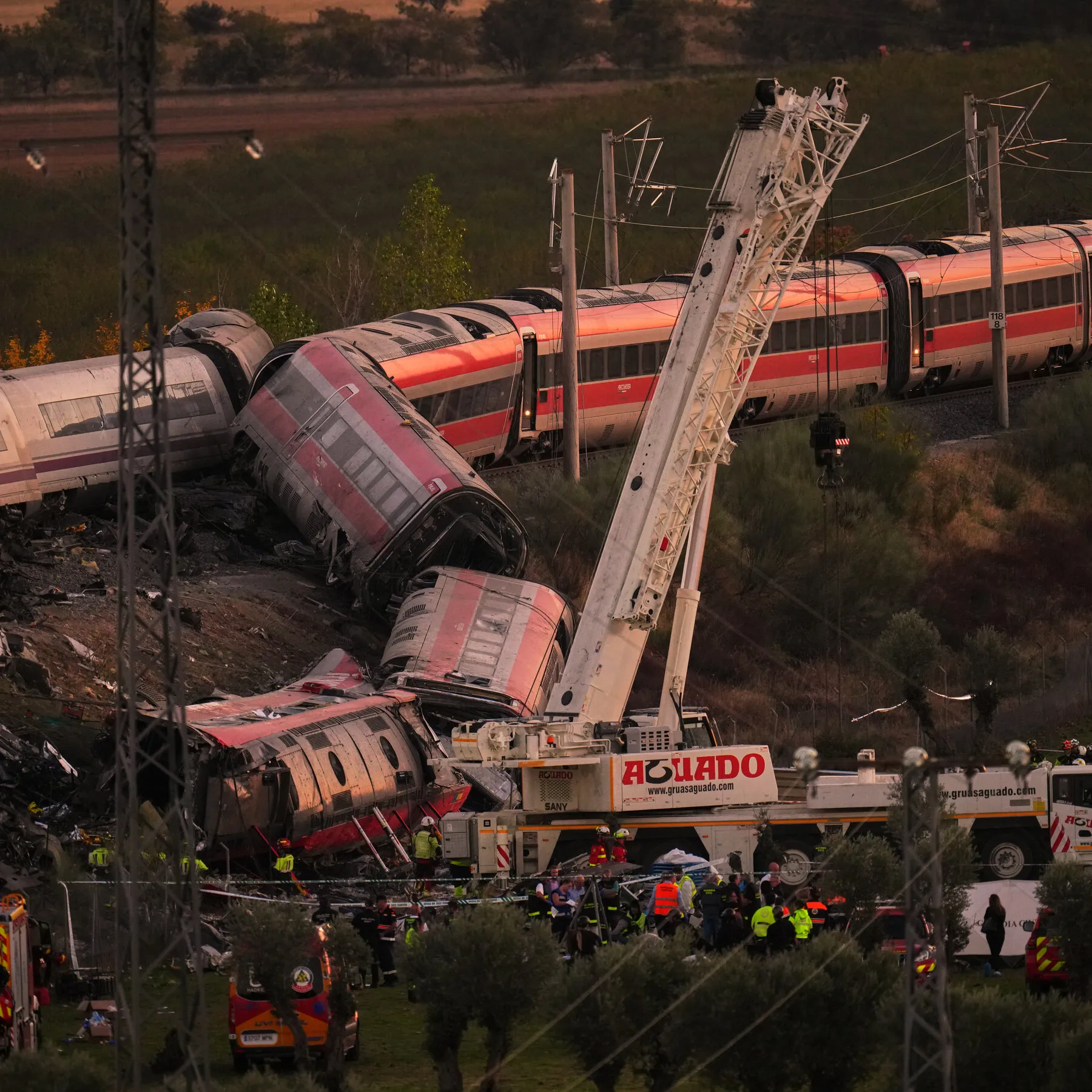
但上个月一场造成69人死亡的惨烈列车相撞事故,引发了对西班牙民用基础设施状况的担忧。这起事故发生在同一条高铁线上仅九个月后另一起碰撞事故造成数十人死亡之后。这也让西班牙人开始质疑,他们的国家是否发展得太快,反而不利于自身。
But a horrific train crash that killed 69 people last month, only nine months after a collision on the same high-speed line killed scores more, has raised concerns about the state of Spanish civil infrastructure. It has also left Spaniards asking if their country has grown too fast for its own good.
随着本月全国大选的临近,基础设施已从晦涩的政策文件走上竞选之路。
With national elections set for this month, infrastructure has moved from esoteric policy papers to the campaign trail.
反对派政客称,首相佩德罗·桑切斯领导的左翼政府让国家日渐衰败。一些专家认为,他的政府过于关注新投资,而忽视了对道路、供水系统和高铁网络等旧设施的维护。西班牙的高铁网络是世界第二大,仅次于中国。一个智库发现,在2024年之前的十年里,每名高铁乘客的支出下降了四分之一以上。
Opposition politicians say the left-wing government of Prime Minister Pedro Sánchez has let the country go to seed. Some experts argue that his government was overly focused on new investments instead of maintaining old ones like roads, water systems and the high-speed rail network, the world’s second-largest, behind China’s. One think tank found that spending per high-speed rail passenger fell by more than a quarter in the decade leading to 2024.
“系统正处于紧张状态,”负责高速公路交通的西班牙公务员佩雷·纳瓦罗说。他说,西班牙的基础设施和公共服务是为“我们有4000万人口时”设计的,但现在“我们有5000万人口,每年接待1亿游客”。桑切斯政府表示,虽然西班牙需要增加铁路投资,但直到八年前还执政的中右翼前政府,通过多年的紧缩政策削弱了基础设施,尤其是铁路基础设施。
“The system is under strain,” said Pere Navarro, the Spanish civil servant responsible for highway traffic. Spain’s infrastructure and public services, he said, were designed for “when there were 40 million of us” but now “we have a population of 50 million and welcome 100 million tourists every year.”Mr. Sánchez’ government said that, though Spain needed to increase investment in its railways, it was the center-right former government that led the country until eight years ago that had eroded infrastructure, and especially railway infrastructure, with years of austerity policies.
桑切斯周三在接受电视采访时被追问维护不足的问题,他辩称其政府一直在努力“扭转保守党前任政府对铁路系统的削减”。他还承诺,将在2030年前额外投入相当于210亿美元用于维护和安全支出。
Mr. Sánchez, pressed on the lack of maintenance in a television interview on Wednesday, argued that his government had worked to “reverse the cuts to the railway system” by his conservative predecessor. He also promised the equivalent of an additional $21 billion on maintenance and safety spending through 2030.
西班牙的大部分基础设施建于上一个繁荣时代,即该国1986年加入欧盟前身组织后不久。突然获得欧盟大量资金后,西班牙在1990年代对巴塞罗那、毕尔巴鄂等工业重镇进行了改造,并建设了庞大的高铁网络和更宽阔的高速公路。
Much of Spain’s infrastructure dates to a previous boom era, soon after the country joined a precursor to the European Union in 1986. Suddenly awash in the bloc’s funds, it spent the 1990s revamping its industrial capitals, like Barcelona and Bilbao, and building a sprawling high-speed rail system and broader highways.
到21世纪初,随着西班牙持续投入数十亿欧元用于交通基础设施,其大运量铁路和公路享誉全球。但一系列挫折重创该国。2008年金融危机和西班牙房地产泡沫破裂后,基础设施投资大幅下降。
By the early 2000s, as Spain kept spending billions on transit infrastructure, it gained global renown for its high-capacity rails and roads. But a series of setbacks hit the country hard. Investment in infrastructure fell off after the financial crisis in 2008 and the popping of Spain’s housing bubble.
随着西班牙变得更加富裕,欧盟优先事项东移,欧洲资金枯竭。随后,2008年金融危机后,欧洲主权债务危机使西班牙的公共投资几乎减半,此前该国公共投资高于欧洲平均水平。无论是右翼还是左翼政府执政,支出都未能恢复。根据瓦伦西亚经济研究院的数据,按实际价值计算,西班牙现在在基础设施上的支出比2000年减少了约25%。
As Spain became wealthier and E.U. priorities shifted east, European funds dried up. Then, after the 2008 financial crash, Europe’s sovereign debt crisis nearly halved public investment in Spain, once higher than the European average. The spending didn’t recover under either right- or left-leaning governments. Now, Spain is spending, in real terms, about 25 percent less on infrastructure than it did in 2000, according to the Valencian Institute of Economic Research.
2018年,社会党的桑切斯上任。在带领西班牙度过新冠疫情后,他利用一轮巨额欧盟复苏基金专注于增长。“西班牙正当时,”桑切斯去年在一场旅游展上表示。
In 2018, Mr. Sánchez, of the Socialist Party, took office. After managing Spain through the coronavirus pandemic, he used a round of enormous E.U. recovery funds to focus on growth. “Spain is in fashion,” Mr. Sanchez said at a tourism fair last year.
作为对西班牙铁路基础设施信心的标志,其政府提议禁止短途航班以减少碳排放。他利用涌入的移民工人带来的税收增加填充国库,并提供受欢迎的补贴和社会福利。
In a sign of his confidence in Spanish rail infrastructure, his government proposed banning short flights to cut carbon emissions. He used increased tax revenues from an influx of immigrant workers to fill the government coffers and offer popular subsidies and social benefits.
随着该国国内生产总值飙升,其基础设施投资未能跟上步伐。去年,一次全国性停电暴露了该国饱和电网的弱点。该电网越来越依赖桑切斯政府优先发展的可再生能源,专家表示这可能使其稳定性降低。分析师和能源公司还表示,电网的局限性使向新建筑项目供电更加困难,拖慢了建设进度并加剧了住房短缺。今年因住房和高租金引发的抗议促使桑切斯呼吁提前选举。
As the country’s gross domestic product soared, its investment in infrastructure didn’t keep pace. Last year, a national blackout exposed the weaknesses of the country’s saturated energy grid. It depends increasingly on the renewable sources that Mr. Sánchez’ government has prioritized, a factor that experts have said may have made it less stable. Analysts and energy companies also say the grid’s limitations make it harder to supply electricity to new construction projects, slowing building projects and contributing to a housing shortage. Protests over housing and high rents this year prompted Mr. Sánchez to call for early elections.
停电事件激发了经济智库Funcas撰写的一本书,书中认为“政治考量影响决策”导致了西班牙交通基础设施、水网和能源资产的老化和故障。作者们表示,政府应当“优先维护现有基础设施,而非进行新投资”。他们并非唯一持此观点。
The blackout inspired a book by the economic think tank Funcas that argued that “political considerations influencing decisions” contributed to obsolescence and breakdowns of Spain’s transport infrastructure, water networks and energy assets. The authors said that the government should instead “prioritize maintaining existing infrastructure over new investment.”They weren’t alone.
“在西班牙,许多曾经运转良好的事物如今运转不佳,”政治分析家拉蒙·冈萨雷斯·费里斯在《El Confidencial》——一家中右翼新闻媒体——发表的广受讨论的文章中写道,此文出现在近期列车事故之后。他指责政府把利益和补贴置于公共工程维护之上,而这些工程“需要很长时间才能见效,且可能不被选民注意”。政府对事故的最初回应并未聚焦于维护缺陷,而是将责任归咎于人为错误——泄露的列车交通控制中心音频显示,一名调度员将一列高速列车指向同轨道上已停驶的列车。但一年内第二起致命事故不可避免地引发了对铁路基础设施和安全的质疑。
“In Spain, many things that once worked well now work poorly,” Ramón González Férriz, a political analyst, wrote in a much-discussed article in El Confidencial, a center-right news outlet, after the recent train crash. He blamed the government for prioritizing benefits and subsidies over maintaining public works that, he wrote, “take a long time to bear fruit and may go unnoticed by voters.”The government’s initial response to the crash was not to focus on maintenance flaws but to blame the human error — revealed in leaked audio from a train traffic control center — in which a controller directed one high-speed train into a stalled train on the same track. But the second deadly crash in a year prompted inevitable questions about railway infrastructure and safety.
随后辞职的交通部长奥斯卡·普恩特 lamented(感叹)称,由于政府在议会未能控制多数议员,无法通过一项加大铁路维护投入的预算。此后,桑切斯先生对批评的回应是将责任归咎于保守派前任、为政府的支出水平辩护,并承诺将增加支出。
The transportation minister, Óscar Puente, who subsequently resigned, lamented that because the government did not control a majority of lawmakers in Parliament, it could not pass a budget that invested more in railway maintenance. Since then, Mr. Sánchez has responded to criticism with a mix of blame for conservative predecessors, defense of his government’s spending level and promises to increase it.
包括在民调中领跑的人民党在内的保守派对手表示,桑切斯先生执政八年后对任何基础设施短板负全部责任。
Conservative opponents, including from the Popular Party, which leads election polls, say Mr. Sánchez has full responsibility for any infrastructure shortcomings after eight years in power.
人民党领袖阿尔贝托·努涅斯·费霍本月表示,西班牙正遭受桑切斯先生“持续的疏忽”,这使西班牙人民面临风险。
Spain is suffering from “continued negligence” under Mr. Sánchez that has put Spaniards at risk, Alberto Núñez Feijóo, the Popular Party leader, said this month.
自2021年以来,西班牙的铁路客运量大幅上升。当时,桑切斯政府向竞争对手开放了该国高速客运铁路市场。票价下降了40%以上,数百英里的新高速铁路线路开通。去年,有4450万乘客使用高速铁路,是2019年的两倍。
Train usage in Spain has risen drastically since 2021, when Mr. Sánchez’ government opened the country’s market for high-speed passenger trains to competitors. Ticket prices fell by more than 40 percent, and hundreds of miles of new high-speed rail routes were opened. Last year, 44.5 million passengers used high-speed rail, twice as many as in 2019.
但据马德里智库经济研究所称,2015年至2024年间,人均高速铁路旅客维护支出下降了27.5%。该智库与西班牙最大的雇主协会有关联。事故发生时,西班牙是欧洲铁路网维护支出最少的国家之一。
But according to the Institute of Economic Studies, a Madrid think tank associated with Spain’s largest association of employers, maintenance spending per high-speed passenger dropped 27.5 percent between 2015 and 2024. At the time of the accident, Spain was among the European countries that spent the least on maintaining its rail network.
据西班牙竞争监管机构称,西班牙乘客开始注意到列车延误,2024年准点到达率下降了近10个百分点,降至约86%。
Spain’s passengers had begun to notice delays, with on-time arrivals dropping nearly 10 points to roughly 86 percent in 2024, according to Spain’s competition regulator.
火车司机去年曾警告通往塞维利亚的高速铁路线路轨道状况恶化,事故就发生在这条线路上。
Train drivers warned last year of track deterioration on the high-speed route to Seville, the line where the crashes occurred.
除了高速铁路维护问题外,交通专家表示,西班牙将优先事项放在高速铁路上的整体战略讲不通,因为去年西班牙超过80%的铁路客运出行发生在短途通勤线路上,这些线路多年来一直遭到忽视。
Beyond the issue of high-speed rail maintenance, transportation experts have said that Spain’s entire strategy of prioritizing high-speed rail makes little sense because over 80 percent of Spain’s passenger rail trips last year were on shorter-distance commuter lines that have suffered from years of neglect.
西班牙独立财政责任局(一个自主的国家任命机构)报告称,1990年至2018年间,西班牙在高速铁路上的投资是通勤铁路的15倍,这一趋势在桑切斯执政下延续了下来。
Spain’s Independent Authority for Fiscal Responsibility, an autonomous state-appointed body, reported that between 1990 and 2018, Spain invested 15 times more on high-speed rail than on commuter rail, a trend that continued under Mr. Sánchez.
但桑切斯对高速铁路的关注不仅仅是政府的优先事项。时任交通部部长普恩特指出,全国各地的地方政客不分政治派别,都要求修建高速铁路。
But Mr. Sánchez’ focus on high-speed rail was not just a government priority. Mr. Puente, the former transportation minister, pointed out at the time that regional politicians all over the country had demanded high-speed rail, regardless of their political affiliation.
“看看这个国家过去20年或30年的历史,”他说,“如果你没有高铁,你就什么都不是。”杰森·霍洛维茨是《纽约时报》马德里分社社长,负责报道西班牙、葡萄牙以及欧洲各地的民生。
“Look at this country’s history over the past 20 or 30 years,” he said. “If you don’t have high-speed rail, you’re nobody.”Jason Horowitz is the Madrid bureau chief for The Times, covering Spain, Portugal and the way people live throughout Europe.