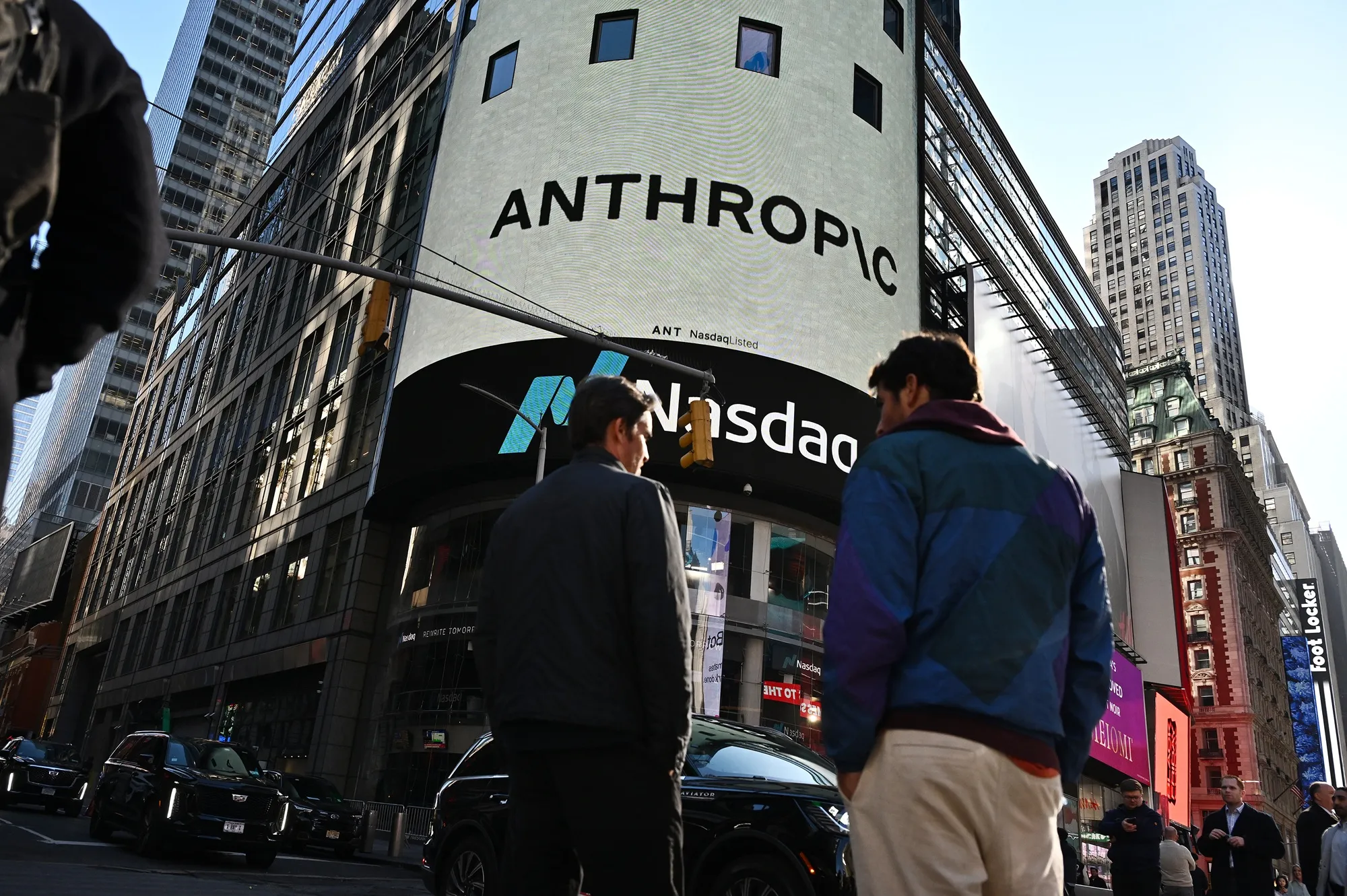
本文曾刊登于《每日前景》通讯。在此处注册。Anthropic周四将首次公开募股(IPO)股价定为每股83美元,在街头反对抗议声中,该股开盘大幅飙升至111.50美元。交易日内,多空双方拉锯,股价一度跌至93美元以下,随后反弹、回落,最终收于97.17美元。
This article was featured in the Daily Prospect newsletter. Sign up for it here. Anthropic set its initial public offering price at $83 a share on Thursday, and amid opposition protests in the streets, it opened with a big pop to $111.50. Bulls and bears whipsawed throughout the trading day, pushing the stock all the way under $93 before it rallied, subsided, and then closed at $97.17.
股票上市前,投资者需求高达5000亿美元,与Anthropic此前有业务往来的投资者获得了优先认购权。事实上,每位投资者都想在投资组合中分得一块Anthropic的蛋糕。《金融时报》引述部分投资者的话称,他们一致认为该股是“必买”之选。其逻辑是:跟随大众涌入一只表现不佳的股票,至少可以说得通,而错过购买首家上市的纯AI模型制造商这一代际机遇,则将是灾难性的。正是这种逻辑推动着Anthropic进入市场指数和指数基金。
There was $500 billion in investor demand before the stock went on sale, and those with a prior relationship with Anthropic got first dibs. Indeed, every investor felt a pull to have a chunk of Anthropic in their portfolio. The Financial Times quoted some, who said uniformly that the stock is a “must own.”The logic is that joining everyone else by piling into something that underperforms is at least explainable, while missing out on the generational opportunity of buying into the first pure AI model maker to go public would be catastrophic. It’s the same logic animating the movement of Anthropic into market indexes and index funds. The Prospect in your inbox Analysis that goes beyond the noise with in-depth, progressive reporting. No paywall, no programmatic ads — just the reporting. Unsubscribe anytime.
这种“没有替代”的心态意味着,关于该公司的所有问题——包括8550亿美元不可取消的购买算力和基础设施承诺、Anthropic的债权人同时也是其供应商、收入在需要爆炸式增长以匹配这些成本时却已放缓、其模型价格降至历史最低、来自版权侵权、自残与自杀责任、失控模型闯入计算机系统等方面的巨大诉讼风险,以及关于毁灭地球上全人类的那整件事——都必须被忽视,因为越来越多的股票被囤积起来。
Submitting your email signs you up for The Daily Prospect, our weekday morning newsletter. This “there is no alternative” mindset means that all of the questions about the company—the enormous $855 billion in noncancelable commitments to buy compute and infrastructure, the fact that Anthropic’s creditors are also its suppliers, the revenues that have already slowed down when they need to explode to match these costs, the prices for its models becoming the cheapest they’ve ever been, the enormous litigation risk from copyright infringement and culpability in self-harm and suicide and rogue models breaking into computer systems and more, and that whole thing about destroying all humanity on Earth—must get ignored as more and more stock is hoarded.
美国经济自由项目详细指出,证券交易委员会竟允许数千人致富(每位Anthropic员工现在都是百万富翁),而上述所有风险都悬而未决,更不用说其披露中有些可疑的融资(关于该信息,弗朗辛·麦肯娜是绝对最佳阅读对象),以及内部人士根据协议可在首日抛售并在90天内完全退出,这一过程散发着拉高出货骗局的气味。全国各地的民主党人和公共养老金基金试图放缓这场冲向首次公开募股的热潮。但他们被忽视了,一旦方向确定,首日涨幅就难以避免。
As the American Economic Liberties Project has detailed, it’s appalling that the Securities and Exchange Commission has allowed thousands of people to get rich (every Anthropic employee is now a millionaire) when all of the above risks are hanging out there, to say nothing of the somewhat dodgy financing in its disclosures (Francine McKenna is absolutely the best read for that information) and the fact that insiders could under the agreement sell on the first day and fully exit before 90 days are up, a process that reeks of a pump-and-dump scheme. Democrats and public pension funds across the country tried to slow down the rush to IPO. But they were ignored, and once the course was set, the initial pop was going to happen.
然而,尽管Anthropic现在是全球估值前十的公司之一,其七位创始人每人持有的股份价值超过240亿美元,但首日的走势并不像一家势不可挡的巨无霸,而更像一家人们还不愿下定论的公司。这属于首次公开募股首日的常态,首日涨幅约为17%。它很像SpaceX的首次公开募股,起初被视为成功,直到首日涨幅后的下跌持续不断:SpaceX在首次亮相几天后,从高点下跌了40%以上。尽管Anthropic是历史上最大的首次公开募股,却并未带动整体市场;市场依然下滑。
Yet while Anthropic is now one of the top ten companies in the world by valuation, and its seven founders are now sitting on a stake worth over $24 billion each, the chart of the first day does not look like a no-brainer juggernaut, but a company that people are wary of rendering a verdict about. It’s normal first-day IPO territory, with a day-one gain of around 17 percent. It looks a lot like the SpaceX IPO, which was seen as successful until the fall from the initial pop just kept continuing: SpaceX is down more than 40 percent from its peak, a few days after its debut. And despite being the largest IPO in history, Anthropic didn’t raise all boats; the market still slid.
这意味着这个行业现在所处的世界与过去截然不同。Anthropic的高层对此心知肚明,已将估值从曾设想的高达2万亿美元的天价下调。正如彭博社所暗示的,Anthropic的IPO可能是AI交易的最后喘息,在滑向危机(如果我们幸运的话,还有无关紧要)之前,带来一次短暂的多巴胺快感。创始人和员工(以及操办IPO的银行家们)拿到了他们的丰厚回报,这笔可观的收入来自于未经补偿地提取全世界的集体知识。但他们可能会让我们其他人承担后果。
That implies something about the very different world this industry is now living in. Anthropic’s top brass kind of knew this, downshifting to a lower valuation from the lofty $2 trillion once imagined. As Bloomberg suggested, the Anthropic IPO could be the last gasp of the AI trade, a quick dopamine hit before it slides into crisis and (if we’re lucky) irrelevance. The founders and employees (and the bankers who set up the IPO) got their payday, a tidy sum based on extracting without compensation the collective knowledge of the world. But they may saddle the rest of us with the consequences.
你不能不谈Nvidia首席执行官黄仁勋的惊人跌落,就谈论Anthropic不确定的开局,Prospect一直持续报道过这一拖累AI交易的惊人现象。一个令人震惊的数据:自10月6日标普500指数触顶以来的跌幅中,有一半可归因于Nvidia的损失。而该公司——请注意——即将向Anthropic投资100亿美元。这是Nvidia的循环融资模式的一部分,这使其成为“AI银行”:它投资那些从自己那里购买芯片的公司。
You cannot talk about Anthropic’s uncertain opening without talking about the incredible drag on the AI trade from Nvidia CEO Jensen Huang’s spectacular fall, as the Prospect has covered relentlessly. An incredible stat: Half of the fall in the S&P 500 since its peak on October 6 can be attributed to Nvidia’s losses. And the company is—wait for it—about to invest $10 billion in Anthropic. This is part of Nvidia’s circular financing model that has made it the Bank of AI: It invests in companies that buy chips from itself.
从某种意义上说,Nvidia的损失并非泡沫破裂的来源。依赖Nvidia融资的公司风险远大得多,正如Gary Marcus所指出的。如果Nvidia停止开支票,CoreWeave和其他公司将会消失。一场热门的IPO固然可以转移注意力,但它无法消除这一根本性问题。
In some ways, the losses at Nvidia aren’t where the bubble pop will come from. The companies that rely on Nvidia’s financing are at far more risk, as Gary Marcus notes. If Nvidia closes the checkbook, CoreWeave and other companies will fade away. A hot IPO is nice for distraction purposes, but it doesn’t eliminate this fundamental set of problems.
Anthropic的大日子也无法抹去其核心问题,正如我之前所说:该公司赚的钱不足以覆盖其开支。而这直接关系到成为上市公司如何改变公司的姿态。
Neither does Anthropic’s big day wipe away its core problem, as I put it previously: The company doesn’t make enough money to cover its expenses. And that ties directly into how being a public company changes the corporate posture.
正如众议员帕特·莱恩(民主党-纽约州)所解释的,一家上市的Anthropic将感受到保持估值高企的压力。这意味着尽可能多地投放广告,或者与企业建立伙伴关系来剥削消费者或取代员工,或者在安全性上打折扣,匆忙推出下一个前沿模型,而不是控制前沿的步伐。Anthropic注册为公益公司,本应考虑所有利益相关方。但这一承诺与高管们的净资产明确取决于获得华尔街认可之间存在张力。上市公司处于显微镜下,其影响每天都在股票行情信息中体现出来。
As Rep. Pat Ryan (D-NY) explained, a public Anthropic will feel the pressure to keep the valuation high. That means selling as many ads as possible, or entering partnerships with businesses to exploit consumers or replace workers, or cutting corners on safety and rushing out the next frontier model rather than pacing that frontier. Anthropic incorporated as a public benefit corporation, which is supposed to take all stakeholders into account. But that promise is in tension with executives whose net worth is explicitly tied to getting nods of approval from Wall Street. Public companies are under a microscope, the effects of which are seen every day in stock ticker information.
到某个时候,Anthropic可能不得不考虑削减开支,而其最大的开支是芯片。它要么减少从英伟达采购的数量,要么尝试将业务内部化;无论哪种方式,一只已经处于暴跌中的股票都将进一步受损。
At some point, Anthropic may have to think about reducing expenses, and its biggest expense is chips. It can either stop buying so much from Nvidia or try to take the business in-house; either way, a stock that is already in freefall would suffer some more.
在谈到选举带来的监管环境变化、我们可能了解到的关于向中国走私AI芯片的潜在犯罪行为,以及其他上百种因素之前,先说这些。投资者可以忽略很多事情,尤其是如果他们在过程中变得富有:见证AI末日论者雅各布·考克森,他曾因警告模型加速会导致人类灭亡而闻名,却在未来IPO之前承诺保留他的OpenAI股权,理由是“我喜欢钱,兄弟。”但尽管似乎事实在华尔街并不重要,所有拥有财富和权力的人都能混过去,这种情况一直持续到不再如此为止。想想1929年或2008年。
This is before getting into the changing regulatory environment given the election, what we might learn about potentially criminal smuggling of AI chips to China, and a hundred other factors. Investors can overlook a lot, especially if they’re getting rich in the process: Witness AI doomer Jacob Coxon, who famously warned about the end of humanity from model acceleration, pledging to keep his OpenAI equity in advance of a future IPO because “I like money, bro.”But as much as it seems like facts don’t matter on Wall Street and everyone with wealth and power muddles through, that’s true right up until the point that it isn’t. Think 1929 or 2008.
立法者和监管者需要知道的是,人工智能公司之间紧密耦合的程度,主要公司与债权人之间的承诺,以及财务状况开始崩溃的时间点。即使那一天的清算遥遥无期,为危机时刻做准备也永远不会白费。作为其中的一部分,负责防止资产泡沫遭受灾难性损害的人应该考虑,那些在派对上大笑直到一切戛然而止的人,是否应该为他们所造成的后果付出代价。
What lawmakers and regulators need to know is the extent of the tight coupling between AI companies, the commitments the major companies have with creditors, and the point at which the finances will begin to break. Preparations for a crisis moment will never go to waste, even if that day of reckoning is far off. And as part of that, those in charge of preventing an asset bubble from catastrophic harm should think about whether the people who laughed through the party until it all came to a halt should pay a price for what they have wrought.