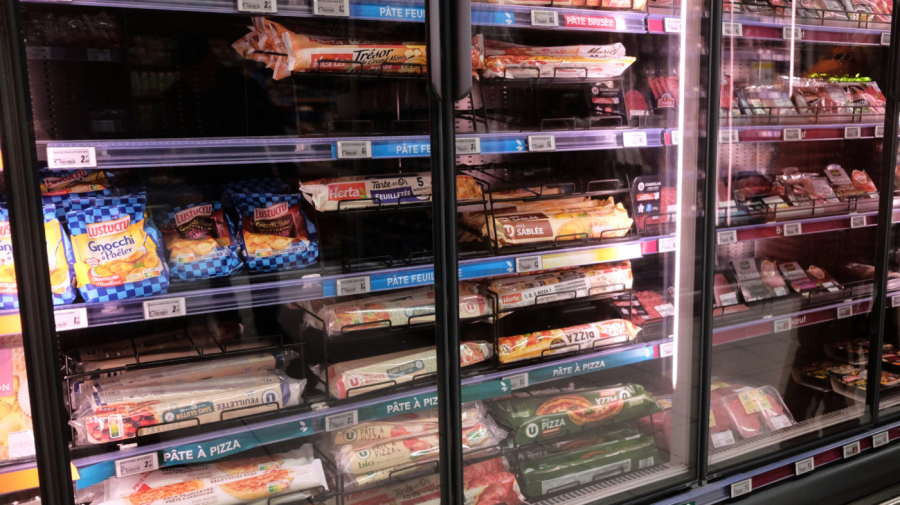
最近欧洲各地发生的一波网络攻击,暴露出维系食品从农场流向消费者这一基础设施的脆弱性。10月,黑客侵入了法国数百家杂货店的制冷系统。短短几小时内,这些系统开始化霜,温度升至华氏122度(约50摄氏度)。这次攻击导致数百磅食品变质,受影响的公司报告了数百万欧元的损失。到了11月,又有六个欧盟国家遭遇了几乎相同的事件。
A recent wave of cyberattacks across Europe has revealed vulnerabilities in the infrastructure that keeps food moving from farms to consumers. In October, hackers infiltrated the refrigeration systems of hundreds of French grocery stores. Within hours, the systems defrosted, reaching temperatures up to 122 degrees Fahrenheit. The attack spoiled hundreds of pounds of food, and the affected companies reported losses of several million euros. By November, six additional European Union countries experienced near-identical incidents.
于是,黑客如今只需敲几下键盘就能威胁我们的食品供应。但如果各国政府出台偏向本国方案、而非互操作性的网络安全规则,就可能让情况变得更糟,削弱它们本想保护的食品供应链的韧性。
And so hackers can now threaten our food supply with a few keystrokes. But governments risk making matters worse if they impose cybersecurity rules that favor national solutions over interoperability, weakening the resilience of the very food supply chains they seek to protect.
五角大楼已发出警报,披露至少六家美国军队小卖部在8月遭遇了类似的制冷系统故障。在法国和美国,受影响的系统都被追溯到丹麦公司丹佛斯(Danfoss),该公司声称黑客利用了过时的遗留软件系统。
The Pentagon has sounded the alarm, revealing that at least six U.S. military commissaries faced similar refrigeration outages in August. In both France and the U.S., the affected systems have been traced to the Danish company Danfoss, which claims that hackers capitalized on outdated legacy software systems.
网络安全调查显示,这些攻击实施起来相对容易。法国的Predicta Lab证明,有2752套丹佛斯系统可在开放互联网上被访问。更令人担忧的是,总部位于纽约的Claroty公司仅用28分钟、花费区区6美元,就利用Anthropic的Claude AI模型在丹佛斯系统中识别出两个漏洞。
Cybersecurity investigations reveal the relative ease by which these attacks were conducted. France’s Predicta Lab demonstrated that 2,752 Danfoss systems were accessible on the open internet. More concerningly, it took New York-based Claroty a mere 28 minutes and just $6 to identify two vulnerabilities in Danfoss systems using Anthropic’s Claude AI models.
这只是农业综合企业领域的冰山一角。该行业日益依赖智能设备,有时被称为物联网(IoT),从自动化农耕设备到先进的供应链管理系统,不一而足。这些设备的互联性带来了更大的网络中断风险。
This is the iceberg for the agribusiness sector, which is increasingly reliant on smart devices, sometimes called the Internet of Things (IoT), ranging from autonomous farming equipment to advanced supply chain management systems. Their interconnectedness carries a greater riskof cyber disruption. Congress has acknowledged these risks.
国会已经认识到这些风险。2025年1月,《农场与食品网络安全法案》被提出,该法案指示农业部评估食品和农业基础设施中的漏洞,并与其他联邦机构协调开展年度危机模拟演练。
In January 2025, The Farm and Food Cybersecurity Act was introduced, directing the Department of Agriculture to evaluate vulnerabilities in food and agriculture infrastructure and coordinating annual crisis simulations with other federal agencies. Those are sensible steps.
这些都是合理的举措。网络安全威胁确实存在。但国会将共同的安全问题变成贸易壁垒的危险同样真实存在。
The cybersecurity threat is real. But so, too, is the danger of Congress turning a shared security problem into a trade barrier. Governments may be tempted to require that every imported refrigeration controller, industrial sensor and logistics platform meet new national cybersecurity rules.
各国政府可能倾向于要求每一台进口制冷控制器、工业传感器和物流平台都符合新的国家网络安全规则。美国可能采用自己的技术法规和认证流程。欧盟和其他贸易伙伴则可能采取不同的做法。
The United States could adopt its own technical regulations and certification processes. The EU and other trading partners might take a different tack. In this scenario, a supplier selling the same refrigeration technology into five markets might have to maintain five compliance programs, undergo five assessments and produce five sets of documentation.
在这种情况下,一家向五个市场销售相同制冷技术的供应商可能不得不维护五套合规方案、接受五次评估并出具五套文件。企业将面临设备更换延迟、供应商减少和成本上升。更糟的是,制造商可能将资源从修复漏洞转向满足不同的官僚清单。这不是供应链韧性,而是伪装成安全的监管碎片化。
Companies would face delayed equipment replacements, fewer suppliers and higher costs. Worse, manufacturers might divert resources from fixing vulnerabilities to satisfying different bureaucratic checklists. That is not supply chain resilience. It is regulatory fragmentation masquerading as security.
这种风险并非假设。欧盟的《网络韧性法案》已经为在欧洲销售的联网产品制定了网络安全标准、认证程序和合规义务。这些要求服务于正当的安全目标,但也为外国制造商制造了另一层监管壁垒。除非华盛顿和布鲁塞尔协调各自的做法,否则制造商可能在认证要求上面临代价高昂的重复。
This risk isn’t hypothetical. The EU’s Cyber Resilience Act already establishes cybersecurity standards, certification procedures and compliance obligations for connected products sold in Europe. These requirements serve legitimate security objectives, but they also create another layer of regulatory barriers for foreign manufacturers. Unless Washington and Brussels coordinate their approaches, manufacturers could face costly redundancies in certification requirements.
相比之下,2020年的《物联网网络安全改进法案》是美国最接近《网络韧性法案》的对应立法,但它只监管联邦机构专用的联网设备,依靠采购要求、自愿性标准和特定行业监管来实施。
By contrast, the IoT Cybersecurity Improvement Act of 2020, the closest U.S. equivalent to the Cyber Resilience Act, regulates those connected devices used exclusively by federal agencies, relying on procurement requirements, voluntary standards and sector specific regulation.
如果美国最终转向更全面的网络安全要求,联邦机构必须确保在访问控制、安全更新、漏洞披露和事件报告方面实现跨境兼容。当不同体系能够达到同等安全效果时,监管机构应承认这种等效性,而不是坚持重复测试,包括通过与可信盟友签订互认协议来实现这一点。重点应放在性能表现,而非设备来源。
If the United States eventually moves toward more sweeping cybersecurity requirements, federal agencies must ensure cross-border compatibility for access controls, security updates, vulnerability disclosures and incident reporting. Where different systems achieve equivalent security outcomes, regulators should recognize that equivalence rather than insist on duplicative testing, including through mutual recognition agreements with trusted allies. The emphasis should be on performance over provenance.
国际上制定的标准提供了有用的起点。美国国家标准与技术研究院已经提供了灵活的网络安全框架,而工业控制标准可以帮助制造商和运营商应对跨境风险。这一切都不需要放松保护措施。
Internationally developed standards offer a useful starting point. The National Institute of Standards and Technology already provides a flexible cybersecurity framework, while industrial control standards can help manufacturers and operators address risks across borders. None of this requires relaxing protections.
政府必须有权排除真正不安全的设备,或应对特定的国家安全威胁。但相关要求应针对已证实的漏洞,并应把安全效益与对国内供应商的偏好区分开来。
Governments must be free to exclude genuinely unsafe equipment or respond to specific national security threats. But requirements should target demonstrated vulnerabilities and should distinguish security benefits from preferences for domestic suppliers.
网络安全标准还必须反映美国农业的现实。小型家庭农场占农场总数的86%,占农业产值的17%。其中许多农场缺乏资源来更换存在漏洞的设备或聘请网络安全专家。
Cybersecurity standards must also reflect the realities of American agriculture. Small family farms account for 86 percent of farms and 17 percent of the value of agricultural production. Many of these farms lack the resources to replace vulnerable equipment or hire cybersecurity specialists.
为解决这一问题,《农业网络安全法案》将设立区域中心,开发安全工具并培训农业经营者。重要的是,国会还应进一步确保设备制造商承担安全设计和软件更新的责任。
To address this problem, the Cybersecurity in Agriculture Act would establish regional centers to develop security tools and train agricultural operators. Importantly, Congress should further ensure that equipment manufacturers shoulder responsibility for secure design and software updates.
华盛顿多年来一直警告,对全球供应链的依赖会带来脆弱性。但解决办法不是把这些供应链分割成各自为政的国家孤岛。一个碎片化的监管体系会限制企业的选择、获取安全技术的能力,以及应对中断时的反应能力。
Washington has spent years warning that dependence on global supply chains creates vulnerabilities. But the answer is not to divide those supply chains into national silos. A fragmented regulatory system would limit businesses’ choices, access to secure technology and capacity to respond when disruptions occur.
制冷系统遭到的攻击是一记警钟。粮食安全就是贸易安全。盟国政府必须加强网络安全,同时不能拼凑出一套各自为政的国家规则,否则将危及互操作性,使关键粮食供应链更加脆弱。
The refrigeration attacks are a wake-up call. Food security is trade security. Allied governments must strengthen cybersecurity without creating a patchwork of national rules that jeopardizes interoperability and leaves critical food supply chains more vulnerable.
埃拉·布施是系统规划与分析公司的军事行动分析师。马克·L·布施是乔治城大学沃尔什外交学院国际商务外交学卡尔·F·兰德格教授。
Ella Busch is a military operations analyst at Systems Planning & Analysis. Marc L. Busch is the Karl F. Landegger Professor of International Business Diplomacy at the Walsh School of Foreign Service, Georgetown University.