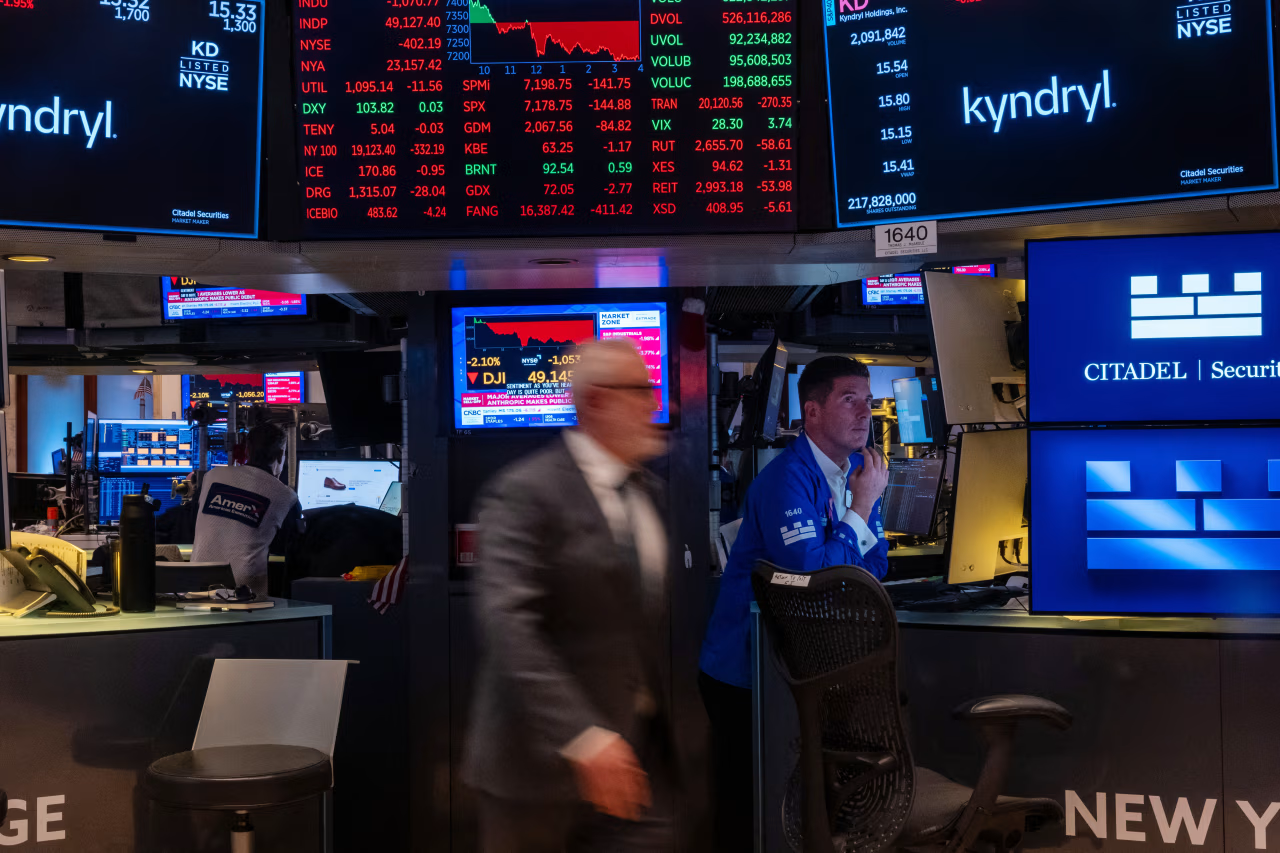
历史或许不会简单重演,但近几周重创股市的 AI 抛售潮,与互联网泡沫破裂时的情形惊人相似。随着投资者持续担忧 AI 是否存在泡沫,一个合理的问题是:泡沫是否曾经存在,以及它是否已经破裂?
History may not repeat itself exactly, but the AI selloff ravaging the stock market in recent weeks is remarkably like the bursting of the dot-com bubble. As investors continue to worry about whether there’s a bubble in AI, a valid question to ask is whether there was, and has it already popped?
不妨看看互联网时代留存至今的几家大型科技公司。以下是它们从高点到 2000 年底、以及到 2026 年底的跌幅对比:英特尔:2000 年 -60% 对比 2026 年 -64%甲骨文:-37% 对比 -60%思科:-52% 对比 -30%美光科技:-63% 对比 -53%高通:-54% 对比 -42%希捷科技:-37% 对比 -60%(期间曾合并后再度分拆)英伟达:-62% 对比 -48%有的跌幅几乎相同,有的更严重,有的则相对较轻。但仅凭这些数据,很难断定哪一次明显是泡沫破裂,哪一次不是。
Consider some of the big technology names from the dot-com era that are still around. Here are the drops from their high to the end of the year in 2000 and in 2026: Intel -60% in 2000 vs. -64% in 2026 Oracle -37% vs. -60% Cisco -52% vs. -30% Micron -63% vs. -53% Qualcomm -54% vs. -42% Seagate Technology -37% vs. -60% (It merged and was spun out again.) Nvidia -62% vs. -48% Some are almost identical, some worse, some better. But just from these it would be hard to say one was obviously a burst bubble and the other not.
回溯 2000 年,跌势波及面足够广,将标普 500 指数从高点拖至年底下跌近 15%,尽管当时发生了大规模轮动,资金从科技股流向廉价防御型股票(公用事业与日用消费品板块均上涨逾 40%!)。
Back in 2000 the falls were widespread enough to drag down the S&P 500 by almost 15% from its high to the end of the year, despite a huge rotation from tech into cheap and defensive stocks (utilities and consumer staples both rose more than 40%!).
今年抛售集中在 AI 相关个股,同样出现大幅轮动——包括医疗保健板块自 4 月底以来上涨 24%——但标普 500 指数仍较盘中高点下跌 12%。
This year the selloff has been concentrated in AI-related stocks, and again there’s been a big rotation—including healthcare up 24% from late April—but still the S&P is down 12% from its intraday high.
目前的一个重大差异是:互联网泡沫破裂引发了经济衰退,导致原本未受波及的板块也走弱,并推动 2001 年出现另一轮深度抛售。未知数在于,本轮抛售是否会像当时那样持续下去。
A big difference, so far, is that the dot-com bust led to a recession, which contributed to weakness in sectors otherwise unaffected and spurred another deep selloff in 2001. The unknown now is whether the selloff continues, as it did then.
市场在 Anthropic 周四成功首发上市(IPO)后未能反弹,并非好兆头,但至少目前经济看起来依然强劲。
The market’s failure to rally after the successful IPO of Anthropic on Thursday isn’t a good sign, but at least for now the economy appears robust.
认为 AI 泡沫已经破裂的论点站得住脚,但前提是这只是一个迷你泡沫,或是围绕数据中心及其所用芯片的一系列迷你泡沫。
The argument that the AI bubble has already burst is plausible, but only if this was a mini-bubble, or collection of them around data centers and the chips used in them.
存储芯片股票中明显出现了通常与极度投机相关的行为,韩国市场尤为突出,在股价见顶时吸引了大量杠杆散户买入。那里的股价暴涨暴跌,看起来像大多数泡沫的最后爆发阶段,只是被压缩在短短几个月内——从3月美国和以色列袭击伊朗后的低点,到6月的高点。
Certainly, behavior usually associated with extreme froth was obvious in memory-chip stocks, with Korea a standout that sucked in leveraged retail buyers right at the top. Stock price ramps and crashes there look like the blowout final phase of most bubbles, but compressed into just a few months from the low in March after the U.S.-Israeli attacks on Iran to a high in June.
好消息是,这轮小型泡沫已大幅消退。芯片制造商美光科技在三个月内股价近乎翻了三倍,随后跌去一半多。半导体公司整体股价翻倍后下跌了43%。为AI数据中心提供能源和设备的供应商呈现相同走势,彭博能源的涨跌幅度同样极端。
The good news is that a lot of this mini-bubble has deflated. Chip maker Micron almost quadrupled in three months, before falling by more than half. Semiconductor companies more broadly doubled, then fell 43%. Suppliers of energy and equipment to build AI data centers showed the same pattern, in the case of Bloom Energy with just as extreme moves.
疲软的“新云”数据中心运营商——本轮周期中的次级借贷者——情况也一样,英伟达支持的CoreWeave便是典型。CoreWeave股价在去年IPO后曾翻了三倍多,但此后已跌回原点。
The same goes for the weak “neocloud” data-center operators, the subprime borrowers of this cycle, notably Nvidia-backed CoreWeave. CoreWeave shares more than quadrupled after its IPO last year, but have since sunk all the way back.
若要跌回年初水平,还会进一步下跌,这会很痛苦,但远不及2001年的抛售。当时路由器制造商思科股价已腰斩,在头三个月内再度腰斩——直到去年12月才收复2000年3月的高点。
Further falls to get back to the level at the start of the year would be painful, but nothing like the 2001 selloff, when router-maker Cisco, already down by half, halved again in the first three months—and didn’t recover its March 2000 high until December last year.
坏消息是,这可能不仅仅是一个小泡沫。更广泛的AI交易呈现令人担忧的循环性。股价下跌可能导致公司收缩激进的投资计划,冲击同样被炒高的供应商,损害其债权人,进而反哺至更低的需求。若如此,市场对数据中心支出实现非凡增长的预期将被下调,不仅冲击经济,也会打击投资者原本寄望从中获利的公司。
The bad news is that this might not be merely a mini-bubble. The broader AI trade is worryingly circular. Falling shares might lead companies to pull back their aggressive investment plans, hitting suppliers that have also been bid up, hurting their lenders and feeding back into still-lower demand. If this happens, expectations of extraordinary growth in data-center spending will be cut, hitting the economy as well as the companies that investors had hoped would profit from it.
股价下跌也可能蔓延至其他板块。散户投资者一直是股票的主要买家,尤其是AI股票,经济学家认为,他们从股价上涨中获利助推了强劲的消费支出。如果这种财富效应逆转,将削弱经济,并波及与AI毫无关联的公司。
Lower share prices could also spill over into other sectors. Retail investors have been big buyers of stocks in general and AI stocks in particular, and economists think their profits from rising stocks contributed to strong consumer spending. If that wealth effect goes into reverse, it will weaken the economy and hurt companies that have nothing to do with AI.
基金管理公司安联投资首席投资官文森特·莫蒂耶表示:“通常只有等到泡沫破裂时,你才知道自己身处泡沫之中。” 到目前为止,我们能确定的只是,数据中心及其供应商领域的一个小泡沫已经破裂,且AI交易中大部分的投机泡沫已被抹去。
Vincent Mortier, chief investment officer of fund manager Amundi, says: “Generally you know you’re in a bubble when it bursts.”So far all we can say for sure is that a mini-bubble has popped in data centers and their suppliers, and that some of the speculative froth has been wiped from much of the rest of the AI trade.
更大的AI泡沫是否正在泄气,目前无法判断——但这种可能性令人不寒而栗。
Whether the air is coming out of a bigger AI bubble is impossible to know—but scarily plausible.