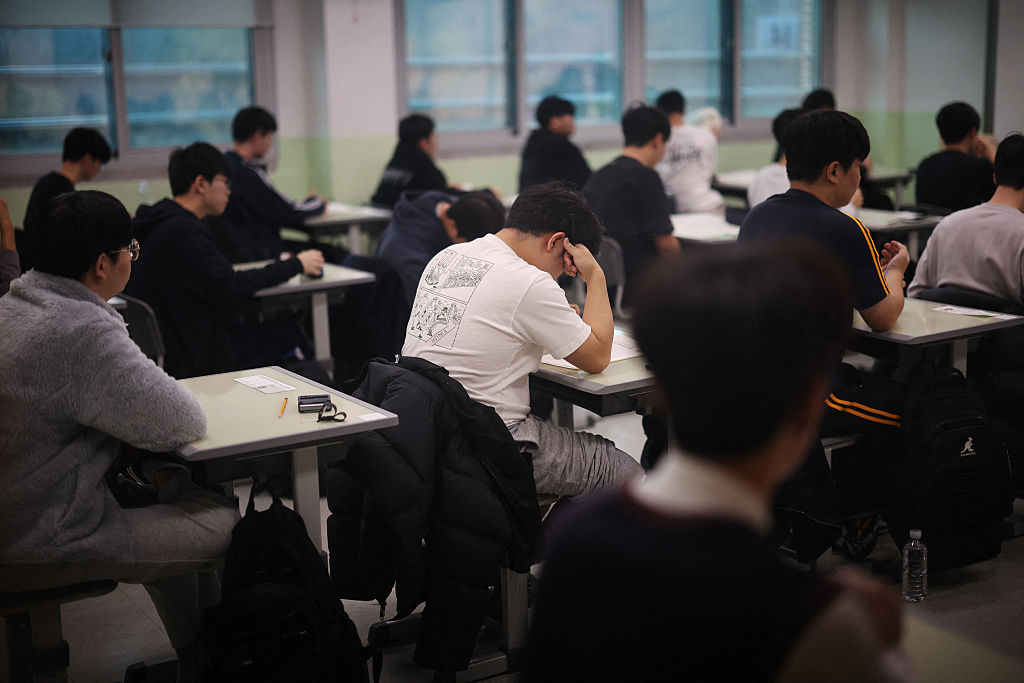
韩国教育部长在因旨在防止在该国至关重要的高考期间利用人工智能作弊的新规引发强烈反弹后,已经辞职。
South Korea’s education minister has resigned after intense backlash against new rules meant to prevent cheating using artificial intelligence during the country’s high-stakes college entrance exams.
崔教振于周日宣布辞职,以回应“公众因未能提前做好充分准备而提出的批评或指责”。教育部是在上周二宣布这项新考试措施的,当时距离近50万韩国人参加长达数小时的大学修学能力考试(也被称为“修能”)仅剩两天。
Choi Kyo-jin announced his resignation on Sunday in response to “criticism or blame from the public for failing to prepare adequately in advance.”The Ministry of Education had announced the new exam measures on Tuesday, just two days before nearly 500,000 South Koreans took the hourslong College Scholastic Ability Test, also called Suneung.
根据新规,考生必须接受眼镜检查,遮住衬衫纽扣以防使用摄像头,并卷起袖子。全国各地的所有手机还在随机时间收到警报,以暴露出学生在考试期间随身携带的任何设备。这些警报使用的是该国的紧急警报系统,该系统通常只在发生自然灾害时使用。政府部署了额外的监考人员,他们在考试前一天接受了视频培训。当局还关闭了考场周围的公共Wi-Fi。
Under the new rules, test-takers were required to have their glasses inspected, cover their shirt buttons to prevent the use of cameras, and roll up their sleeves. Alerts were also sent to all cellphones across the country at random times to expose any devices that students kept with them during the exam. The alerts used the country’s emergency alert system, typically reserved for a natural disaster. The government deployed additional invigilators, who received video training a day before the exam. Authorities also shut down public Wi-Fi around test centers.
这些措施招致了激烈的批评。一些老师表示,检查可能会让学生感到紧张或分心。一名高中老师对《韩国中央日报》表示:“看到本该只专注于考试的孩子们如此紧张,让人感到难过。他们担心自己穿的衣服或在考场上拿铅笔的方式会让自己看起来很可疑。”
The measures drew fierce criticism. Some teachers said the inspections may have made their students nervous or distracted. “It is sad to see children who should be focusing only on the exam so on edge. They worry that what they wear or how they handle a pencil in the exam room could make them look suspicious,” a high school teacher told Korea JoongAng Daily.
另一位老师说:“今年,防范AI作弊等问题意味着从考试一直到最后都在不断改变,所以学生们更加紧张。”
“This year, problems like AI cheating meant one change after another right up until the exam, so the students are even more nervous,” another teacher said.
一名学生对《纽约时报》表示,她很担心其他学生可能会带手机进去,这会导致刺耳的警报声响起,从而打扰考场里的所有人。
One student told the New York Times that she was anxious that another student might have brought in a phone, which would cause the loud alert to go off and disturb everyone else in the room.
学生、家长和在野政党呼吁推迟考试。国民力量党党首张东赫(音)发文称,当考试公平性无法得到保障时,“绝不能强行推进”。改革党敦促政府考虑推迟考试,以确保可靠的防作弊措施。考试按原定计划进行后,要求崔相穆(音)辞职的压力增大。
Students, parents, and opposition political parties called for a postponement. Jang Dong-hyeok, the leader of the People Power Party, posted that the exam “must not be forced ahead when its fairness is not guaranteed.”The Reform Party urged the government to consider postponing the exam in order to ensure reliable anti-cheating measures. After the exam went ahead as scheduled, pressure mounted on Choi to resign.
由高三学生及其他考生组成的“考生团结”呼吁部长辞职。该组织在11月21日的声明中表示,学校并未统一执行规定,并将临场变更规则描述为教育部的“失职”。另一个由高中生和大学生组成的团体宣布计划于12月举行集会,要求采取更好的措施确保学术诚信,并呼吁大学推迟发布录取结果。
Test-Takers’ Solidarity, an association of high school seniors and other exam candidates, called for the minister’s resignation. The group said in a Nov. 21 statement that schools did not uniformly implement the rules, and described the last-minute changes as a “dereliction of duty” by the ministry.”Another group of high school and college students announced plans to hold a rally in December, demanding better measures to ensure academic integrity and calling for universities to postpone admissions announcements.
教师工会也表示,这些措施在缺乏足够支持和准备的情况下,将责任推给了监考人员。
Teachers’ unions also said the measures shifted responsibility to invigilators without adequate support or preparation.
韩国教员团体总联合会(KFTA)在11月17日的声明中呼吁崔相穆辞职,称:“今天匆忙选拔监考人员,明天培训,后天部署,真的能培养出识别复杂AI作弊的专业能力吗?”
The Korean Federation of Teachers’ Associations (KFTA) called for Choi to resign in a Nov. 17 statement, saying, “Will hurriedly selecting supervisors today, training them tomorrow, and deploying them the day after tomorrow really create the expertise to identify sophisticated AI cheating?”
残酷的考试文化 韩国的大学入学考试至关重要,在考试进行的八小时里,全国几乎陷于停摆。在听力考试期间,航班停飞、施工暂停。当局限制考场周边交通,并要求公众保持安静,同时调整公共交通和工作时间以尽量减少干扰。为保密试题,出题人和审题人在考前40天被隔离。
Gruelling exam culture South Korea’s college entrance exam is so critical that the country nearly comes to a standstill for the eight hours that it takes place. During the listening portion of the test, flights are grounded and construction paused. Authorities restrict traffic around test centers and ask the public to keep noise down, while public transit and work hours are adjusted to minimize disruptions. Test makers and reviewers are kept in isolation for 40 days before the exam to keep the questions secret.
这项考试包含韩语、英语、数学、历史等科目,在决定学生能进入国内哪所大学方面起着重要作用。该国三所最顶尖的大学——首尔国立大学、高丽大学和延世大学——表示,计划为2027学年提供约12200个名额,约占今年报名考生的2.2%。该考试首次举办于1993年。
The exam, which includes sections on Korean, English, math, history, and other subjects, plays a major role in determining which universities in the country students can get into. The country’s three most prestigious universities—Seoul National University, Korea University, and Yonsei University—said they planned to offer around 12,200 places for the 2027 academic year, or around 2.2% of this year’s exam registrants. The exam was first held in 1993.
对名校名额的激烈竞争催生了“填鸭式”备考文化,许多学生花费数年时间准备这项全国性考试。2025年,家庭在小学、初中和高中学生的私人补习上花费了27.5万亿韩元(约合200亿美元)。同年,约有380万名学生接受私人补习,包括在全国注册的9.5万家私立学院(补习班)就读。
Competition for elite university places has fuelled a “cram” culture, with many students spending years preparing for the national exam. Families spent 27.5 trillion Korean won ($20 billion) on private lessons for elementary, middle, and high school students in 2025. The same year, around 3.8 million students took private lessons, including at the 95,000 private academies, or hagwons, registered across the country.
2025年全国心理健康调查发现,超过一半的高中女生和三分之一的高中男生“通常”感到压力很大。青少年自杀率上升也引发了对学业压力的担忧。去年6月,釜山一所艺术高中三名学生死亡,引发了一次特别审计。警方称,这些学生似乎因对未来的焦虑而苦恼。审计未查明导致他们死亡的原因,当局怀疑是自杀,但审计发现了员工不当行为的案例。
A 2025 national mental health survey found that more than half of high school girls and a third of high school boys “usually” felt a lot of stress. Rising suicide rates among teenagers have also prompted concerns about academic pressure. In June last year, the death of three students at an arts high school in Busan prompted a special audit. Police said the students appeared to have been struggling with anxiety about their futures. The audit did not establish what led to their deaths, which authorities suspected to be suicide, although it uncovered cases of employee misconduct.
考试的高风险也给防止作弊和确保公平带来了更大压力。2025年12月,主考官在考生抱怨英语部分过难后,正式道歉并辞职。去年仅有3.11%的考生在英语科目获得最高等级,比例较前年减半。
The stakes of the exam also put more pressure on preventing cheating and ensuring fairness. In December 2025, the head test maker issued an official apology and resigned after test takers complained about an overly difficult English section. Only 3.11% of test takers earned the highest grade in English last year, half the share from the year before.
应对学校中的 AI 问题 随着周四考试临近,人们对利用 AI 作弊的担忧日益加剧。截至 11 月 16 日上午 9 点,出题机构的在线问答板上已出现近 700 条帖子,呼吁加强防范 AI 辅助作弊的保障措施,并推迟考试。
Grappling with AI in schools Concerns about possible cheating using AI grew ahead of Thursday’s test. Nearly 700 posts calling for stronger safeguards against AI-assisted cheating and a postponement of the exam appeared on the online Q&A board of the institute that sets the test, as of 9 a.m. on Nov. 16.
政府最初制定的规则侧重于智能眼镜。但在韩国注册税务师考试的状元于 11 月 15 日承认使用微型摄像头、智能手机和生成式 AI 作弊后,官方宣布了额外措施。
The government had initially set rules focused on smart glasses. But officials announced the additional measures after the top scorer on South Korea’s certified tax accountant exam admitted on Nov. 15 to using a miniature camera, smartphone, and generative AI to cheat.
政府试图遏制疑似 AI 辅助作弊行为。考前,总统李在明悬赏至少 1 亿韩元(约合 7.5 万美元)奖励举报作弊者。教育部还警告,作弊者可能面临刑事指控。政府表示将推动立法,禁止作弊者在长达 10 年内重考。
The government has tried to clamp down on suspected AI-assisted cheating. Prior to the test, President Lee Jae Myung offered a reward of at least 100 million won ($75,000) to people who reported cheaters. The Ministry of Education also warned that cheaters could face criminal charges. The government said it would seek legislation for cheaters to be banned from retaking the exam for up to 10 years.
“利用先进设备在考试中作弊,无异于窃取数十万名刻苦备考考生的分数,”李在明于 11 月 17 日发帖称。“如果有人正考虑在考试中作弊,请不要抱侥幸心理毁掉自己的人生。为了你自己和他人,请放弃这一念头。”据教育部称,共有 111 人涉嫌使用电子设备作弊,其中 54 人通过全国性手机警报被抓获。当局成立专案组,审查监考人员在考试期间记录的 Wi-Fi 和蓝牙信号,以排查其他可疑案件并展开调查。
“Cheating on exams using advanced equipment is no different from stealing the scores of hundreds of thousands of examinees who worked hard,” Lee posted on Nov. 17. “If anyone is considering cheating on the exam, please do not ruin your life by hoping for a lucky break. Give it up for your own sake and everyone else’s.”According to the ministry, 111 people were suspected of using electronic devices to cheat on the exam, including 54 who were caught through the nationwide phone alerts. Authorities set up a task force to review Wi-Fi and Bluetooth signals recorded by invigilators during the test to catch other suspicious cases for investigation.
李在明表示,AI 公司也将向政府提供考试期间被拍照的试题用户记录。政府未透露同意共享数据的公司名称,目前也没有公司公开置评。
Lee said AI companies would also provide user records to the government of questions photographed from the test during the exam period. The government did not name which companies had agreed to share data, and no companies have publicly commented.
但这场作弊争议加剧了关于政府如何以及能否在不造成过度压力的情况下确保公平的辩论。周五,李某呼吁对国家考试进行全面改革。该国国家教育委员会此前已在考虑在考试中增加更多主观题和论述题。一些教育官员还提议赋予大学在选拔学生方面更大的自主权,让考试更多地发挥资格审查的作用。
But the cheating controversy has intensified debate on how, and whether, the government can ensure fairness without creating undue stress. On Friday, Lee called for a sweeping overhaul of national exams. The country’s National Education Commission was already considering more written and essay questions on the test. Some education officials also proposed giving universities more discretion in how they select students, with the exam acting more as a qualifying exam.
考试规则并非韩国政府试图应对日益增长的AI使用的首个案例。去年,韩国国会将AI驱动的数字教科书重新归类为可选的补充材料,缩减了前一届政府计划在全国推广AI教科书的规模。
The exam rules are not the first instance of the South Korean government seeking to get to grips with rising AI use. Last year, South Korea’s National Assembly reclassified AI-powered digital textbooks as optional supplementary materials, scaling back the previous administration’s planned nationwide rollout of AI textbooks.
世界各地,当局采取了不同措施以阻止利用AI作弊。在中国,主要科技公司在2025年全国统一高考(又称高考)期间暂时禁用了图像识别和答题等功能。中国教育部门长期采取极端措施遏制作弊,包括对违规者判处监禁,并飞行无人机在考点上空扫描信号。
Around the world, authorities have taken different steps to deter cheating using AI. In China, major tech companies temporarily disabled features like image recognition and question answering during the 2025 national university entrance exam, also called gaokao. China’s education authorities have long taken extreme measures to curb cheating, including jail time for violators and flying drones over testing centers to scan for signals.
挪威教育局今年为部分考试锁定了电脑,限制了学生在线获取考试配套数字资源的权限。其他政府则在努力界定学校和青少年使用AI的边界。
Norway’s education directorate locked computers for selected exams this year, curtailing students’ online access to digital resources provided with the exam. Other governments have grappled with setting the boundaries for AI use in schools and among youth.
在纽约市,公立学校于2023年初在校内设备和网络上屏蔽了ChatGPT。该学区对八年级及以下学生面向学生的生成式AI实施暂停令,并将高中生限制为本学年仅可使用获批工具。
In New York City, public schools blocked ChatGPT on school devices and networks in early 2023. The district imposed a moratorium on student-facing generative AI through eighth grade and limited high school students to approved tools for this school year.
与此同时,澳大利亚新南威尔士州去年为公立学校学生推出了自家聊天机器人。该聊天机器人旨在引导学生解答问题,并提示他们推理出答案。
Meanwhile, the Australian state of New South Wales rolled out its own chatbot for public school students last year. The chatbot is designed to guide students through questions and prompt them to reason through their answers.