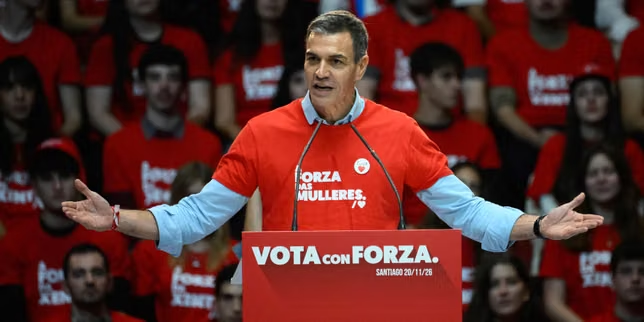
西班牙首相佩德罗·桑切斯于周一(11月23日)提出对净资产超过1亿欧元(约1.09亿美元)的财富征收新税,距离大选仅剩数天。他表示,这项税收将有助于为托儿、住房和公共服务提供资金。
Spanish Prime Minister Pedro Sanchez on Monday, November 23, proposed a new tax on fortunes worth more than €100 million ($109 million) days before a general election, saying it would help fund childcare, housing and public services.
在周日的提前大选前夕,桑切斯领导的社会党一直试图与保守派人民党(PP)划清界限。桑切斯指责人民党想要为最富有的纳税人减税。民调显示,人民党将在选举中赢得最多席位,但将无法获得议会多数席位,这意味着极右翼政党“呼声”党可能成为西班牙的“造王者”。
Ahead of Sunday's snap election, Sanchez's Socialists have been seeking to draw a distinction with the conservative Popular Party (PP), who Sanchez has argued want to cut taxes for the wealthiest taxpayers. Polls have indicated the PP will win most seats in the election but fall short of a parliamentary majority, meaning the far-right Vox party could become Spain's kingmakers.
桑切斯自2018年执政以来,在X平台上写道:“尽管我们已将收入不平等降至历史低位,但最富有的0.1%人口掌握着超过10%的财富。而且自2010年以来,他们的份额持续增长。”他补充道:“我们提议对净资产超过1亿欧元的财富征税,以资助例如育儿补贴、住房和更好的公共服务。让数百万欧元也转化为权利。”
"Although we have reduced income inequality to historic lows, the richest 0.1% hold more than 10% of the wealth. And their share has kept growing since 2010," Sanchez, who has been in power since 2018, wrote on X. "We propose a tax on fortunes worth more than 100 million euros to fund, for example, a child-rearing benefit, housing, and better public services. Let millions translate into rights too," he added.
财富税与减税之争 近年来,英国、法国、荷兰等国的左倾政客纷纷主张对富人资产征收各类税收,以应对民众对不平等的愤怒并动员其选民基本盘。商业团体总体上反对此类税收,警告称这可能迫使创造就业和增长的企业家流向国外。
Wealth tax vs. tax cuts Various taxes on the assets of the rich have recently been championed by left-leaning politicians in Britain, France, the Netherlands and elsewhere as they seek to address anger at inequality and to rally their voter bases. Business groups have, in general, opposed such taxes, warning they could push job- and growth-creating entrepreneurs abroad.
西班牙已于2022年推行团结税,针对净资产超过300万欧元的大额财富征税。该税种旨在补充各大区的财富税,确保无论富人居住在哪个大区,都要做出贡献。
Spain already has a solidarity tax on large fortunes, introduced in 2022, which applies to net assets exceeding €3 million. The levy was designed to complement regional wealth taxes and ensure that wealthy individuals contributed regardless of where they lived.
与此同时,人民党承诺为中低收入者和年轻工人减税,并为投资科技和数字化的企业提供税收激励。
The PP, meanwhile, has pledged tax cuts for middle- and lower-income earners and young workers, as well as tax incentives for companies investing in technology and digitalisation.