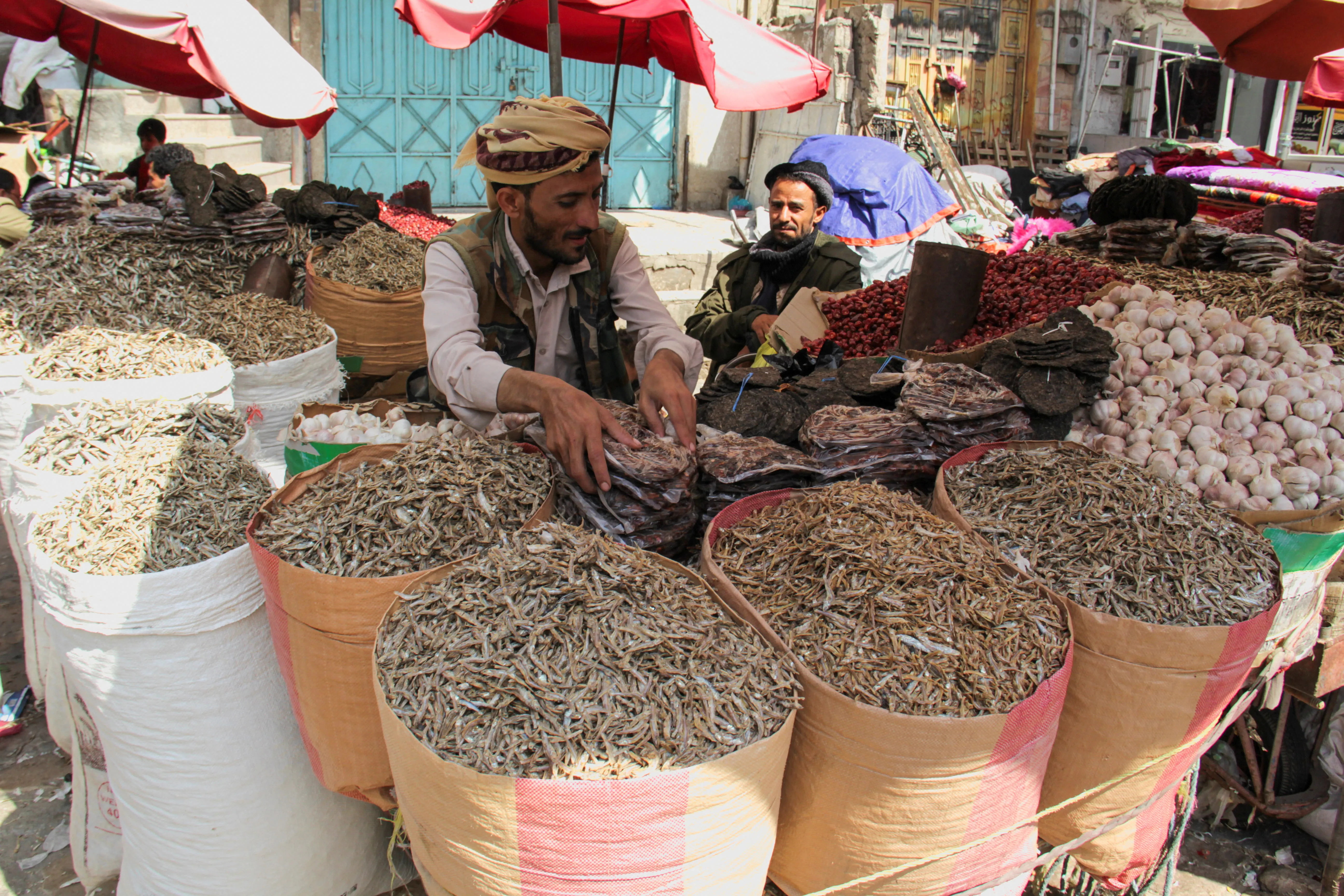
乌姆·萨米是一名寡妇,独自抚养四名子女,居住在也门红海港口城市荷台达。她靠出售生活用品和偶尔做家务来养家糊口。物价上涨改变了她的购物方式。她对《半岛电视台》说:“有时我们只能买一点面粉或食用油,只够一天用,因为买不起整袋。”
Umm Sami, a widow raising four children in Yemen’s Red Sea port city of Hodeidah, sells household goods and takes on occasional domestic work to feed her family. Rising prices have changed how she shops. “Sometimes we buy a little flour or oil that lasts just one day because we cannot afford a whole bag,” she told Al Jazeera . Food is still on the shelves.
食品仍然摆在货架上。监测机构在九月份能够到达的市场里仍有供应,但家庭可支配的资金减少了,依据也门联合监测报告——一项人道主义和粮食安全评估。包括荷台达在内的胡塞控制区,一篮子基本食品的价格比八月份上涨约7%,即91美元,创下一年来的最高水平。
It was available in the markets that monitors could reach in September, but families had less money to spend, according to the Yemen Joint Monitoring Report, a humanitarian and food security assessment. Across Houthi-controlled areas like Hodeidah, a basket of basic foods cost about 7 percent, or $91, more that month than in August, its highest level in a year. Families on both sides of the front lines are struggling, and prices are rising faster in the government-held south, according to the Famine Early Warning Systems Network (FEWS NET).
前线两侧的家庭都在苦苦挣扎,且政府控制的南部地区物价上涨更快,依据饥荒预警系统网络(FEWS NET)的数据。胡塞控制的北部地区之所以与众不同,在于家庭的收入极少,援助也所剩无几。
What sets the Houthi-controlled north apart is how little families there can earn and how little help is left. Most households in and around northern towns find only five to 10 days of paid work a month, FEWS NET reported in October.
FEWS NET十月份报告称,北部城镇及其周边的大多数家庭每月只能找到五至十天的有偿工作。联合国世界粮食计划署(WFP)对胡塞控制区的粮食援助自2025年九月起已暂停,FEWS NET称。到2026年九月中旬,WFP已在政府控制区启动了一轮分发,目标覆盖约170万人。
The UN World Food Programme’s (WFP) food assistance in Houthi-held areas has been suspended since September 2025, FEWS NET said. By mid-September 2026, WFP had begun a distribution round in government-held areas that aimed to reach about 1.7 million people. In the last nationwide hunger analysis by UN agencies and their partners, published in mid-2025, the only people projected to face catastrophic hunger, about 41,000, were in four districts of Amran, Hodeidah and Hajjah governorates – all under Houthi control.
在联合国机构及其合作伙伴于2025年中期发布的全国饥饿分析中,唯一预计将面临灾难性饥饿的人口约为41,000人,分布在阿姆兰、荷台达和哈贾省的四个地区——全部处于胡塞控制之下。
UN humanitarian chief Tom Fletcher says Yemen’s Taiz has enough food to meet only 10 percent of civilians’ needs, warning that aid supplies and convoys are ready but unable to reach those in need.
联合国人道主义事务负责人汤姆·弗莱彻表示,也门泰兹的粮食仅能满足平民 10% 的需求,并警告称,援助物资和车队已准备就绪,但无法抵达有需要的人手中。
LIVE updates: https://t.co/Qhy8AMAOV9 pic.twitter.com/RlL9lCuhlJ
实时更新: pic.twitter.com/RlL9lCuhlJ—— 半岛电视台英语频道 (@AJEnglish) 2026年11月25日周五,世界粮食计划署和联合国粮农组织(FAO)将也门列入其截至 2027 年 5 月止六个月内的最高关注饥饿热点地区名单。
— Al Jazeera English (@AJEnglish) November 25, 2026
随着战事蔓延且援助枯竭,我们探讨为何在北也门出售的食品正变得遥不可及,令需要这些食品的家庭难以企及。
On Friday, the WFP and the UN Food and Agriculture Organization (FAO) named Yemen among its hunger hotspots of highest concern for the six months ending May 2027.
为何荷台达一些家庭只能一天一天地买食物?因为一天的工作 —— 如果有工作的话 —— 已不再能支付一天的食物开销。
As fighting spreads and aid dries up, we look at why food on sale in northern Yemen is slipping out of reach of the families who need it. ## Why are some families in Hodeidah buying food one day at a time?
艾哈迈德·阿尔贾什在荷台达的奥斯曼市场附近开着一辆租来的摩托车出租车,供养一家六口。许多过去的顾客现在选择步行以省下车费。“现在,我一天的收入勉强只够付燃油费或摩托车租金,”他告诉半岛电视台。
Because a day’s work – when there is any – no longer pays for a day’s food. Ahmed Arjash drives a rented motorcycle taxi near Hodeidah’s Othman market to support his family of six. Many of his former customers now walk to save the fare.
按日计酬的建筑工人萨利赫说,有些日子无人雇佣他。“如果我干一天活,这工资在物价这么高的情况下,不够维持家里好几天的开销,”他说。
“Now, my daily earnings barely cover the fuel or the rent for the motorcycle,” he told Al Jazeera . Saleh, a construction worker paid by the day, said some days pass without anyone hiring him.
捕鱼收入也降低了。三十多岁的渔民萨利姆说,燃料、渔船和设备成本上升,而能负担得起他捕获鱼获的顾客变少了。“许多家庭不再像过去那样买鱼了,”他说。有些出海行程,他勉强只赚回出海的成本。
“If I work one day, the wage is not enough to cover the family’s needs for several days with prices this high,” he said. Fishing pays less, too. Salem, a fisherman in his 30s, said fuel, boats and equipment cost him more while fewer customers could afford his catch. “Many families no longer buy fish as they used to,” he said.
家庭正通过减少进食来应对。半岛电视台发现,在荷台达最贫困的社区,许多人不吃饭或不吃肉、鱼、奶和水果。
On some trips, he barely earns back what it costs to go to sea. Families are adjusting by eating less.
在胡塞武装控制的地区,饥荒预警系统网络(FEWS NET)报告称,截至9月,对街头小贩和商铺征收更高税费已减少了对劳动力的需求。在其截至2027年5月的展望中,该机构预计更多小企业将倒闭,仍在营业的企业将减少招聘。
In Hodeidah’s poorest neighbourhoods, many skip meals or go without meat, fish, milk and fruit, Al Jazeera found. In Houthi-held areas, FEWS NET reported that higher taxes on street vendors and shops had already reduced demand for labour in September.
食品如何抵达也门北部商店?是什么让运输变得更昂贵?几乎所有食品都靠海运抵达,从船只到商店的每个环节成本现在都更高。据世界粮食计划署(WFP)称,也门进口约90%的食品。荷台达是向胡塞武装控制的北部地区(包括萨那)供应食品的主要港口。
In its outlook through May 2027, it expected more small businesses to close and those that stayed open to hire fewer workers. ## How does food reach shops in northern Yemen, and what makes the journey more expensive? Almost all of it comes by sea, and each step from ship to shop now costs more. Yemen imports about 90 percent of its food, according to WFP. Hodeidah is the main port supplying the Houthi-held north, including Sanaa.
食品持续抵达——数据显示,与前三个月相比,6月至8月胡塞武装控制地区的进口量增长了10%,同比翻倍——但燃料却没有。
Food has kept arriving – data shows imports into Houthi-held areas rose 10 percent between June and August compared with the previous three months and doubled year-on-year – but fuel has not.
据联合国粮农组织(FAO)称,8月燃料进口同比下降约85%,北部港口无柴油或汽油到港记录。半岛电视台报道,9月胡塞当局将汽油价格上调约10%,这是四年来首次涨价。饥荒预警系统网络称,当月胡塞武装控制地区的面包价格上涨了25%。
Fuel imports fell about 85 percent year-on-year in August, with no recorded arrivals of diesel or petrol through northern ports, according to the FAO. In September, the Houthi authorities raised the price of petrol by about 10 percent, the first increase in four years, Al Jazeera reported . Bread prices in Houthi-held areas rose 25 percent that month, FEWS NET said.
港口本身也遭到袭击。法新社报道,11月2日,胡塞武装运营的马西拉电视台(Al Masirah TV)称,沙特飞机袭击了荷台达以北的拉斯伊萨港(Ras Isa port)的一座码头和一艘商船。周二,沙特领导的联盟称其袭击了荷台达的“作战能力”,胡塞武装威胁将对沙特红海港口进行报复。半岛电视台报道,荷台达港仍保持开放。最新袭击将如何影响运输仍不清楚。
The ports themselves have come under attack. On November 2, the Houthi-run Al Masirah TV said Saudi aircraft had hit a pier and a commercial ship at Ras Isa port, north of Hodeidah, the news agency AFP reported. On Tuesday, the Saudi-led coalition said it had attacked “operational capabilities” in Hodeidah, and the Houthis threatened to retaliate against Saudi Red Sea ports. Hodeidah port remains open, Al Jazeera reported. How the latest attacks will affect deliveries remains unclear.
将货物运往内陆也变得更慢、更贵。一名在萨那经营店铺的萨利赫·阿卜杜拉(Saleh Abdullah)于9月告诉半岛电视台,一辆往返于南北之间的卡车“现在最多需要一周才能到达最终目的地”。在战斗重燃之前,这趟行程只需三天或更短时间。他说,顾客承担了额外的运输和燃料成本。“无论是面粉、婴儿奶粉、水果、蔬菜,还是其他任何东西。”
Moving goods inland has also become slower and costlier. A truck travelling between the south and the north “now takes up to a week to reach its final destination”, Saleh Abdullah, a shopkeeper in Sanaa, told Al Jazeera in September. Before the renewed fighting, the trip took three days or less. Customers pay the extra transport and fuel costs, he said. “Whether it is the flour, the baby milk, the fruits, the vegetables, or anything else.”
当家庭买不起食物时,是什么阻碍了援助送达?在北方,主要的粮食援助来源已被切断。世界粮食计划署于2025年9月在胡塞武装控制区暂停活动,此前该武装扣押了联合国工作人员。上个月,世界粮食计划署表示,仍有73名联合国人员被扣押,其中38人为该机构自身员工。
When families cannot afford food, what stops aid from reaching them? In the north, the main source of food aid has been switched off. WFP suspended its activities in Houthi-controlled areas in September 2025 after the group detained UN staff. Last month, WFP said 73 UN personnel, 38 of them its own staff, remained in detention.
其他援助组织仍在北方开展工作,但资金削减和限制措施限制了其覆盖范围。
Other aid organisations still operate in the north, but funding cuts and restrictions limit their reach.
周四,挪威难民理事会(NRC)表示,少数人手不足、资金短缺的也门本地和国际组织是那里数百万人唯一剩下的生命线。
On Thursday, the Norwegian Refugee Council (NRC) said a handful of overstretched and underfunded Yemeni and international organisations were the only remaining lifeline for millions there.
该组织补充称,资金削减、制裁以及联合国暂停行动,共同导致了人道主义响应的崩溃。挪威难民理事会称,捐助方今年为也门粮食安全所需资金仅提供了16%。
Funding cuts, sanctions and the UN’s pause in operations had all contributed to a collapsing humanitarian response, it added. The NRC said donors had provided just 16 percent of the money sought for food security across Yemen this year.
联合国最新的饥饿警告透露了关于也门北方的什么信息?最新的粮农组织-世粮计划署报告警告称,战斗和经济困境恐将加剧饥饿,直至2027年5月。报告将经济困境列为威胁之一,但无法说明北方有多少人正在挨饿。据路透社报道,粮农组织和世粮计划署表示,冲突、流离失所、经济困境和极端天气推高了五个最高关注热点地区的风险。
What does the UN’s new hunger warning tell us about northern Yemen? The latest FAO–WFP report warns that fighting and economic hardship threaten to deepen hunger through May 2027. It names economic hardship among the threats, but it cannot say how many people in the north are going hungry. FAO and WFP said conflict, displacement, economic hardship and extreme weather drove the risk in the five hotspots of highest concern, the Reuters news agency reported.
联合国支持的综合粮食安全阶段分类(IPC)系统尚未发布关于胡塞武装控制地区的最新分析。其最新数据——即在2025年10月至12月期间,有540万人面临危机级或更严重的饥饿,其中180万人处于更严重的紧急级别——仅涵盖政府控制地区。
The Integrated Food Security Phase Classification (IPC), the UN-backed system for measuring hunger, has not published a recent analysis of Houthi-held areas. Its latest figures – 5.4 million people facing crisis levels of hunger or worse between October and December, including 1.8 million at the more severe emergency level – cover government-held areas only.
2025年6月,IPC预测,在2025年9月至2026年2月期间,也门将有1810万人面临危机级或更严重的饥饿。这占全国分析覆盖人口的52%。
In June 2025, the IPC projected that 18.1 million people in Yemen would face crisis levels of hunger or worse between September 2025 and February 2026. That was 52 percent of the population covered by the nationwide analysis.
饥荒预警系统网络(FEWS NET)预计,荷台达和哈杰的紧急级饥饿将持续至2027年5月。
FEWS NET expects emergency levels of hunger to persist in Hodeidah and Hajjah through May 2027.
在这一级别下,家庭面临食物消费的巨大缺口,或不得不出售维持生计所需的资产来购买食物。该网络最严重的警告涉及塔伊兹,这座由政府控制、被胡塞武装围困的城市,如果围困长期持续并收紧,该网络认为在2026年2月至5月之间存在饥荒的可信风险。
At that level, families face large gaps in what they eat, or must sell what they need to make a living to buy food. The network’s gravest warning concerns Taiz, a government-held city besieged by Houthi forces, where it sees a credible risk of famine between February and May if the siege is prolonged and tightened.
在荷台达,市场上仍有面粉。对于乌姆·萨米这样的家庭来说,问题是他们能买得起多少。“甚至面包都成了负担,”她说。
In Hodeidah, the market still has flour. For families like Umm Sami’s, the question is how little of it they can afford. “Even bread has become a burden,” she said.