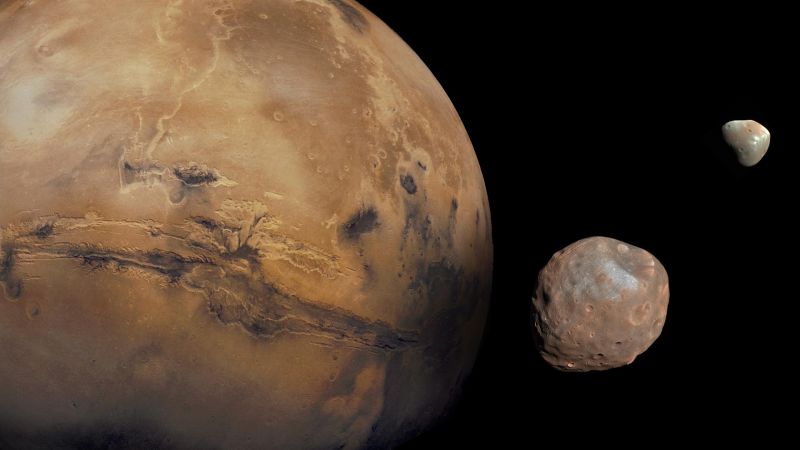
火星大部分未被探索的卫星正迎来它们的关注时刻,因为一项首创任务正准备发射。
Mars’ largely unexplored moons are getting their moment in the spotlight as a first-of-its-kind mission prepares to take flight.
这颗红色星球有许多未解之谜,但由日本主导的火星卫星探索项目(MMX)将仅聚焦于围绕其运行的两颗最大的好奇天体。火卫一和火卫二长期以来让科学家们困惑不解,他们一直在研究这两颗小而不规则的卫星,以寻找关于火星早期历史的线索。
The red planet has many unsolved riddles, but the Japanese-led Martian Moons eXploration project will focus solely on two of the biggest curiosities orbiting nearby. Phobos and Deimos have long baffled scientists, who have been eyeing the small, lumpy moons for clues about the early days of Mars.
“这有点像太阳系形成过程中一个重大未解之谜——火卫一和火卫二的起源,所以我们确实需要像MMX这样的任务来弄清楚这一点,”NASA戈达德太空飞行中心(位于马里兰州格林贝尔特)的高级科学家、MMX任务参与科学家丹尼尔·格拉文博士说。
“This is kind of like one of the major outstanding mysteries of solar system formation, the origin of Phobos and Deimos, so we really do need a mission like MMX to figure this out,” said Dr. Daniel Glavin, senior scientist at NASA’s Goddard Space Flight Center in Greenbelt, Maryland, and participating scientist on the MMX mission.
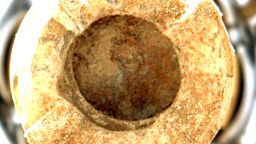
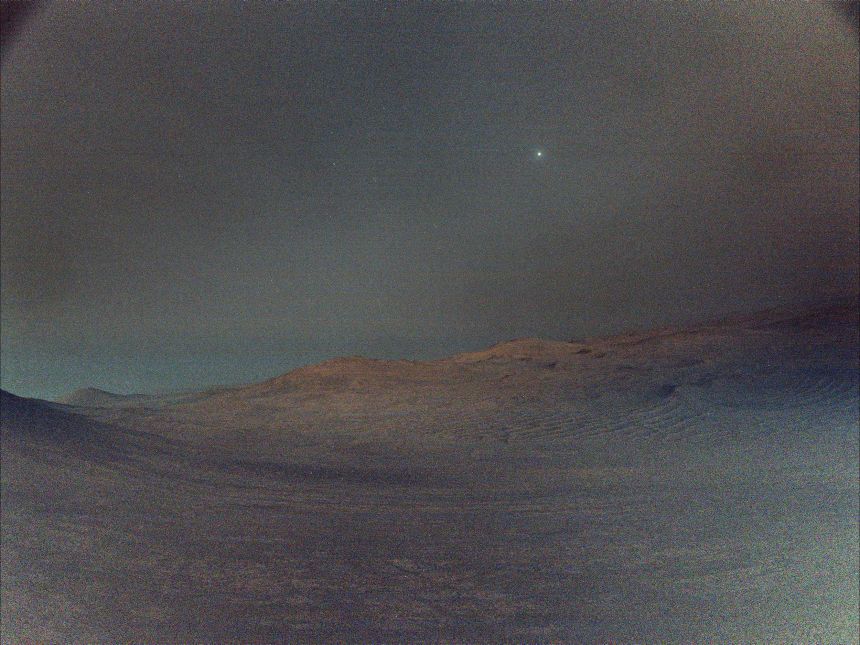
以往的火星任务在条件允许时曾观察过这对奇特的卫星对。绕火星运行的轨道器多年来拍摄了这些岩石天体的图像,而包括好奇号和毅力号在内的火星车在火卫一穿过火星和太阳之间时,也捕捉到了一些令人惊叹的“谷歌眼”日食。但即便经过数十年的观测,科学家们仍不知道火卫一和火卫二是如何形成的。
Previous Mars missions have observed the peculiar pair whenever convenient. Orbiters circling the red planet have snapped images of the rocky bodies over the years, while rovers including Curiosity and Perseverance have captured some fantastic “googly eye” eclipses when Phobos moved between Mars and the sun. But even after decades of observations, scientists still don’t know how Phobos and Deimos came to be.
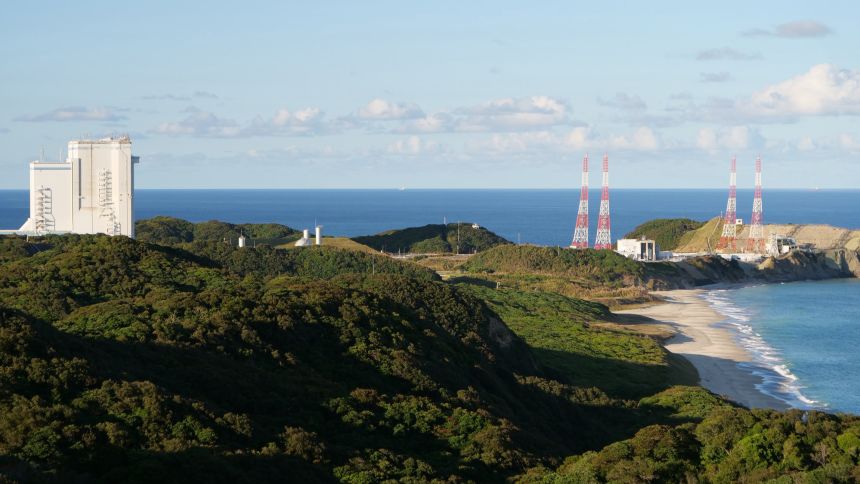
“这些小太空土豆是什么?我们目前无法解释火卫一或火卫二。它们本不该存在,但它们确实存在,”位于加利福尼亚州帕萨迪纳的NASA喷气推进实验室研究科学家阿比盖尔·弗雷曼博士说。“它们非常奇怪,非常小,也非常令人困惑。”MMX任务计划于日本时间周二凌晨4:41(即美国东部时间周一下午3:41)搭载H3火箭从位于日本西南部鹿儿岛县的JAXA种子岛航天中心吉野信发射场升空。
“What are these little space potatoes? We can’t explain Phobos or Deimos right now. They shouldn’t exist, but they do,” said Dr. Abigail Fraeman, research scientist at NASA’s Jet Propulsion Laboratory in Pasadena, California. “They’re super weird, they’re super small and they’re super puzzling.”MMX is set to lift off aboard an H3 rocket from the Yoshinobu Launch Complex at the Japan Aerospace Exploration Agency’s Tanegashima Space Center in southwestern Japan’s Kagoshima Prefecture at 3:41 p.m. ET Monday (4:41 a.m. JST Tuesday).
这项风险的机器人任务是一项国际合作项目 — — 包括来自美国国家航空航天局、欧洲航天局、法国国家空间研究中心和德国航空航天中心的科学仪器 — — 旨在从火卫一采集超过0.4盎司(10克)的物质,并在2031年返回地球。
The risky robotic mission is an international collaboration — including scientific instruments from NASA, the European Space Agency, France’s National Center for Space Studies and the German Aerospace Center — that aims to collect more than 0.4 ounces (10 grams) of material from Phobos and return to Earth in 2031.
火卫星探测器(MMX)的详细观测和采样可能揭示火卫一和火卫二起源故事中缺失的部分 — — 甚至可能揭开这颗红色星球本身的秘密。如果样本中包含火星碎片,MMX有望成为首个成功将火星物质带回地球科学家手中的任务,与中国展开竞赛。
The detailed observations and samples captured by MMX might reveal the missing pieces to Phobos and Deimos’ origin story — and could even unveil secrets about the red planet itself. If the samples contain pieces of Mars, MMX could potentially be the first mission to successfully bring back Martian material to scientists on Earth in a race alongside China.
美国天文学家阿萨夫·霍尔于1877年发现了这颗红色星球的奇特卫星。他以罗马战神马尔斯的两位神话之子命名它们:火卫一,意为恐惧;火卫二,意为恐怖。
American astronomer Asaph Hall discovered the red planet’s unusual moons in 1877. He named them after the two mythological sons of the Roman god Mars: Phobos, meaning fear, and Deimos, signifying dread.
火卫一是一颗注定毁灭的卫星 — — 每100年向火星靠近6英尺(1.8米)。科学家预计,这块凹凸不平的岩石将在大约5000万年后撞向火星,或碎裂成一个留在轨道上的岩石环。其显著特征是斯蒂克尼陨石坑 — — 一个宽约6英里(9.7公里)的巨大空洞,占据了这颗微小卫星表面大约一半的面积。随着时间的推移,数千次陨石撞击也在火卫一上留下了痕迹。
Phobos is a doomed moon, drawing 6 feet (1.8 meters) closer to Mars every 100 years. Scientists expect the lumpy rock to crash into the planet in roughly 50 million years or break up into a rocky ring that stays in orbit. The object’s defining feature is Stickney crater — a gaping cavity, about 6 miles (9.7 kilometers) wide, that takes up approximately half of the tiny moon’s surface. Thousands of meteorite impacts have also scarred Phobos over time.
与此同时,更远且更小的火卫二正缓慢远离火星。这颗卫星的表面比火卫一更光滑,但仍布满陨石坑,并覆盖着令人困惑厚度的尘埃。
Meanwhile, more distant and diminutive Deimos is slowly spiraling away from Mars. The moon has a smoother surface than Phobos but is still heavily pockmarked and covered in a perplexing amount of dust.
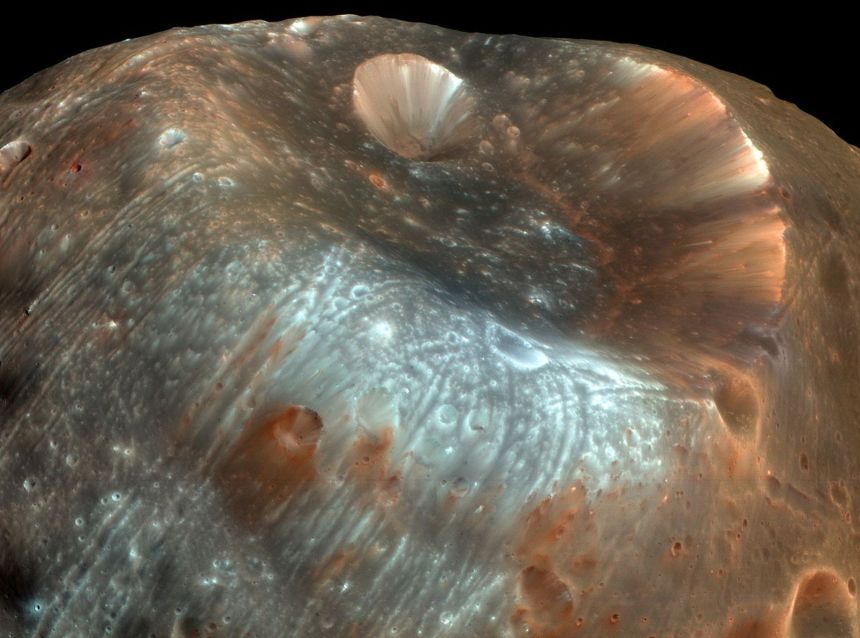
科学家们正在权衡关于这些奇特卫星如何进入火星轨道的两种主要假设。一种假设认为,一个巨大的物体撞击了火星,喷射出的岩石碎片聚合形成了火卫一和火卫二,格拉文说道。另一种假设则认为,这两颗卫星本来是小行星,因过于接近火星而被其引力捕获。
Scientists are weighing two leading hypotheses about how these oddballs came to orbit around Mars. One concept suggests that a large object slammed into Mars, launching rocky material that coalesced into Phobos and Deimos, Glavin said. The other hypothesis purports that the two moons are asteroids that came too close to Mars and were drawn in by its gravity.
“我们的数据既不完全符合第一个假设,也不完全符合第二个假设,”弗雷曼说,她同时也是MMX任务的参与科学家。她补充道,日本对这两颗神秘卫星的探测可能会发现支持现有假设之一的新数据,也可能揭示出完全不同的形成背景故事。
“None of our data fit either hypothesis correctly,” said Fraeman, who is also a participating scientist on MMX. Japan’s expedition to the enigmatic moons could find new data that supports one of the existing hypotheses or illuminate an entirely different formation backstory, Fraeman added.
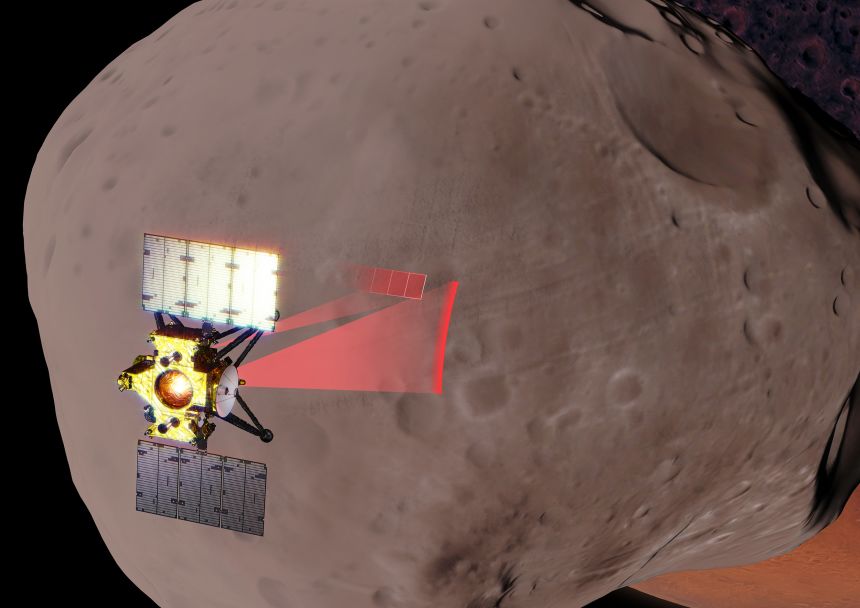
该任务的主要目标是侦察和访问火卫一——即距离火星更近、体积更大的卫星,但在途中也会拍摄火卫二的图像,以帮助科学家更好地理解这对“兄弟”卫星之间的相似性和差异性。
The mission will primarily focus on scouting and visiting Phobos, the larger and closer of the two moons to Mars, but along the way it will also take images of Deimos to help scientists better understand similarities and differences between the fraternal moons.
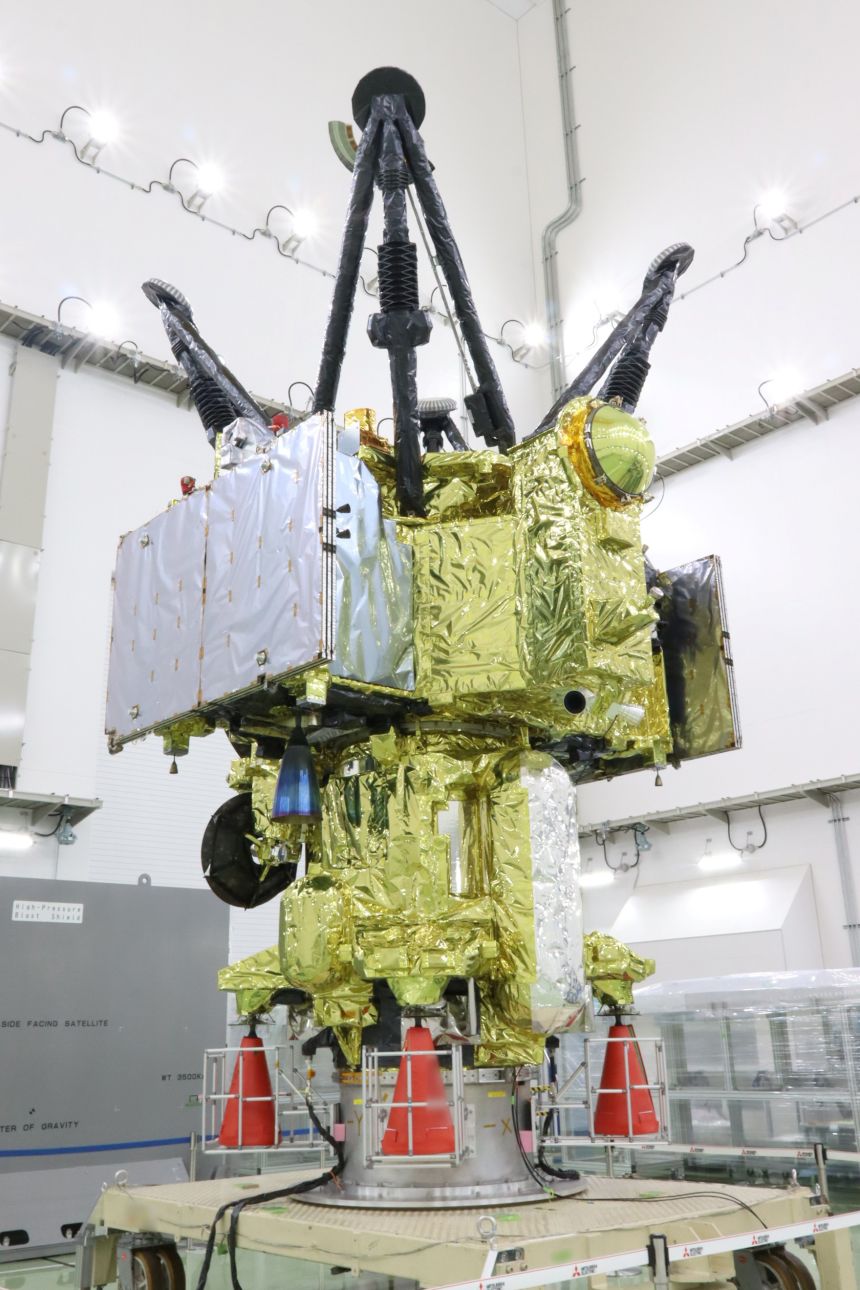
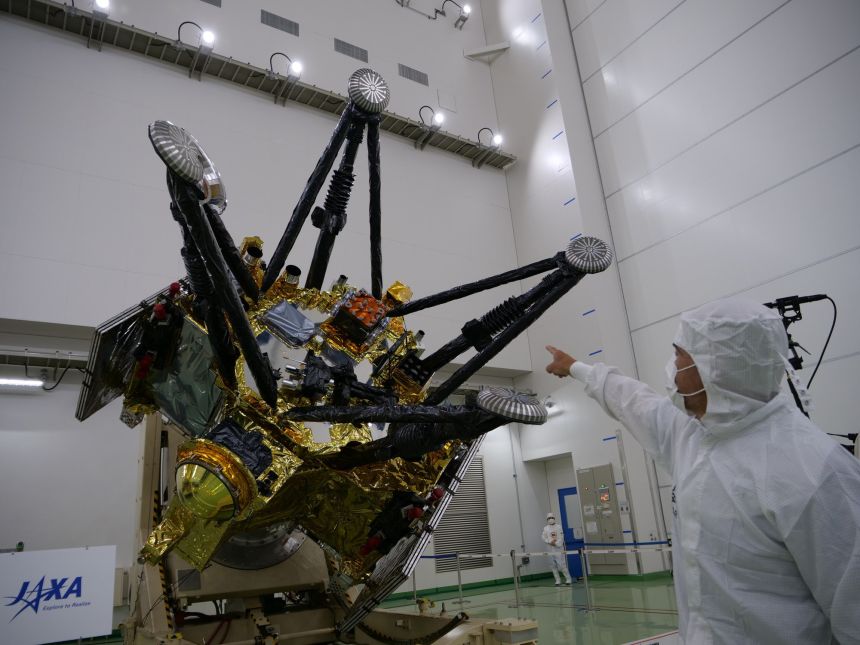
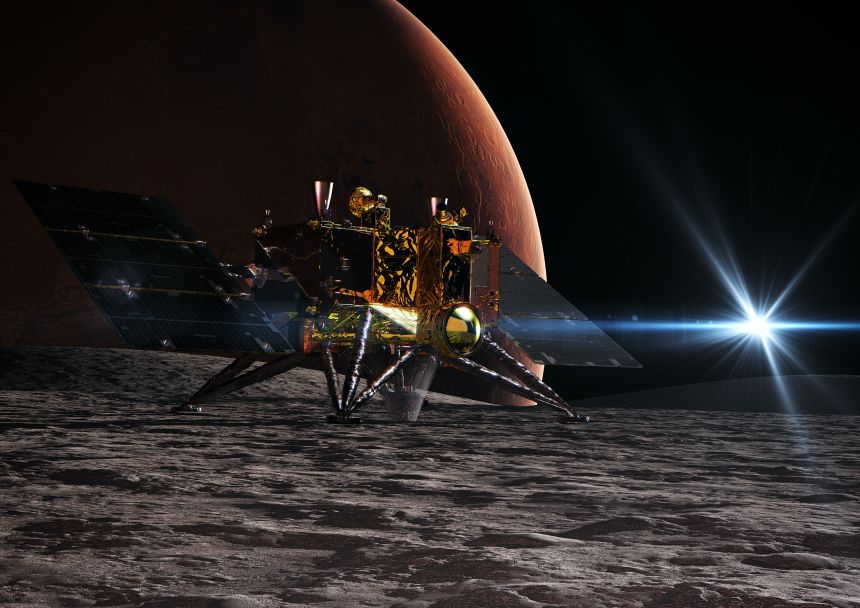
MMX航天器搭载了一辆名为“Idefix”的小型探测车,该航天器由三个模块堆叠而成,分别负责推进、探测和返回地球。航天器将花费大约一年时间前往火星,随后将围绕火卫一运行约三年。
Carrying a small rover named Idefix, the MMX spacecraft — a stack of three modules for propulsion, exploration and returning to Earth — will spend about a year traveling to Mars and then orbit Phobos for about three years.
航天器着陆器上的仪器套件——称为探测模块——将使科学家能够收集多种数据,包括地形、矿物、化学元素和空间辐射的测量。两台超高清摄像头将以4K和8K分辨率拍摄火星及其卫星的最高清晰度图像。
A suite of instruments aboard the spacecraft’s lander, called the exploration module, will enable scientists to gather a variety of data, including measurements on terrain, minerals, chemical elements and space radiation. Two Super Hi-Vision cameras will take the highest-definition images of Mars and its moons in 4K and 8K.
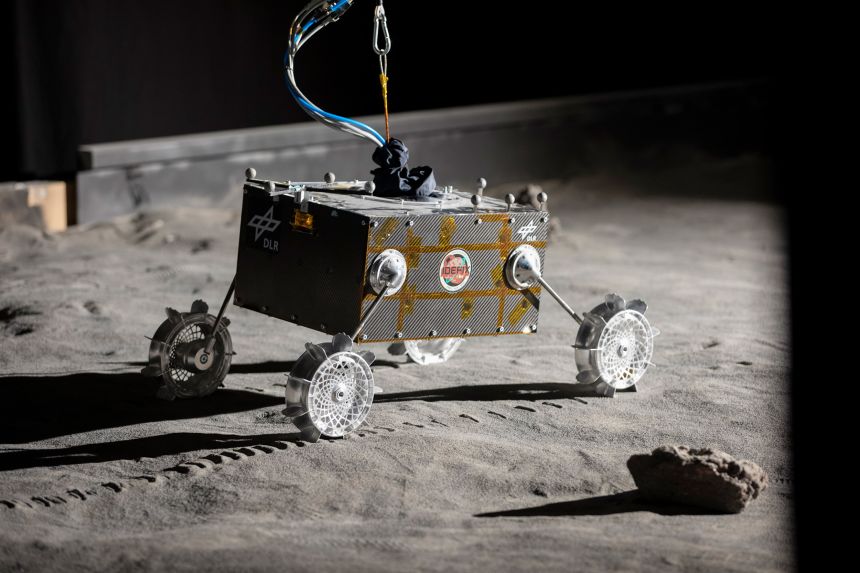
航天器将于2029年初首先部署由德国航空航天中心和法国国家空间研究中心共同开发的Idefix探测车。这个机器人探测者将进行初步观测,帮助MMX任务的科学家和工程师确定四足着陆器在火卫一上采样的地点。
The spacecraft will first deploy the Idefix rover, developed by the German Aerospace Center and France’s National Center for Space Studies, in early 2029. The robotic explorer will make initial observations that will help mission scientists and engineers determine sites for MMX’s four-legged lander to collect samples directly on Phobos.
探测车将从大约131到328英尺(40到100米)的高度降落到火卫一表面;这颗微小卫星的弱重力应能缓冲其下降,使探测车在着陆前能够弹跳。
The rover will drop from about 131 to 328 feet (40 to 100 meters) down to the surface of Phobos; the tiny moon’s weak gravity should cushion its fall and enable the rover to bounce before sticking its landing.
在自主释放车轮和太阳能板,并调整至直立姿态后,Idefix将开启为期100天的任务。由于火卫一的重力极弱,Idefix探测车自身重约55磅(25千克),但在表面作业期间其重量将仅约为0.5盎司(15克)。
After autonomously releasing its wheels and solar panels and maneuvering into an upright position, Idefix will embark on a 100-day mission. The gravity on Phobos is so weak that Idefix, which weighs roughly 55 pounds (25 kilograms), will only weigh about 0.5 ounces (15 grams) during its surface operations.
这个大小相当于一个饮料箱的探测器将负责勘察具有科学研究价值的区域以及可能的安全着陆点。随后,任务团队将从中选定两处地点供MMX着陆器着陆。
The drink crate-size rover will scout out areas of scientific interest and potential safe landing spots. The mission team will then select two separate sites for the MMX lander to touch down.
格莱文介绍道,目前环绕火星运行的探测器所拍摄的图像显示,火卫一似乎有一面较亮、一面较暗——几乎就像拥有两种不同类型的表面。日本宇宙航空研究开发机构(JAXA)的科学家、参与该任务已有10年之久的臼井智宏博士表示,正因如此,计划分别从这两个区域采集样本——即火卫一面向火星的一面以及背对火星的另一面。
Images taken by current orbiters show that Phobos appears to have one lighter side and one darker side — almost as if it has two different types of surfaces, Glavin said. That’s why the plan is to collect a sample from each of these two regions — on the side of Phobos that faces Mars and the opposite side facing away from the planet, said Dr. Tomohiro Usui, a scientist at the Japan Aerospace Exploration Agency, or JAXA, who has worked on the mission for 10 years.
“我们会先选定第一处着陆点并执行着陆操作,之后便起飞返回轨道,”日本宇宙航空研究所太阳系科学系教授臼井智宏对CNN说道,“接下来还需要数月时间来寻找下一处着陆点。着陆操作本身风险极高。” MMX着陆器具备两种采集火卫一岩石与尘埃的方式:一种是岩芯采样器,可钻入地表0.8英寸(约2厘米)深,将地下物质储存在航天器样本返回舱的管状容器中;另一种则是气动采样器,利用加压气体将地表物质扬起并收集进管中。
“We’re going to choose a first landing site and then do some landing operations, and after that we’re going to lift off and get back to orbit,” Usui, professor in the department of solar system sciences at Japan’s Institute of Space and Astronautical Science, told CNN. “It takes another several months for the search of the next landing site. Landing operations are very risky.”The MMX lander has two different ways to collect rocks and dust from Phobos. A coring sampler will drill down 0.8 inches (2 centimeters) and store the subsurface material in a tube aboard the spacecraft’s sample return capsule. A separate pneumatic sampler will use pressurized gas to kick up surface material and collect it in a tube.
样本采集完成后,MMX着陆器将起飞,对火卫二进行观测,随后于2030年启程返回地球。
After the samples have been stored aboard the MMX lander, it will lift off, make observations of Deimos and begin the journey back to Earth in 2030.
臼井智宏指出,通过MMX对火星卫星的探测所获数据,未来甚至能为载人火星任务的规划提供参考。
Insights gained from MMX’s tour of the Martian moons could even aid with the planning of crewed missions to Mars in the future, Usui said.
可以说,MMX着陆器就像一把功能齐全的“瑞士军刀”,配备了多种组件,为科学家们提供了多种途径来探寻火卫一与火卫二的神秘起源。
The MMX lander is like a Swiss army knife of many different components, providing scientists various ways to try to decode the mysterious origins of Phobos and Deimos.
在样本返回地球之前,研究人员将能够提前看到MMX仪器实时传回的初始遥感数据的抢先预览,例如火星-月球伽马射线和中子光谱仪(MEGANE)。
Ahead of the samples returning to Earth, researchers will be able to get a sneak peek at initial remote-sensing data beamed back in real time from MMX instruments such as the Mars-moon Exploration with GAmma-rays and Neutrons spectrometer, or MEGANE.
MEGANE的数据可能会揭示出挥发性元素的迹象,即沸点和熔点较低的化学元素,例如氢、钠和氯,这些元素可能存在于火卫一和火卫二上。这些元素组成的测量结果可能提供关键线索,有助于支持某一起源假说而削弱另一假说,约翰霍普金斯大学应用物理实验室的行星科学家、MEGANE科学负责人大卫·劳伦斯(David Lawrence)表示。
MEGANE data could reveal signs of volatile elements, or chemical elements with low boiling and melting points, such as hydrogen, sodium and chlorine on Phobos and Deimos, for example. These elemental composition measurements could provide key clues that lend credibility to one origin hypothesis over another, said David Lawrence, planetary scientist at the Johns Hopkins University’s Applied Physics Laboratory and science lead for MEGANE.
“如果是一次巨大撞击,那么物质会变得非常热,这些挥发性元素就会被‘煮掉’,”劳伦斯说。“相比之下,我们观测到的许多小行星这些挥发性元素的丰度较高。”弗劳曼(Fraeman)曾将博士论文的一部分聚焦在火卫一的成分上,她将进行MEGANE数据与MMX红外光谱仪(MIRS)捕获的观测数据的综合分析。该光谱仪将利用近红外光测量火卫一上的矿物质、有机物和与水相关的物质。
“If you had a giant impact, what happens is the materials get very hot, and you will cook off these volatile elements,” Lawrence said. “In contrast, a lot of asteroids that we see have higher abundances of these volatile elements.”Fraeman, who focused part of her doctoral thesis on Phobos’ composition, will do a combined analysis of MEGANE data and observations captured by the MMX InfraRed Spectrometer, or MIRS. The spectrometer will use near-infrared light to measure minerals, organic matter and water-related substances on Phobos.
尽管火星的卫星是任务的优先目标,但科学家们预计MMX的数据也将揭示火星过去此前未知的方面。
Even though the Martian moons are mission priorities, scientists anticipate that MMX’s data will also reveal previously unknown aspects of Mars’ past.

“如果火卫一是由被抛射出来的火星碎片再次凝聚而成,那么这可能会为我们提供一些关于火星成分及其年轻时状态的重要新线索,”弗劳曼说。
“If Phobos is made from bits of Mars that were thrown up and then recoalesced, that could give us some important new clues about the composition of the planet and what it was like when it was much younger,” Fraeman said.
即使火星的岩石邻居不含火星残留物,如果火卫一是被捕获的小行星或彗星——它可能曾将太阳系边缘的水和其他挥发性元素输送到火星附近——那么它同样具有吸引力,弗劳曼说。
Even if the rocky neighbor doesn’t contain remnants of Mars, Phobos would be equally intriguing if it’s a captured asteroid or comet — which could have transported water and other volatile elements from the edge of the solar system to Mars’ vicinity, Fraeman said.
如果火卫一和火卫二富含水和有机物,“那可能曾是火星生命的种子,”格拉文(Glavin)说。
If Phobos and Deimos were enriched with water and organics, “that could have been a seed for life on Mars,” Glavin said.
“这正是我特别感兴趣的领域:生命的起源。我们是否孤独存在?生命是否也在火星上出现过呢?”他补充道,“研究火卫一的样本并分析火卫二,都是这一研究课题的重要组成部分。”格拉文曾参与过此前的样本采集任务,比如OSIRIS-REx任务,该任务从近地小行星贝努上带回了大量意想不到的有机物质。在MMX任务中,他的团队也将在火卫一的样本中寻找构成蛋白质的氨基酸以及其他生命所需的化学基础物质。
“That’s what I’m particularly interested in: the origin of life. Are we alone? Did it happen on Mars?” he added. “Studying the samples from Phobos and analyzing Deimos as well is part of that whole story.”Glavin has worked on previous sample collection missions, like OSIRIS-REx, which returned an unexpected wealth of organic material from the near-Earth asteroid Bennu. For MMX, his team will look for amino acids, the molecules that form proteins, and other chemical building blocks of life in the Phobos samples as well.
“在太阳系中,无论我们往哪里看,似乎都能发现氨基酸的踪迹,”格拉文说道,“我们将重点研究氨基酸的数量与复杂程度上的差异,以及它们的相对丰度,这些信息有助于我们推断其来源。”火卫一与火卫二很可能已经存在了数十亿年,因此它们或许见证了火星的演化历程。由于距离较近,火卫一就像一个“小吸尘器”,收集着从火星稀薄大气中飘散出来的物质。
“Amino acids seem to be literally everywhere we look in the solar system,” Glavin said. “What we’re going to be looking at is differences in the number and complexity of amino acids, but also their relative abundances, which can tell us about their origin.”Phobos and Deimos likely have existed for billions of years, which means the moons might be witnesses of Mars’ evolution. Given its proximity, Phobos has served as a little dustpan, collecting material that has swept away from the planet’s thin atmosphere.
“或许有火星碎片落在了火卫一表面,就像火星碎片也曾落到地球上一样,”弗雷曼说道,“当我们从火卫一带回样本时,其中很可能混有少量火星物质。”MMX并非唯一朝着火星进发的探测器。中国的天问三号任务计划于2028年发射,目标是直接从火星采集样本并带回地球,预计也将在2031年完成任务。
“There could be pieces of Mars that have landed on the surface of Phobos, much like pieces of Mars have landed on Earth,” Fraeman said. “When we bring samples back from Phobos, there could be little bits of Mars mixed in there.”MMX is not the only craft racing toward the red planet. China’s Tianwen-3 mission, which aims to launch in 2028 and return samples directly from Mars back to Earth, is also expected to return in 2031.
“2030年代初或许会成为我们深入了解火星的关键时期,”格拉文说道。
“The early 2030s could really be banner years of explanation for Mars,” Glavin said.
欢迎关注我们,获取关于宇宙探索、重大科学发现及前沿进展的最新资讯。
. Explore the universe with news on fascinating discoveries, scientific advancements and more.