日本火卫一探测任务于本周发射升空,预计抵达时将有一颗服役多年的欧洲探测器在等待接应。日本宇宙航空研究开发机构(JAXA)证实,火星卫星探测(MMX)航天器于协调世界时10月19日19时41分(日本时间为10月20日)搭乘H3火箭发射升空。10月21日,该机构表示,包括太阳能电池板展开在内的初期关键操作已经完成。
Japan's mission to the Martian moon Phobos launched this week, with a veteran European probe expected to be waiting when it arrives. JAXA, Japan's space agency, confirmed that the Martian Moons eXploration (MMX) spacecraft launched aboard an H3 rocket on October 19 at 19:41 UTC – October 20 in Japan. On October 21, it said that initial critical operations, including solar array deployment, were complete.
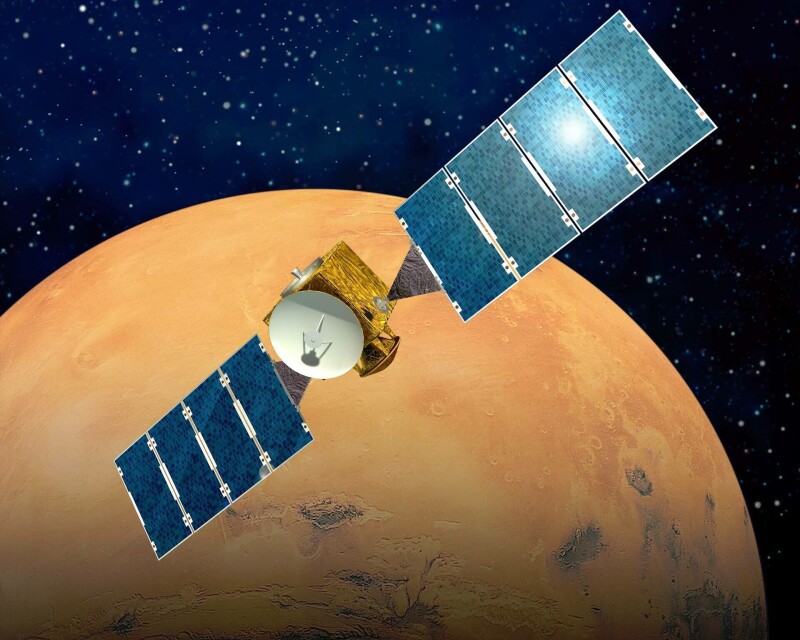
随着航天器为外程巡航做准备,设备检查将随后进行。该探测器预计于2027年抵达火星,在火卫一上部署“Idefix”巡视器,并尝试在火卫一上着陆一到两次。该巡视器以《阿斯泰利克斯历险记》漫画中的狗命名。科学家计划从火卫一采集约10克物质并将其送回地球,返回计划定于2031年。欧洲空间局(ESA)正以“火星快车”(MEX)探测器为此次任务提供支持,该探测器自2003年以来一直环绕火星运行。
Equipment checks will follow as the spacecraft prepares for its outbound cruise. The probe is due to reach Mars in 2027, deploy the Idefix rover on Phobos, and attempt one or two landings on the moon itself. The rover is named after the dog from the Asterix comics. Scientists plan to collect about 10 g of material from Phobos and send it to Earth, with a return planned for 2031. The European Space Agency (ESA) is supporting the trip with Mars Express (MEX), which has orbited Mars since 2003.
一位前团队成员告诉本刊,相关计划包括联合观测和拍摄MMX着陆点。MEX最近一次任务延期将持续至2029年,覆盖MMX的预期抵达时间。这位前团队成员称,这“绝对是最后一次”——随后又补充说,“第一次‘最后一次延期’大约是在2007年”。关于再次“最后一次延期”的讨论可能在2028年或2029年开始,支持MMX和“罗莎琳德·富兰克林”巡视器是让MEX继续运行的潜在理由之一。
A former team member told The that plans include joint observations and imaging of MMX's landing site. MEX's latest mission extension runs to 2029, covering MMX's expected arrival. The former team member described it as definitely the last – before adding that "the first 'last ever extension' was in about 2007." Discussions about another "last ever extension" could begin in 2028 or 2029, with support for MMX and the Rosalind Franklin rover among the potential reasons to keep MEX going.
资金和科学回报将决定最终结果。2025年5月宣布的一项软件更新减少了其陀螺仪的磨损,可能使它们的使用寿命延长至2034年。“罗莎琳德·富兰克林”巡视器在多次推迟以及俄罗斯被排除出该项目后,定于2028年发射。MEX很可能能够拍摄该巡视器在火星表面的着陆点,并参与数据中继操作,不过欧洲空间局的“痕量气体轨道器”(TGO)将是主要的中继资产。
Funding and scientific returns would determine the outcome. A software update announced in May 2025 reduced wear on its gyroscopes, potentially allowing them to last until 2034. Rosalind Franklin is due for launch in 2028 after repeated delays and Russia's ejection from the project. MEX will likely be able to image the rover's landing site on the surface of Mars and take part in data relay operations, though ESA's Trace Gas Orbiter (TGO) will be the main relay asset.
几年前,另一位团队成员开玩笑说,MEX非常坚固,如果把它送到火卫一处理,它会直接击穿火卫一。我们不会把这当作工程评估,但这说明了团队对他们航天器的感情。MEX的长寿是对其建造者和运营者的致敬。凭借到2029年的资金支持,它明年可能迎来MMX。进一步的延期可能会让它一直工作到样本返回任务离开以及罗莎琳德·富兰克林号抵达。“我们都想要我们的‘飞行30年’T恤,”这位前团队成员说。®
Several years ago, another team member joked that MEX was so tough it would punch straight through Phobos if sent there for disposal. We wouldn't take that as an engineering assessment, but it says something about the team's affection for their spacecraft. MEX's longevity is a tribute to its builders and operators. With funding through 2029, it could welcome MMX next year. Further extensions might keep it working through the sample-return departure and Rosalind Franklin's arrival. "We all want our '30 years in flight' T-shirts," the former team member said. ®