首次前往火星卫星的任务将尝试在火卫一(Phobos)上着陆一个机器人探测器以及一辆火星车。这艘日本航天器于周二发射升空,旨在探索这些神秘的卫星并采集样本。
1st mission to Mars's moons will attempt to land a robotic prospector plus a rover on Phobos A Japanese spacecraft rocketed toward Mars on Tuesday on an unprecedented quest to explore its mysterious moons and bring back samples.
全球五大航天机构联合开展了这项为期五年的任务,目标是在火卫一(火星两颗卫星中较大且距离火星较近的一颗)上着陆该机器人探测器及火星车。
Five of the world's space agencies joined forces for the five-year mission that will attempt to land a robotic prospector plus a rover on Phobos, the larger and closer of Mars's two pint-sized moons.
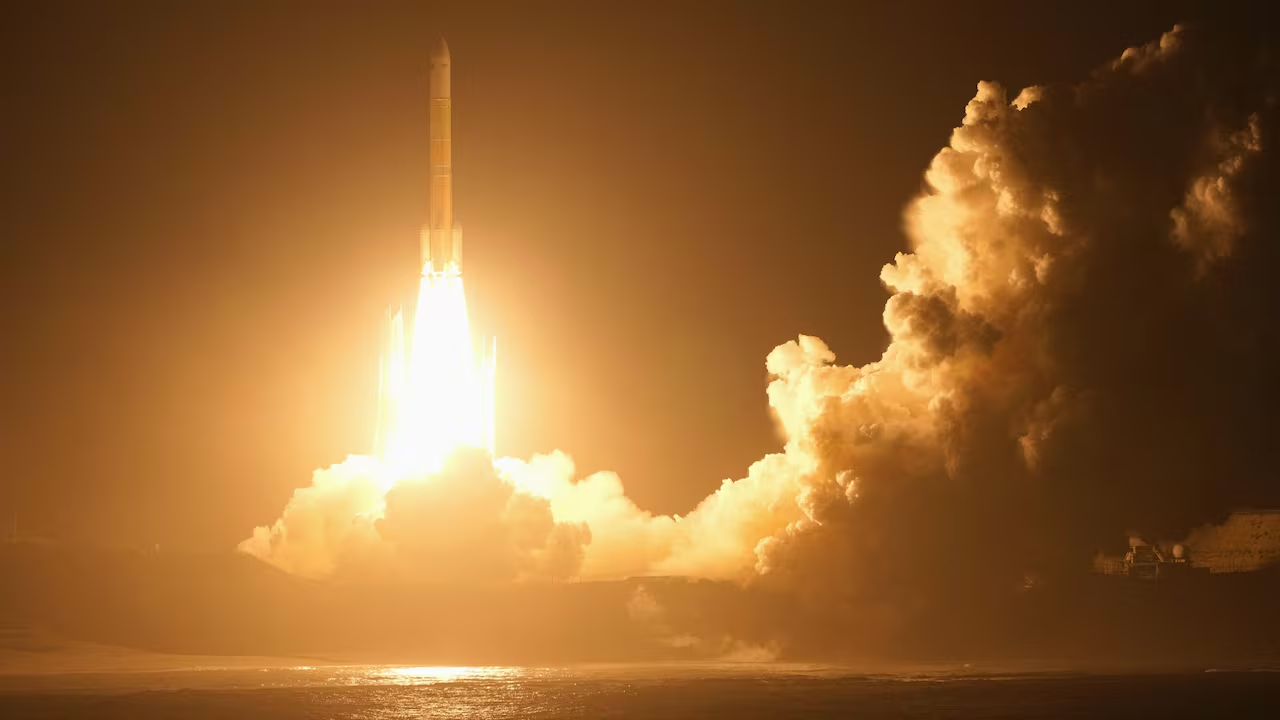
负责此次采样任务的日本宇宙航空研究开发机构(JAXA)在黎明前从日本种子岛的主航天发射场发射了这艘航天器。一小时后,当航天器按计划与火箭的上面级分离时,官员们宣布任务成功。飞行控制人员爆发出热烈的掌声,纷纷站起来握手、庆祝。
The Japan Aerospace Exploration Agency, which is leading the bold sampling effort, launched the spacecraft before dawn from the country's main spaceport on Tanegashima Island. Officials declared success an hour later when the spacecraft separated as planned from the rocket's upper stage. Flight controllers burst into applause and jumped to their feet, shaking hands and embracing.
虽然美国宇航局(NASA)在过去50年里已成功将九艘航天器送上了火星,中国也在2021年实现了火星着陆,但至今还没有任何航天器登陆过火卫一或其伴星火卫二(Deimos);更没有人能够从火星或其卫星上采集到样本。
While NASA has successfully landed nine spacecraft on Mars over the past 50 years and China scored a 2021 touchdown, no one has ever ventured onto Phobos or its sidekick Deimos. And no one has managed to fetch samples from Mars, let alone its moons.
如果任务成功,火卫一上的尘埃、土壤和岩石样本将于2031年抵达地球。
If successful, bits of dust, soil and rocks from Phobos will arrive on Earth in 2031.
参与该项目的NASA天体物理学家汤姆·斯塔特勒(Tom Statler)表示:“这次任务充满了紧张感、兴奋之情,同时也让人感到无比震撼。”
"There's a lot of adrenaline and a lot of excitement and a lot of wow," said NASA astrophysicist Tom Statler, who's involved with the project.
日本在这次任务中具有优势——因为他们此前已经成功从小行星上采集到了样本。周二,日本宇宙航空研究开发机构的工作人员们在种子岛航天中心庆祝:日本航天器搭乘H3火箭成功发射,并按计划与火箭分离。
Japan has an edge going in, with two asteroid sample returns already under its cosmic belt. Employees of Japan Aerospace Exploration Agency and others celebrate at the Tanegashima Space Centre as a Japanese spacecraft launched aboard an H3 rocket successfully separated as planned on Tuesday. (Naoki Hiraoka/Kyodo News/The Associated Press) Mars's moon Phobos is a lumpy, little rock Phobos is a lumpy, potato-shaped rock just 22 kilometres or so across.
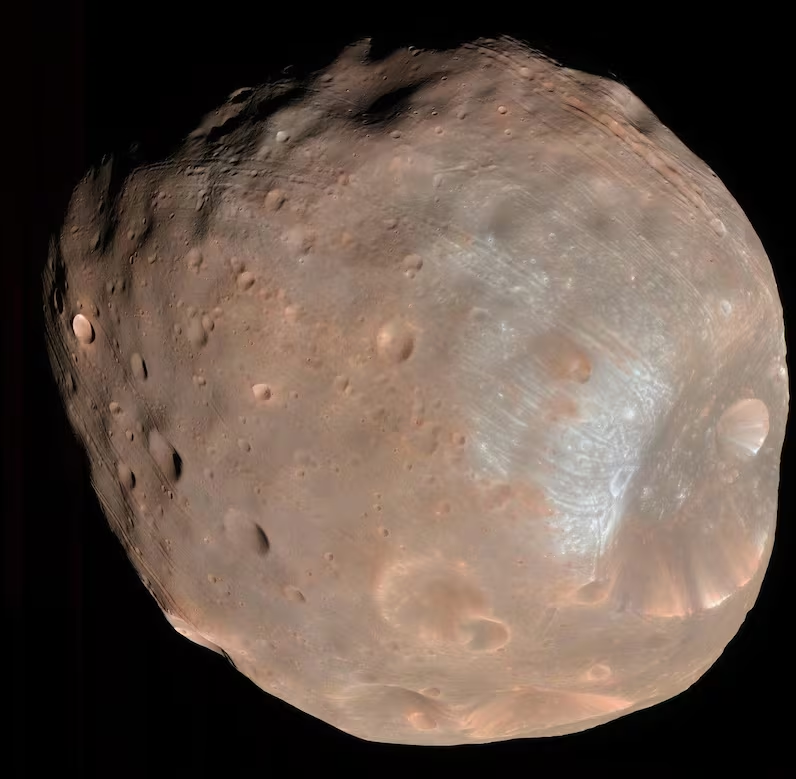
火卫一是一颗形状不规则、呈土豆状的岩石卫星,直径仅约22公里。研究其样本有助于揭示火星卫星(以及可能存在于其他行星系统的卫星)的起源。
Examining pieces of it can explain how Mars's moons — and possibly moons elsewhere — came to be.
该任务被称为MMX(火星卫星探测任务),耗资8.12亿加元(约合5.78亿美元),搭载一艘重达五吨的航天器,预计将于明年夏末抵达火星。它将与火卫一绕火星运行的紧密轨道同步,随后弹射出一辆名为“伊德菲克斯”的法德合作探测车——其名字取自《阿斯特里克斯历险记》漫画中的白色梗犬。
Dubbed MMX for Martian Moons Exploration, the $812 million ($578 million US) mission features a hefty five-tonne spacecraft that should reach Mars by late next summer. It will sync up with Phobos's tight orbit around the red planet, before ejecting the French-German rover that's named Idefix after the white terrier in the Asterix comics.

这张由美国国家航空航天局(NASA)“火星勘测轨道飞行器”拍摄的照片显示,2008年3月23日拍摄到的火星卫星之一——火卫一。(NASA/美联社)此前从未有航天器到访过那里。伊德菲克斯探测车体积不大于微波炉,将独自降落在火卫一表面,在该卫星极低的重力环境下弹跳数分钟才会停稳。
This photo taken with NASA's Mars Reconnaissance Orbiter, shows Phobos, one of Mars's moons, on March 23, 2008. No spacecraft has ever gone there before. (NASA/The Associated Press) No bigger than a microwave oven, Idefix will plop onto Phobos by itself, bouncing for several minutes before coming to a halt in the moon's extraordinarily low gravity.
伊德菲克斯探测车着陆后将发生什么 这辆四轮探测车设计有自动翻正功能,若倒扣着陆可自行复位。但法国国家空间研究中心(CNES)的朱利安·巴鲁克表示,如果它陷入松软土壤或卡在岩石间,一切就难以预料了。他补充道,一旦探测车的太阳能电池板展开,就无法再自行翻正,因此它的移动速度将极其缓慢,仅为每秒一毫米(0.04英寸/秒)。
What happens after Idefix the rover lands The four-wheeled rover is designed to right itself if it lands upside down. All bets are off, though, if it sinks into soft soil or gets wedged between rocks, said the French Space Agency's Julien Baroukh. Once the rover's solar panels are deployed, the vehicle can no longer right itself, he added, which is why it will move at a glacial one millimetre per second (0.04 inches per second).
据巴鲁克介绍,伊德菲克斯将充当“安全先遣员”,在火卫一表面巡视100天。日本飞行控制人员希望借此避开粉状土壤和崎岖地形,以便母船——一座四足固定着陆器——于2028年底或2029年降落采集样本。
Idefix will serve as a "scout for safety," according to Baroukh, as it prowls around Phobos for 100 days. Japanese flight controllers want to avoid powdery soil and rough terrain when the mothership — a four-legged stationary lander — descends to the surface to gather samples in late 2028 or 2029.
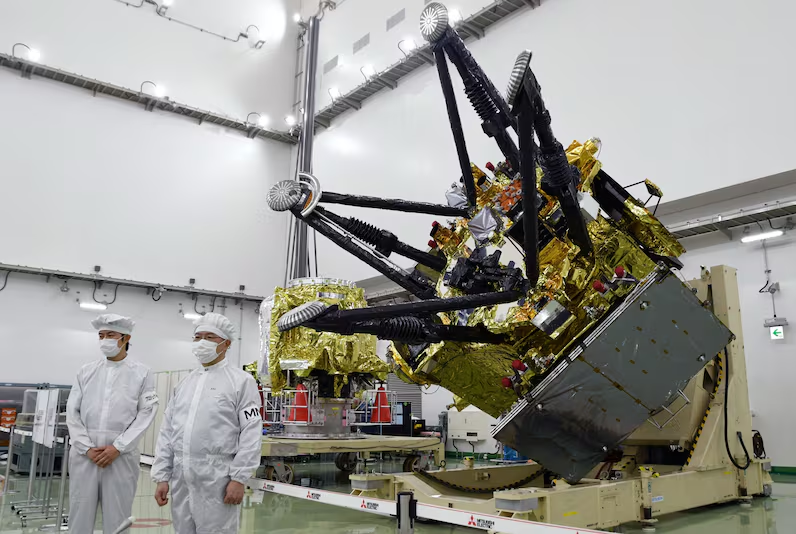
2026年8月13日,日本宇宙航空研究开发机构(JAXA)在日本南种子町种子岛航天中心发布其火星卫星探测任务(MMX)的航天器。(Yuika Kawazoe/共同社/美联社)着陆器将在火卫一停留仅两小时,通过钻探和真空吸取方式获取至少10克(约三分之一盎司)物质,随后发射升空。它将在一系列飞越中研究火卫二,于2030年离开火星周边,并于2031年将样本送回澳大利亚沙漠。这是一项充满险阻的任务,残骸散落在探测路径上。
The Japan Aerospace Exploration Agency unveils a spacecraft for its Martian Moons eXploration mission at the Tanegashima Space Center in Minamitane, Japan, on Aug. 13, 2026. (Yuika Kawazoe/Kyodo News/The Associated Press) The lander will spend just two hours on Phobos, drilling and vacuuming up at least 10 grams (one-third of an ounce) of material, before launching back into space. It will study Deimos during a series of flybys before leaving the Martian neighborhood in 2030 and hustling back to Earth for a 2031 sample delivery in the Australian desert. It's a treacherous undertaking, with wreckage littering the path.
这两颗卫星的名字并不令人安心:福波斯在希腊语中意为“恐惧”,戴摩斯意为“恐惧/战栗”。它们是战神阿瑞斯(罗马神话中的马尔斯)的双胞胎儿子。
The moons' names aren't exactly comforting: Phobos is Greek for fear and Deimos means dread. They're the twin sons of the god of war Ares (Mars in Roman mythology).
科学家希望了解火星卫星的形成过程。俄罗斯在所有三次福波斯探测尝试中均告失败,其他火星探测任务也多以失利告终。日本在其唯一的另一次火星任务中,也未能让探测器进入火星轨道。即便是美国国家航空航天局(NASA),在试图回答“火星上是否曾存在生命”这一核心问题的过程中,也经历了不少失败。
Scientists hope to learn how Mars's moons formed Russia stumbled in all three of its Phobos attempts as well as many other Mars endeavours. In its only other Mars mission, Japan failed to get a spacecraft into orbit around the red planet. Even NASA has had its share of flops in a bid to answer the burning question: Did life ever exist on Mars?
通过研究火星的卫星,科学家希望弄清福波斯和戴摩斯是否形成于远古时期火星与一颗撞击小行星碰撞的后果之中。也有可能这些卫星原本是流浪小行星,后来被火星引力捕获。
By studying Mars's moons, scientists hope to learn whether Phobos and Deimos formed in the aftermath of an ancient collision between Mars and a battering space rock. It's also possible that the moons might be stray asteroids that became ensnared in Mars's gravity.
无论哪种情况,科学家预计在福波斯上能发现火星物质的痕迹,这使得样本成为极具吸引力的“买一送一”,有助于揭开行星与卫星形成的奥秘,甚至可能揭示生命的起源配方。
Either way, scientists anticipate finding traces of Mars on Phobos, making the samples an irresistible two-for-one that should help demystify planetary and moon formation, and perhaps even the recipe for life.
美国国家航空航天局代理行星科学部主任林赛·海斯表示,这些发现将有助于塑造未来的火星任务,包括载人任务。
The findings will help shape future Mars missions, including those by astronauts, said NASA's acting planetary science director Lindsay Hays.
德国航天中心探测器负责人马库斯·格雷本施泰因表示:“这是千载难逢的机会。我们正参与首次从火星系统返回样本的任务。”
"It is a once-in-a-lifetime chance. We are part of the first sample return mission from the Martian system," said the Germany Space Agency's rover chief Markus Grebenstein.
日本并非唯一觊觎火星系统岩石和泥土中蕴藏的科学财富的国家。中国计划于2028年发射火星采样返回任务,而美国国家航空航天局仍在商讨如何回收“毅力号”火星车收集的30多个样本管——“毅力号”是地外行驶里程的新纪录保持者。
Japan isn't the only one looking to claim the scientific riches packed into the Martian system's rocks and dirt. China plans to launch a sample return mission to Mars in 2028, while NASA is still debating how to retrieve the more than 30 sample tubes collected by the Perseverance Mars rover, the new champion for off-Earth driving.
日本和中国在从火星系统带回样本方面可能不相上下。两国均以2031年为目标。
Japan and China could be neck-and-neck in getting samples back from the Martian system. Both are targeting 2031.
日本为这项任务投入了3.5亿美元的资金。美国国家航空航天局(NASA)贡献了1.22亿美元(约合8,700万美元),法国航天局投入了约9,500万美元(约合6,800万美元),德国航天局投入了约7,900万美元(约合5,600万美元),欧洲航天局则投入了约2,400万美元(约合1,700万美元)。
Japan is investing $350 million in this mission. NASA is contributing $122 million ($87 million US), the French Space Agency about $95 million ($68 million US), the German Space Agency about $79 million ($56 million US) and the European Space Agency some $24 million ($17 million US).